



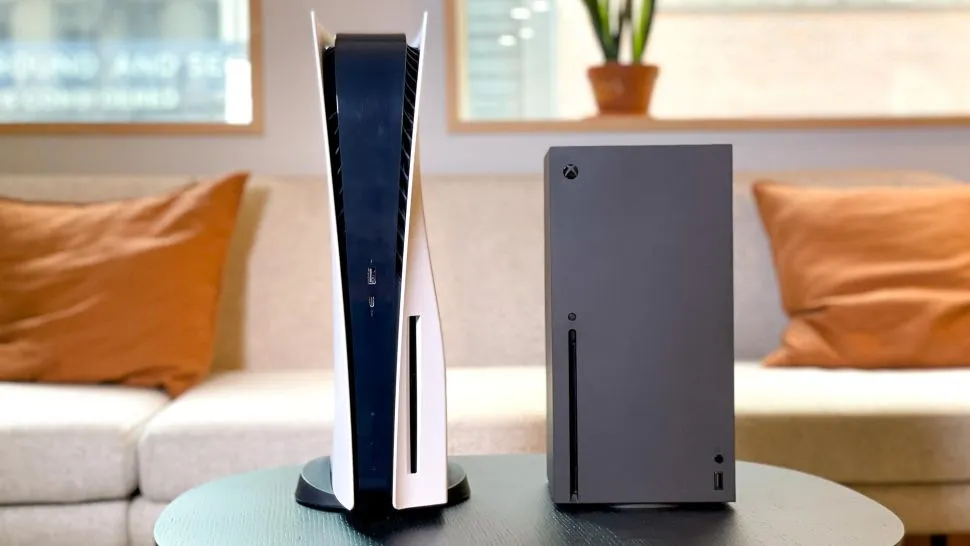
Even a quick glance at Twitter reveals that the console war is in full swing. Every day, thousands of accounts — some with significant fan followings — take to the trenches and argue endlessly over the merits of the PS5 and the Xbox Series X.
The “war” moniker feels accurate, as these are not polite, sober discussions. These are no-holds-barred online shouting matches, complete with wild accusations, ad hominem barbs and in some cases, threats of actual violence. The problem — one among many, really — is that modern technology has rendered the PS5 vs Xbox Series X console war essentially pointless.
Not that it wasn’t pointless before, granted. Grown adults attacking each other over the relative merits of two plastic boxes is somewhere between “pathetic” and “deranged,” depending on how much pity you feel for the participants. But two relatively recent developments have rendered most console war arguments null and void: specifically, the rise of cloud gaming and the rise of PC ports.
There are still a few substantive differences between the PS5 and the Xbox Series X. Each system does, indeed, have strengths and weaknesses. But the era of hyperbolic, world-ending conflict between the two extremely similar consoles can finally end, if its participants can let it go. The fact is, there’s just not much worth getting that worked up about anymore.
The rise of cloud gaming
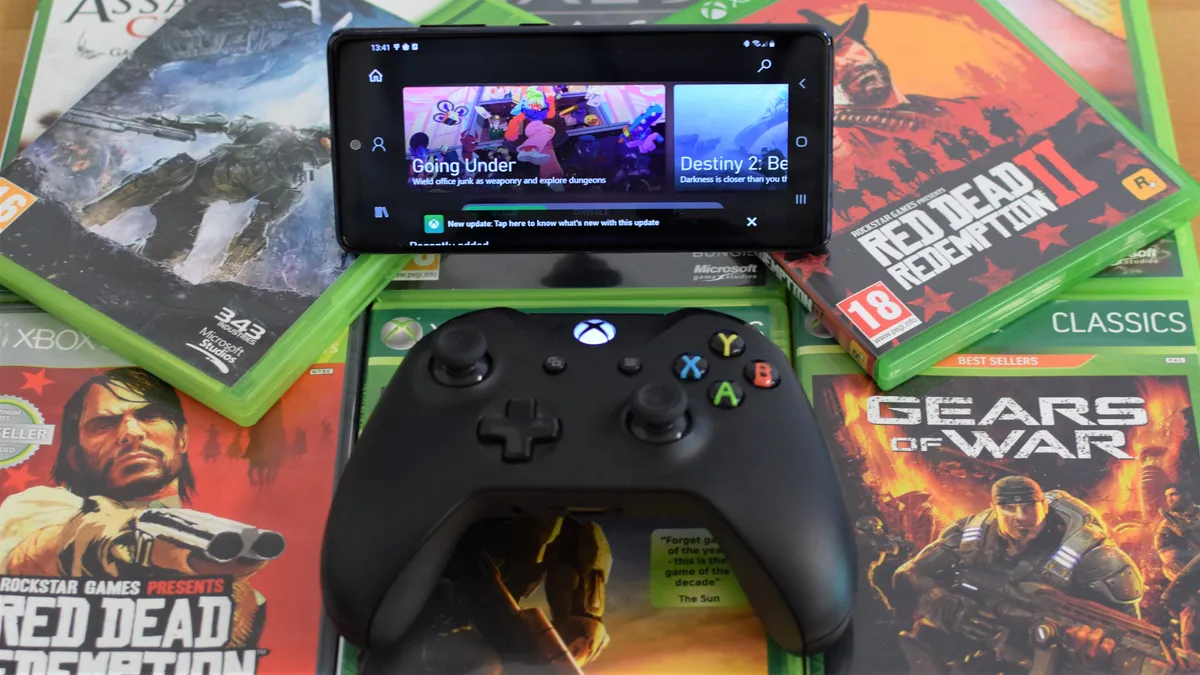
Let’s address one salient point right off the bat: Cloud gaming is not yet ready to replace console or PC gaming in any substantive way. However, it’s also not that far off, and it’s getting better every day. Microsoft’s expansive Xbox Game Pass has arguably the best implementation of cloud gaming at the moment, but Nvidia GeForce Now, PlayStation Now and even Google Stadia all have their charms.
In other words, not only are most games available on both major consoles — most of them are available, regardless of whether you own a major console at all. Whether you subscribe to a rotating library of games, as with Xbox Game Pass, or buy them à la carte, as with Google Stadia, you don’t need a PS5 or an Xbox Series X to play titles such as Hades, Doom Eternal, Mass Effect Legendary Edition or Assassin’s Creed Valhalla. You could do so on a non-gaming PC, a smartphone or even on a TV.
Not only are most games available on both major consoles — most of them are available regardless of whether you own a major console at all.
You could argue that cloud gaming still doesn’t offer the same high resolutions and smooth frame rates as downloaded titles on consoles, and that’s true. But in an era of cross-generation console games and thousands of different gaming PC configurations, arguing over performance minutiae feels trivial. Every gaming system handles game performance slightly differently. We can (and should) analyze these differences, but if you adopt a zero-sum-game mentality based on slight variations in graphics or performance, you should be aware of how silly you look to any rational observer.
Cloud gaming has one other major advantage, although at present, only Microsoft has taken full advantage of it. Previously, one of the biggest arguments in favor of buying an Xbox was its roster of exclusive series — Halo, Forza, Gears of War and so forth. With Xbox Game Pass, you can play many of these “exclusive” games on just about any system, from an Android smartphone, to an iPad, to a Windows productivity laptop. If Xbox doesn’t have any truly “exclusive” games, you may have a better gaming experience on an Xbox Series X, but you don’t really “need” one.
And before you counter that Sony would never do such a thing, remember that PlayStation Now is available on PCs, and it does indeed offer older entries in series such as God of War, Uncharted, Ratchet & Clank and so forth. More platforms, rather than fewer, seems to be the wave of the future.
Console exclusives on PC

Microsoft has led the charge, and Sony has followed, on one other key issue: PC ports. In terms of raw accessibility, there’s no denying that gaming PCs are at least as troublesome as consoles, and perhaps more so. (Have you tried to buy a GPU like the RTX 3050 lately?) Gaming PCs are almost always more expensive than consoles, and require much more know-how to use. At the same time, though, if you buy or build a PC, you can now play an awful lot of former Xbox and PlayStation exclusives on one.
A few years ago, Microsoft committed to making all of its first-party titles available for download on both Xbox and PC. At first, this meant that buyers had to go through Microsoft’s cumbersome proprietary store; more recently, however, Microsoft has taken to selling its games via Steam as well. This means that you can play Microsoft Flight Simulator, Halo Infinite, or Forza Horizon 5 whether you have an Xbox Series X or a gaming PC. (You can even play them if you don’t have those things; see the previous section.) Based on Steam sales figures and critical reception, this practice has been wildly successful.
Slowly but surely, Sony is also building up its PC credentials. Over the past few years, we’ve seen Horizon Zero Dawn, Days Gone and God of War (2018) make their way to Steam, and two Uncharted games are just about to follow. While Sony may never promise Microsoft’s day-and-date PC parity, it seems inevitable that we’ll see more Sony games and series on PC, sooner rather than later.
In other words, perhaps the PC gamers were right all along. You can argue about PlayStation and Xbox until Half-Life 3 comes out, but having a gaming PC might really be the solution after all.
What else is there to fight about?
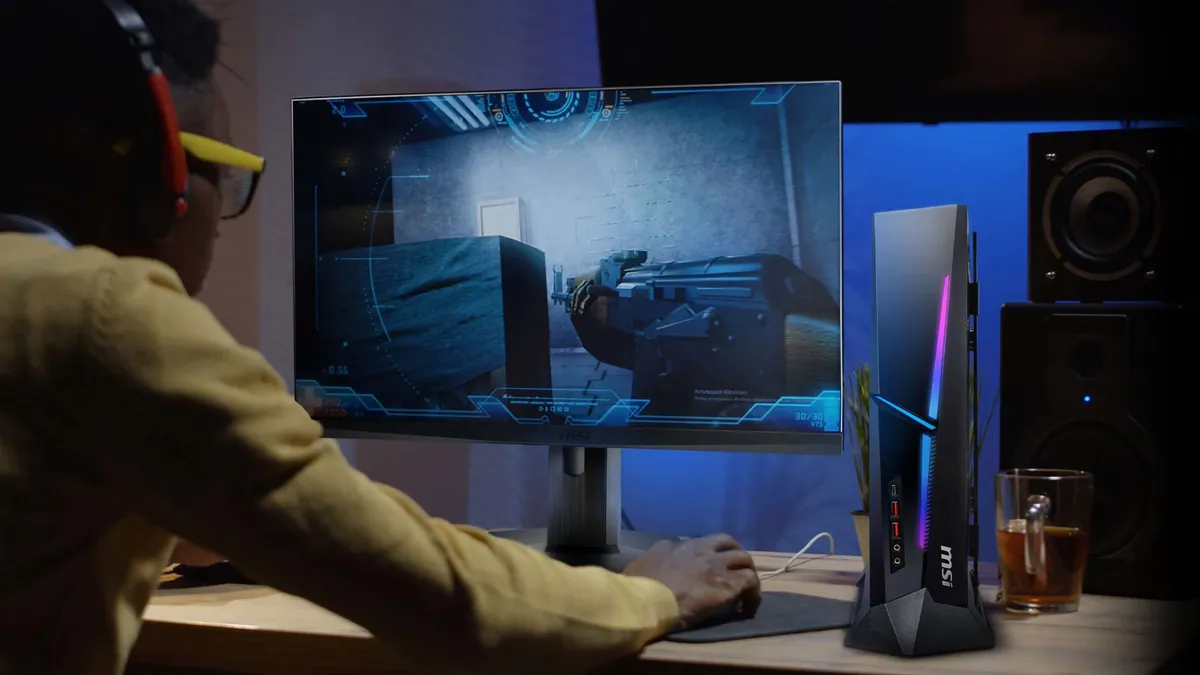
The fact is, the PS5 and Xbox Series X offer similar performance and, for the most part, the same game library. Exclusive games have been the one thing even remotely worth fighting about. And due to actions from both Microsoft and Sony, soon that won’t even be much of a fight anymore.
(There’s always the Nintendo Switch to consider as well, but Nintendo generally does its own thing, and I wouldn’t expect that to change over the next five years.)
So, if the console war is well and truly over, who won? I would say everyone who spent their time actually playing games rather than screaming about them on Twitter is a winner, personally. But in terms of which system will offer the most games in this generation and beyond, the answer is — as it has always been — a gaming PC.

