There comes a time when we all need to replace or upgrade our cookware, and while we know many of you are already fans of cast-iron pans, you probably don’t know quite as much about the benefits of carbon steel.
These two materials have become particularly popular amongst discerning chefs and are now appearing in everyday kitchens — but how do you decide which one is right for you and your cooking needs?
Selecting the right cookware for your kitchen can turn a chore into an enjoyable experience and elevate a mediocre dish into something more delicious. Investing in high-quality materials is also a safe way to acquire something reliable that will help you deliver great meals day after day.
Still, there are important differences between cast iron and carbon steel that you should understand if you want to get the right cookware for your everyday needs.
Cast Iron versus Carbon Steel: Materials
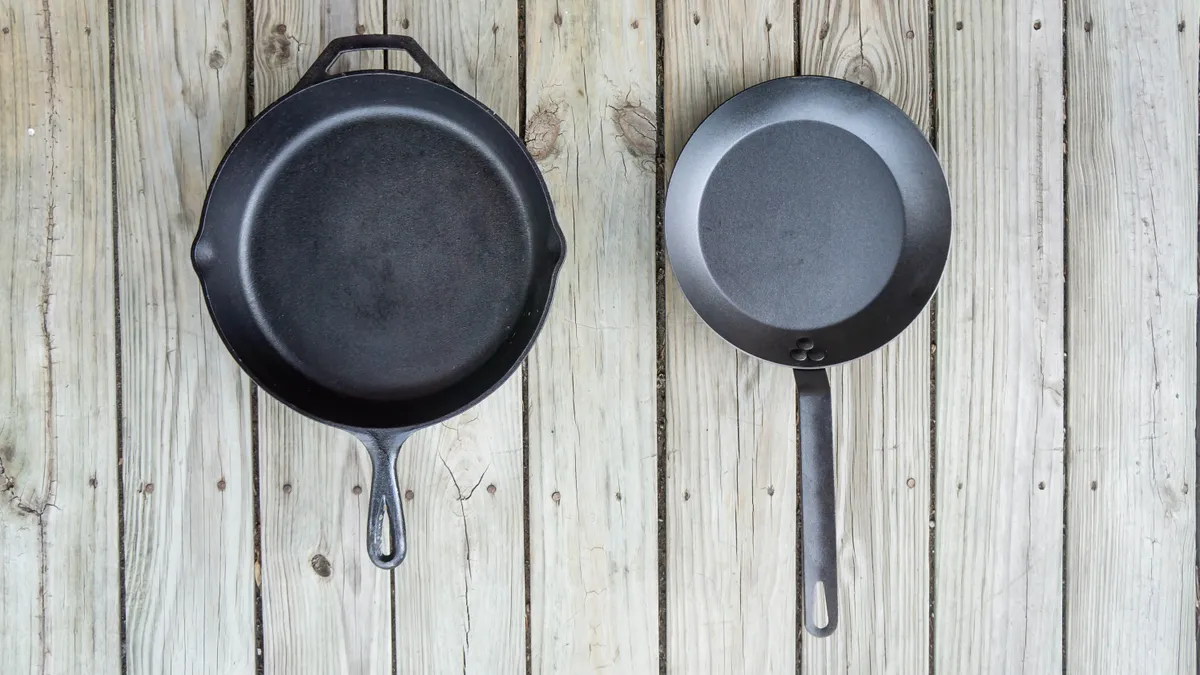
One big clue behind these two types of pans is in the name itself. Cast iron is made from an alloy of iron and carbon, just like steel, but the proportions differ. In cast iron, there is a higher carbon content (up to 3.5%), and it’s this difference that gives cast iron its slightly rougher texture and heavy weight.
Since cast iron is more brittle than steel, it must be thicker and cast iron products are made by pouring molten metal into a mold and letting it solidify.
Carbon steel is also an alloy of iron and carbon, but the carbon quantity is less. Pure steel has 1.2% carbon, while carbon steel contains 2% carbon — still noticeably lower than cast iron. As a result, carbon steel is harder than stainless steel and more flexible than cast iron.
When carbon steel pans are made, the material is hammered into a thin sheet and then bent into shape. This results in a lighter, thinner product.
Cast Iron versus Carbon Steel: Materials

Since cast iron and carbon steel pans are primarily used for cooking food at high temperatures, it’s important to understand how these materials respond to heat.
Cast iron is slow to heat up and conducts heat less efficiently across its surface, resulting in hot spots within the pan. However, its thickness makes it excellent at retaining heat over long periods, making it well-suited for slow-cooking techniques like braising and stewing. It is also effective at achieving a good sear or char on different foods, since it can generate such powerful heat — especially if given time to warm up.
Carbon steel is praised for its rapid heat transfer, which heats the pan to a uniform temperature quickly. It's also much more reactive to changes in heat, which can make it easier for cooks to change or correct the temperature during cooking. Any quick cooking techniques, such as sauteing or stir-frying, are well-suited to this kind of heat retention. However, longer cooking techniques require a greater application of heat to maintain the temperature.
Cast Iron versus Carbon Steel: Nonstick Seasoning

Neither carbon steel nor cast iron is nonstick, but it is possible to achieve this effect on the pan's surface through careful seasoning. Seasoning refers to the application of a non-greasy layer of oil that adheres to the surface of the pan, protecting the material from rust while also creating a nonstick surface for any foods placed on top.
Both carbon steel and cast iron pans should be seasoned to prevent rust and maintain their nonstick performance, but cast iron requires more substantial seasoning.
To protect the surface of the cookware, both cast-iron and carbon-steel pans should be washed by hand rather than placed in the dishwasher.
How to season your pans
You’ll find that some pans come preseasoned; however, it’s still good to know how to season cast-iron pans, since they will need to be re-seasoned over time to ensure they remain nonstick. This requires washing and drying your pan, applying a thin layer of oil to the surface to reestablish the bond, before placing it in a hot oven to dry and seal.
Cast Iron versus Carbon Steel: Price

There are various brands and products in the market today that range in price, but generally cast iron is cheaper than carbon steel. Cast iron is also known for its longevity, especially when properly cared for, with many cast-iron pans being handed down through generations. The combination of lower price and long lifespan means that cast iron is particularly good value for money.
Carbon steel products are slightly less common and usually command a higher price point, especially if made by a reputable brand. However, they are well-suited for most cooking tasks, and you’ll get plenty of use out of them for their cost. They also have a long lifespan, though perhaps not quite as long as cast iron because of their thinner construction. Many chefs recommend keeping one of each type to accommodate all kinds of cooking needs.
Cast Iron versus Carbon Steel: Versatility

Cast iron is suitable for both stovetop cooking and oven roasting, especially when food requires a long, slow cook. It can take a while to heat up to the necessary temperature, but its heat retention once it reaches that point balances it out.
Cast iron is notably heavier than carbon steel, which can make it awkward to move from the stovetop to the oven or simply maneuver on the stovetop — especially when full. This is why it’s favored for less involved cooking, where it can bubble away on a back burner.
Carbon steel, on the other hand, is lightweight and easy to maneuver, whether you’re cooking scrambled eggs at breakfast or sauteing veggies at dinner. It is still suitable for oven cooking, as well as the stovetop, should you need to combine cooking techniques, but the stovetop is where it really shines.
It’s also a higher performer at quick cooking, since it has greater responsiveness to heat — this also makes it a good choice for beginner cooks who may need to correct temperatures as they go.
Cast Iron versus Carbon Steel: Which is best?
Ultimately, there is no single better performer when it comes to using carbon steel or cast iron in the kitchen. It really comes down to how you like to cook, how much you want to spend, and what you prize most.
If you mostly favor slow cooking techniques and workhorses that will stand the test of time, then cast iron might be right for you. If you’re usually frying something quickly on the stovetop, want something lightweight and efficient, and don’t mind investing a little more for quality, then carbon steel is a great choice. Or to make the decision easier, you could get one of each.

Follow Tom's Guide on Google News and add us as a preferred source to get our up-to-date news, analysis, and reviews in your feeds.
More from Tom's Guide