The RAM crisis is already hitting the tech industry hard, with prices skyrocketing on DRAM, SSDs, laptops, desktops and more — and it's all thanks to a continued push to satisfy the need for AI data centers.
Recently, we've seen customizable PC manufacturer Framework raise the price of its Framework Desktop, and memory sticks cost more than a PS5. Now, according to Micron, we can expect to see these prices last until 2028, or "at least until the AI demand starts to fade away."
Micron, one of the largest memory manufacturers in the world, opted to kill its Crucial consumer RAM brand in favor of AI data centers at the end of 2025, but we now have more insight into the company's production capabilities and how it's dealing with the ongoing memory shortage.
In an interview with Wccftech, Micron VP of Marketing, Mobile and Client Business Unit, Christopher Moore, chats about the ongoing memory shortage and how the company is set to service the consumer market despite high AI demand.
How long will the RAM crisis last?

One of the most important topics surrounding the RAM crisis is just how long it will last. Many have shown differing opinions, with the U.K.-based Scan Computers CEO stating, "it's just another market cycle," while SK Hynix, one of the biggest manufacturers of RAM, claiming it will last until 2028.
According to Moore in the interview, Micron also believes the memory shortage won't improve until 2028, and this is due to how long it takes to see "meaningful output" for the consumer.
"In order to dramatically increase the number of bits, we need more clean room space. And that takes a lot of time," Moore states. "So we broke ground in Idaho in our ID1 facility three years ago. And that's gonna come online in mid-2027.
But you're not really gonna see real output, meaningful output, by the time we get all the qualifications done and customers are accepting it and you get the tools, everything up and running until 2028.
"Memory manufacturers are scrambling in to build newer production lines, yet constraints of the process eventually forces them to push the timelines ahead by several quarters, which means that for the average consumer, the DRAM shortages could persist for quite some time now, or at least until the AI demand starts to fade away."
Catering to AI

As stated, it takes time for memory to be manufactured despite the push to get started on a whole new production line in mid-2027. Right now, this is happening for High Bandwidth Memory (HBM) for AI data centers instead.
So, why is Micron shifting gears to AI? Well, Micron is a business, after all, and Moore chats about how the total addressable market (TAM) has expanded so fast that it's hard for major manufacturers like Micron to ignore.
"What's going on right now is that the TAM and data center is growing just absolutely tremendously. And we want to make sure that, as a company, we help fulfill that TAM as well.
"What's happening now is that all these data center build-outs are going on, and the TAM of the enterprise or data center business is growing what used to be 30, 35%, and then to 40%, and now to 50% and 60% of the overall market is requiring more bits than what used to happen," Moore states. "And the entire industry is short. So I think that's something for people to understand.
"This is not a Micron issue, it's an industry issue, where us and our peers or our competitors are all rushing to service these segments as much as we can, and there's just not enough supply to go around.
"It's a really unfortunate situation. But I think it's really important for people to understand we are still servicing the consumer market."
Outlook
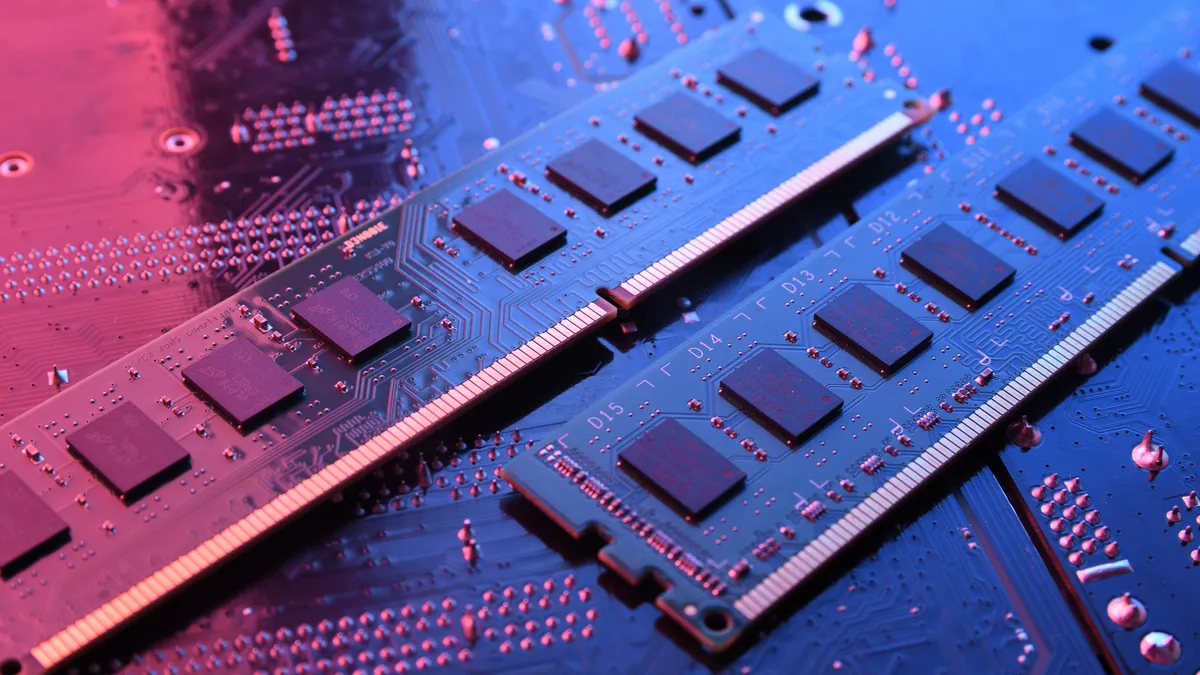
While Micron is clearly looking to help consumers on the current DRAM shortages, it will take a long time until we see these results. There's more of a focus on AI data centers now, and until we see AI demand "fade out" or facilities cater to the demand of memory, it's looking increasingly likely that 2028 will be the year when prices may go back to normal.
Take that from one of the "big three" manufacturers around. Besides, it's not like Micron can simply add a machine, with Moore explaining: "if you've got a fab running with a bunch of different machines for one piece of silicon, and then you have to stop those machines and get it to run on another piece of silicon, you're gonna get less output."
By just how much will we see smartphones, laptops, consoles and more rise in 2026? We've heard Valve's upcoming Steam Machine may be pricier than first thought, and even Meta Quest headsets may see a cost bump this year. It will still take some time, though, but here's hoping the latest tech we've seen at CES 2026 won't be ridiculously priced.

Follow Tom's Guide on Google News and add us as a preferred source to get our up-to-date news, analysis, and reviews in your feeds.
More from Tom's Guide
- Asus explains 'people are going to be surprised' when RAM shortage will affect laptop, phone and gaming console prices — here's why
- 'Basically a photograph interacting with you at 500 frames per second': Nvidia CEO Jensen Huang shares his vision of the future of PC gaming, and how the company plans to tackle GPU pricing crisis
- I tested Nvidia's DLSS 4.5 beta update: here's how much faster it made Cyberpunk 2077 run