Android XR just took another huge step forward, as Xreal’s Project Aura glasses are almost ready for primetime. Alongside today's showing, our own Mark Spoonauer went hands-on with them too.
With a 70-degree field of view display packed into a pair of specs, Android is now able to layer digital content directly onto the physical world — enriching the world around you with information whenever you ask for it.
After writing about the best smart glasses for the past four years, I’ve been waiting for these moments where the parallel development paths of AR and AI glasses merge, and it looks like we’re almost there…but there’s a catch. Let me explain.
The next step in AR comes next year
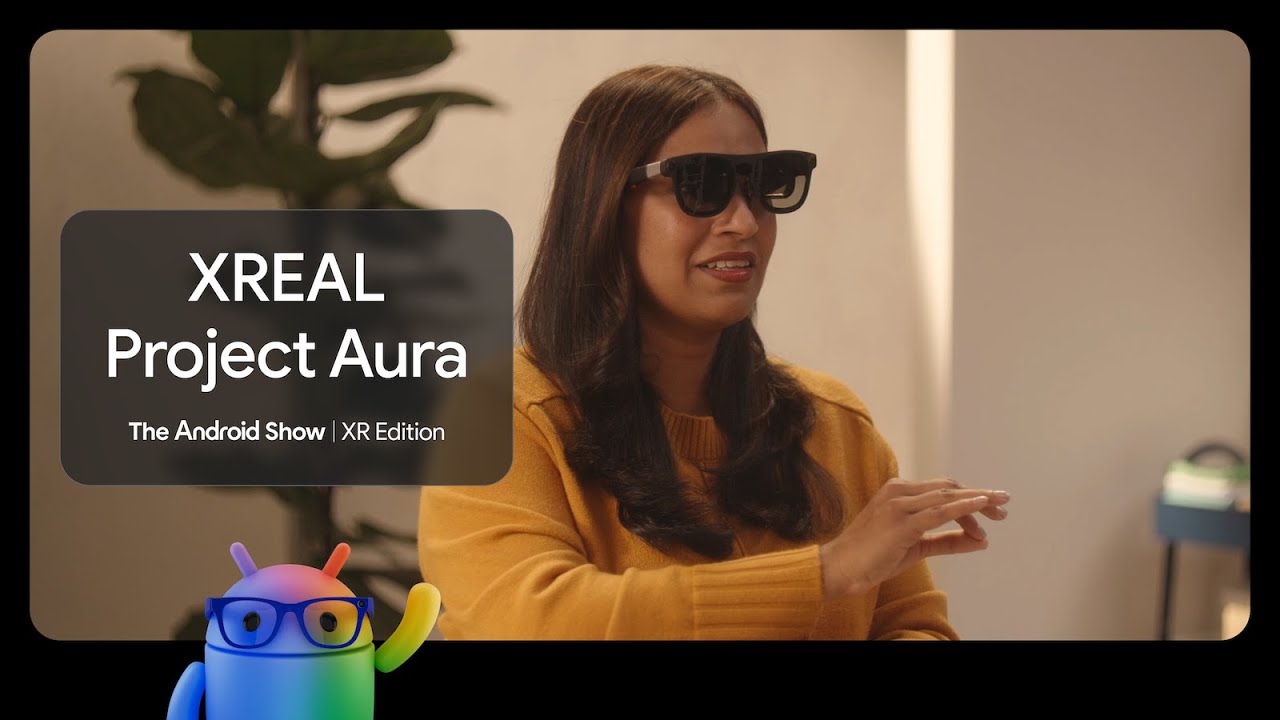
Think Meta’s Project Orion but with a wire connecting the glasses to the compute puck. We already found out a fair amount of detail about these glasses back at Augmented World Expo — from the design and prism tech taking a lot of inspiration from the Xreal One Pro, to the massive 70-degree field of view.
We also found out that there are other front-facing sensors (those additional cameras in the corners) for gesture controls, and after speaking with Xreal’s head of PR, Ralph Jodice, he said that “what’s in Moohan (Samsung Galaxy XR) can come to Project Aura.”
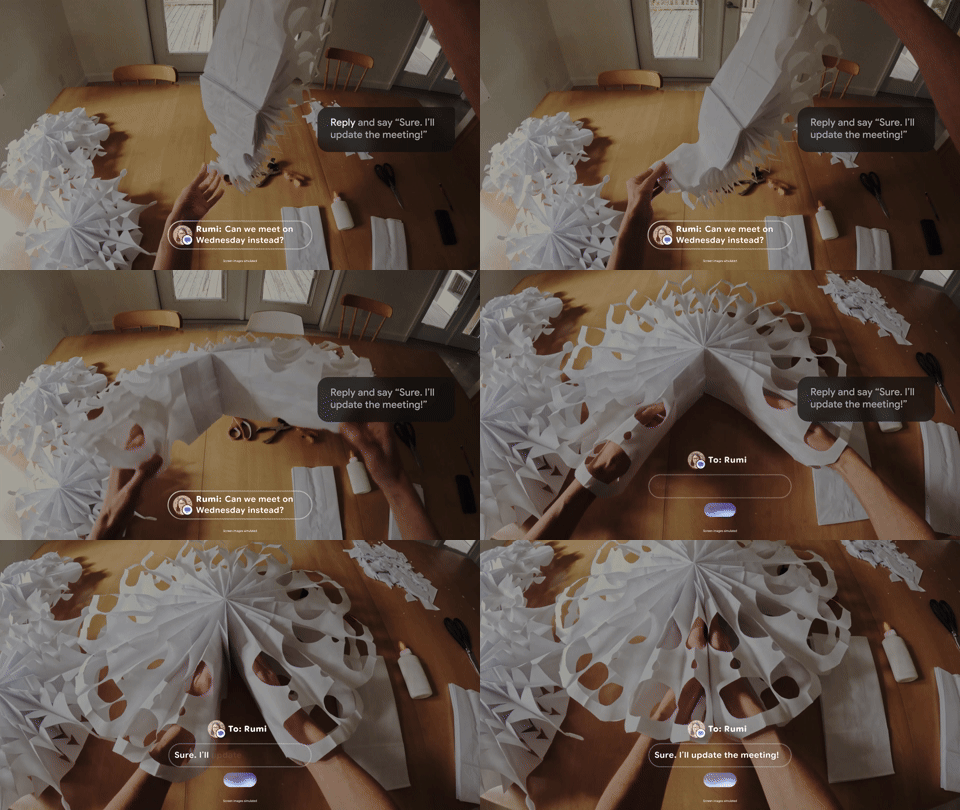

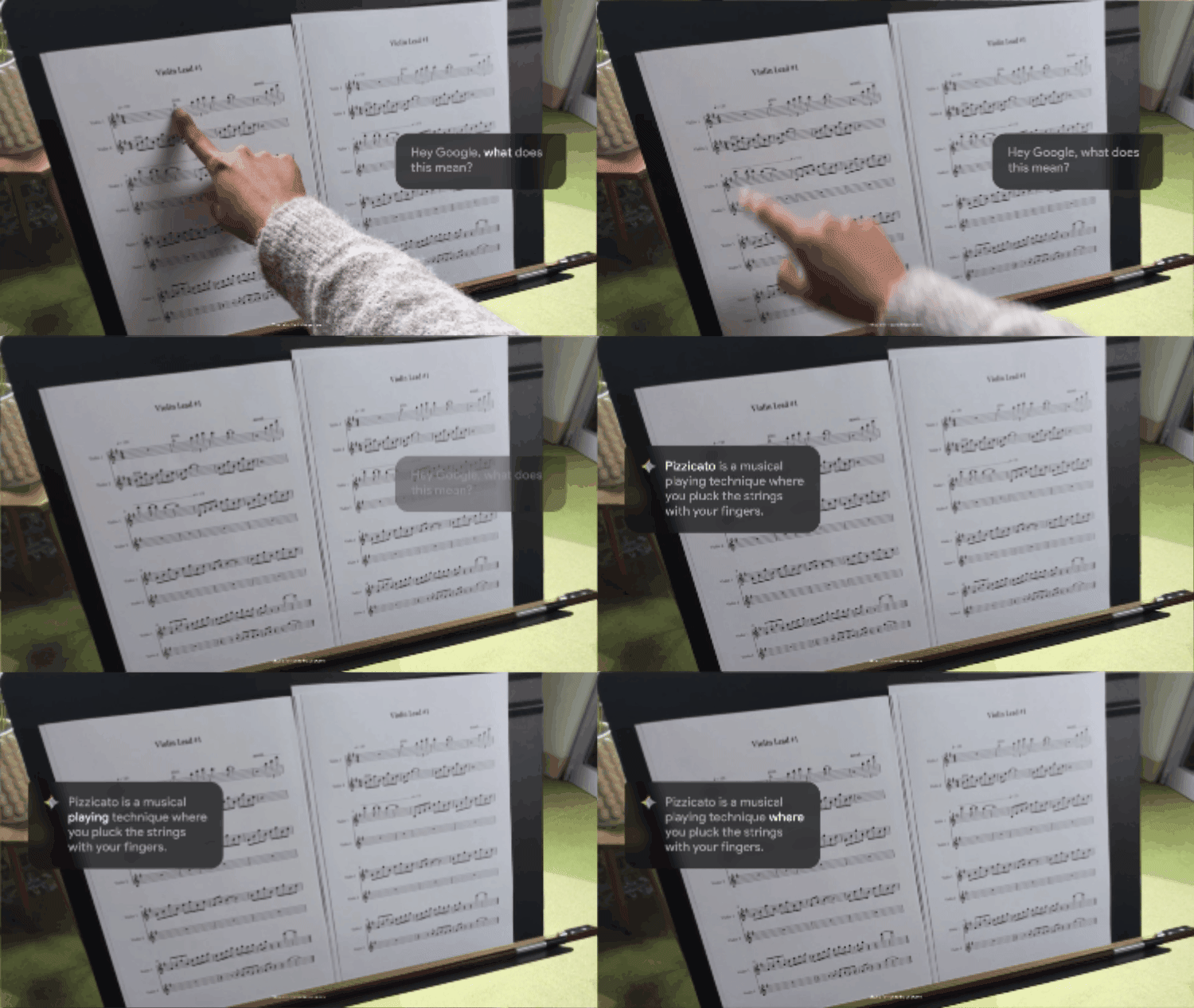
Now, we’re seeing that put into practice. Directions via Google Maps overlaid on the real world like the HUD of a first-person video game, real-time translation of signs in foreign languages, information on things you point at, and step-by-step visual guides.

And since they are AR glasses at their core, you can also do all the AR glasses things you know and love — a massive display for your entertainment, a floating screen for a YouTube how-to in the corner of your view, and more.
Tech Specs

The real differentiator here is going to be that compute puck and the silicon used to bring the worlds of AR and AI glasses together into one pair of specs.
We already know from talking to Xreal that Project Aura will run a refreshed version of the X1 spatial chip you find in Xreal One — known as X1S. This will drive accurate AR tracking and anchoring to ensure your screen doesn’t fly away.

But what's in the smartphone-sized puck. My guess back in June was Qualcomm’s Snapdragon XR2 Gen 2 to power this fully-fleshed-out XR experience, and I was right (sort of). It's coming with Snapdragon XR2+ Gen 2, and the battery life apparently can last up to four hours on one charge.
Wired AR glasses in public?
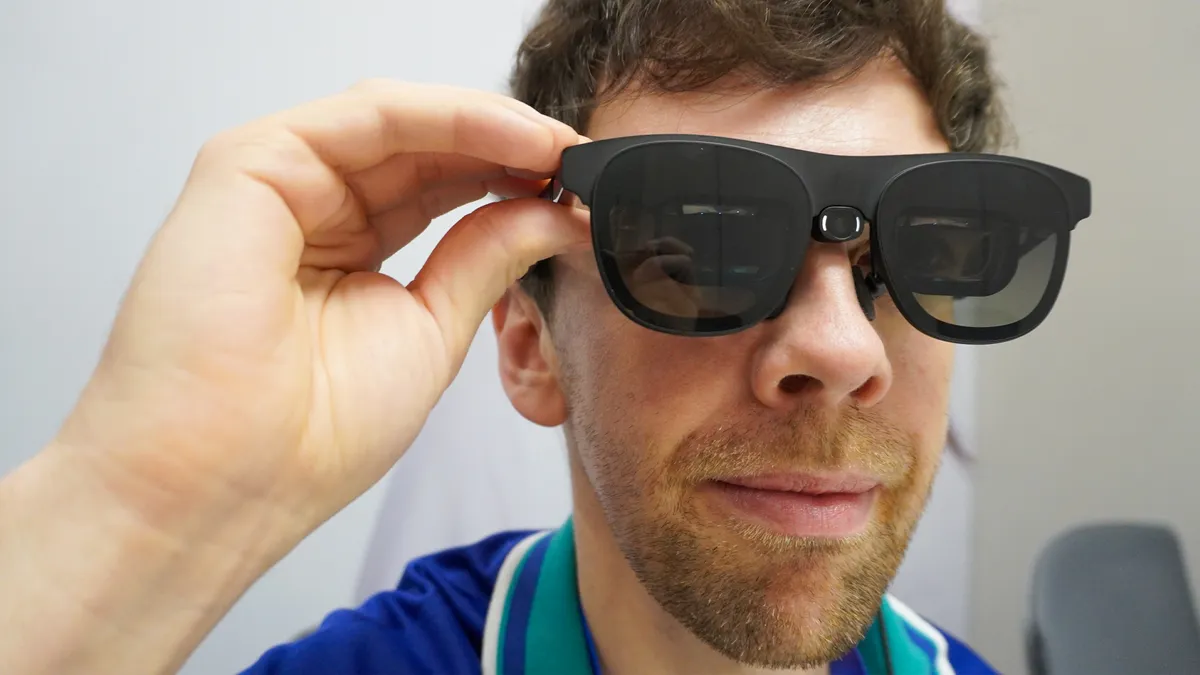
I address this a lot in my AR glasses reviews — talking about how to fit all the prism display tech behind the lenses, these specs have to be a little larger than life. In scenarios like a long haul flight or on the train, where people are focused on their own entertainment, you can get away with glasses with a cord connected to your laptop without a confused second take.
But walking out and about? I’ve tested this myself with the Xreal One and Xreal Beam Pro, and…let’s just say you better have some strong self confidence with all the looks you get! This could be impacted by the fact I live in a tiny town in the middle of nowhere, but tech this visible needs to be really subtle to get away with it in public.
And so far, the only smart glasses that can get away with it are display-free AI options like the Ray-Ban Metas or the Even Realities G2. Google knows this too, as the company is working with Samsung to launch screen-free options partnered with Gentle Monster and Warby Parker.
From the very prominent camera placement and visible display prisms in Xreal's option here, to the cable trailing down your side into your pocket, these are going to be hard to not notice on a person’s face walking down the street.
That’s not to say the tech isn’t awesome. It is. But when style and social acceptability is so crucial too, consider Project Aura a sort of public beta test, to see how the world deals with seeing a slightly-too-big pair of smart glasses.

Follow Tom's Guide on Google News and add us as a preferred source to get our up-to-date news, analysis, and reviews in your feeds.
More from Tom's Guide
- I stepped 10 years into the future of smart glasses — here's why they are about to change everything
- Smarter tech, dumber looks — smart glasses are in their awkward phase
- Samsung Galaxy XR vs Apple Vision Pro vs Meta Quest 3: Which headset is right for you?