Google just announced new Android XR upgrades coming for the Samsung Galaxy XR headset starting today — including a virtual display for your PC, creating a digital likeness for video calls and a travel mode for that first-class cinema experience in economy.
With these, we’re pretty much at parity with the Apple Vision Pro on the features that matter most to users. Pair that with the price difference ($3,500 for Vision Pro vs $1,799 for Galaxy XR) and suddenly Samsung's headset looks a lot better.
Of course, this is by design in a way, as Apple is reportedly “hellbent” on making smart glasses (Google is too with Samsung’s AI glasses and Project Aura). And as I’ve always said, the whole industry is moving towards packing that all-immersive XR experience into a small pair of specs.
While that’s going to take a while, these three new features are certainly going to enrich the experience you have in the Galaxy XR. We've gone hands-on with them, so let me take you through the details.
1. PC Connect
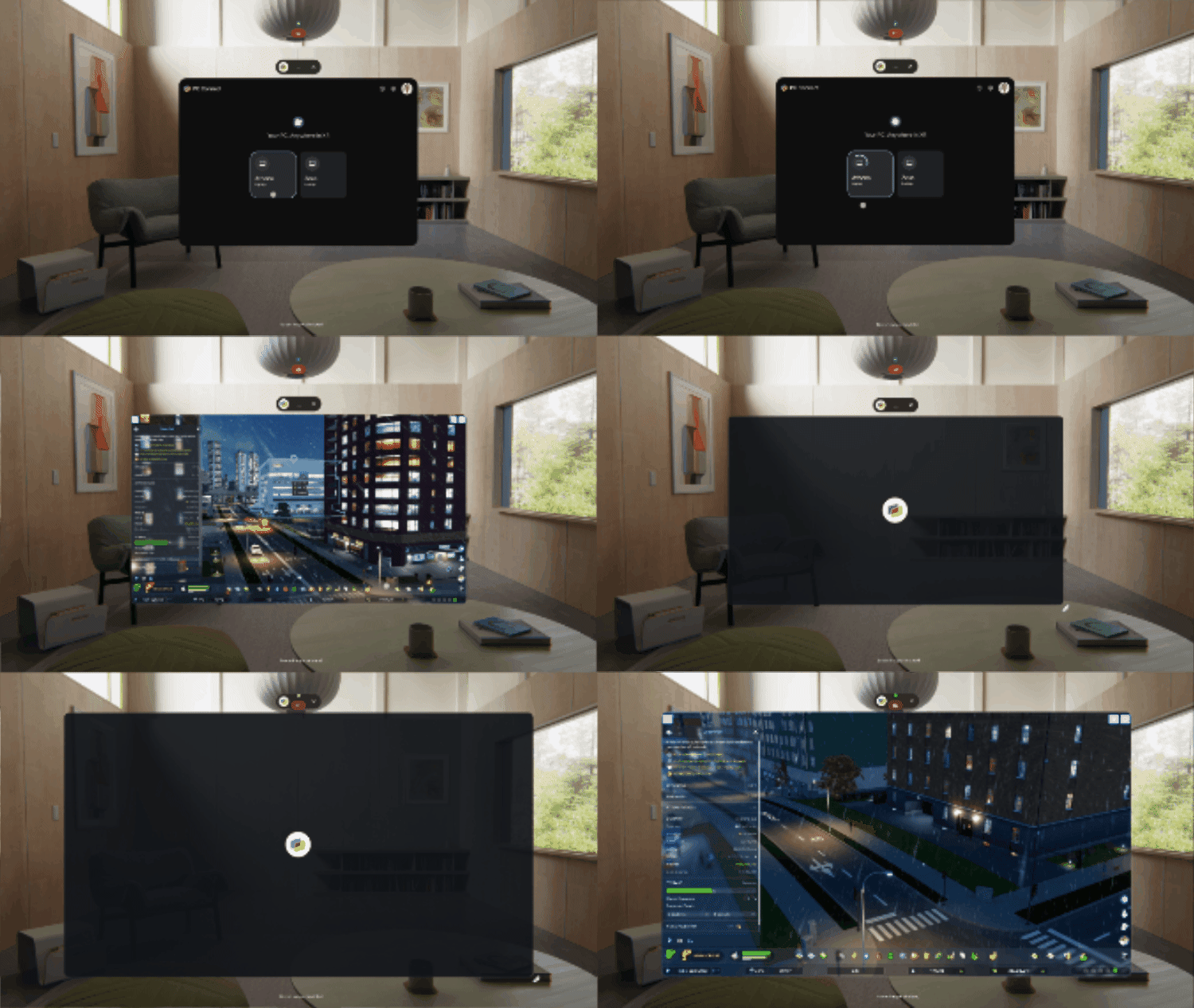
One of the most-loved features of Apple Vision Pro is the ability to project a virtual display from your Mac. And now, you’re getting that same experience on Galaxy XR with PC Connect.
Essentially, you can link your Windows PC to your headset and project the desktop in a window in front of you. You can even use it side-by-side with other native apps you have open on the Galaxy XR — meaning you could have a YouTube tutorial playing for a finicky Windows 11 feature, while working on it on your Windows PC.
You can even ask Gemini questions about the content you see on your Windows PC virtual display, and get visual guides as well.
Details are a little thin on the ground about how this is going to work (at the time of writing), but my guess is that it’ll use Windows 11 Mixed Reality Link like I tried on my Meta Quest 3. That would also mean ultra-wide support, but Google doesn’t expressly confirm that, so I’m setting up a quiet prayer circle for this.
2. Create your Likeness

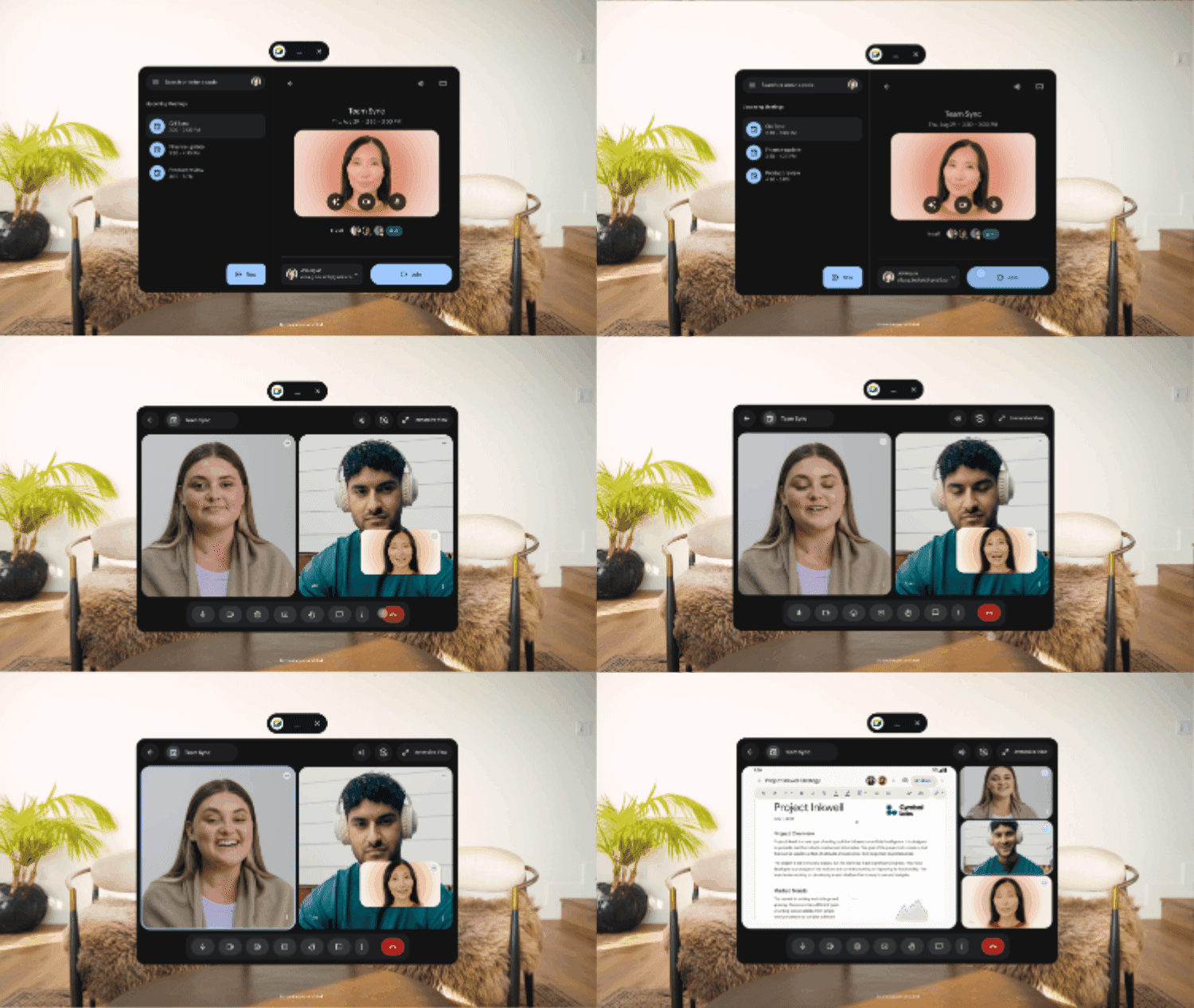
Faster than you can say “hey, this looks like a Black Mirror episode,” lifelike avatars are coming to Galaxy XR. Named Likeness, you use your Android phone to scan your face, and then your virtual avatar can appear in video calls and Google Meets — matching your facial expressions and hand gestures in real-time.

Is this a little weird? Yes. When my fiancee FaceTimed me on her Apple Vision Pro, I was a little taken aback to say the least. But I can understand why companies are doing this — to try and increase the amount of time people spend wearing their headsets.
3. Travel Mode

Finally, a proper Travel Mode is coming to Galaxy XR. Google promises “a view that stays stable even when you’re in motion,” to “turn a cramped flight into a personal cinema or immersive workspace.”
That last bit kind of sums up why I love Travel Mode on my Quest 3 — basically, instead of having to subject yourself to the terrible seat back display and cramped surroundings of economy class, you can just whisk yourself away.
There's no specifics on how this works, but to take an educated guess, I’d say that some of the tracking is being turned off in Travel Mode to provide a more fixed picture here.
Wait, what about Meta Quest 3?

This is all well and good, but there’s just one small problem here — the Quest 3 does most of this already, while being over $1,000 cheaper than the Galaxy XR. Yes, there are differences in display quality, performance, accuracy of tracking and software. But does that really matter to you?
That’s what I found out when facing off the Samsung Galaxy XR vs Apple Vision Pro vs Meta Quest 3. It’s good to have skin in the XR game and bring some great new features to the table, but when the competition undercuts you this deep, it becomes hard to sell the vision.
Does VR even matter anymore?

And then I came to the other question in my mind after thinking further. Google, Meta and Apple are all razor focused on making smart glasses — the thing people actually want. You can see as much, as reports show that while VR headset shipments fell 14% year-over-year in the first half of 2025, AR glasses grew 50% in that same time.
So outside of VR gaming, do headsets like this matter to the general public? In my mind, the answer is complicated, because these are great to use. I use my Quest 3 almost daily! But I can’t deny the vibe I’m getting that these are purely beta tests for the glasses-shaped main event coming in the near future.

Follow Tom's Guide on Google News and add us as a preferred source to get our up-to-date news, analysis, and reviews in your feeds.
More from Tom's Guide
- I binge-watched shows using Meta's Horizon TV hub on Quest 3 — the good, the bad and the immersive
- Confirmed: Steam Frame will lack this Apple Vision Pro and Meta Quest feature at launch — Valve says it's 'on our list'
- I wore the Even Realities G2 smart glasses for a week, and it's the first pair of AR glasses I'd actually buy