One of the challenges you don’t think about in a long-distance relationship is the hours-long phone calls at 1 a.m. Throw in a sprinkling of ADHD, and it makes me a nightmare. My brain briefly leaves the chat a lot, and my fiancée picks up on this with expert precision (usually in the way I say “uh-huh”).
But something changed this time around. As I ended up in that nightmare scenario — she stopped talking and expected a reaction to the story I didn’t hear — I just looked up at the subtle glow of my Even Realities G2 and saw the text of her life scrolling in front of your eyes. I asked a follow-up question, and she didn’t even notice that my brain had gone on autopilot for the past few minutes.
This is a feature called Conversate, and while I get it’s meant to be for summarizing meetings, it’s literally an AI superpower that bailed me out of a sticky situation… Or is AI making me a worse human? Let’s figure it out together.

What is Conversate?
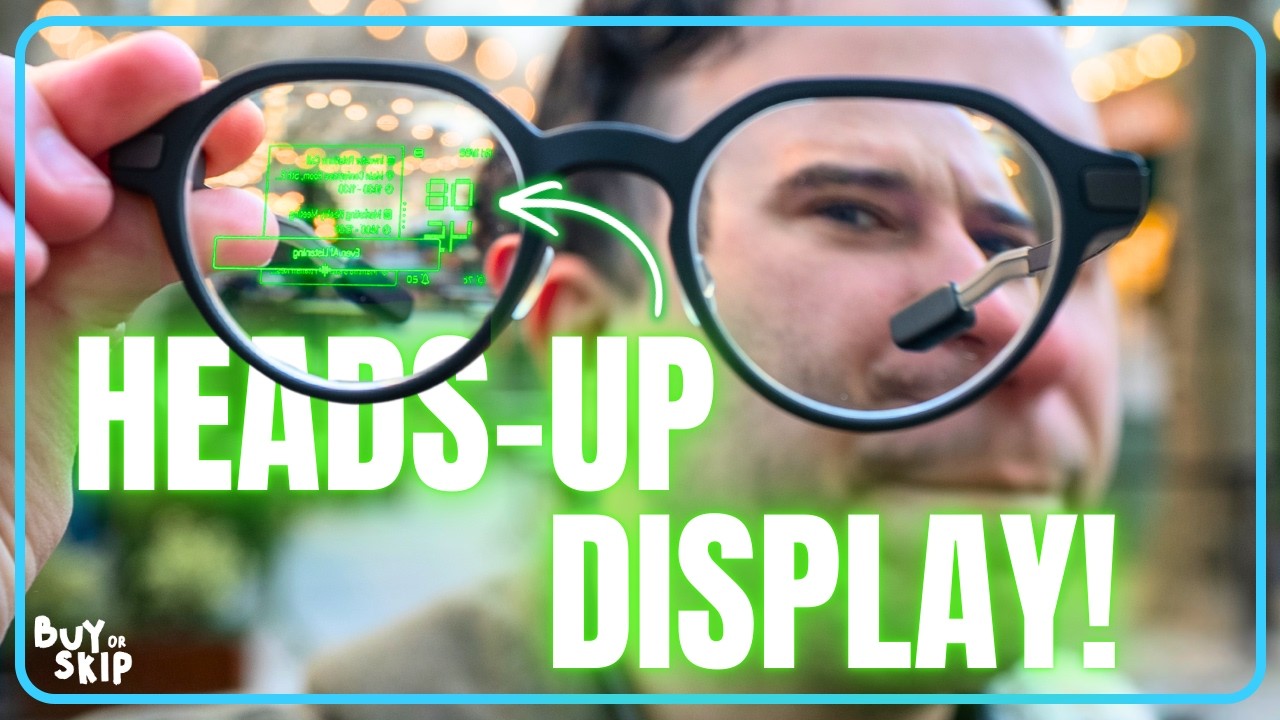
So what is this feature? Well, I know there’s a lot of tech that is able to transcribe conversations, but this is not just a transcript; it’s a summary engine. It takes the noise of a chat and turns it into actionable data in real-time.
Be it a summary of key points discussed, a list of people mentioned or additional context provided where it’s needed, the G2 kept up with everything discussed with alarmingly quick response times to the discussion.
And while this was done while I was on the phone, I also tested it with friends closer to home, and given the subtle, low-profile design of the glasses (to my mates, they looked totally normal), nobody even noticed that I was looking at a heads-up display.
This could be a cheat code for in-person chats. All you have to do is activate the feature before the chat begins!
Living the lie

So there I was, zoned out with mental fatigue and needing to search for that one song that was on repeat in my mind — the entire time, she was sharing a story about all the flight cancellations in New York because of the recent snowstorm.
She was frustrated, and I would’ve made it way worse by giving the game away that I wasn’t listening to her. But a quick swipe on the Even R1 smart ring and I saw everything she’d talked about and even the names she mentioned.
“Yeah, that’s unreasonable given the fact that 18 inches of snow was just dumped on you,” I responded. “Oh, and did you get a response from Tony to your message?”
She felt heard, and I felt relieved. The G2 didn’t just transcribe the words, it also bridged a gap created by my own lapse in attention.
Is this the death of active listening?

As I started to think further about this, I ended up feeling conflicted. Does it count as “listening” if an LLM does the heavy lifting for you?
I don’t doubt that this is one of the rare times in my life where an AI feature has actually felt useful — not just something I ask questions to, or a so-called “agentic” system that takes way longer to do something for you. It’s the first time I came out of a moment thinking, “that actually saved me.”
But with tech like this being marketed to help us “stay present,” are we actually present? Or am I more absent than ever before? There’s a danger here of over-reliance turning us into attentional tourists in our own lives.
An MIT Media Lab study last year showed that users who rely consistently on AI to process information for them showed lower memory recall and weaker neural connectivity. Basically, summaries allow humans to passively bypass the moments where the brain and attention are needed.
After reading the findings and relating them back to my situation, I felt a little shaken up in my mini existential crisis. Like, is a summarized relationship still a relationship?
The safety net

All in all, I’m grateful for the save, but I’m definitely a little spooked by how easy it was. The G2s are what I would call the ultimate social prosthetic — fixing a moment of human weakness that I had without alerting her to what had just happened.
However, I’ve got to be careful here, and I urge anyone reading this to be careful, too. Over-reliance on AI can have a material impact on your focus and ability to connect, and we can’t let the muscle of genuine attention atrophy in favor of a device just summarizing everything for us.
Now, join me in crossing your fingers — hoping that she doesn’t read this column!

Follow Tom's Guide on Google News and add us as a preferred source to get our up-to-date news, analysis, and reviews in your feeds.
More from Tom's Guide