The war for your face is heating up. Meta and Snap are betting big on cameras and bulky frames, but Viture is preparing to take a very different path. As the No. 1 ranked company in XR glasses shipments in the U.S., the company is taking its talents to a whole new category — laying a path to merge the worlds of AR and AI glasses in the future.
In an exclusive interview with Tom’s Guide, Viture’s CMO and co-founder Emily Wang revealed that the company is officially stepping into the "connected lifestyle" category — named Vonder, and set to launch in Q4 of this year.
But unlike the Ray-Ban Meta glasses, VITURE is prioritizing two things the current market lacks: true fashion and absolute privacy.
Viture’s taking on Ray-Ban Meta with something Vonderful

This is the biggest takeaway from my conversation with Viture, so let’s start here. We all know that the future of smart glasses is going to be when AR and AI collides (more on that later in our chat), so it pays to be developing on both sides of this specs chasm now.
“We believe smart glasses should feel invisible, not intrusive, and that technology should disappear into a timeless design, not the other way around."
Emily Wang, Viture
I brought up this gap in Viture’s lineup — the daily carry AI wearable like the Ray-Ban Metas, and following a couple of potential leaks and the company’s Series B funding announcement mentioning a “new category of connected lifestyle technology,” I asked whether Viture had plans to fill it?
Well, I had asked the right question, because Emily had an ever increasing smile on her face. “I think you’re picking up on exactly what we’ve been hinting at,” Wang commented. “With all the display technology, software and AI integration we’ve built over the years, we’re in a unique position to bring that philosophy to a new category — where the glasses are not only smart and capable, but something you’re genuinely proud to wear.”
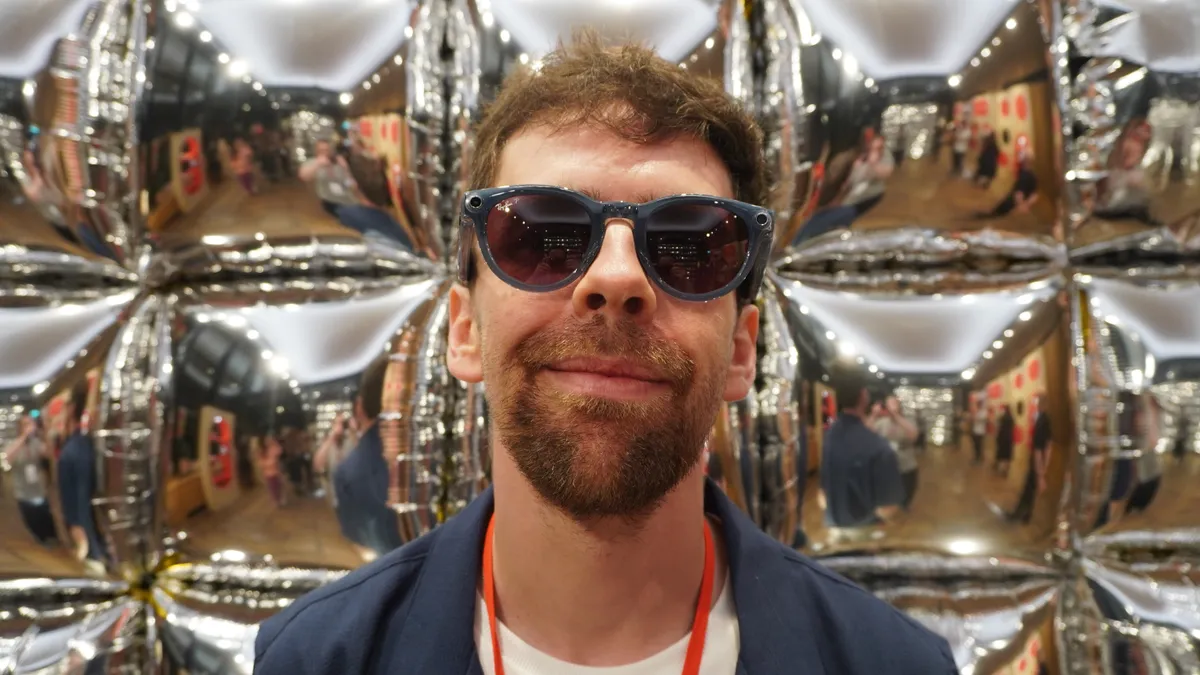
So to have Viture enter the AI glasses space with Vonder is incredibly exciting. With this category ever-expanding, I asked what were the key pain points they see in the industry today that the company plans to tackle.
“The most obvious one is privacy — current AI glasses have cameras pointing at the world, and people around you know it,” Wang responded. “We believe smart glasses should feel invisible, not intrusive, and that technology should disappear into a timeless design, not the other way around."

And this conversation went exactly in the direction I was hoping for. In all the smart glasses I’ve tested, it always feels like there’s an awkward battle between tech and fashion. For something so present on your face, making them look good almost has to come first followed by the tech.
“There’s a deeper issue we’ve cared about since day one at Viture: the tension between technology and fashion,” Wang continued. “With AI glasses, you have the freedom to make them as fashionable and personal as you want. That’s a huge unlock because at the end of the day, glasses live on your face — if people don’t want to wear them, none of the technology matters.”
The Beast is (almost) ready for primetime
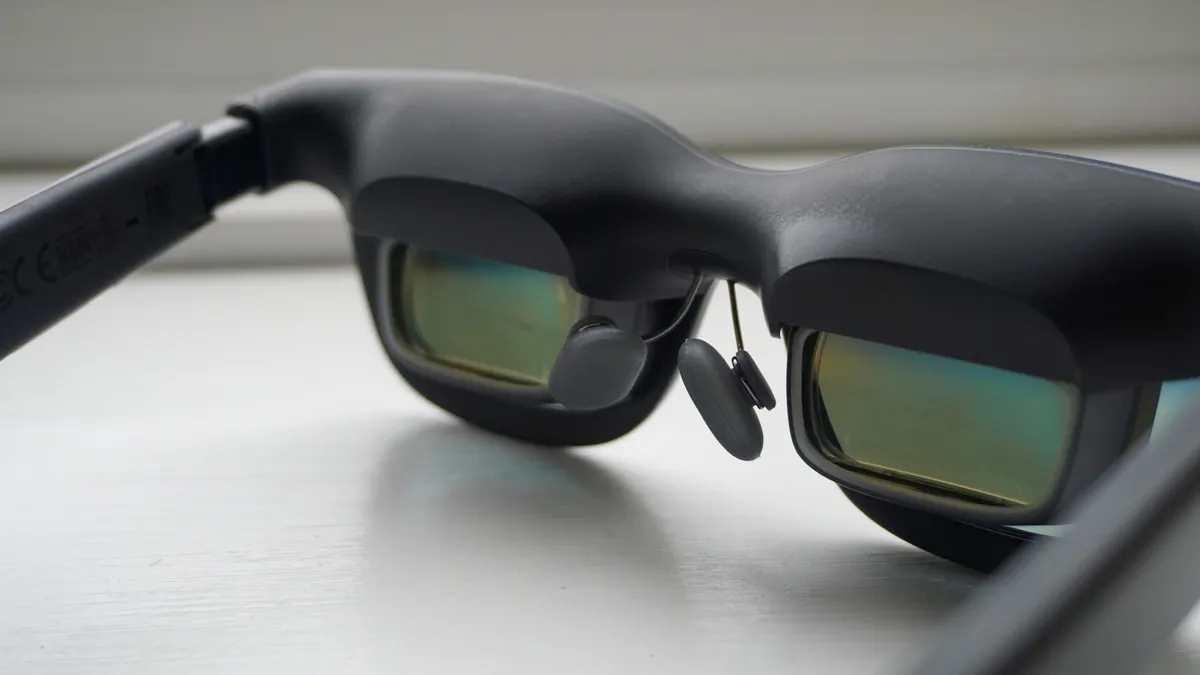
Moving to the here and now, you may know that I’ve been testing the Viture Beast for a while now, but also elected to not review them. Simply put, the hardware was sound, but all the features were not present.
However, as you may have seen on Viture’s subreddit, it’s a very different story now — several rapidfire updates have brought them to the level where I will be reviewing them very soon. The only feature that’s left is a 1200p picture, which the company confirms will be released “this month.”
“Our philosophy has always been to build hardware that’s future-ready, delivering a polished experience than rush it,” Wang explained. “The recent firmware updates for image stability, color tuning and 3DoF tracking have been a huge leap forward in the everyday experience.”
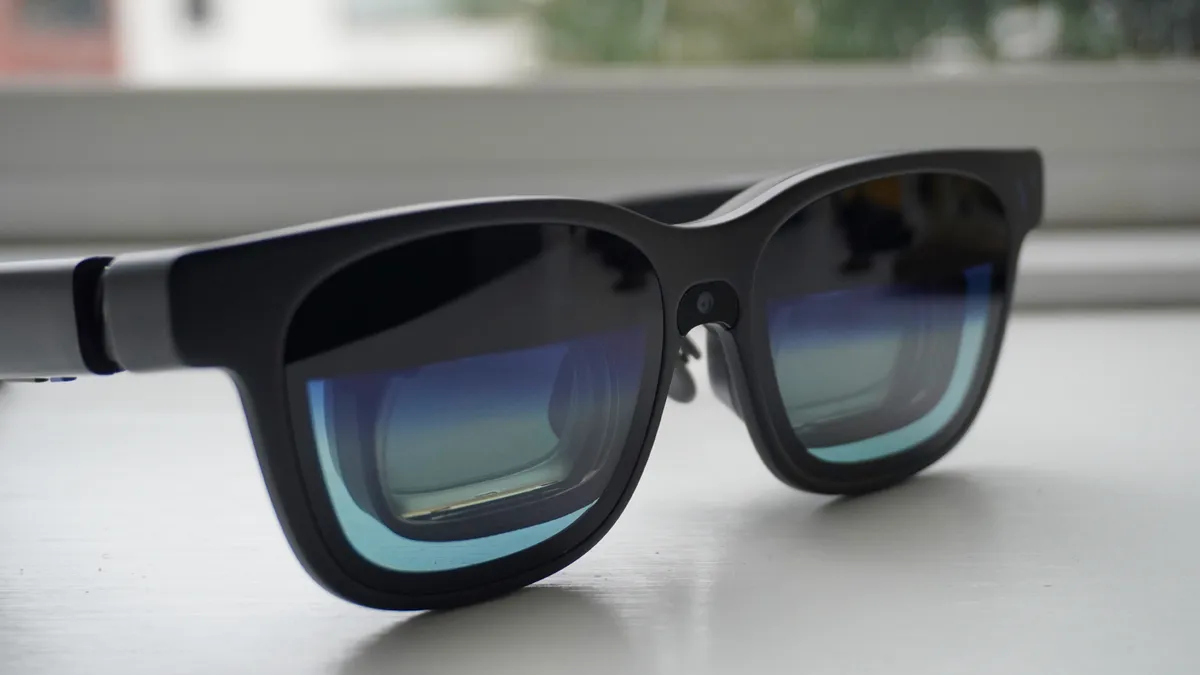
And I have to say I agree. It’s a night-and-day difference in the experience using these glasses now compared to the drifting images I saw back in January. Viture’s bought my AWE awards winners back to the primetime, and they’re lining up for a big launch.
“On April 27, the Beast will be fully available on Best Buy, Amazon and our own website simultaneously,” Wang confirmed. “Stay tuned, because what you’ll see is a mature, refined version of the beast, and for the first time, everyone will be able to easily grab what we believe is the best on the market.”
Those words — “mature” and “refined” — are signaling that the early-adopter era for these XR glasses is over, and the confidence to put them into Best Buy is a positive sign (one that I can vouch for after testing them the past few weeks).
The gaming monitor killer

As someone with one eye on the future, I wanted to see where this vision for the Beast goes. This turned my attention to the Asus ROG Xreal R1 glasses I tried back at CES 2026: seemingly a prototype (unless they do become a reality — I only say that because the companies have gone real quiet about them ever since January), which brought a 240Hz refresh rate to take on the gaming monitor.
And then I thought about Viture’s partnership with Nvidia, which is in the AI space at the moment (more on that in a minute), but gearing up with the gaming side of Team Green to provide the kind of glasses that could replace a bulky gaming screen would be hype.
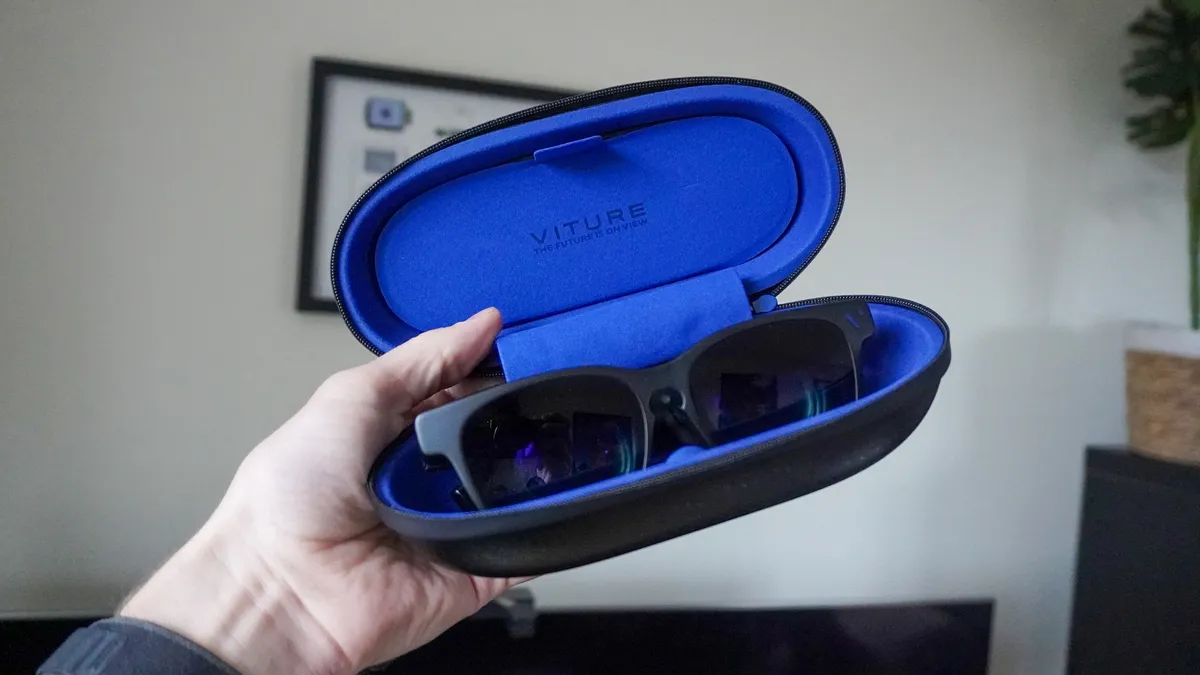
“We believe AR glasses can and should be a viable gaming monitor alternative — high refresh rate, immersive and private,” Wang elaborated. “It’s definitely a space we’re exploring, and I think you’ll see some exciting developments from us on this front.”
But, this is the part where the company dropped an incredibly intriguing nugget — saying that “the Beast’s display engine was designed with headroom for exactly this kind of use case.” No, that doesn’t mean you’ll see 240Hz in these current gen Beast specs, but it shows a mighty promising future for these glasses if you’re a PC gamer.
The future of ‘seeing’

So for context, Viture teamed up with Nvidia and Stanford medicine for a “truly meaningful” partnership — bringing XR together with AI in healthcare to streamline lab workflows, make it agentic and provide hands-free data.
“As Professor Cong (of Stanford University School of Medicine) shared, years of research work can be compressed into months, and millions of dollars in costs can be reduced to thousands,” Wang explained.
I asked further as to whether this is an agentic sign of the consumer direction for AI glasses. “The next evolution is exactly what you described: glasses that don’t just show you things, but understand what you’re seeing and act on it,” she responded. “The glasses become the interface layer between the user and an AI that’s always contextually aware.”
Where this all goes in the next few years

So let’s go back to what I wrote about at the beginning: the merging of AR and AI glasses into one product. Tech like waveguide displays and the AI to make it possible are developing at a rapid rate where we could see this become a reality over the next few years (pending the compression of said tech into something fashionable).
In my mind, the first real test of whether they are ready for primetime will be Snap Specs — set to launch this year. Emily agrees, but acknowledges the challenges of jumping straight in.
“The convergence is inevitable, but I want to be thoughtful here — the path to that all-in-one form factor isn’t as straightforward as it might seem,” Wang continued, bringing up how Waveguide tech is advancing, but field of view, brightness and power demands are challenges. “What you see with products like Snap Specs is exciting, but they're still limited in display capability and daily wearability.”

My take after seeing every company’s innovation at AWE last year is that this challenge won’t be solved by one mega product from one company, but rather lots of small ingredients from companies coming together into one eventual dominant pair of specs. And Emily is on the same track here.
“Our view is that this won't be a single leap — it will be a journey. And the companies that will lead aren't necessarily the ones who rush to cram everything into one device first,” Wang explained. She mentioned the real secret ingredient will be making “the right ecosystem, user base and software foundation” along the way. This means that when the optical tech is ready for the all-in-one form factor, Viture is “not starting from zero.”
“The biggest challenges between now and then? Optical efficiency in a lightweight frame, thermal management, battery life, and — coming back to what I said earlier — making sure the design is something people actually want to wear every day,” she continued. “Technology alone won't win. It has to be beautiful, it has to be comfortable, and it has to feel like you. That's the bar we're setting for ourselves.”
It’s going to be an interesting 2026 for smart glasses, as Viture makes its first big foray into AI glasses, and marks a path towards that final form every company’s been hunting for! And with Apple rumored to be introducing its own glasses too, competition could get fierce.

Follow Tom's Guide on Google News and add us as a preferred source to get our up-to-date news, analysis, and reviews in your feeds. Subscribe to Tom's Guide on YouTube and follow us on TikTok.
More from Tom's Guide
- Snap and Qualcomm team up for 'the future of Specs' — aiming to make smart glasses 'more human and grounded in the real world'
- I fed my Tamagotchi, looked like a D1 athlete and fact-checked my boss — my time with Even G2's secret smart glasses app store
- I went on a sightseeing run in London with the Oakley Meta Vanguard smart glasses — here’s 5 things I like and 2 I disliked