If you've followed my coverage over the years, you know I'm usually the first person to tell you to be wary of Intel Arc GPUs. While I've always appreciated how "Team Blue" tried to break up the Nvidia and AMD duopoly, the driver issues and inconsistent performance of the early Alchemist era made them a hard sell for anyone who just wanted their games to work.
But the world has changed. We're in the middle of a full-blown RAMageddon crisis that has sent the cost of VRAM-heavy cards into the stratosphere. While the GPU market feels more volatile than ever, Intel is doing something impressive: they’re actually making their budget card better through software.
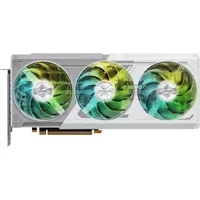
Intel has confirmed to Tom's Guide that the Intel Arc B580 is officially getting XeSS 3 with Multi-Frame Generation (MFG) next month. My colleague Jason England reviewed this card last summer, and between his testing and this new confirmation, the verdict is clear. At $300, this is a legitimately great choice for budget-conscious gamers.
Why the B580 makes sense in 2026

I normally wouldn't recommend a $300 Intel card when you could save for a GeForce equivalent. But the RAM crisis has tripled the cost of memory, leading to some truly obscene price hikes. When an RTX 5070 Ti is pushing toward $1,000, looking for alternatives isn't just "skepticism"—it’s financial survival.
The Arc B580 currently costs $300. For that price, you get a generous 12GB of VRAM and a 192-bit bandwidth. In Jason’s testing, he found this allowed the B580 to punch above its weight class in 1440p gaming:
- Cyberpunk 2077 (1440p Ultra, No RT): 90 FPS
- Forza Horizon 5 (1440p Ultra, No RT): 106 FPS
- Black Myth: Wukong (1440p Medium, No RT): 77 FPS
It’s important to note that performance results are sensitive to your specific rig. If you're running at lower resolutions or using a slower CPU, you might hit a bottleneck where the GPU can't fully stretch its legs. But for pure texture-loading and future-proofing, having 12GB of memory at this price point is a huge advantage over 8GB competitors.
DLSS vs. XeSS

Now, let’s be fair—Nvidia is the pioneer here. Their DLSS (Deep Learning Super Sampling) ecosystem is the gold standard for a reason. With support across more than 450 titles and the recent DLSS 4.5 demo at CES, Nvidia has a massive lead in maturity. You can even access newer features via overrides in the NVIDIA App, which is the kind of forward-looking support that pro-sumers love.
However, Intel’s XeSS 3 is finally bringing "secret sauce" parity to the budget level. Intel’s AI-driven multi-frame generation is arriving for the Arc B580, and based on what we’ve seen on Core Ultra Series 3 laptops, the results are startling. Turning a 60 FPS experience into 200+ FPS via AI is no longer an Nvidia-exclusive luxury.
By force-enabling this tech on titles that already support XeSS 2, Intel is closing the gap. In my own tests on a Samsung Galaxy Book6 Pro, I saw Cyberpunk 2077 hit 65 FPS at 1800p on Ray Tracing Low—impressive for integrated tech, and a sign that the desktop B580 is about to get a massive second wind.
The trade-offs: RT and productivity

Of course, you get what you pay for. If you like Ray Tracing, Nvidia still holds the crown. In Alan Wake 2, the B580 drops to 45 FPS at 1440p High when RT is involved—playable, but not as smooth as what you’d get from an RTX card.
Additionally, if you use your PC for professional AI work or video rendering, Nvidia’s CUDA cores still smoke the competition. In the Procyon AI benchmark, the RTX 5060 maintains a noticeable lead. For productivity, Nvidia is still the clear choice.
Bottom line
The Arc B580 isn't an Nvidia killer, but it is a value king. Thanks to the current memory shortage sending prices through the roof, it’s the only card in the $300 range that doesn't feel like a compromise on VRAM.
Nvidia continues to lead the way in software maturity and high-end Ray Tracing, but for the average gamer who just wants to play modern titles at 1440p without spending a month’s rent, the Intel Arc B580 is a serious, budget-friendly contender that's only getting better with age.

Follow Tom's Guide on Google News and add us as a preferred source to get our up-to-date news, analysis, and reviews in your feeds.
More from Tom's Guide