
 Club Benefits





Whether you're tight on space, need a smaller TV for a space that's not your living room or want to pick up a more affordable set, the best 43-inch TVs are a a great option. Not every manufacturer will do a TV at this size, but there are some great options available to you.
My current top pick is the LG C5. It's last year's model, but now that the LG C6 exists, the price has dropped massively for one of the best 43-inch TVs (that's actually 42-inch), with vivid picture, impressive darks and great gaming features.
Most recently-released TVs now come with some AI features. Upscaling aside, most of these are gimmicks or novelties with limited use. Don't pick a TV based on these; the hardware and picture quality should be your main priority, as the software will change over the life of the TV anyway.
The best 43-inch TVs available right now
Why you can trust Tom's Guide Our writers and editors spend hours analyzing and reviewing products, services, and apps to help find what's best for you. Find out more about how we test, analyze, and rate.
Best 43-inch TV overall


The best 43-inch TV is not actually a new model, but is instead last year's LG C5. Firstly, it's a fantastic TV that we loved from the moment we powered it up, but it's also almost half the price now that the new LG C6 is out in the wild.
So while you'll also find the LG C6 on this roundup, the C5 is currently better value for your money, unless you're specifically after the evolutionary performance updates on the C6. And the best part is you're not really compromising with last year's model.
We were so impressed with the way the display makes colors pop with a vivid picture that works just as well during atmospheric (ie. dark) movies, TV shows and live sports. And, even out of the box without changing any settings the picture is immaculate.
Most of the most notable things about the C5 was that it was impressively bright. We tested the 65-inch model, and while performance will be similar, the 42-inch model (yeah, sorry, there's not a 43-inch C5) actually behaves a bit differently.
The pixels on the smaller display are closer together, so to prevent overheating, LG turned down the power on the 42-inch and 48-inch models, so it can achieve around two thirds of the brightness of the larger versions.
This sounds like a downgrade, but it still puts the 42-inch C5 some distance ahead of the 43-inch versions of the Sony Bravia 3 or Samsung Q7F. There's another compromise too on the speakers, which are inevitably smaller to fit the smaller TV.
Then again, we actually found that the speakers on the C5 weren't much to write home about. And, if anything, we usually recommend picking up one of the best soundbars anyway, since TV speakers are often acceptable at best.
- Read our full LG C5 review
Best 43-inch TV for gaming

Yes, this another of the best 43-inch TVs that's actually a 42-inch TV. But even though it's an inch off, the Samsung S90F is a fantastic set with incredible contrast that makes every picture look explosively vivid and colorful.
This was particularly clear while watching dark movies, which filmmakers love. On some TVs, these varied blacks end up running into each other, making detail difficult to pick out. But the S90F handled them exceptionally well, so you could really pick out everything happening in the scene.
Samsung has carved out a niche as a gaming TV manufacturer, thanks to its dedicated gaming hub and specific settings. Plus, on this model, you get a 144Hz refresh rate and four HDMI 2.1 slots, making it a good pick for console and PC gamers.
We tested it with the Nintendo Switch and the PS5 Pro, tackling titles like Armored Core 6 and Elden Ring Nightreign, and the fast-paced action sequences with colorful highlights really stood out.
Just like the LG C5, there are some differences between the 42-inch version and the 65-inch model we tested. The main one is that the smaller variants use a WOLED panel instead of the Quantum Dot (QD-LED) on the rest of the lineup.
There are some technical differences between WOLED and QD-OLED, but the practical effect is that the image isn't quite as bright or vivid on the 42-inch version. It's a compromise that's quite universal as the manufacturer tries to squeeze all the tech into a smaller body and has to make some design choices.
The upside is that it generally means the smaller TVs are cheaper, which could be one of your main reasons for looking into 43-inch TVs in the first place. The difference is noticeable, but not significant, so while it is a trade-off, it's not one that'll dramatically change your experience of the still-exceptional S90F.
- Read our full Samsung S90F OLED TV review
Best 43-inch OLED TV

I don't want to tell you what to do (although, I guess that's sort of the point of this guide?), and I know I said that you should buy the LG C5 because it's better value than the LG C6, but that doesn't mean you should write off the newer model, either.
Not least of all because it is easily the best 43-inch OLED TV (even if it is 42 inches), with better performance, colors and pretty much everything else. And the redesigned remote resolves one of our main complaints about the otherwise fantastic C5.
Everything we watched on the C6 looked great, and we were impressed with the variety of picture modes you can switch between, like Standard, Eco, Filmmaker and Vivid. Experiment with each one to find the option that suits your eyes best, but in our testing, we found it worked to set and leave it in Filmmaker mode.
Like the C5, the LG C6 runs on the company's webOS platform, which is one of the most minimal and easy to navigate TV platforms. The C6 ships with webOS 26, which is a lot like webOS 25 but with more AI. Fortunately, we found you can pretty much ignore those features if you want to.
Like the others on this list, we tested the 65-inch version, which has a few differences compared to the 42-inch model. The larger one has 40W speakers, while the 42-inch comes with 20W speakers.
This sounds (!) like more of a problem than it is as the audio is still good, and I also still recommend picking up one of the best soundbars if you want more immersive audio. The more noticeable difference is, once again, how bright the TV gets.
The 42-inch model doesn't have LG's Brightness Booster for similar reasons to the others; the pixels are closer together, and increasing the power risks the TV overheating, so it's performance here is more limited than it's larger siblings.
But it's important to put it in context. After all, we are talking about some of the best TVs available right now. The brightness on the 65-inch model is flawless, and even a bit of a drop on that performance on the 42-inch set will still blow away most other TVs.
- Read our full LG C6 review
Also tested
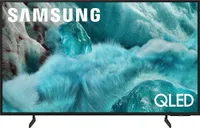
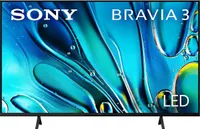
There aren't a huge amount of 43-inch models on the market at the moment (as most manufacturers prioritize 55-inch and above), so if you need more options, here are the other TVs we tested that didn't make the mark, but could be a good pick for certain setups or use cases.
How we test 43-inch TVs
We test TVs in two parts; lab testing to get specific performance data points and in our living rooms during everyday use.
The lab comes first; we perform benchmarks with Jeti spectraval 1501-HiRes spectroradiometer, a Klein K10-A colorimeter, a Murideo 8K-SIX-G Metal pattern generator, and Portrait Displays’ Calman TV-calibration software. For gaming performance, we use a Leo Bodnar 4K Input Lag Tester as well.
This original testing data means we can compare each set objectively and consistently, which accounts for the fact that different conditions, lighting and variations in our eyesight can effect our more subjective at-home tests.
Once installed in our living room, we then use the TV, just as you would at home. We keep everything on default settings initially and then fiddle around to find the setup we prefer the most or gives the best performance.
We stream movies, TV shows and play games. We make sure to throw a diverse range of titles at each set, to really test out the vivid colors in something like Barbie or The Super Mario Bros. Movie, and the dark darks of The Batman, or pretty much any Christopher Nolan film.
How to choose the best 43-inch TV
Before you delve too far into your research, first: why do you want a 43-inch TV specifically?
Is it because you looked at our guide to choosing the perfect TV size for your room, because you're looking to keep costs down or because you're tight on space and want a high-performance TV that'll still fit into your room?
While the best 43-inch TVs are still fantastic, there are compromises (often in brightness and sound) on these smaller sets compared to their larger siblings, so you want to be sure it's a 43-inch model (or 42-inch as it is in reality) you really need.
Then you're onto what do you want to do with it? Is it for gaming, leaving on in the background or as a way to stream Netflix in bed? There are different technical or performance aspects that impact all of these use cases.
For background viewing, maybe picture quality isn't so important. And if you want to stream at night, it won't make a difference that the 43-inch models aren't quite as bright as the larger versions (though still impressively bright when needed).
If you're constrained by space, but still want a great audio experience, no TV really offers high-quality audio. So unrelated to the size, you'll want to add one of the best soundbars into your setup to get better and more detailed sound.

