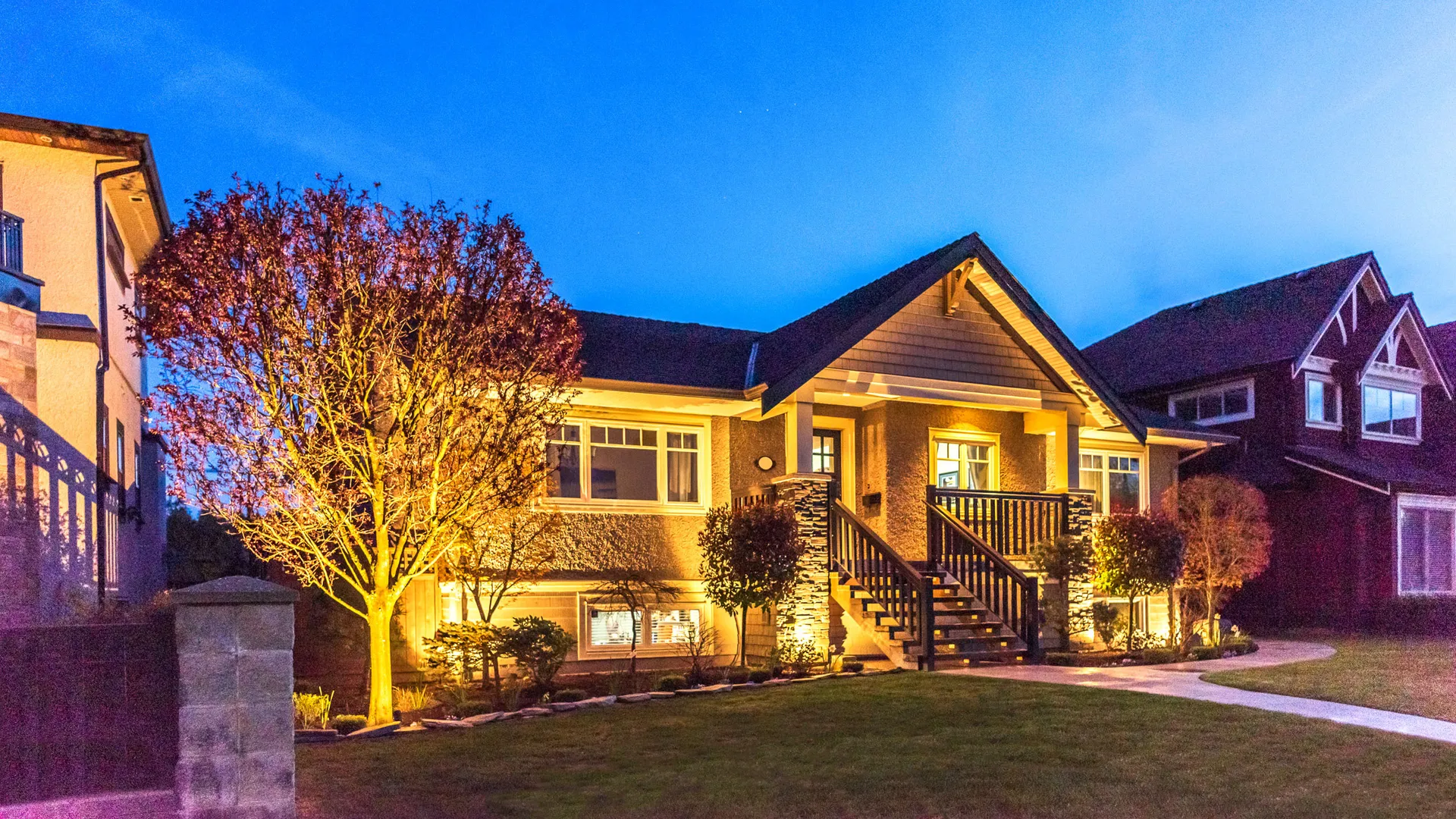
As we head into the winter (at least in the Northern hemisphere), it's getting darker, earlier. That means that by the time you get home from work, it might already be dark. Some police departments have noticed the same shift and are already planning around it. For example, as daylight saving time ended, the Palos Verdes Estates Police Department in California warned residents that an early sunset gives burglars more chances to spot homes that look unoccupied, and urged people to leave a few interior lights on or use timers, and to keep entryways lit. It's a useful starting point, and a fairly simple one.
But the risk is actually more complicated than the old image of a burglar creeping around at midnight, and so is the defense. Good locks, lighting and habits do a lot of the work, and many of those checks cost almost nothing. A camera or alarm then adds a layer on top, since it shows you what's happening and lets you act on it.
What the data shows
Thankfully, burglaries are on the decline. The FBI's 2024 burglary rate of 229.2 per 100,000 people was about 69% below the 2005 rate, and the FBI's 2025 data show burglary falling roughly another 16% in 2025.
But falling crime doesn't make prevention optional, because the FBI's 2024 data show that just 15.9% of property crimes were cleared by arrest or exceptional means, and burglary has run a bit lower, at 14.1% in 2019. Getting property back is, realistically, a much weaker plan than keeping someone out.
Package theft is harder to pin down. In Security.org's 2026 survey, 30% of American adults said they'd had a package stolen at some point, up from 24% a year earlier, though the survey wasn't weighted and the increase alone doesn't prove the rate has risen. It does put the exposed parts of a property, including porches, driveways, yards and garages, at the center of a winter plan, since long nights make an approach much easier.
Winter doesn't turn burglars into night owls, but it does change when your home is most exposed. In the Bureau of Justice Statistics' analysis of household burglary, which covers 2003 to 2007, 43% of burglaries of empty homes happened between 6 a.m. and 6 p.m., compared with 26% overnight. In winter, though, sunset moves into the commute window, so a house that's empty and unlit at 5:30 p.m. can look as unoccupied as one at midnight. And the evening stakes are higher, since someone was home in 61% of nighttime burglaries versus 33% of daytime ones.
A sizable share of break-ins also don't need force. The FBI's 2019 breakdown classed 37.8% of burglaries as unlawful entry with no force used. In the dark, an unlocked back door or ground-floor window is easier to try without anyone noticing, which is why the winter checklist starts with locks.
Locks, doors, windows and outbuildings
Lock everything, even when you're home, and that includes first-floor windows and any upstairs window reachable from a flat roof or ladder.
On main doors, a deadbolt offers far more resistance than a simple spring latch. Fit it with long screws that anchor the strike plate, the metal plate around the lock bolt, into the frame rather than just the decorative trim. Look for a deadbolt certified to the ANSI/BHMA A156.40 residential standard, ideally with an A grade for security. One of the best smart locks can help too — most offer an auto-lock setting (make sure it's switched on), so even if you forget to lock the door, it won't remain unlocked.
Windows need more than a handle pulled shut. Fit a working lock to every accessible window, and add stops that limit how far it can open. A wooden or metal bar in a patio door's track stops it from sliding, even when the latch is easily broken.
A peephole or door chain gives you a way to check a caller before opening up. Check ID from anyone claiming to be from a utility company, and be especially skeptical of urgent repair offers after bad weather. The FTC warns that scammers often turn up after severe weather, pushing homeowners to sign a contract right away or pay up front, and advises confirming a contractor's license and insurance before agreeing to anything.
Outside, lock the side gate, shed and garage, since long winter nights make outbuildings an easier target. Put ladders and tools away, since they can also help someone reach or force the house. Frost or obscure garage windows too, so nobody can casually browse your belongings from the street.
The boundary of the property matters too. Low front hedges preserve visibility, while gravel makes a quiet approach considerably harder. Anti-climb paint can make fences difficult to grip and marks anyone who touches it, but pair it with warning signs and follow the product's reapplication instructions closely.
Finally, photograph valuables and record serial numbers in an inventory stored somewhere secure. An ultraviolet pen can add ownership details that aren't normally visible, while a forensic marking kit links items to a unique registered code. Neither will stop a theft, but both can help police identify recovered property and make an insurance claim less painful.
Lighting and looking occupied
One way to help prevent break-ins is to make your home look occupied even when it's not. Start outside with motion-activated lights at entrances, along driveways and on paths. For a side passage or secluded corner, a dusk-to-dawn light switches on automatically when daylight fades, while a solar model avoids running a cable. Smart bulbs and floodlights can go a step further, with schedules tied to local sunset so they shift automatically as the days get shorter, or by switching on when a camera or sensor detects motion.
Aim the light at the approach rather than into a camera lens or a neighbor's window. The goal is to expose movement and give any camera a usable image, not to turn the whole yard into a stadium.
Inside, put a few lamps on timers or smart plugs that switch on around dusk, and vary the schedule if you're away. A smart plug also lets you adjust the lights from your phone if you're delayed getting home or traveling, so the house doesn't sit dark on the one night it matters. Leaving one light on all day can have the opposite effect, because a lamp burning at midday suggests that nobody is there to turn it off.
It's also worth closing curtains or blinds in the evening so screens and valuables aren't visible, and asking a neighbor to collect mail and deliveries.
Cameras, alarms and smart locks
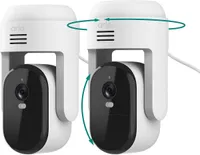
Then there's the use of other smart security devices. The best home security cameras, of course, are a major one. Place cameras around the routes someone would actually use. The front step matters, but so do the side gate and rear entrance. Good lighting on those approaches will usually do more for night footage than a bigger night-vision range claim, because you need enough detail to identify a face at the gate rather than simply spot a shape. Many smart cameras also let you draw activity zones, so you're alerted to someone at the gate but not to every passing car or neighbor, and models with a built-in spotlight or two-way audio let you light up the area or speak to a visitor from your phone.
The evidence broadly supports that layered approach. A 2019 systematic review of 40 years of research, led by Eric Piza, found that closed-circuit television systems were associated with a significant and modest decrease in crime, with better results when cameras were combined with other measures, so a camera on its own isn't really a perimeter.
Visible alarms still have real value, and in a UNC Charlotte study of 422 convicted burglars, 60% said an alarm would make them choose another target. Monitoring is the part that turns a notification into action. A monitored service watches alerts constantly and can escalate them when you don't respond.
It's also worth making sure your cameras are charged up properly. The usual advice for battery cameras is to keep a second charged pack to swap in, or add a compatible solar panel or USB-C charger where conditions allow. A solar panel won't perform miracles on a shaded wall in December, of course, so keep in mind where the sun will hit when it is out.
Apart from standard cameras, a smart video doorbell can help too. The front door, of course, is where deliveries and visitors arrive. With a smart doorbell, you can see and talk to them straight from your phone, even when you're not there.
Summary and priority steps
The cheapest useful check is to simply walk around your property at dusk and look at it as a stranger would. Can someone reach the back gate unseen? Are ladders out, valuables visible through a window, or packages sitting on the step?
Start with those basics. Good locks, sensible lighting and a routine for looking occupied come first. Then add monitoring that fits your home, whether that's a visible alarm or a well-placed camera, and extend the same attention to sheds, cars and parcels.
Before you travel, test the alarm sensors, clean the cameras, charge or replace batteries in cameras and smart locks, confirm that auto-lock and your lighting schedules are working, confirm that alerts reach someone who can act on them, and check the policy's unoccupied limit.
You don't need to overhaul everything at once to improve the odds. A locked door, a lit approach and a delivery that isn't sitting outside for six hours go a long way, and a camera or alarm that alerts you when something does happen makes those habits more effective.