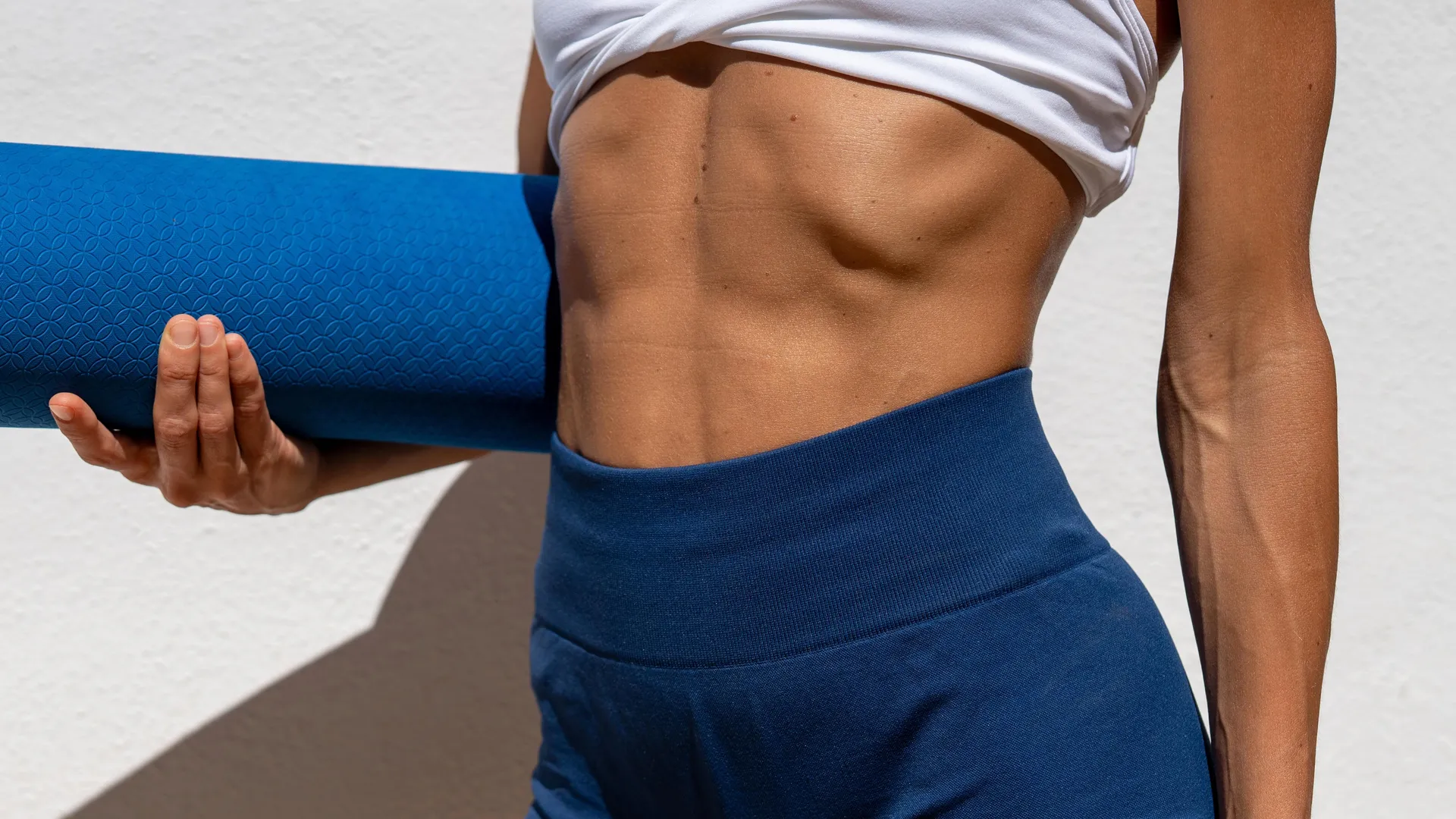
I’ve said it before, and I’ll say it again — if you’re looking to see real results in your midsection, stop doing sit-ups and crunches. You should be doing dead bugs instead.
This simple core exercise works on the deepest layer of your abdominal wall, helping to build a solid foundation, as well as sculpt your abs from the inside out.
I’ve been practising Pilates for 15 years, and this is the exercise I fall back on time and time again. You can do it using just your bodyweight, or progress it using weights. It’s gentle on your spine, and it’s helped me get to the start line of six marathons injury-free, and rebuild my core and pelvic floor following the birth of my son. Read on to find out more about my favorite Pilates ab exercise and the progressions to try.
As a reminder, if you’re a complete beginner, you’re pregnant or postpartum, or you’re currently working out with an injury, it’s always best to seek personalized advice from a qualified professional before trying something new.
How to do a dead bug
Let’s start by looking at how to do a simple, bodyweight dead bug with good form. You can see a video of Pilates instructor Brian Spencer doing a dead bug below, but here’s the basics:
- You’ll want to start by lying on your exercise mat with your arms and legs in a tabletop. This means you have a 90-degree bend in your knee, and that your knees are in line with your hips. Your arms should be straight towards the ceiling, with your wrists in line with your shoulders.
- From here, engage your abs — you can think about sucking your belly button into your spine, or zipping your abs up and in, as if you were trying to squeeze into a pair of jeans that are a size too small. I find the latter helps me to think about really engaging my pelvic floor too, which is essential after childbirth.
- When your abs are engaged, you’ll find your lower back is pressed into the mat. You shouldn’t have any space between your lower back and the floor.
- Slowly, and with complete control, extend your left leg out and away from your body, taking it a few inches from the floor with your foot flexed. At the same time, extend your right arm behind you. It’s important to work within the range of motion that is right for you and your body — good form is more important than how far you stretch your arm and leg. If you’re a beginner, start with just tapping your left heel to the floor and taking your right arm to a 45-degree angle. The essential thing to remember is that your lower back should stay pressed into the floor the whole time.
- Pause for a few seconds before bringing your arm and leg back to your starting position, and repeating on the opposite side.
- Remember to do the same number of reps on both sides.
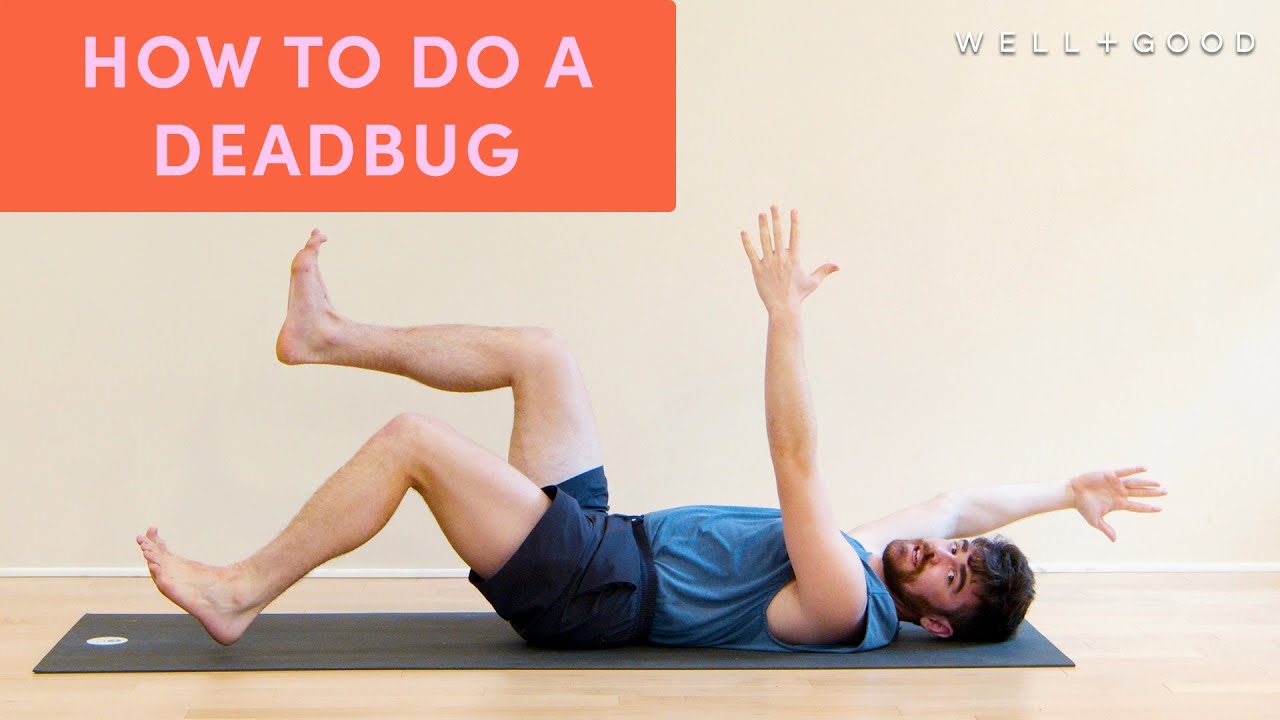
Common form mistakes to look out for are bringing your knees too far in towards your torso in the tabletop position. This can cause your lower back to round and lift off the mat, and mean your hip flexors will be doing more work during the leg extension. Make sure that your knees really are in line with your hips before extending your leg.
It’s also important to remember that the slower you move, the harder your abs work. Don’t be tempted to overextend, as it’s likely your lower back will peel off the floor, or rush the movement, as you won’t see the benefits in your core.
What is the dead bug doing for your body?
The dead bug is a fantastic exercise for working that deep core. Sure, we all want visible abs, but your deep core acts as your body’s corset, protecting your lower back from injury and helping you relieve and avoid back pain. If your deep transverse abdominis muscles are weak, your core will be more unstable, and your spine is more likely to arch, so wherever you’re starting from, deep core exercises like this should be an essential part of your strength training routine.
The dead bug also requires you to move opposite limbs simultaneously, while keeping your torso still. This cross-body movement is essential if, like me, you’re a runner, but it’s also great for the brain’s neuromuscular coordination. This can help improve your overall balance, especially as we age.

This move is also working your obliques and lower abs, which in turn stabilize your pelvis. This can help improve your pelvic stability and help you sit, walk, run, and move with a better posture overall.
Finally, unlike planks, crunches, and sit-ups, which all put a degree of pressure on your spine, dead bugs, by nature, support your back as you’re keeping it pressed into the floor. This makes the dead bug a great abdominal move to start with if you’re a complete beginner, and it was one of my favorite ab exercises to use when returning to training after my pregnancy (but, as always, check with your doctor beforehand).
The progressions to try
Once you’ve mastered the bodyweight dead bug, here are some progressions to add to your routine:
- The weighted dead bug: One of the easiest ways to progress is to add weight. To do this, either hold a set of light dumbbells in your hands or strap a pair of ankle weights to your ankles. This increases the load on your core.
- Add a resistance band: If you don’t have light weights, use a band. Grab a long resistance band and loop it around something behind you (like a table leg). Hold the band with both hands so that there is tension with your arms reaching towards the ceiling. Perform the leg movement of the dead bug — your upper abs will be working even harder to keep your back pressed into the floor.
- Use a stability ball: There are two ways to use a Pilates ball to add intensity to the dead bug. Firstly, place the ball on one leg and use the opposite hand to put pressure on it, squeezing the ball. Perform a dead bug on the other side — you’re adding cross-body tension and making the abdominal contraction more intense. The other alternative is to place the Pilates ball under your pelvis, adding a huge amount of instability to the dead bug, and forcing your core to work even harder.

Follow Tom's Guide on Google News and add us as a preferred source to get our up-to-date news, analysis, and reviews in your feeds.
More from Tom's Guide
- I’m a physical therapist who works with seniors: Here are the 5 bodyweight exercises I recommend
- No, not planks! I'm a personal trainer for seniors, and these are the 4 best exercises you can do for core stability at every age
- Over 60? I’m a personal trainer, and these 3 floor exercises will show you how strong your core is