I’ve been practicing Pilates for the past decade, and toe taps are often my go-to when it comes to working my deep core. I used the move as soon as it was deemed safe after the birth of my son to strengthen my core and pelvic floor muscles, and I’m still using it pretty much daily two years later to improve stability as I train for my next marathon.
Yet one super simple way to progress the move is to tap both toes at the same time. This forces your transverse abdominis, that’s the deepest muscle in your midsection, to work even harder. Read on to find out how to do the exercise with perfect form, plus the progressions to attempt once you’ve mastered the move.
As a reminder, if you’re a complete beginner, you’re pregnant or postpartum, or you’re returning to exercise following an injury, it’s always best to seek advice from a qualified professional before trying something new.
What is the exercise?
The double toe tap is exactly how it sounds — instead of the traditional Pilates toe tap, where you’ll tap one toe to the ground, then the other, you’ll tap both toes. The key to this move is to really engage your core. Think about sucking your belly button into your spine, or zipping your abs up and in, as if you were trying to squeeze into a pair of jeans a size too small.
Here’s how to do it:
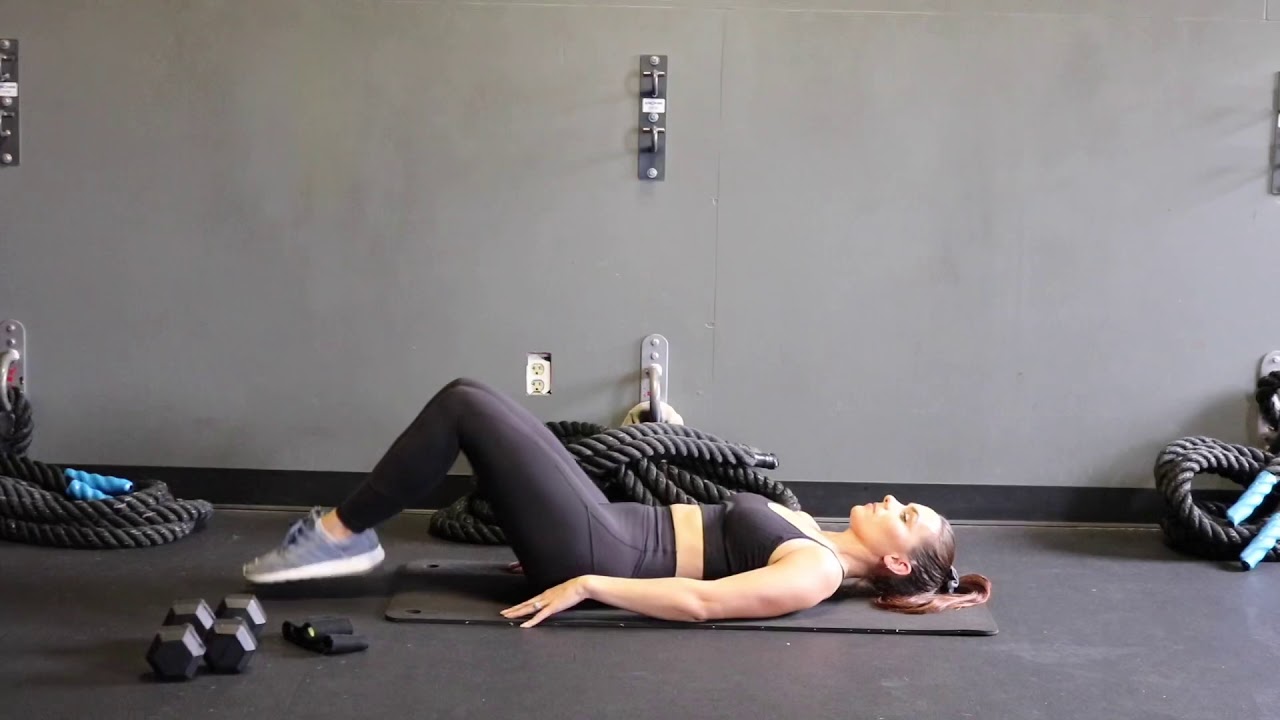
- Start on your back on your exercise mat with your knees bent and your feet pressed flat on the floor. Engage your abs, pressing your lower back into the mat.
- Lift your legs off the floor, keeping a 90-degree bend in your knee. Your knees should be in line with your hips.
- Keep your pelvis still and your back pressed into the floor, and slowly lower both toes to touch the floor. The movement should be coming from your core. It doesn’t matter if your toes don’t fully touch the floor — don’t let your lower back peel off the mat.
- Pause for a second, then lift your legs back to your starting position.
- Remember to breathe: inhale as you lower both feet to the floor, exhale as you use your lower abs to pull your knees up to your starting position.
What are the benefits?
Deep ab engagement
As mentioned above, your deep core muscles will be working hard here. Far from giving you visible abs, these muscles play a crucial role in stabilizing your torso and protecting your lower back from injury. As you lower your legs to the floor, they are acting like a lever, and your deep core will be working against this force to keep your back flat and stabilize your spine.
Pelvic stability
This move requires you to keep your pelvis still in a neutral position. You are effectively working on your pelvic stabilization, which is important during exercises like weightlifting and running.
Hip flexor control
If you have tight hip flexor muscles, they’ll often take over during ab workouts. During this move, when done with good form, your hips won’t be able to do that, and your core will be working to support the weight of the legs.
What are the progressions?
- Lift your head and shoulders off the mat: To force the upper abs to work as hard as your lower abs, add a scoop to your belly by lifting your head, neck and shoulders off the mat. Don’t pull on your neck — keep your eye-gaze neutral and toward your thighs as you perform the toe taps.
- Add a Pilates ball: Adding instability will force your deep core to work harder against this. Add a Pilates ball to the move by placing it under your lower back.
- Add weights: To add even more intensity, wear a pair of light ankle weights for this exercise. The extra weight will force your core to brace even more against the weight to protect your spine.
Follow Tom's Guide fitness on Instagram for more workouts, routines, tips, and tricks.
Pilates essentials we love

Follow Tom's Guide on Google News and add us as a preferred source to get our up-to-date news, analysis, and reviews in your feeds.
More from Tom's Guide
- Not sit-ups, planks, or crunches: I do this simple Pilates exercise every single day to build a strong and stable core and work on my hip flexor mobility
- Not sit-ups or lunges — I use this simple Pilates exercise to sculpt strong obliques, inner thighs and hip stabilizers
- 'I’m a Pilates instructor, and I recommend these 5 core exercises to help older clients build strength and improve posture'