We all know that strength training is one of the best ways to slow down the effects of aging. Whether you’re performing bodyweight exercises or lifting weights, resistance training can help slow or reverse age-related muscle loss, build functional strength and balance, and reduce your risk of falls and injuries.
Yet according to a new study, published in the medical journal Geroscience, resistance training can also add 2.3 years to your overall life expectancy. If you’re a complete beginner or you’re unsure where to start, you’ve landed in the right place. Below, personal trainer Bruno Pontes takes you through three bodyweight exercises you can do at home, with no equipment.
As always, if you’re currently recovering from an injury or you experience any discomfort during this workout, it’s always best to stop and seek personalised advice from a qualified professional.

Bruno Pontes is an ACSM and AFAA certified Personal Trainer at fitness app Muscle Booster. His passion for the past 8 years has been helping individuals through their fitness journey. He believes that fitness is for life and movement is medicine, which is why he strives to make his workouts fun, challenging, and effective.
What are the exercises?
Ready to get started? Here are the three simple exercises Pontes recommends to his senior clients:
1. Glute bridges
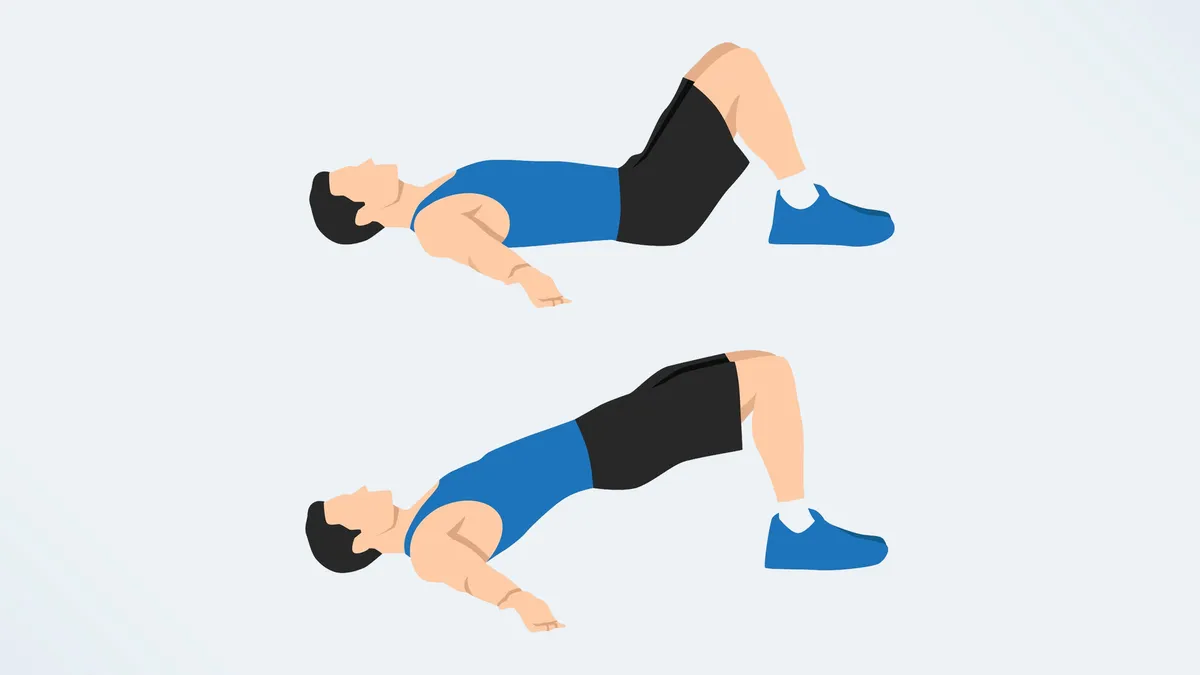
“Glute bridges help strengthen the glutes while minimising stress on the lower back. They improve hip strength and pelvic stability, which can help to reduce back strain. The key is to focus on squeezing the glutes at the top of the movement rather than arching the lower back,” he says.
Here’s how to do a glute bridge:
- Lie on your back with knees bent and feet flat on the floor, hip-width apart.
- Rest your arms by your sides.
- Press through your heels and lift your hips until your body forms a straight line from shoulders to knees.
- Squeeze your glutes at the top.
- Lower slowly back to the floor.
- Aim for 10-12 reps.
2. Sit-to-stand
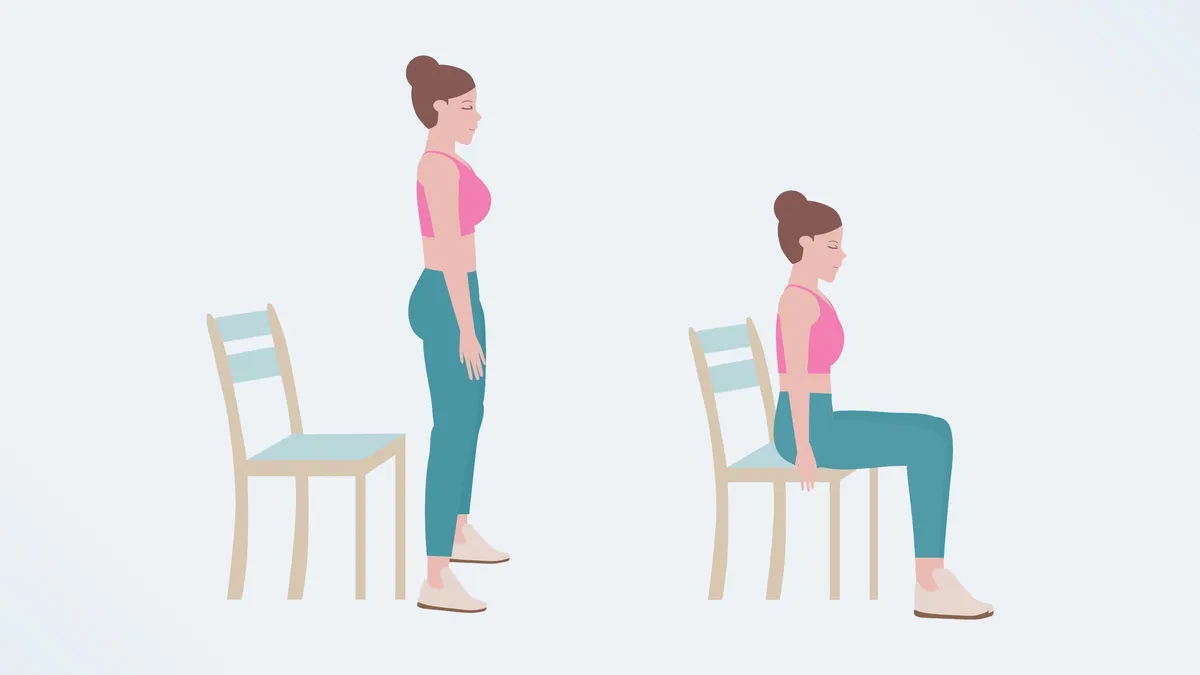
“Sit-to-stands can strengthen both the quadriceps and glute muscles while improving everyday functional activities. This exercise becomes increasingly important as we age, since the ability to stand without assistance is closely tied to lower-body strength, coordination, and overall independence,” Pontes adds.
How to do a sit-to-stand:
- Sit with your feet hip-width apart on the front of a chair. You should have a 90-degree bend in your knees, and your feet should be flat on the floor.
- Place your hands on your thighs, at the side of the chair, or across your body (this is the hardest variation).
- Lean forward slightly, shifting your weight into your feet, and engage your core as you push through your feet to stand up.
- Slowly lower yourself back down to the chair, controlling the movement. Gently tap the chair before standing again.
- Aim for 10-12 reps.
3. Wall push-ups
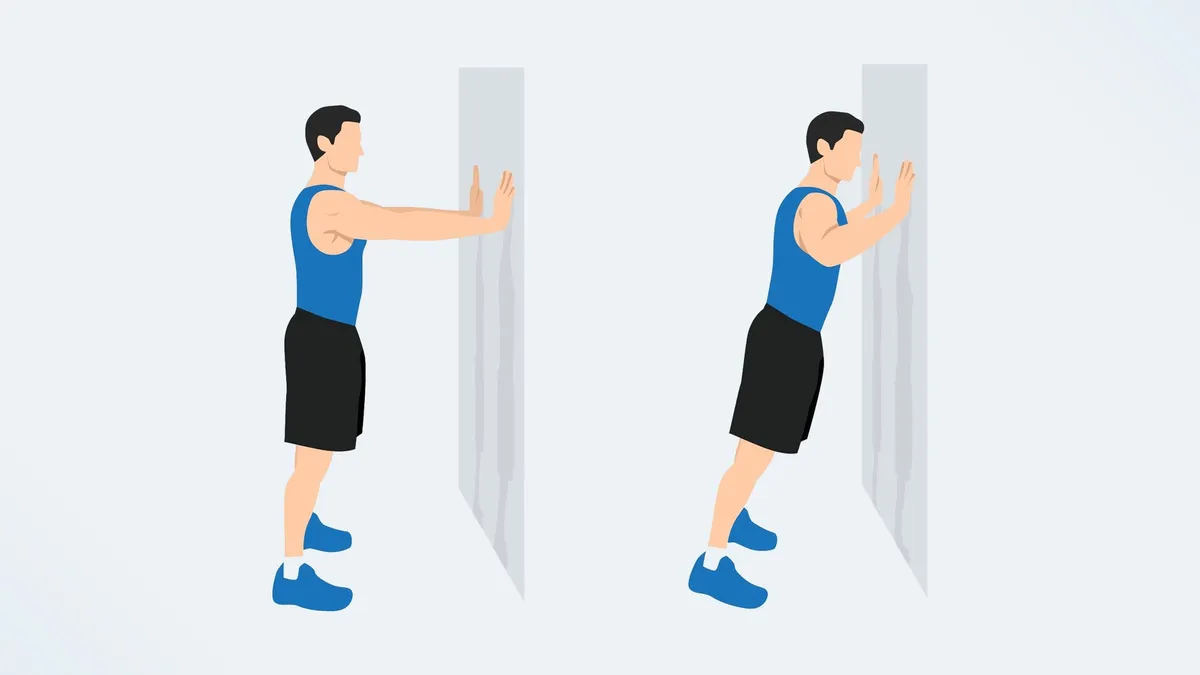
“Wall push-ups are a low-impact variation of traditional push-ups performed against a wall instead of on the floor. They are great for building and maintaining functional strength without putting significant strain on the body,” says Pontes.
Here’s how to do wall push-ups:
- Stand facing a wall about an arm’s length away.
- Place your hands on the wall at shoulder height, slightly wider than shoulder-width apart.
- Keep your body in a straight line from head to heels.
- Bend your elbows and lower your chest toward the wall.
- Push through your palms to return to the start position.
- Aim for 10-12 reps.
What are the benefits?
“Resistance training can help slow or reverse age-related muscle loss, preserving your strength and making everyday activities easier,” says Pontes. These simple exercises can be done with no equipment, and can help you build the functional strength you’ll need for everyday activities like carrying a heavy bag of groceries, standing up from a chair, or climbing the stairs.
Strength training is also a fantastic way to help manage weight gain. “Increased muscle mass means better blood sugar control and improved insulin sensitivity. These effects can be especially valuable during and after menopause, when hormonal shifts may make it harder to maintain muscle mass,” adds Pontes.
If you are hoping to lose weight and get in shape, the best way to do this is to ensure you’re in a caloric deficit — in other words, burning more calories than you consume. Wearing one of the best fitness trackers can help you keep an eye on how many calories you’re burning daily.

Follow Tom's Guide on Google News and add us as a preferred source to get our up-to-date news, analysis, and reviews in your feeds.
More from Tom's Guide
- I’m a physical therapist who works with seniors: Here are the 5 bodyweight exercises I recommend
- No, not planks! I'm a personal trainer for seniors, and these are the 4 best exercises you can do for core stability at every age
- Over 60? I’m a personal trainer, and these 3 floor exercises will show you how strong your core is