The brand KitchenAid is practically synonymous with the best stand mixer, but does it deserve its notoriety? Well, I've tested leading mixers from brands like Cuisinart, Smeg, Ooni, and yes, KitchenAid, to find out. And spoiler alert: in my tests, I found that the best stand mixer for most people is, indeed, a KitchenAid Artisan.
I've even got a KitchenAid Artisan in my own kitchen. It's been in my family for decades, which should tell you how hard-wearing these appliances can be when you treat them well.
That's not to say that the KitchenAid is the best stand mixer for everyone, though. If you're on a budget, the often-compared Cuisinart Precision is a worthy contender, offering a lot of the same functions at about half the price. And if you're a keen bread baker, or budding pizzaiolo, the Ooni Spiral ousted the Ankarsrum mixer when it was released last year as the best stand mixer for kneading bread, which is a uniquely challenging task for less powerful mixers.
For all the results of my hands-on testing (and yes, plenty of photos of cake), keep on reading.
Best overall


KitchenAid announced a new and improved version of its KitchenAid Artisan mixer, called the Artisan Plus, in early 2026. It features the addition of a light above the bowl, allowing you to watch your machine in action. We're still testing this latest release, but it's more expensive than the Artisan and still offers a lot of the same features, so we feel comfortable recommending the OG for now.
The KitchenAid Artisan 5-quart stand mixer is a real workhorse, so it’s no wonder that it tops almost everyone’s list of best stand mixers. It’s fast, efficient at mixing and quiet in operation. What’s more, this is the mixer I have at home, and I use it every week without fail.
This KitchenAid Artisan features a tilt-head design, which is easy to release by moving the side lever. I find it makes changing attachments, which twist and click into place, super easy, and it gives me space to remove mixture off the side of the bowl, which is particularly useful when making cake batter.
Size-wise, 5 quarts is all that most domestic bakers will need. I’ve used it for over 10 years and have a family of four, and it’s seen me through plenty of birthdays and festivities when I tend to bake bigger batches. It also has 10-speed options, which give you lots of flexibility when mixing. I start on a low level and ramp it up once the mixture starts to blend, although for kneading dough, I keep it on a steady, slow speed.
Appliance in action
Read the deep dive ▼


Kneading bread dough
The KitchenAid Artisan produced a soft bread dough after 10 minutes of kneading at speed 2 — the recommended speed for the task. The noise level measured 77 dB. All of the mixture was incorporated well without any intervention, and I had a chance to rest my arms.
Mixing cake batter
Starting with softened butter, I creamed sugar and butter together before incorporating the eggs. At this stage, I placed the pouring shield over the top of the bowl to prevent splashes. This was easy to attach and gave adequate space to add the remaining eggs before incorporating the flour. Most of the ingredients were incorporated apart from a small amount of flour at the top of the mixing bowl, which is what I’d expect.
Whisking heavy cream
The whisk proved super fast, and I found the heavy cream I was whisking reached a thick point much sooner than I had expected. While I was busy monitoring the noise level, which was 77 dB, the cream had reached a thick set within 1 minute 23 seconds. There's nothing slow about this appliance.
Read our full KitchenAid Artisan review
Best budget


If you’re looking for a stand mixer but don’t want to invest in a KitchenAid, or similar premium brand, this Cuisinart Precision Master Stand Mixer makes a good choice. When testing, I was impressed with the ease of using the speed dial on the side of the machine and lever at the back to lift the tilt head. This made removing the bowl and adding the attachments a breeze. And with 12 speeds, you can’t fault its flexibility.
Like the KitchenAid Artisan, the Precision comes with a handy splash guard. However, I found it significantly trickier to use than the KitchenAid due to the two-part design. It's also trickier to remove when you need to stir ingredients mid-use.
Larger than the KitchenAid Artisan, it has a large 5.5-quart mixing bowl and the 500-watt oomph to mix batter for five dozen cookies. However, its bread kneading was a little lacking due to the flimisier construction of the mixer. If you’re a heavy-duty bread baker, you might want to upgrade to the Ooni Halo Pro. For its capacity, however, it is a very affordable and handsome choice.
Appliance in action
Read the deep dive ▼


Kneading bread dough
I made a 1.5 lb loaf and found that the flour and butter blended well, and within a short time, before I added some water. Once ready to knead, I set the stand mixer at the lower end of the recommended speed, on level 5, and ran the appliance for 10 minutes. When I increased the speed to 8, the machine began to shake.
Mixing cake batter
I started by mixing the butter and sugar, but had to intervene as the mixture stuck to the bottom of the bowl. I'd already attached the pouring shield, and this was tricky to detach. I then added the eggs, and could see the benefit of a flex-edge beater that would touch the edges of the bowl, incorporating more of the ingredients. However, this inconvenience didn't hinder the end result — a light sponge cake.
Whisking heavy cream
I whisked heavy cream, starting on speed 1, before increasing it to speed 8. I measured the noise level and it peaked at 75 dB, slightly less than when monitoring the KitchenAid Artisan. After 2 minutes it had reached the consistency I required, although it had taken over 30 seconds longer than the KitchenAid.
Read our full Cuisinart Precision Master stand mixer review
Best for bread


Ooni is best known for making some of the best pizza ovens, but here Ooni has concentrated on an appliance that actually makes the dough.
It’s certainly a solid appliance, weighing in at 32 pounds, although its looks aren’t quite what we’ve come to expect from the likes of KitchenAid, as it carries an industrial aesthetic. It’s a stand mixer that means business. And that’s quite fitting, because although the Ooni is hefty, we discovered it’s up to the task of shifting 11 pounds of dough.
The Ooni Halo Pro Spiral Mixer has a tilt-head design, the same as the two other stand mixers in my top recommendations. And it comes with premium-feeling attachments made of stainless steel, including a dough hook and breaker bar, a flexible beater, and a geared whisk. All of the attachments are easy to insert into place, and you can also cover the bowl with a splash guard that fits into the tilt head, although it’s a bit tricky to attach.
At almost $800, it’s not going to be every baker’s choice. So, unless you’re making volumes of bread and hosting pizza party after pizza party, you won’t need such a heavy-duty appliance. However, if you are still looking for a premium stand mixer but don’t quite need the dough-making capacity, you would be just as well served opting for the KitchenAid Artisan.
Appliance in action
Read the deep dive ▼


Kneading bread dough
Millie started by making a standard white bread dough in the Halo and noticed how much steadier the stand mixer remained compared to the KitchenAid Artisan. Plus, after 10 minutes of mixing at 20% speed, she was impressed with the gluten development she was able to achieve with this appliance.
She found the spiral mixing technology, usually only found in professional kitchens, to be similar to the Ankarsrum mixer. But in professional kitchens, the breaker bar (a straight metal rod that extends into the mixing bowl, positioned close to the rotating dough hook) cannot be removed, unlike this version.
Unsurprisingly, the Ooni excelled when making pizza dough. Millie followed a recipe for New York-style pizza dough and made eight pizzas using 1kg/2lbs of flour. Once again, she was impressed with the gluten development. Not only that, but she was also intrigued to see how steamy the bowl shield appeared — a sure sign of how much yeast activity the mixer had stimulated. What’s more, her pizza party guests said the pizza dough had a good chew, great flavor, and the crusts puffed up perfectly.
Mixing cake batter
Millie was concerned that the batter for her small loaf cake would spread around the bowl, making the beater less effective. However, the flex edge beater removed the stuck-on ingredients and integrated everything into the mix. She was also impressed with the mixer’s speed, particularly when it was cranked up to 100%. However, she found the bake slightly dense, and thinks it would be better to use the Ooni for layered cakes with more batter for a fluffier result.
Whisking egg whites
Rather than testing out the usual whipped cream and beating egg whites for meringue, Millie went a step further and made butter from scratch. It would be an endurance task for most stand mixers, but she found the Halo didn’t even break into a sweat.
Read our full Ooni Halo Pro Spiral stand mixer review
Best looking
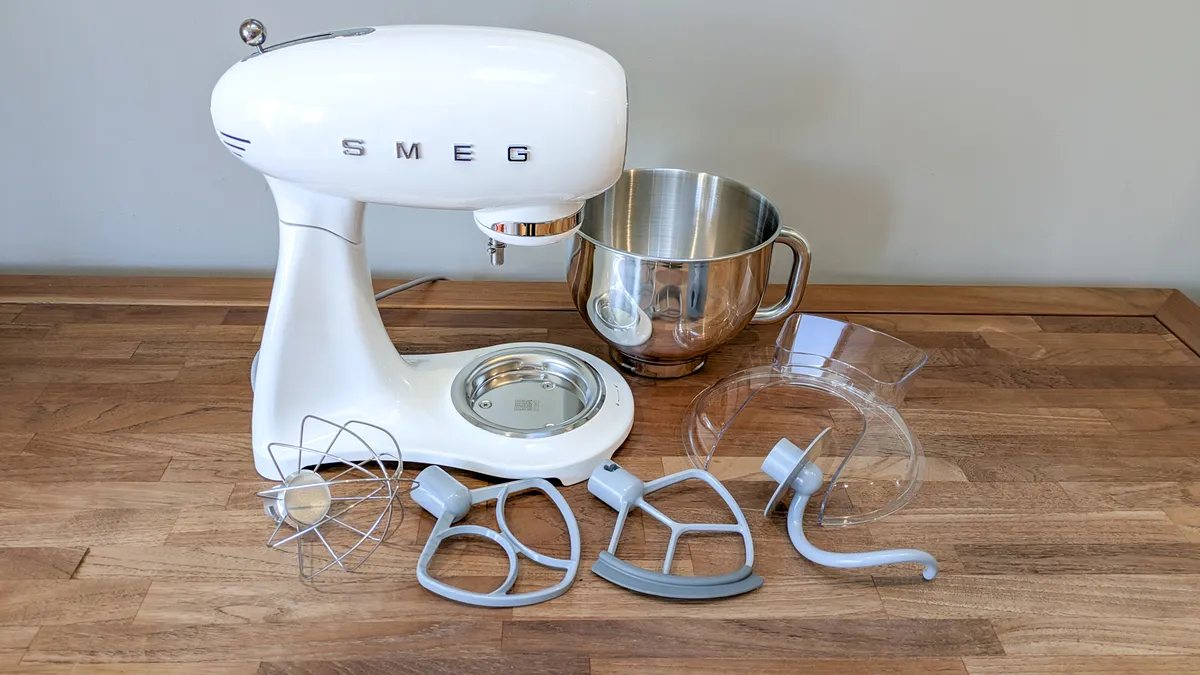
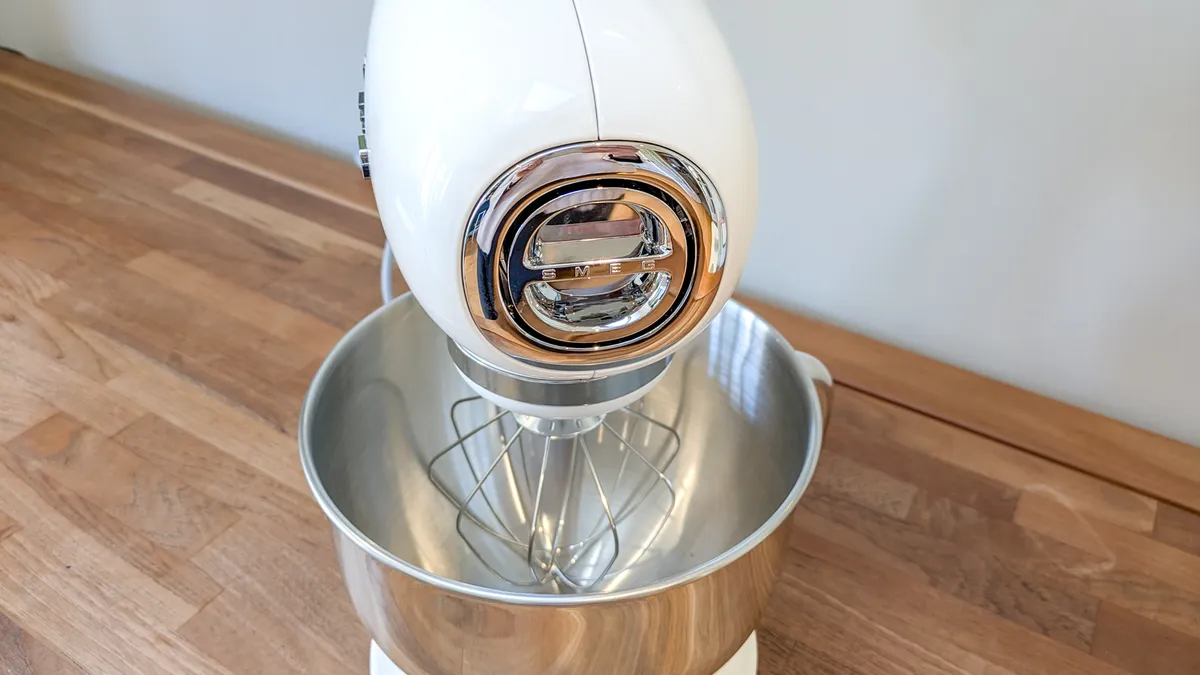


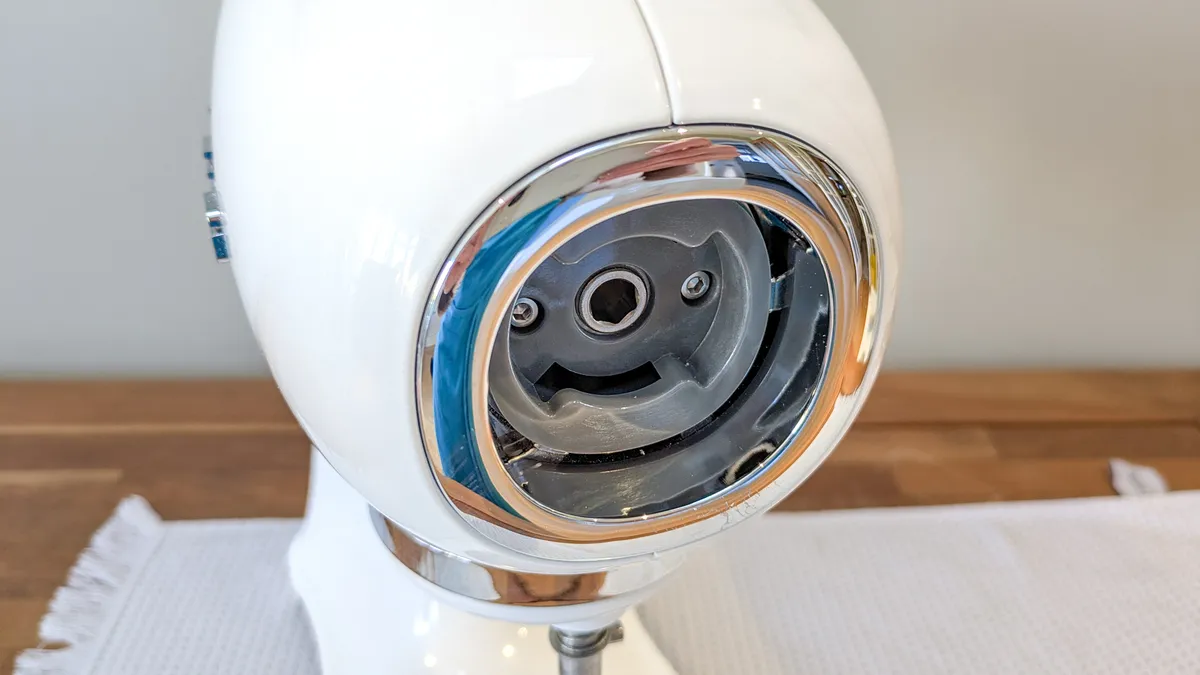
The new Smeg Forte delivers steady, consistent results for everything from cakes to bread dough, making it a trustworthy pick for a wide range of baking tasks. Not only is it a powerful pick, it also looks great in any kitchen thanks to its retro-style design.
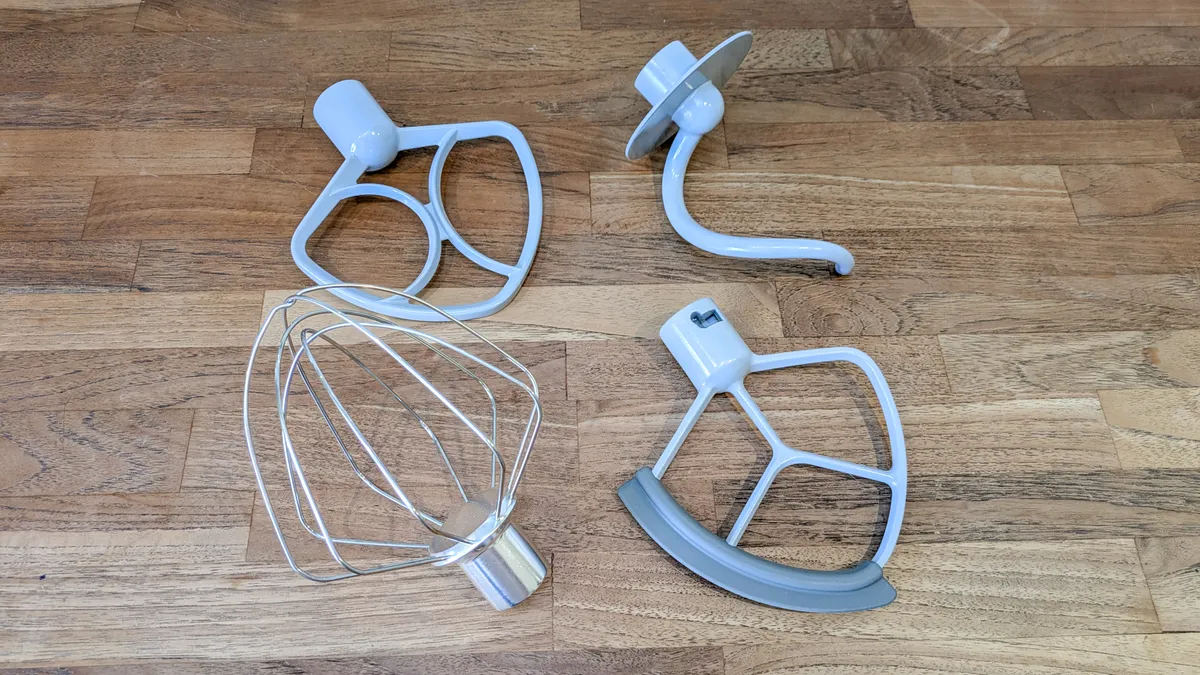
With a flex-edge beater, dough hook, whisk, and splash guard included, the Smeg covers all the essential bases and reduces bowl scraping and mess. I was particularly excited about the flex-edge beater, which scrapes the bowl as it mixes. It's an attachment I feel should be included with every KitchenAid mixer, so this small but meaningful upgrade means less scraping and more consistent results for everyday tasks.
Comparable with the KitchenAid Artisan, the Smeg Forte's 5-quart bowl is large enough for double batches or bigger loaves, but still fits comfortably on most counters, striking a smart balance for home bakers.
It's expensive, and despite its increased power, I'd still pick my KitchenAid over the Forte for my day-to-day use, but the main trade-off is its heft: at over 20 pounds, it’s not something you’ll want to move on and off the counter often. Still, based on its capacity, reliability, and ease of use, the Smeg Forte is a dependable, all-purpose choice for home bakers.
Appliance in action
Read the deep dive ▼



Kneading bread dough
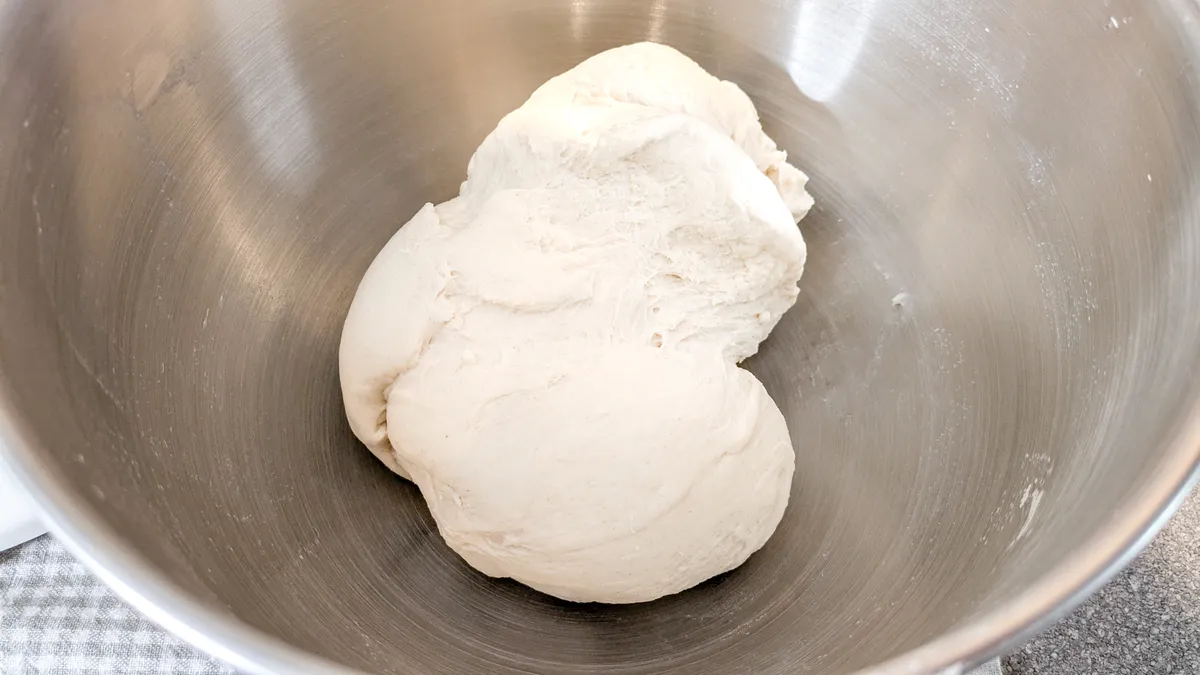
A noisier option than most, the Smeg Forte hit 84dB during my kneading tests. The bread dough test tends to be where weaker or less sturdy mixers fall down, but the Smeg Forte stated put and didn't move around. It also sounded perfectly comfortable during operation, where others such as the Cuisinart, sounded more strained.
Mixing cake batter
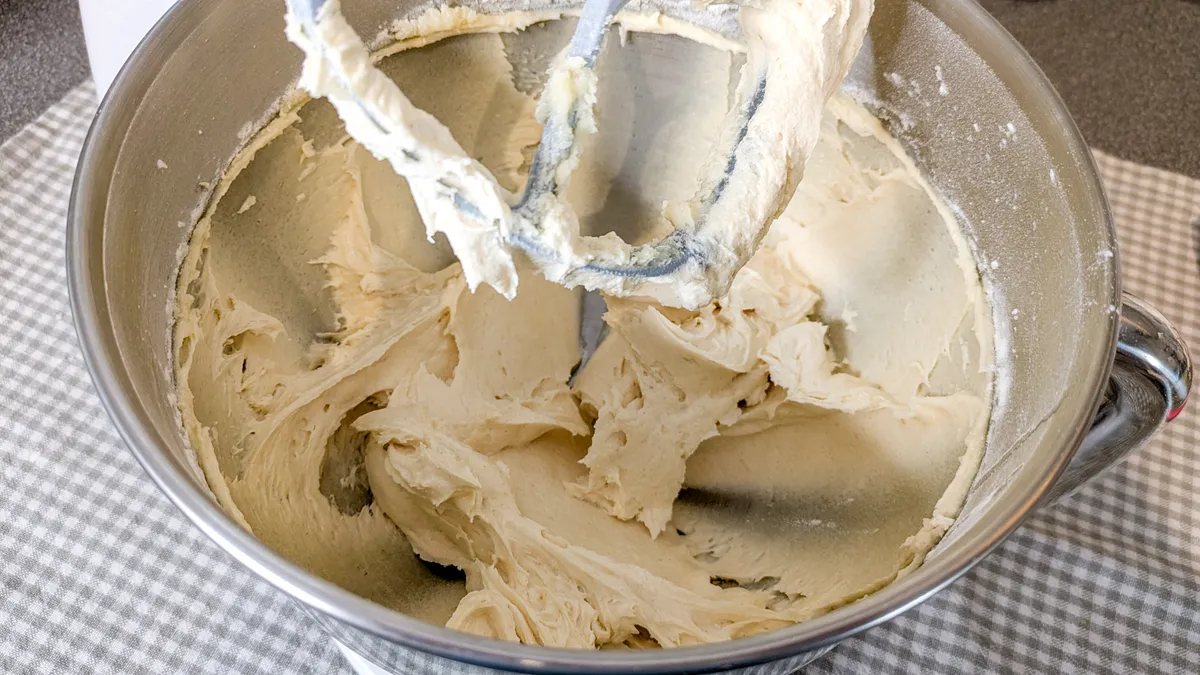
Using the flat-edge beater to mix my cake batter, I was struck by how low-maintenance this mixer is to use. There's no need to go in and scrape unincorporated sugar or butter into my mix, and the mixer did a fantastic job of smoothly combining my ingredients at power level 2.
Whisking heavy cream
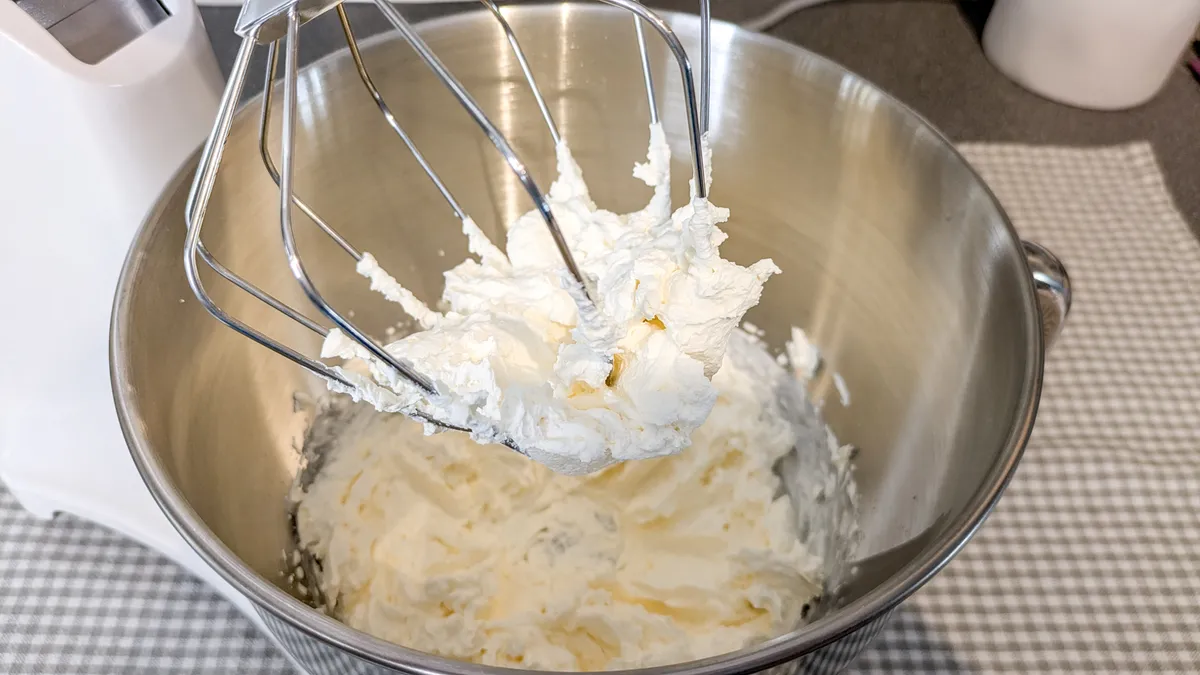
Despite its higher wattage, the Smeg Forte took longer than my KitchenAid Artisan to hit stiff peaks on my cream whisking test. After two and a half minutes, I had delicious and smooth cream ready to be sandwiched between my cake layers, but this took over a minute longer than the KitchenAid Artisan during my standard testing.
Read our full Smeg Forte stand mixer review
Also tested
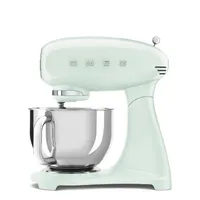
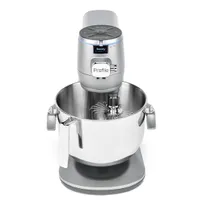
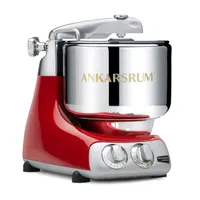
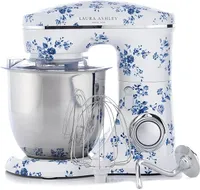
What to look for
When looking for a stand mixer I recommend you consider the following before making a buying decision.
Capacity and weight: A larger mixer will be heavier and more difficult to move around, and may take up more countertop space. So, if space is limited or you want to store your stand mixer in a cupboard, opt for a lightweight model and one with a smaller capacity.
How much can it mix?: Bigger isn't necessarily better. If you only need a smaller capacity, there's no reason to buy a larger model — you’re just paying out for something you don’t need.
Tilt-head or bowl-lift? The majority of stand mixers are based on a tilt-head design where the head of the mixer is raised. Bowl-lift models look more heavy-duty and the bowl lifts and lowers using a lever mechanism.
The attachments: Most stand mixers will come with three attachments, including a flat beater, for beating and creaming; a wire whip for whipping egg whites and heavy cream; and a dough hook for mixing and kneading dough. Sometimes you’ll also get a flex-edge beater that has a silicon flexible edge that skims the side of the bowl when mixing. Another useful accessory is a pouring shield, which covers the bowl while it's in use.
Meet our testing team

I started baking from a young age, as soon as I could see over the kitchen countertop, and I virtually kicked my mom out of the kitchen. And, although I can't profess to being a professional baker, my passion remains on the domestic front. I certainly know my way around a stand mixer and enjoy using all the attachments and features each one offers. I've been fortunate to extend my passion into my work, where I write about homes and gardens and get to test, review and compare kitchen appliances.

I'm Tom's Guide's Managing Editor for Buying Guides, and I've got six years of appliance testing under my belt. But before I'd even heard of an air fryer, the first kitchen appliance I learned to use was a stand mixer. I grew up using my mom's lovely red KitchenAid to make everything from brownies to multi-layered cakes, and when I got a place of my own, I completed my kitchen with a cream-colored KitchenAid Classic. I've tested a number of the machines in this guide, including the Ooni Halo and the Ankarsrum.

I'm an experienced writer and Home Economist with a wealth of experience working within the heart of the food industry. I started reviewing home and kitchen appliances in 2007 at the Good Housekeeping Institute and now work freelance, reviewing all sorts of appliances, from stand mixers to coffee machines. For this guide I tested the KitchenAid Artisan 7-Quart Bowl-Lift stand mixer. You’ll see my work across a host of Future publications, including Homes & Gardens, Ideal Home and Tech Radar.

I tested the premium-priced GE Profile Smart Mixer that's reviewed in this guide, although I don't expect many novice bakers will opt for this model as the KitchenAid Artisan 5-Quart Tilt-Head stand mixer gives a better performance.
My advice comes from five years of experience as a home and kitchen product tester, during which time I've tested hundreds of items first hand, including a good few kitchen appliances and stand mixers. My work appears in publications such as Forbes, USA Today, The Spruce, Food52, and more.
How we test
We use many indicators when reviewing the best stand mixers to see whether an appliance can deliver on performance. It can be a challenge because, in the process, we eat our way through a lot of bread and cake! However, although we put the stand mixers through a range of mixing tests, we also consider other factors.
Size and weight

When testing each stand mixer, we look at its size and weight, considering whether it will fit under a wall-mounted kitchen cupboard and how easy it is to move around. For instance, if you want to store your stand mixer in a cupboard, will lifting and moving it onto your countertop be tricky? The capacity of the bowl is another aspect — how many cookies or loaves of bread can you make in one batch?
Design
We also consider the overall appearance of the stand mixer, as we realize that looks are important if your appliance is going to be a permanent fixture on your countertop. Plus, we consider the number of color options available, as some stand mixers are available in every color under the sun.
Ease of use

We also assess how intuitive an appliance is to use — can it be unpacked and used without reading the instructions, or do you need more insight before the first go? The positioning of the controls is also important, along with how easy they are to use. And although not many of us like to think about cleaning, this is another important element that we review. Are there any hard-to-reach parts, and which accessories are dishwasher safe?
The appliance in action
During testing, we rate things like power and how well each stand mixer performs at various tasks and speeds. This includes whisking, mixing batter, and kneading bread using the different attachments. During this process, we also looked at how user-friendly and practical the appliance was to use and monitored the noise level.
The dough hook

First, we attach the dough hook and blend the ingredients for a loaf of bread. We check how well the ingredients come together before setting the mixer to knead the dough for 10 minutes. During this time, we measure the noise level in decibels and monitor how much of the stand mixer is moving on the countertop. Once the 10 minutes are up, we check the consistency of the dough to see how smooth it appears and whether any ingredient remnants are left around the edge of the bowl.
The flat beater

We then progress to making a vanilla sponge using the flat beater. While the butter and sugar are creamed together, we note how well the ingredients are incorporated, how much remains on the edge of the bowl, and whether any intervention is needed. The remaining ingredients are added, and we monitor how well the cake batter comes together within a few minutes. If the stand mixer has a pouring shield, we also monitor how easy and effective it is to use. The proof is also in the pudding, and we consider the texture and taste of the final bake.
The whisk

Our final flourish is using the whisk, which we use to whip heavy cream. We time how long it takes for the mixture to hold its shape and form a consistently that could be used for piping. We also note which speed setting was used and whether the heavy cream splashed when being mixed.
How to choose
There are lots of aspects to consider before buying a stand mixer, especially if it's your first time and you don't have previous experience knowing what to look for. So, before buying a stand mixer in your favorite color — because I know there's lots of tempting colorways to choose from — take the time to consider what you want out of the appliance. Here, you'll find lots of advice to help you decide, whether you're a novice or not.
Capacity and weight
Before buying a stand mixer, consider where it’s going to be stored. If you're using it every day, it’s best kept on your countertop rather than in a cupboard. And, if you are going to be moving it about, check its weight, as some can be heavier than others. You could end up being the baker with the biggest biceps! It’s also worth checking the clearance height if you have a tilt-head stand mixer (more on these below), whereas a bowl-lift design won't need any additional headroom.
How much can it mix?
There's really no need to buy the biggest capacity stand mixer unless you're going to use it. I use the KitchenAid Artisan 5-Quart Stand Mixer, and it's plenty big enough for my needs. I can batch bake cupcakes, knead a good-sized loaf and whip up a flurry of cream, without feeling I need a larger appliance. However, if your baking prowess goes beyond a domestic level, you might do well buying the KitchenAid Artisan 7-Quart Bowl-Lift Stand Mixer. Although with extra capacity comes a higher price tag.
Tilt-head or bowl lift?
Stand mixers are split into tilt-head and bowl-lift designs. With a tilt-head stand mixer you tilt the head back so you can look into the bowl and add ingredients. This also allows you to remove the bowl and change the attachments when necessary. Out of the two, I'd say it is the easier stand mixer to use. On a bowl-lift model, you raise or lower the bowl using a crank — it can take a little while to get used to the technique, but soon becomes second nature. Tilt-lift models tend to be less expensive, so are a good choice if you are starting your baking journey, or needing it to store it away when not in use. However, bowl-lift mixers offer more power and larger capacities.
Breaking down the attachments
Why you can trust Tom's Guide Our writers and editors spend hours analyzing and reviewing products, services, and apps to help find what's best for you. Find out more about how we test, analyze, and rate.

Stand mixers now come with a host of attachments and accessories for different purposes, so many that it can be a little intimidating to a new baker. Here’s a breakdown of what the main tools do so you know which to use:
Flat beater: This attachment should come with every stand mixer. It’s used for everyday beating and mixing — great for creaming butter and sugar together for cakes as well as batters and frosting. Out of all the attachments I have, I use this the most. Some flat beaters also come with a rubber or silicone edge so they can better scrape the ingredients from the edges of the bowl. They are often called flex-edge beaters, and are worth their weight in gold. If your stand mixer doesn't come with a flex-edge beater, but there's an option to buy one, I'd definitely go for it.
Wire whip: Used for whisking, this attachment whips air into ingredients. It’s commonly used to make whipped cream or meringue and creates light and fluffy textures. Sometimes it's called a balloon whisk.
Dough hook: As the name suggests, this attachment helps mix and knead doughs, so it’s what you need to use if you plan to bake fresh bread or pizza. Dough hooks can appear in a ‘C’ shape or can also look like a spiral.
Splash guard or pouring shield: Other useful tools include a splash guard or pouring shield. These sit on top of the bowl while the mixer is running and prevent ingredients from splashing out. During our testing, some were more tricky to use than others, so it's worth checking advice and reviews before you make a purchase. I like the pouring shield on the KitchenAid Artisan as it comes in one piece and is easy to remove and replace. It's much easier than using a teacloth, which I remember my mom using to prevent flour and powdered sugar taking over the kitchen.
Extra bowls: Some brands also sell glass bowls in addition to stainless steel. With a glass bowl, you can better see the ingredients being mixed, but they are naturally more fragile.