Just when you thought you’d wrapped your head around HDMI cables and ports, a new specification emerges: HDMI 2.2.
According to a recent report from FlatpanelsHD, the HDMI Licensing Administrator (the organization that oversees HDMI specifications), the first products to carry the HDMI 2.2 certification will arrive next year. It’s not yet clear which devices will be the first to feature HDMI 2.2-certified inputs, the industry’s best TVs are as good a candidate as any.
For folks in the market for a new TV, the imminent nature of HDMI 2.2 raises several questions about what to buy and when to shop. Before we dive into that, let’s get to the bottom of what HDMI 2.2 actually does.
HDMI 2.0 vs HDMI 2.1 vs HDMI 2.2: what’s the difference?

Their differences come down to bandwidth.
Take a trip down any TV aisle and you’ll find two types of HDMI ports on the back of TVs: HDMI 2.0 and HDMI 2.1. The higher of the two specs, HDMI 2.1, has been around since 2019.
Affordable TVs tend to offer HDMI 2.0, while many high-end models are equipped with a full slate of HDMI 2.1-compatible ports. Mid-range TVs often come with a mix of both.
HDMI 2.1 allows for better audio support, higher refresh rates and additional gaming enhancements like Variable Refresh Rate (VRR). Most of HDMI 2.1’s benefits are, in fact, gaming-related, which is why this specification is often sought after by gamers.
Their differences come down to bandwidth. HDMI 2.1 offers a much higher bandwidth than its predecessor (48 Gbps compared to just 18 Gbps for HDMI 2.0).
HDMI 2.2 is even faster — up to two times faster than HDMI 2.1, to be precise. The words “up to” are important, though, because unlike 2.0 and 2.1, HDMI 2.2 will be available across three separate bandwidth tiers: 64, 80 and 96 Gbps. This means that a device (like a TV) might technically carry HDMI 2.2 certification while only supporting some of its features.
What are the benefits of HDMI 2.2?
At the higher performance tiers (80 and 96 Gbps), HDMI 2.2 supports uncompressed, 4K/240Hz content, or 4K/480Hz content with 4:2:0 chroma subsampling (color data compression) enabled. HDMI 2.2 also supports true, uncompressed 8K/60Hz content, and with compression enabled, can push 8K content even further.
HDMI 2.2 also arrives with something called Latency Indication Protocol (LIP), which improves audio-and-video synchronization at the device level.
Although HDMI 2.2 represents a massive upgrade to the pipeline between a TV and any given device, it’s worth remembering what, exactly, is capable of passing through that pipeline.
The top 4K spec for current-generation gaming consoles like the Xbox Series X and PlayStation 5 is 120Hz, with most titles settling at 60Hz. 8K content is still hard to come by, too, and there's no indication that 4K is on its way out anytime soon.
Does HDMI 2.2 require new cables?
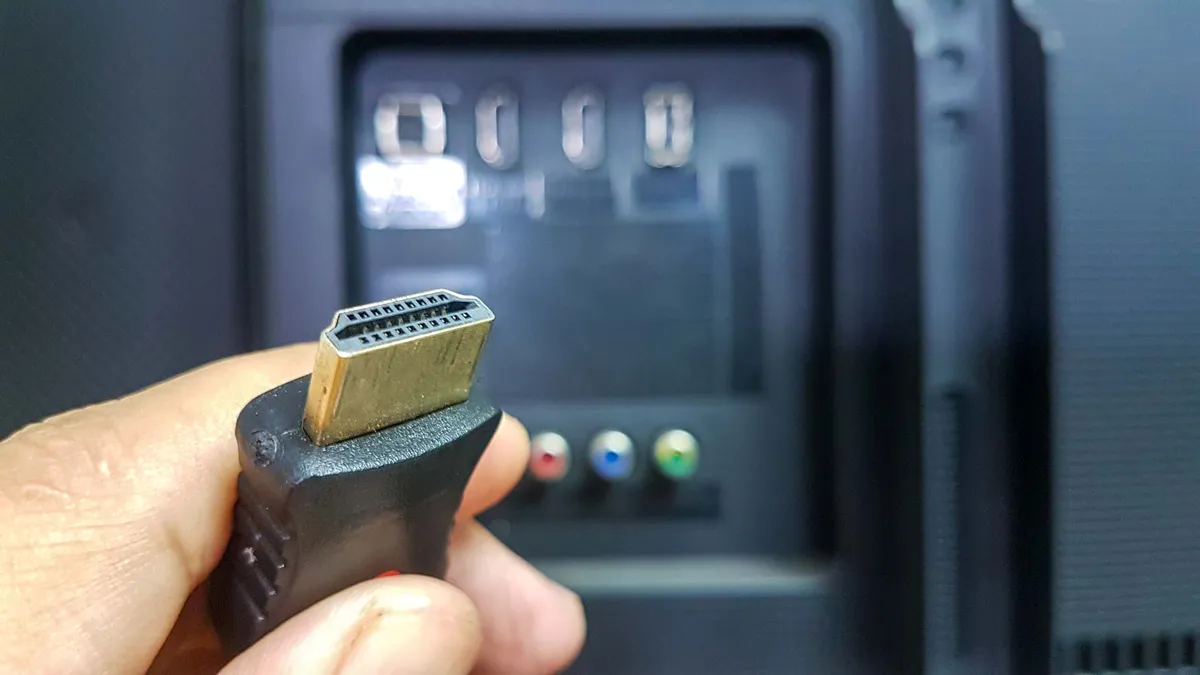
Check out my guide for buying HDMI cables.
Yes, devices that support HDMI 2.2 will require HDMI 2.2-certified cables in order to take advantage of any HDMI 2.2-based features. These cables are already on their way to store shelves.
Much like HDMI 2.1-certifed cables carry the "Ultra High-Speed" designation, HDMI 2.2-compatible cables carry the "Ultra96" label (a reference to the 96-Gbps bandwidth speed). TV-makers are encouraged to label any HDMI 2.2-compatible ports with the Ultra96 designation, too.
There's a catch, though. Ultra96 cables will always offer 96 Gbps bandwidth, an HDMI port with the Ultra96 label can support any of the three HDMI 2.2 bandwidth speeds. This means that shoppers will have to pay attention to whether an HDMI 2.2-supporting TV is cleared for 64, 80 or 96 Gbps.
HDMI 2.2: outlook

Here's the bottom line: If you're shopping for a TV in 2026 or 2027, you needn't worry about HDMI 2.2 at all. For one thing, TVs aren't likely to adopt HDMI 2.2 for another couple of years. More importantly HDMI 2.2 won't offer you much upside until its features are widely adopted.
The next generation of gaming consoles (like the would-be PlayStation 6) might be among the first devices to take advantage of certain HDMI 2.2-based features. But even if this pans out, game developers will need to be on board with those features, too.
For the foreseeable future, TVs that feature four HDMI 2.1-compatible inputs will continue to offer the most flexibility for viewers and gamers.

Follow Tom's Guide on Google News and add us as a preferred source to get our up-to-date news, analysis, and reviews in your feeds.
More from Tom's Guide