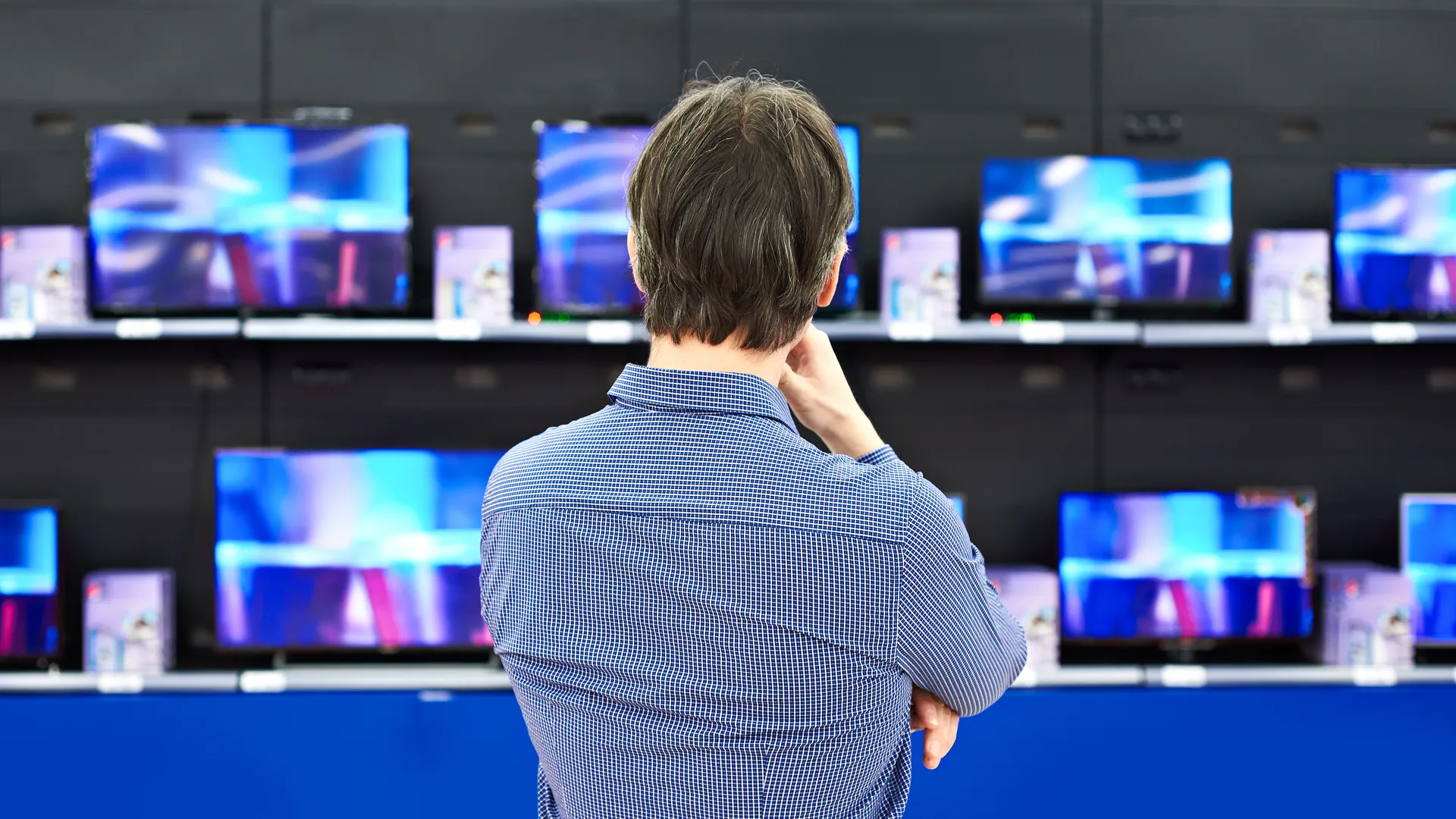
TVs are complicated. As a result, the TV business sometimes seems at odds with itself. Brands are eager to impress with their latest technological innovations, but the competitive nature of the industry often fosters misinformation.
I’ve been covering TVs for over 10 years, reviewing everything from budget models to the best TVs in the world. Throughout this time, I can’t help but have noticed a handful of myths that haven’t gone away.
Some of these misconceptions could end up costing you money. Others might land you a less-capable TV. Let’s bust these myths.
1. TV brightness matters more than anything else

In the world of TVs, few metrics are weighed as heavily as brightness. It’s easy to measure, easy to boast about with numbers, and most importantly, easy for people to understand. But while certainly important, brightness isn’t the be-all, end-all yardstick for picture quality.
Brightness matters as it relates to your ability to see the picture. Naturally, if your living room gets a ton of sunlight, buying a bright-enough TV is important. The TV needs to compete with ambient light in order for the picture to pop.
However, when we use the word “pop,” what we’re really talking about is contrast. Contrast describes the difference between the darkest parts of the picture and the brightest.
Contrast — not brightness alone — is the main ingredient in a visually appealing picture.
A high-contrast picture offers more depth, making it appear more real to our eyes. This is why contrast — not brightness alone — is the main ingredient in a visually appealing picture.
A TV that gets extremely bright has a distinct advantage over a dimmer model, since its picture will hold up better during the day and have a head start with the lights off. But many TVs — especially the best OLED TVs — deliver better contrast (and a better overall picture) than rival sets that achieve higher brightness.
It’s all relative. Since the pixels on an OLED TV are self-lit, they’re capable of producing perfect black levels and controlling the brightness on a pixel-by-pixel basis. As a result, the brighter parts of the picture look even brighter. OLED TVs, in other words, don’t have to get as bright as LED TVs in order for our eyes to perceive them as being brighter.
OLED TVs don’t have to get as bright as LED TVs in order for our eyes to perceive them as being brighter.
Another way to look at this is that 1,000 nits of highlight brightness on an OLED TV looks much brighter than 1,000-nit highlights on an LED TV, and it’s all thanks to OLED’s ability to get consistently darker.
This is one of the reasons we often recommend entry-level OLED TVs over their similarly priced, LED-based rivals. The LG B5, for instance, offers modest brightness compared to most mid-range LED TVs, but its OLED-driven picture allows for better overall contrast than most of those LED-based sets.
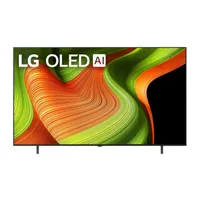
I’ve seen searingly bright TVs that look worse than models half as luminous. I’ve also seen equally bright TVs that look drastically different thanks to matters of color, picture processing and more.
When shopping for a TV, it’s worth researching brightness and having a good handle on how a TV might hold up in whatever room you’re putting it in. But it’s also worth avoiding the mindset that brighter equals better.
2. Because of burn-in, OLED TVs don’t last as long as LED TVs
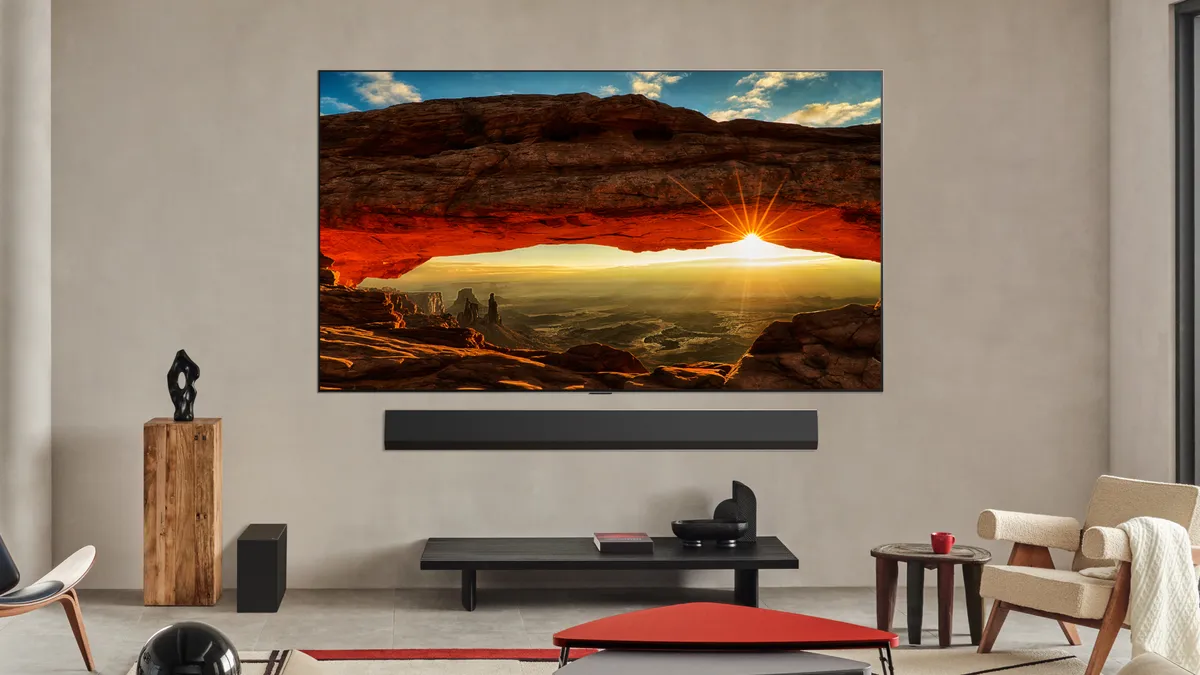
For the majority of my career, I’ve not (and will likely won’t) be concerned about burn-in on an OLED TV.
To be clear, the burn-in effect — in which a ghostly after-image is permanently seared into the picture after long-term use — is very much real. But in all likelihood, you don’t need to worry about it.
OLED’s reputation for burn-in makes sense when you consider that the display technology is, in many ways, the spiritual successor to plasma. Way back when, plasma TVs did run the risk of burn-in — even more so than the OLED TVs that took their place.
And while the earliest consumer-ready OLED TVs were susceptible to burn-in, over a decade of high-level engineering has all but solved the problem entirely for the vast majority of viewers.
All newer OLED TVs come with a variety of tools to prevent burn-in.
These days, unless you spend several hours a day watching the same type of content (or using your OLED TV as a computer monitor), you really don't need to worry about static images burning their way into the screen. If you use an OLED TV, be on the lookout for things like on-screen logos, news chyrons and sports tickers. Any elements that are on the screen for long periods of time are potentially problematic, but only if you’re spending a ton of time with them up there.
All newer OLED TVs come with a variety of tools to prevent burn-in, and most of these processes happen automatically in the background. LG OLEDs, for instance, offer the following: Pixel Cleaning (which can be run manually or set to an automatic timer), Screen Move (which subtly shifts the display occasionally in order to shake up the pixels) and Adjust Logo Brightness (which automatically detects on-screen logos and throttles their brightness).
You can find similar settings on Samsung and Sony OLEDs, and all of the major OLED-makers come with optional screensavers, too.
3. There are still ‘dumb TVs’ worth buying
Many folks yearn for the halcyon days of TV ownership, where the newest sets weren't saddled with busy, ad-filled software and constantly connected to the internet. Unfortunately, those days are very much in the rearview mirror.
TV brands make a ton of money from the ad revenue associated with smart TVs. Like much of the tech industry, various entities also profit off of smart TV user data. The longer that money comes in, the more incentivized TV-makers are to maintain the status quo.
So-called "dumb TVs" technically still exist, but the vast majority of them are either manufactured by companies I don't recommend, or they're barebones, rudimentary displays intended for commercial use.
4. Expensive HDMI cables are always better

Take it from someone who’s been juggling various types of TV cables for years: As long as you buy the right bandwidth, you really don't need fancy HDMI cables for your TV.
There's no shortage of overpriced cables out there, but the advantages of silver-, bronze-, or gold-plated cables are mostly aesthetic. You won't notice a difference in picture quality between a gold-plated cable and a basic cable, provided they’re rated for the same features.
Now, you might decide that a braided cable feels more reliable, or you might just appreciate how the look of a more premium cable blends in with the rest of your A/V equipment. If this sounds like you, feel free to splash out — just don’t expect to get a better picture in the process.
Is your TV limited to HDMI 2.0 inputs? 18-Gbps HDMI cables are good enough for your needs.
Does your TV support various HDMI 2.1 features? Shop for 48-Gbps HDMI cables to take advantage of those high-bandwidth-related perks.
5. The era of 8K is right around the corner
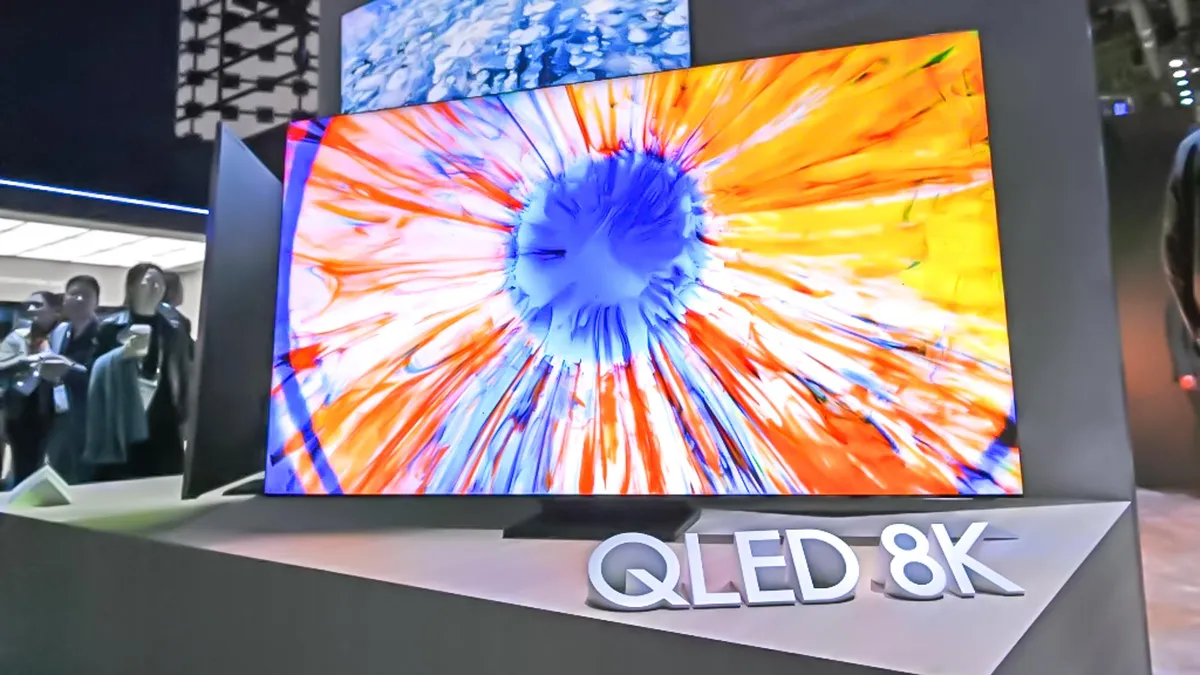
For as long as I've been covering the TV industry, 8K resolution has been the next big thing. But that outcome never arrived.
8K resolution hasn't become the new standard for TVs for two reasons: the costs associated with 8K and the lack of native-8K content.
8K TVs are expensive to manufacture and, on average, too pricey for the average consumer. More importantly, there simply isn't enough 8K content to enjoy on an 8K TV.
There simply isn't enough 8K content to enjoy on an 8K TV.
In fact, 4K TV shows and movies have only recently become the standard for streaming platforms, and Live TV (like cable and over-the-air broadcasts) are mostly sub-4K by the time they reach your screen.
As such, I strongly recommend shopping for a 4K TV instead of spending up on an 8K model. Until things change, spending way more on an 8K TV and then tasking it with upscaling 4K and sub-4K movies and shows is not a smart way for most people to to spend money.

Follow Tom's Guide on Google News and add us as a preferred source to get our up-to-date news, analysis, and reviews in your feeds. Subscribe to Tom's Guide on YouTube and follow us on TikTok.
More from Tom's Guide