
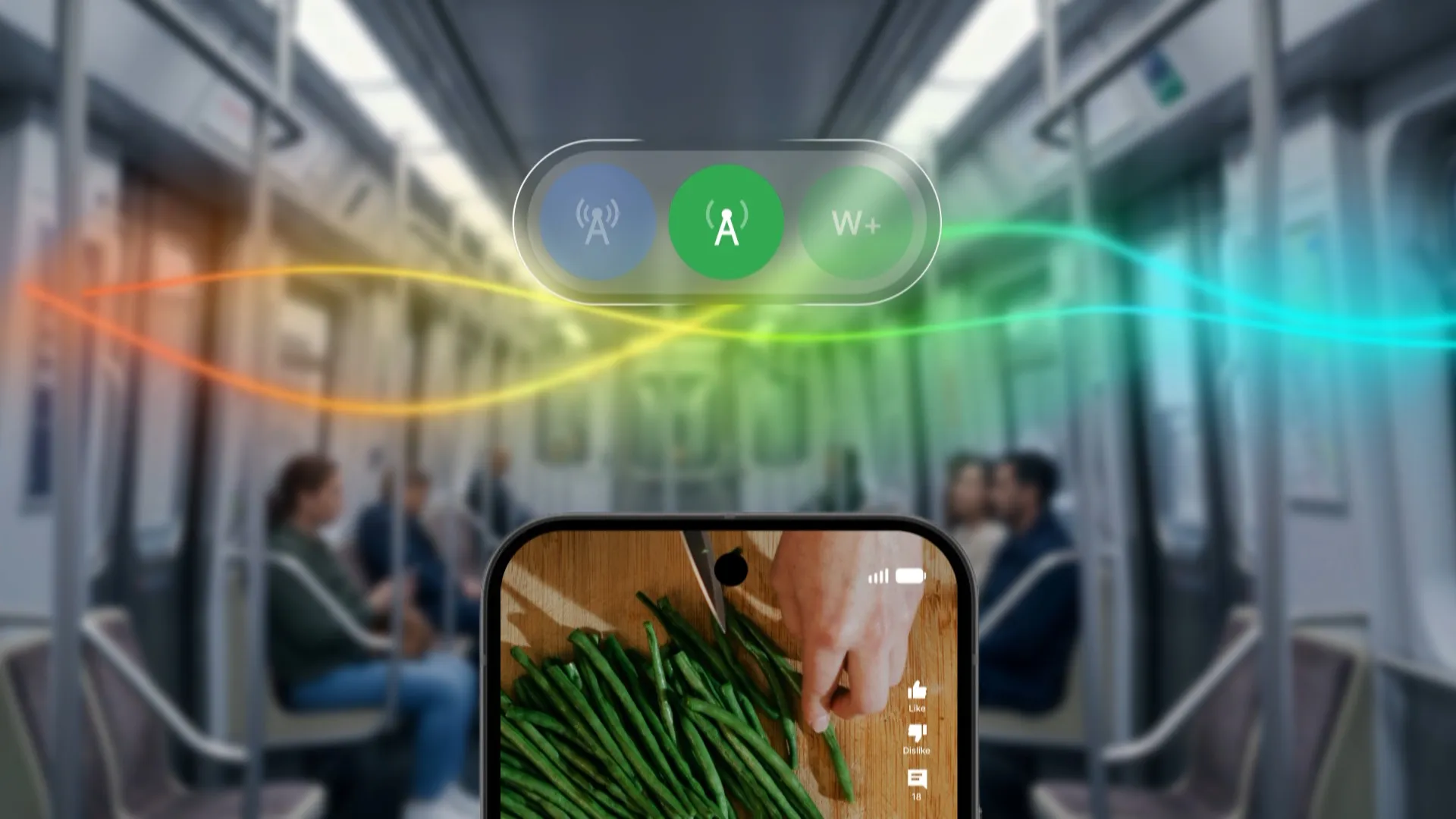
I live in one of the most densely populated states in the country, but even with New Jersey’s small size, there are still dead zones lurking around. Google Fi is tackling this persistent problem in 2026 with the rollout of its new "super network," which is designed to automatically switch between two 5G cellular networks in real time.
This new feature for Google Fi subscribers is rolling out first to the Google Pixel 9 and newer devices starting today, giving them the ability to automatically switch 5G networks in the event one drops. Interestingly enough, this isn’t the first time Google has offered this helpful feature because at its inception with Project Fi back in 2015, the carrier offered multi-network support — only to stop supporting it in 2023 when U.S. Cellular was dropped as an official network partner.
Google Fi’s "super network" switching is powered by Multiple Enabled Profiles (MEP) eSIM technology, which essentially allows a single physical eSIM to run two carrier profiles at the same time. Instead of treating the second connection as an inactive backup, the phone maintains active links to two separate cellular 5G networks. Therefore, if the signal degrades — whether due to congestion, tower interference, or physical obstacles — Google Fi's software automatically switches over to the secondary connection to prevent dropouts. It directly tackles the dead zones that cause reels to buffer or download speeds to crater.
While Google’s announcement doesn’t explicitly name which carriers it's partnering with to pull this off — choosing instead to label them simply as "two of America's fastest 5G networks" — there are plenty of clues. T-Mobile remains Google Fi’s primary host carrier, while the secondary partner providing the dual-coverage failover is described in as a "major carrier," defined as an "MNO or MVNO with more than 1 million customers in the U.S. as of March 2025."
Even the strongest cellular signal can struggle inside crowded spaces like airport terminals, shopping malls, and dense high-rises. That’s where Wi-Fi Auto-Connect+ steps in to supplement coverage by automatically identifying and linking your phone to high-quality public Wi-Fi networks. It does this without requiring manual logins, portal verifications, or toggling Wi-Fi menus, keeping the handoff completely seamless.
Google Fi is carrying the super network abroad as well, enabling real-time network switching and Wi-Fi Auto-Connect+ across international travel destinations. By pairing dual-carrier 5G failover on the road with automated Wi-Fi in crowded venues, Google Fi makes staying reliably connected practically effortless no matter where you travel.

Follow Tom's Guide on Google News and add us as a preferred source to get our up-to-date news, analysis, and reviews in your feeds.
More from Tom's Guide