So as you may have read, a massive Siri overhaul is coming to the iPhone in iOS 27, and Gurman’s reporting this “chatbot-like experience” will be announced officially at Apple’s WWDC event this June.
Well, if Apple needs to take notes from anybody, it’s from AGI Inc. — the company’s new app (currently in private beta) is the world’s first on-device agentic AI that can use your phone for you, and I got to go hands-on with it and speak with the company’s founder, Div Garg.
Instead of simple voice commands, I want the future of Siri to look exactly like this app: an AI that can physically navigate your device and use applications on your behalf, and in a partnership with Qualcomm, it’s coming to Snapdragon-powered devices.
What true self-driving tech looks like

OK, so here’s how it works under the surface. The AGI-o platform lying underneath it uses a vision-language model (VLM) to see your phone screen in real-time, use semantic understanding to figure out buttons, text fields and UI elements like any human would, and leverages accessibility features to take control of your phone to complete actions fast.
And in my quick time testing the app, it was impressively effective — clearly trained on a whole lot of UIs to find its way around and do the things I asked of it like booking an Uber or taking a photo and posting directly to my Instagram story. For Uber specifically, it took around 15 seconds to get from prompt to booking and I followed the process all the way through until I was nudged for approval at the final transaction window.
You could see Apple sort of start thinking about this if you rewind back to their WWDC 2024 keynote where they spoke about letting Siri take control of apps. Obviously, that didn’t happen, but it showed the Cupertino crew were thinking more along the lines of letting developers integrate key functions of their apps into Siri — something that can be a bit of a headache.
AGI’s approach, however, is all about reinforcement learning with a model trained on millions of UI interfaces — including internal clones of apps like DoorDash and LinkedIn — which allows the AI to adapt even to app updates.
Privacy and on-device processing

This immediately made me think of the Rabbit R1 — a device which did get better over time but didn’t quite reach the full potential of this agentic vision with its Large Action Model. On top of that, there were some security concerns, which the company has addressed, but do raise a point about doing this kind of agentic work on the cloud.
AGI Inc. currently uses its cloud GPUs to do this agentic work, which is a little concerning from a privacy perspective. However, the Qualcomm partnership puts true local agentic AI in the next six months — with the NPU running smaller models that fit efficiently on the device and keep your personal data secure.
And this aligns perfectly with Apple’s strict privacy standards when it comes to AI. A next-gen Siri would need to run locally, or at the very least put several hurdles in place to go the private cloud compute route. However, that would be a massive pain (think Siri asking you “do you want me to ask ChatGPT for this?” every time).
Solving the “mini-fridges” problem
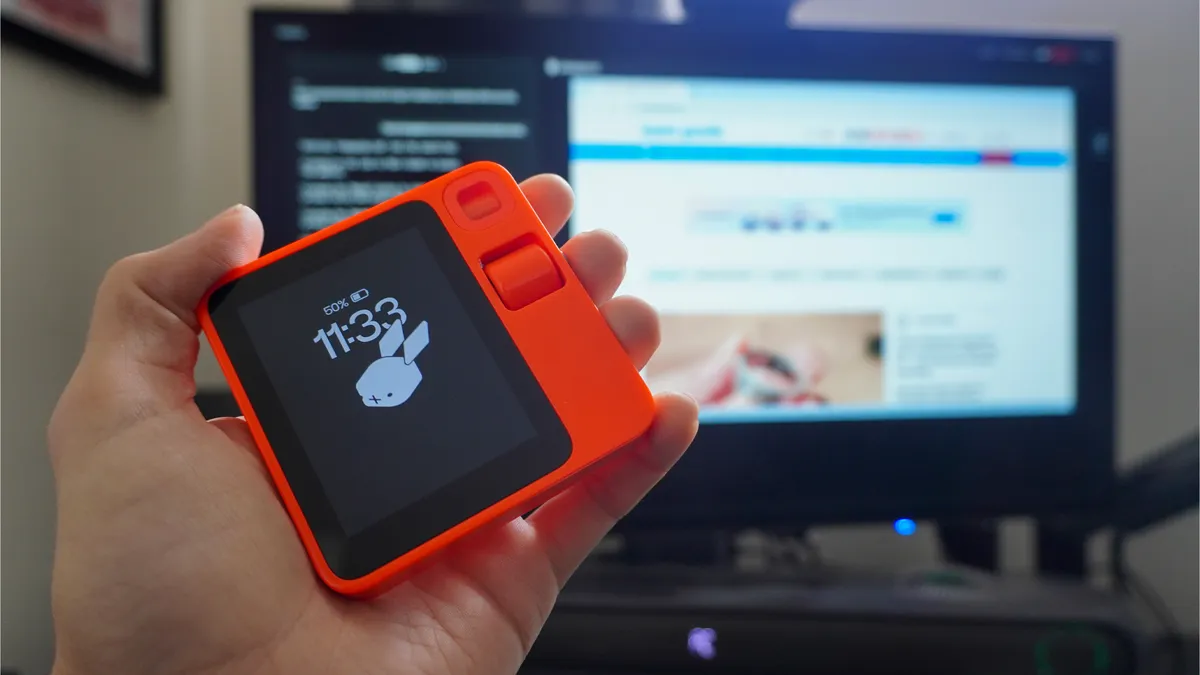
Any time I talk about agentic AI, I of course need to talk about adding guardrails. Let’s not forget the moment where I nearly bought $2,000-worth of Diet Coke-themed mini fridges when I asked for six Diet Cokes off Amazon via Rabbit's LAM Playground.
This is critical, and AGI Inc. has been crystal clear about this by putting a “user in the loop” and ensuring actions are reversible. Because of course, “my AI bought that” isn’t really something that’s going to fly when you request a chargeback to your credit card.
And that’s where the partnership with Visa comes in — ensuring secure authentication before the agent makes web transactions. Now, with Apple Pay, this could be the bulletproof safety rails for your iPhone that stops the process to get your approval.
The ultimate ecosystem

But one of the more exciting things Garg spoke to me about was how this agentic tech won’t stop at just phones. The ultimate goal of AGI Inc. is to take this tech and implement it into a cross-device ecosystem where you can talk to your PC, smart TV or car like a human — seamlessly understanding your intent across platforms.
The Snapdragon partnership will definitely help with that, given how many devices Qualcomm builds chips for. Imagine being able to tell your PC to research party gifts, pass the locations to buy them to your phone and pre-heat the car on a cold day. We’re getting into Jarvis territory here.
And with Android devices soon to get it, this is the critical piece of the puzzle that Apple needs to get right at WWDC for Siri to survive. The company’s plan has clearly been to surround you with their devices — from iPhone to Mac to TV to Watch and VR (soon to be Apple Glasses). If these can all be threaded together seamlessly with that level of autonomy, this would be huge.

Follow Tom's Guide on Google News and add us as a preferred source to get our up-to-date news, analysis, and reviews in your feeds.
More from Tom's Guide