




WordPress competes with the best website builders and utilizes the best web hosting services via the best WordPress hosting, and is the world's leading content management system (CMS). Used by more sites than any other platform or CMS, more than 455 million websites are currently powered by WordPress.
As the most popular CMS, with a market share of over 60%, WordPress's dominance has led to many myths and misconceptions arising about it. These include its capabilities, what it can be used for, and more. Here, we look at five of the most common myths and debunk them.
1. WordPress is just a toy for bloggers
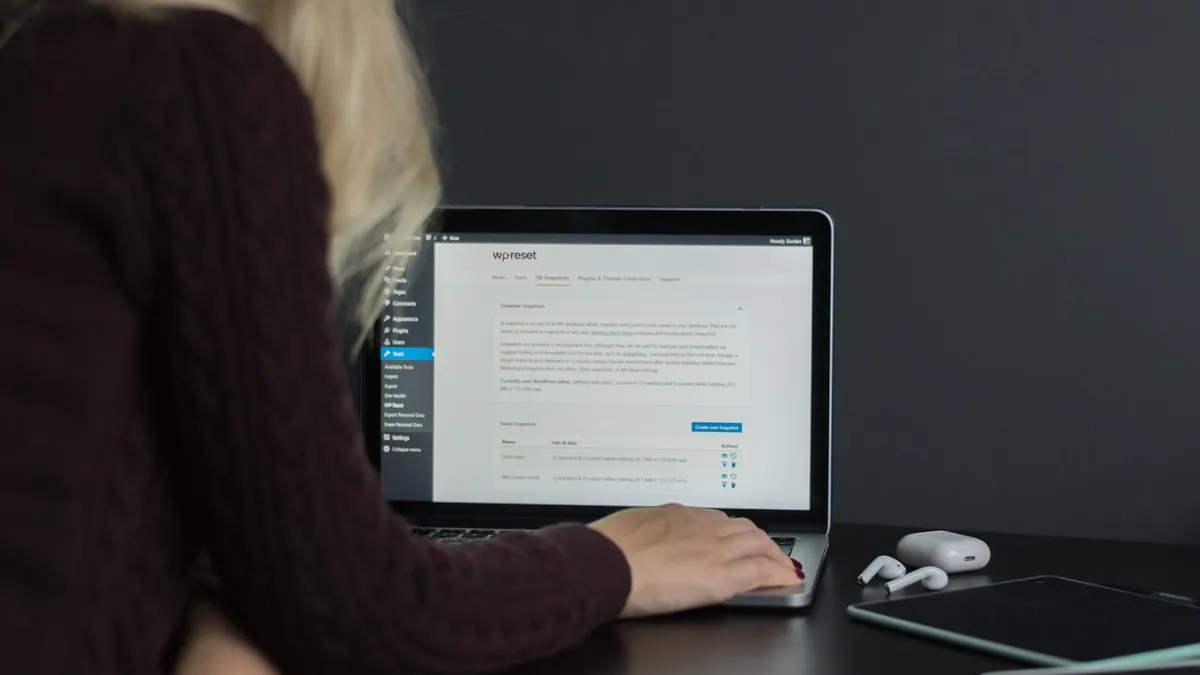
It’s true that WordPress began life in 2003 as a blogging tool, being built on top of an existing platform called b2/cafelog. But it’s been a long time since blogs were the only thing for which it was used.
People have been making all sorts of sites with website builders for WordPress for many years, including ecommerce stores, brochure websites for small and medium-sized businesses, membership sites with subscription-based content, and many more. WordPress has been used to build pretty much any type of website you can think of, across the full spectrum of markets and interests.
While WordPress is simple to set up and use – which makes it attractive to bloggers and people who have never built a website before – in the hands of skilled developers, it can be used for complex applications. In fact, due to WordPress’ plugin architecture, anyone can write their own plugin for it to extend its capabilities and provide advanced functionality which doesn’t exist out of the box.
2. It's not good for ecommerce

This one is easy to debunk, as the numbers simply tell a different story. WooCommerce, which is just one of the many ecommerce plugins available for WordPress, accounts for over four million ecommerce sites online, competing with other big names in the ecommerce space, like Shopify and Magento.
The reason WooCommerce is so prevalent is that it’s so easy to set up and use, and there are thousands of different themes available for it. These factors mean building ecommerce sites is within the reach of anyone, not just those with web development expertise.
Ecommerce is a complex undertaking, and a lot goes into doing it successfully, but plugins like WooCommerce have been built by experts in the field with many years of combined experience. That experience translates into systems that include all the functionality you need to be able to successfully run an online business.
3. WordPress isn't scalable

If you’re unfamiliar with what scalability means in relation to websites, it’s the ability of a website to handle increased workload – usually in the form of more visitors – without a loss of performance, i.e. it doesn’t slow down, or in some cases, malfunction.
Scalability has as much to do with your hosting environment as it does the platform you use to power your site. You could have the most finely-tuned website possible, but if your hosting setup isn’t right, your website could fall over if you get a sudden spike in traffic.
So really, WordPress, or any other CMS, is only one side of the equation. And like any other database-driven CMS, in the right hands and with the best WordPress hosting, WordPress can be configured to produce peak performance and use a minimum of server resources.
4. No support

Aside from the fact that it’s free and easy to set up, one of the things that attracts many people to WordPress is that so many other people already use it. With such a large user base, no matter what problem you’re facing or question you have, you’re almost guaranteed that someone else has been in a similar situation before and already asked about it.
The WordPress website has a knowledge base with a large library of articles, but there are also community support forums where people have been asking questions and sharing their knowledge for many years. WordPress themes and plugins also have their own dedicated forums. And then there are the thousands of websites dedicated to WordPress topics, many featuring detailed tutorials and videos.
All of this support is free, but if you’ve purchased plugins, priority support is usually included in the purchase price. And if you choose to host your website with WordPress.com (as opposed to hosting your own site), all of the plans come with live chat and email support.
5. It’s not secure, or more likely to be hacked

This is a tricky subject because there are many conflicting claims, some saying WordPress is insecure and others saying it’s not. Out of the box, WordPress has a better security record, and a larger security team to focus on these types of issues, than some other CMSs like Joomla.
The WordPress CMS itself is usually not the culprit when it comes to sites being hacked, but rather plugins that have been used on it, particularly ones that have not been updated for a while. Plugins are often developed by individuals or small teams who don’t have the same resources as the WordPress core development team to put into security checks.
Any site that is not actively maintained, with its software kept up to date, is vulnerable to hacking attempts. This is true of all sites powered by a CMS. In the hands of experienced professionals, a WordPress site can be made to be very secure.
Developers who take security seriously will also make sure that the clients they deliver WordPress sites for know how to actively maintain sites after launch to ensure they remain secure.
Further reading on website builders and web hosting
On the web hosting side, read our comparison of web hosting vs WordPress hosting, and our list article giving seven reasons why you should choose managed WordPress hosting for your site.
When it comes to website builders, read our comparisons pitting WordPress vs Wix vs Squarespace and web hosting vs WordPress vs website builders, and our features exploring how to build a website with WordPress and the most common WordPress website mistakes.

