The weather has taken a chilly turn, and while I’m mostly tucked inside, I do want to get out into my backyard to complete a few winter gardening chores. There are still fallen leaves to clear, plants to prune, and robins to feed.
However, to reach most of my beds and borders, I need to step on my lawn, and I’m wondering if this is a good idea when it’s covered in frost. So, I called on the help of lawn experts for their advice on whether they recommend setting foot on your lawn when it’s covered in frost, and if you do, will it cause harm?
Should you walk on a frosty lawn?
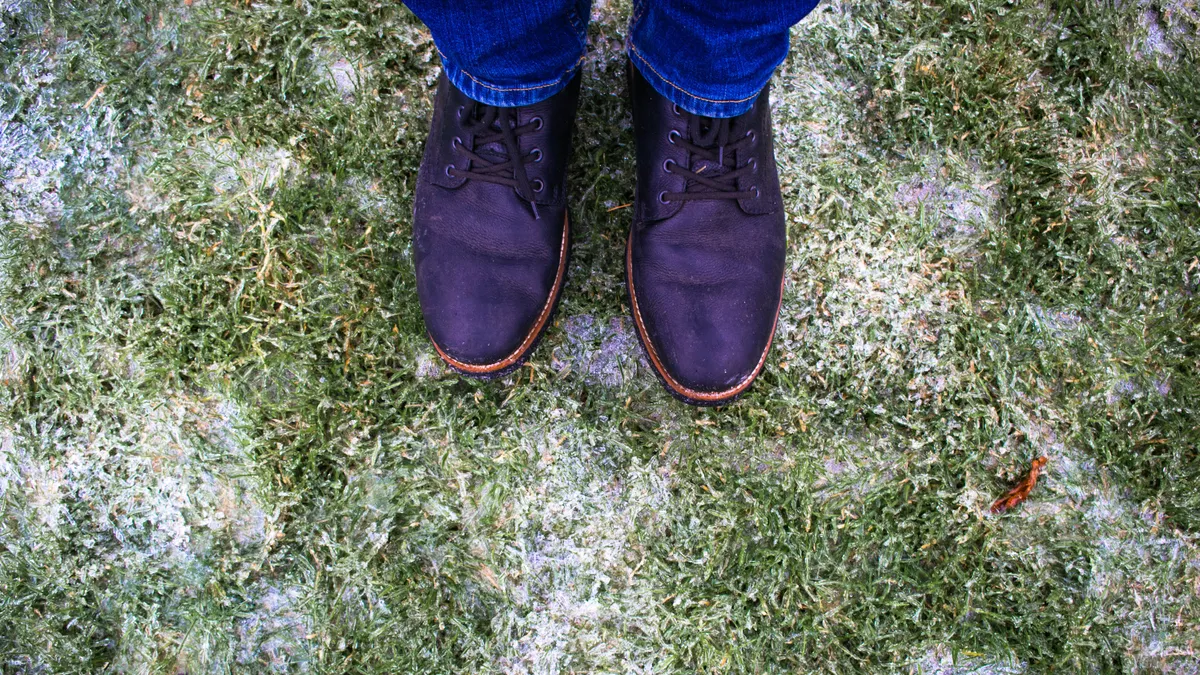
The answer is clear-cut. All the lawn experts advise against walking on a frosty lawn, and the same applies to your lawn after heavy snow. Although this doesn’t mean it’s entirely off limits — because you do have to get from A to B — you should use caution. When frost settles on your lawn, it freezes the water cells in the grass blades, making them brittle and easy to snap. So, when you tread on your lawn, there’s a high chance that you will damage the blades.
Gene Caballero, Co-founder at Greenpal explains that when you tread on a frosty lawn, you’ll leave brown footprints behind, and the grass may die or not recover in the spring. Plus, once broken, the blades are at further risk. “With exposed tears, they can be more susceptible to bacteria, diseases, and fungi,” says Steve Corcoran, CEO at LawnLove.
One such disease is snow mold, which leaves unsightly discolored patches on your lawn.
Can you walk on a snowy lawn?

Whether you should walk on your lawn depends on how much snow is on it.
If there’s a light covering of snow, Craig Elworthy, founder at Lawnbright, says you should feel free to walk on it. “The snow acts as a protective layer, insulating the lawn from the harsh winter air.”
And he adds, “Lawns that get covered with a consistent snowpack often fare better than lawns that are exposed to the cold air all winter long.”
However, this advice changes when the snow is heavy, as it can cause more harm.
“Stepping down on snow causes it to compress and form a thick layer that’s more likely to turn into ice. That can then smother the grass underneath, preventing it from getting the oxygen it needs,” says Corcoran.
Angeleika Zaber, lawn care specialist at Online Turf, is also concerned about the damage compaction can cause. “A compacted soil can then lead to waterlogging, meaning the water is unable to drain away and the plant’s roots literally drown. As a result, your lawn may develop bare patches, which can then be taken over by weeds, moss, algae, lichens, liverworts, and diseases.”
And just as frost can damage blades, snow can, too, leaving unsightly brown footprints and bare patches that may need overseeding in the spring.

What to do if you can’t avoid treading on your lawn

“If you live in a climate where the frost burns off in the morning sun, then it’s best to wait until it warms up and the leaf blades are soft to the touch before treading on them,” Elworthy advises.
However, overcoming the problem of treading on a frosty or snowy lawn can be especially challenging for pet owners and those with children. Lively pets can’t be curtailed from chasing about on your lawn. If this is the case for you, Elworthy says, “If your pet treads on the lawn as a daily habit, then it may be easier to just allow them to continue doing this and repair the lawn in the spring.”
While you can’t deny children the fun of making snowmen and beating you in a snowball fight, you can encourage them to stay in designated areas, so your entire lawn isn’t damaged.
And if you need to walk across your lawn, Ionel Giuran, landscaping expert at Fantastic Gardeners, recommends sticking to frozen, compacted areas, such as walkways, where the damage is less likely to be noticed, and avoid dragging across heavy equipment. Zaber also suggests installing stepping stones if you don’t already have a pathway in place.
What happens to your lawn when it comes out of dormancy?
Treading on a frosty or snowy lawn can impact growth once it comes out of dormancy. "The damaged blades can die back, and the plant will need to divert energy into regrowth instead of root development or early spring growth,” explains Giuran.
“This can leave your lawn looking patchy and thin in the spring and can slow down its ability to fully recover from winter. Areas that have been heavily compressed or damaged can struggle for several weeks or months to regain their vigour, especially if the underlying soil was compacted during freezing conditions,” he adds.

Follow Tom's Guide on Google News and add us as a preferred source to get our up-to-date news, analysis, and reviews in your feeds.
More from Tom's Guide
- Gardeners urged to protect plants from frost this weekend — 9 essential tips
- How to safely store your robot lawn mower for the winter — expert tips
- I've lost too many plants to cold weather — garden experts share 3 tips to help them survive the winter