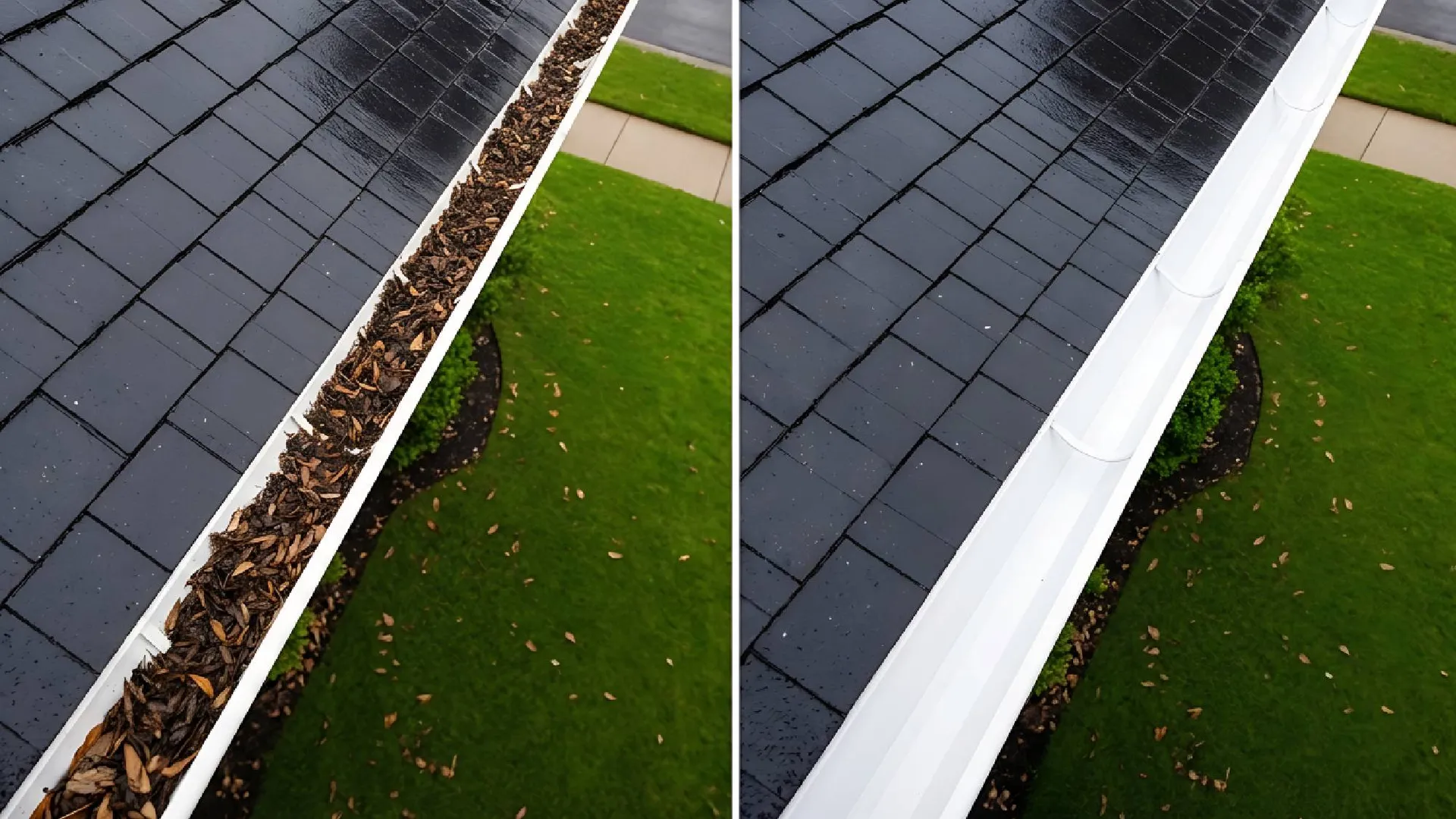
Few home maintenance chores feel more daunting than clearing clogged gutters. Dragging an extension ladder across uneven flowerbeds, leaning precariously over shrubs, and scooping wet sludge by hand is both exhausting and genuinely dangerous.
Ignoring the buildup is not an option either, as overflowing gutters quickly send rainwater pouring down your siding and pooling against your foundation. The trick to clearing your roofline safely comes down to extending your reach from the ground, removing loose debris before you add water, and knowing when a clog is too stubborn for a pole attachment.
Why you shouldn't put off cleaning clogged gutters
As damp leaves and pine needles pack together, they form a heavy dam that blocks rainwater from reaching the downspouts. That trapped water spills over the lip of the trough, soaking fascia boards until the wood rots and saturating the soil around your foundation walls, where leaks and basement dampness soon follow.
In colder months, standing water inside a blocked gutter also freezes solid, adding enough weight to pull brackets loose from the roofline or form damaging ice dams under your shingles.
Here are three simple ways to clear your gutters cleanly while keeping both feet firmly on the ground.
The easy way to clear gutters from the ground
1. Pull dry debris out with a wet/dry vac gutter kit
Blasting leaves out with a leaf blower works over open grass, yet it creates a mess over decks, patio furniture, or flowerbeds. A gutter attachment kit for a standard wet/dry shop vac keeps that debris contained while letting you work safely from the lawn.
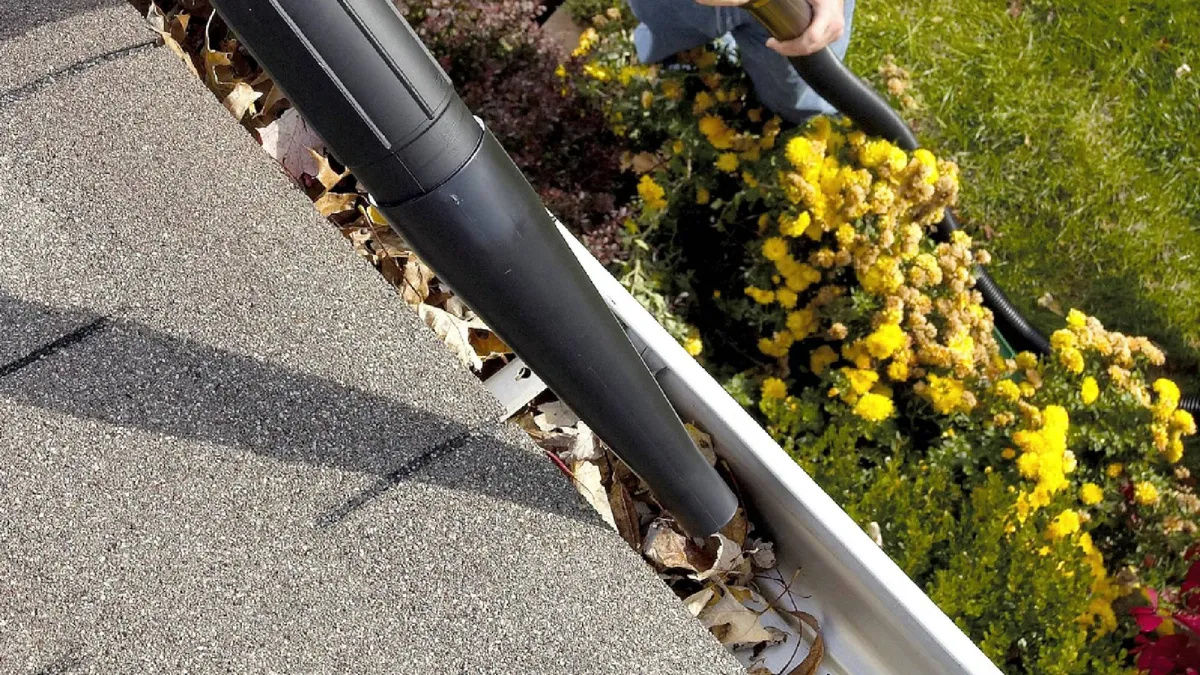
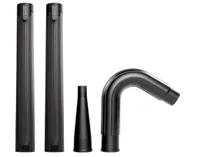
Brands like Craftsman sell these universal kits at hardware stores and Amazon. Each kit includes three or four rigid plastic extension wands that click together into a 10-to-14-foot pole, topped with a curved, U-shaped nozzle.
Hold the assembled pole like a pool skimmer, hook the curved nozzle over the gutter lip, and switch the vacuum on to pull dry leaves, twigs, and grit straight down into the canister beside you.
Work in short sections along the wall, lifting the hook over each gutter bracket as you walk, and wear eye protection and gloves in case stray debris drops from above.
2. Lift stubborn clumps with a telescopic gutter scoop
If your debris is too damp for a vacuum to lift, grabbing a hose right away will only turn the leaves into heavy, wet paste.
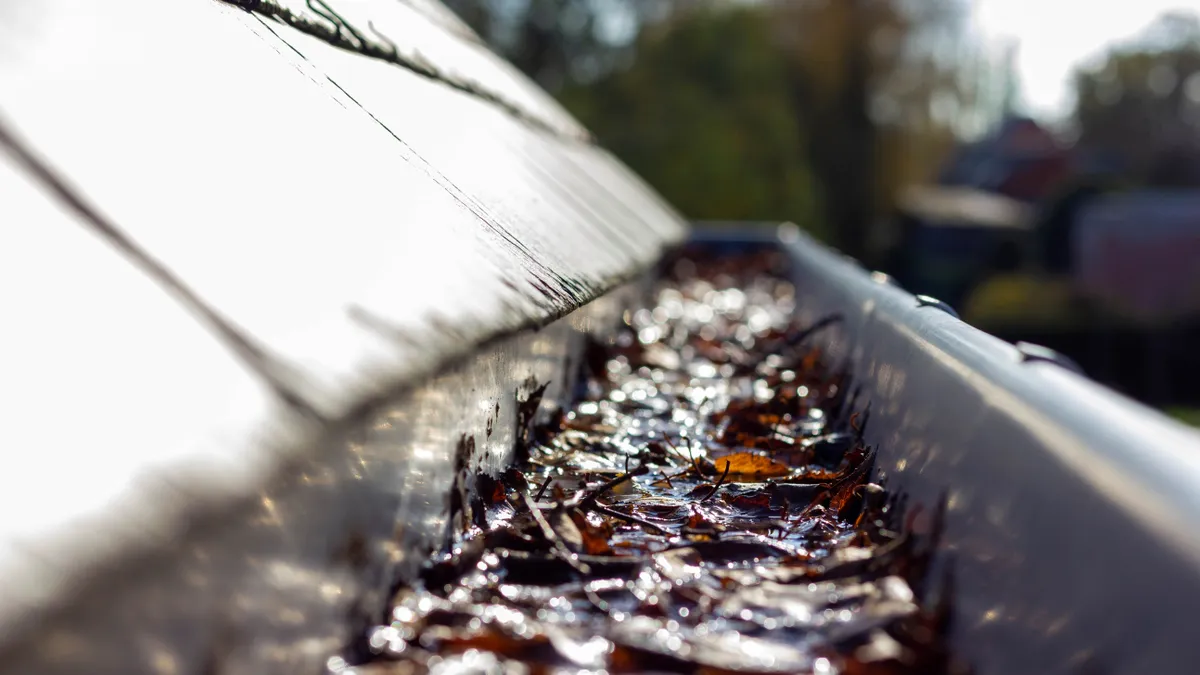
Instead, attach a curved gutter scoop or stiff brush to a telescopic extension pole suited to your roofline height. Work in short sections and focus on lifting material up and out of the channel rather than pushing it toward the downspout, which only packs debris tighter into the outlet.
If you cannot see over the lip of the trough, clipping a small pole-mounted inspection camera to the shaft lets you spot any leftover buildup without guessing.
3. Flush the channel gently with a curved hose wand
Once you have removed the bulk of the leaves, you still need to clear fine shingle grit and confirm that water can actually escape down the pipe.
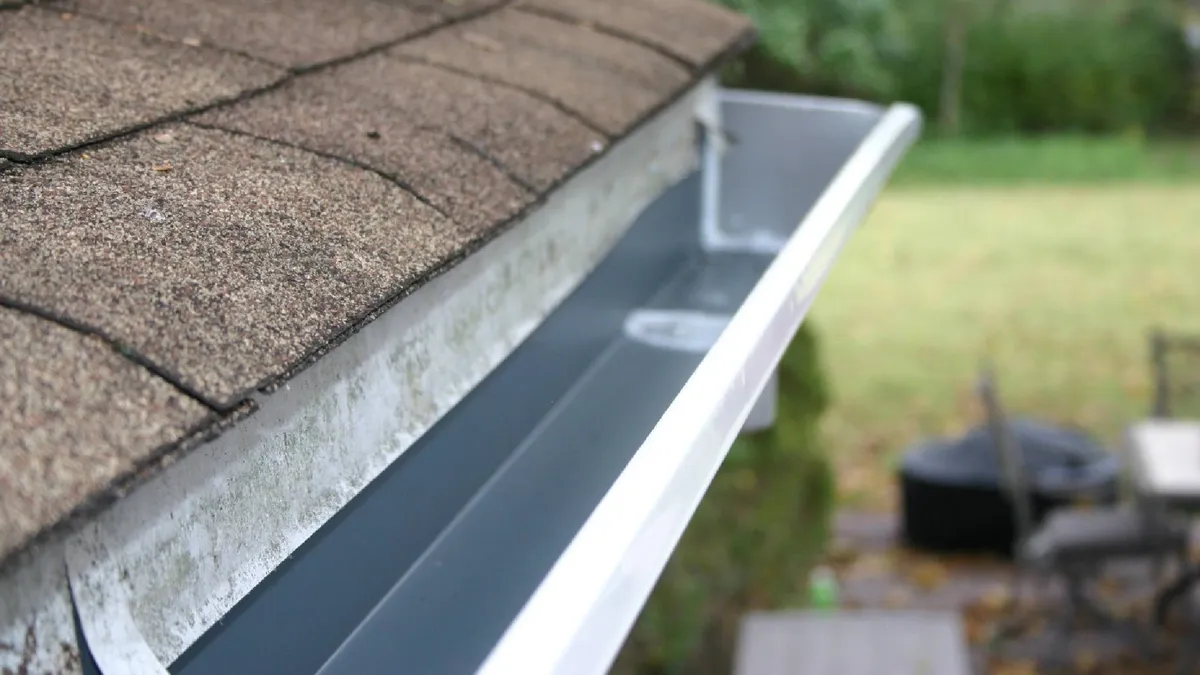
Hook a curved garden-hose attachment over the gutter lip and run a gentle stream of water rather than a high-pressure blast, which can loosen gutter brackets or force water up under your shingles. Work toward the downspout to wash remaining dirt away.
If water starts backing up over the edge, turn the hose off immediately rather than adding more water, as a persistent blockage inside the downspout elbow usually needs to be cleared by hand.
When ground-level tools aren't enough
Extension poles and vacuum kits handle routine single-story maintenance easily, yet they have clear limits. If your roofline sits beyond a standard 24-foot reach, never stand on a chair or makeshift platform to bridge the gap.
Ground tools also struggle with years of packed mud, heavy branches, or thick mats of wet pine needles. Skip the DIY approach and call a professional if you face severe clogs, overhead power lines near the roof, interior water leaks, or gutters pulling loose from the fascia board.

Follow Tom's Guide on Google News and add us as a preferred source to get our up-to-date news, analysis, and reviews in your feeds. Make sure to click the Follow button!
More from Tom's Guide