There’s one problem all tomato growers fear. A ruined harvest. Blossom end rot is the culprit that can put an end to promising pickings.
After all your hard work, whether growing tomatoes from seed or from established plants in pots, the ultimate disappointment is seeing an edible crop. When blossom end rot takes hold, all hope of picking and biting into a homegrown, juicy tomato is suddenly dashed.
It’s not hard to identify blossom end rot in tomatoes, but the key is preventing it from ruining your crop and reducing your tomato yield. Here I explain how to identify blossom end rot, what causes it and steps you can take to beat it this month.
What does blossom-end rot look like?
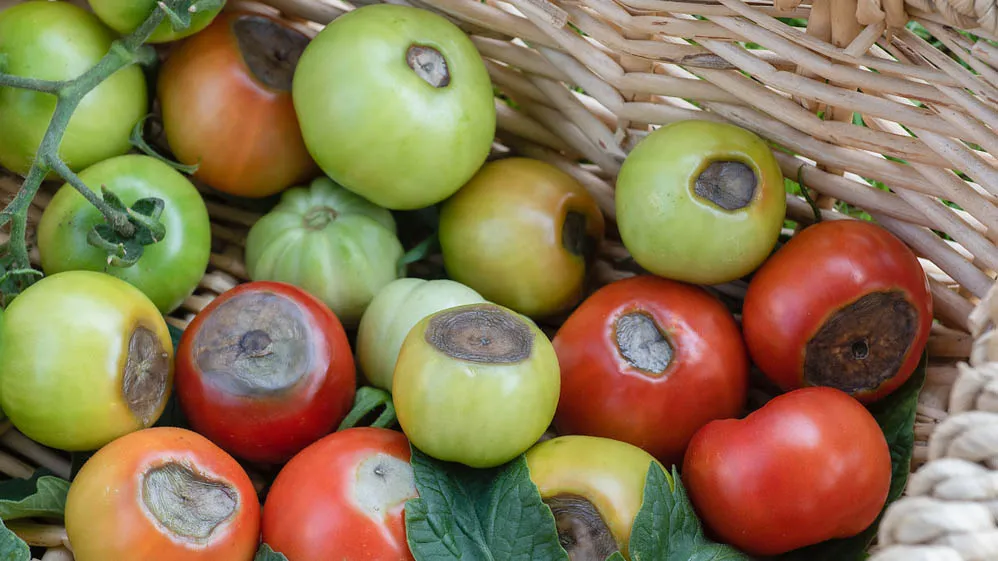
Blossom end rot doesn’t just affect tomatoes; it’s also a common problem with eggplants and peppers. But rather than being a pest or disease, it’s related to growing conditions.
It’s not difficult to spot. You’ll notice a circular patch at the bottom of the fruit that resembles a bruise. It’s often described as a ‘water-soaked patch’ that starts out greenish-brown and, over time, turns dark brown and then black.
The patch will enlarge and become sunken, giving the fruit a flattened appearance, but only at the affected end. It will also take on a leathery appearance, eventually spreading and damaging the whole fruit.
What causes blossom end rot?
If you spot blossom end rot on your tomatoes, it’s a sign they lack calcium. Without calcium uptake, the plant’s cell walls collapse, and the plant dies, which in turn causes the bruised appearance on the fruits.
Tomatoes absorb calcium from the soil, but the problem occurs when it’s dry, and the calcium remains locked in. The risk will also increase if you have acidic soil, as it naturally contains lower levels of calcium than alkaline soil.
Adding fertilizer to the soil around your plants can also exacerbate the problem. Calcium will be competing with nitrogen, potassium or magnesium for root uptake. Plus, when concentrated fertilizer is applied to dry soil, limited water movement reduces the roots’ ability to absorb calcium.
What to do with damaged fruit
Once you’ve spotted blossom end rot, you can’t save the individual fruits. Remove the fruit, and then check over the rest of the plant. You’ll also need to monitor any other tomato plants to see if it’s spread to them.
If your plant is still flowering, you’re still in luck. It’s likely to recover and continue to produce fruit. But to prevent blossom-end rot from damaging your next fruits, there are a few steps you can take.
How to prevent blossom end rot
1. Keep your plants moist

The soil or potting compost around your plants should always be kept moist. And during particularly hot periods, you may need to water your plants a couple of times each day.
You could try the tomato-watering hack, involving a plant pot buried in the soil near the roots. I use it on my own plants to ensure the water goes to the roots, rather than lying on the surface or just below.
2. Apply a mulch

Apart from keeping to a regular watering schedule, applying mulch will help retain moisture and prevent it from evaporating in the summer heat. Place two to three inches of organic matter around the base of your plants, but avoid the tomato plant’s stalk to prevent rot.
Straw makes a lightweight barrier that also keeps slugs and snails away. You can also use well-rotted compost, shredded leaves and grass clippings.
3. Test your soil's pH
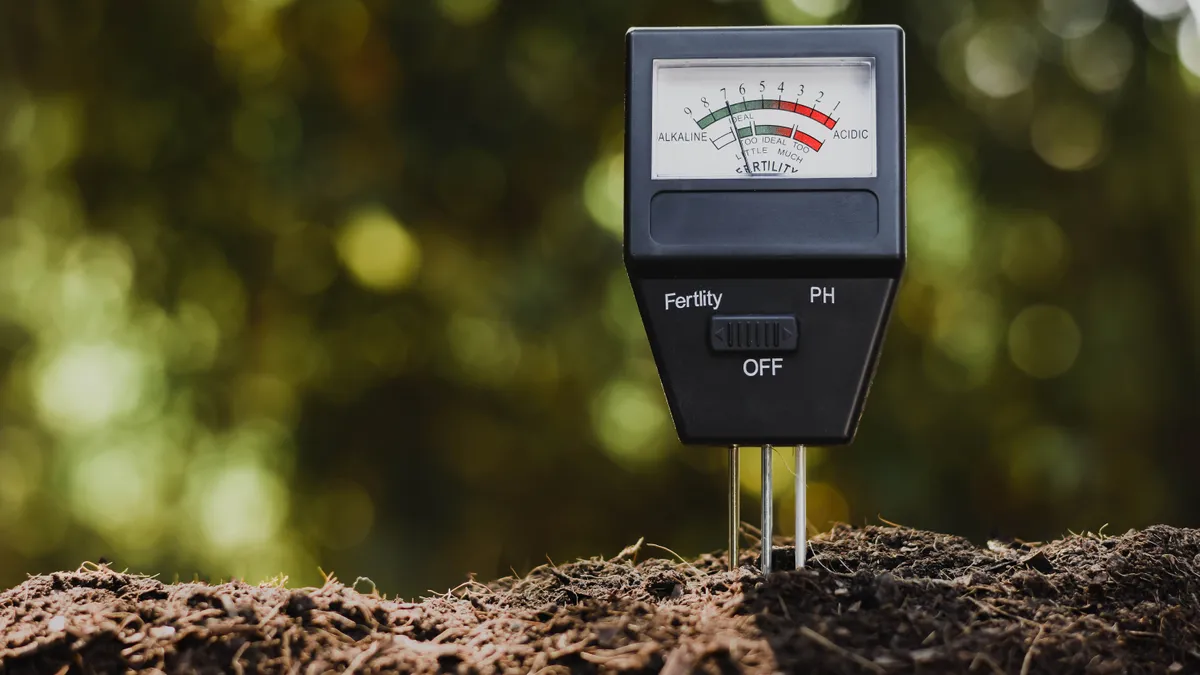
You’ve already learned that there is less calcium in acidic soil, so for this reason, if your soil is acidic, your tomato plants might be more susceptible to blossom end rot — there’s simply less calcium for their roots to absorb.
If you don’t already know where your soil sits on the pH scale, it’s advisable to take a soil test before you plant your tomatoes. This will indicate whether your tomatoes will need extra calcium to prevent them from going bad. You could try this 4-in-1 soil pH and moisture meter, now $15 at Amazon.
4. Add calcium
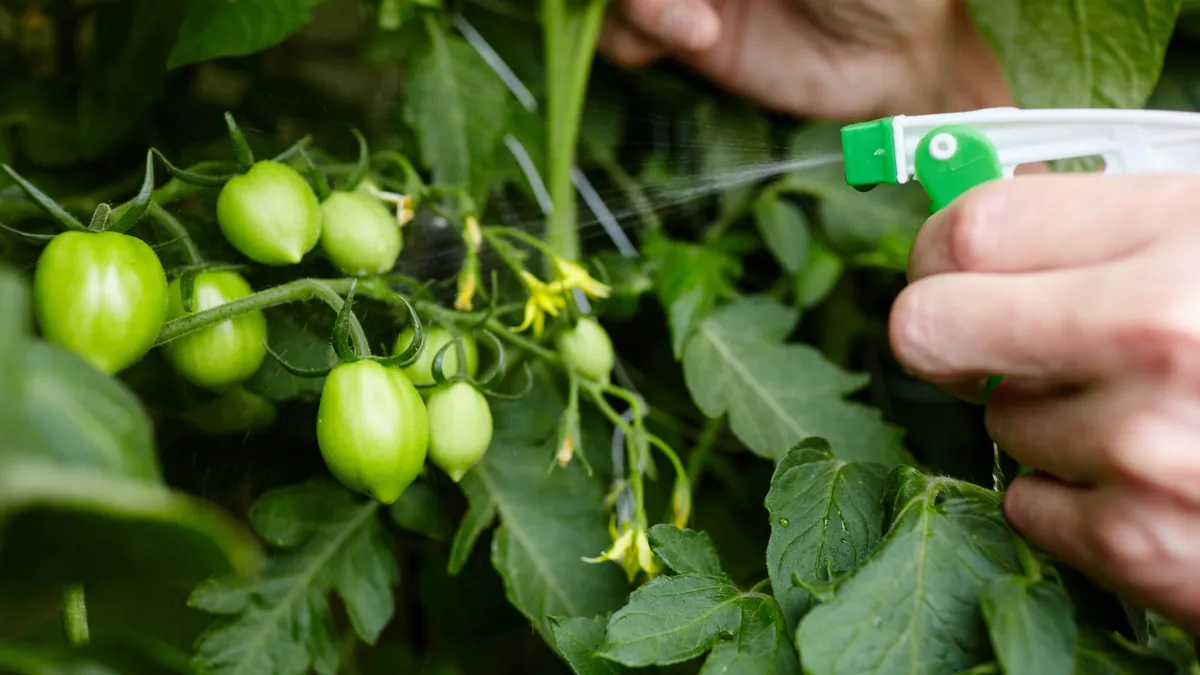
Once you’ve determined your soil's pH, if it’s acidic, you can add lime to balance it. However, don’t add lime before testing your soil.
Tom Kalb, NDSU Extension horticulturist, suggests making your own calcium feed for your tomato plants. He recommends mixing four tablespoons of calcium nitrate into a gallon of water and spraying it onto your fruits, but not the leaves, two to three times a week.
And he says, the key time to spray the fruits is when the tomatoes are dime-sized or smaller.
Does blossom end rot means the end of your whole harvest?

Thankfully, if treated promptly, later fruits will ripen successfully, and your whole crop won’t be ruined.
Kalb explains, “The first cluster of fruits is most often damaged,” but adds that after removing the damaged fruits, “Subsequent clusters of fruits are much less susceptible to blossom end rot.”
So it appears that you can save your tomato harvest. “As summer progresses, the vine’s network of roots expands, allowing it to absorb more calcium into the plant. The leaves and fruits on the vine are in better balance later in summer, too,” he says.
Gardening watering essentials we love

Follow Tom's Guide on Google News and add us as a preferred source to get our up-to-date news, analysis, and reviews in your feeds.
More from Tom's Guide