







3D printing has come a long way in the past decade or so. When my middle school got its first 3D printer around 2013, I remember how careful we were instructed to be with anything we made using it. We could hardly make anything sizable or structurally sound with it, due to the limitations of our equipment and I didn't see the potential in it then that I see now.
As I write this, I'm sitting in the Autonomous Ergochair Ultra 2, a chair made with 3D-printed components that can hold my entire weight. On top of that, these carefully engineered parts provide one of the most sustainably comfortable perches I've had in my office in years.
That's where the beauty of 3D printing really shines with this chair: everything in the seat is formed down to the millimeter with a holistically optimized design. In other words, Autonomous made an unbelievably comfortable chair that, despite being full of frilly tech, doesn't feel like anything more than a wonderfully cozy office chair and it very well could be one of the best office chairs yet.
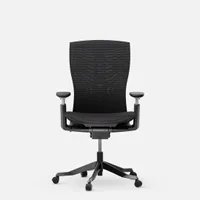
What's 3D-printed on the Ergochair Ultra 2?

The star of the show with the Ultra is its 3D-printed tech, but it's actually a subtle detail from a functional standpoint. Autonomous printed a network of helical springs that line the underside of the seat, and they're made to give you the supple, pressure point-free feeling of foam while retaining their shape over time. No sinking into a groove here.

Autonomous even sent me a cutout of the chair so I could get a better look at the matrix of nodes and struts. This cutout shows that there's still some foam lining the top of the seat, but the springs are doing plenty of work to make this chair comfortable. A rubbery liner separates these two layers to spread your weight more evenly across the springs, and it all sits atop an inch-high air gap that allows for better shock absorption.
Easy assembly

I've been sans-chair in my apartment for as long as I've lived here, but I finally had a boatload of chairs arrive all at once last week. This initially stressed me out, because I wasn't looking forward to tediously piecing all of them together. But I was pleasantly surprised when I cracked open the box to the Ergochair Ultra 2 and pulled out only three pieces.
I didn't need any tools to put this chair together either. The whole process of removing the chair from its gargantuan box and assembling it took me less than five minutes. I was frustrated that it came in a box that was too big to fit through the front door of my apartment, but I was at least happy that I spent minimal time in my mailroom. Once it was assembled, I didn't fret about anything falling apart.
Surprisingly supportive

At a glance, the lumbar support in this chair seems underwhelming. However, it's actually one of the sturdiest and most pronounced I've tested recently. I didn't pick up on it when I was putting the chair together, because it all hides behind a massive spine lining the backrest which provides unparalleled structural support.

The metal base is also an extremely sturdy component. I noticed no sagging or dragging as I moved this chair around on my carpet. Unfortunately, the casters are still a somewhat cheap-feeling plastic set, but they're easy enough to remove and replace if you want to upgrade to rollerblade wheels.
Overall, this chair is surprisingly well-rounded for its mid-range price point. Does it blow my mind on its own? Not necessarily, but the technology that's bursting out of the seams of this chair is undeniably impressive. I don't have any long-term testing notes for this chair yet, but I'm looking forward to seeing what the matrix can withstand as I give it a proper run through the wringer.
More from Tom's Guide
- I tested a NASA-inspired office chair used by a former US President
- Office chair vs gaming chair: Which is better for your home office?
- I just tried an office chair with a built-in massager and working from home will never be the same

