Dandelions spread fast once they establish in your lawn. A single plant produces a white seed head containing hundreds of seeds that disperse with the slightest breeze, scattering across your yard and into neighbors' lawns. Within weeks, one dandelion becomes dozens.
The key to controlling dandelions is removing them before those seed heads form and spread. Once dandelions go to seed, they're extremely difficult to manage because their deep taproots regenerate even when you pull the visible plant. A small piece of root left in the soil grows back into a full plant.
Timing matters more than method when dealing with dandelions. Here are three natural ways to eliminate dandelions and how to keep them from coming back.
1. Hand-pull dandelions after rain
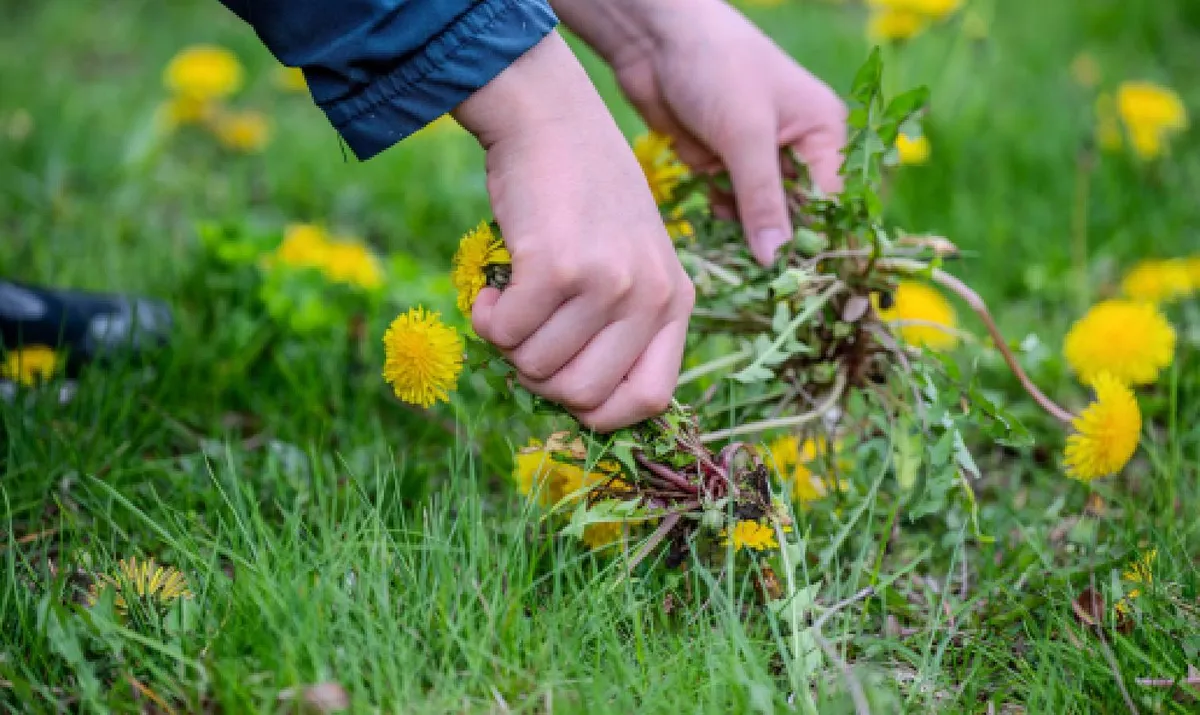
Hand-pulling works best immediately after rain when soil is soft and saturated. Wet soil releases roots more easily than dry, compacted ground, letting you extract the entire taproot instead of breaking it off partway down.
Wait for a good soaking rain or water your lawn thoroughly the night before. The next day, grasp each dandelion at the base of the stem where it meets the soil. Pull slowly and steadily upward with consistent pressure — don't yank or jerk, which snaps the root.
The goal is removing the entire taproot in one piece. Dandelion taproots can extend 6-10 inches deep, so you need significant soil moisture to pull them out completely. Any root fragment left behind regenerates into a new plant within weeks.
Hand-pulling works well for small dandelion populations or isolated plants. For larger infestations covering significant lawn areas, hand-pulling can be impractical and you might need tools to help.
2. Dig out roots with a weeding tool

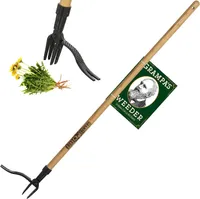
For dandelions with established taproots or when soil is too dry for hand-pulling, use a specialized weeding tool. A dandelion weeder (also called a taproot weeder) has a long, narrow blade designed to penetrate deep into soil and cut underneath the root.
Push into the blade into the soil alongside the dandelion stem, angling it to slide under the plant's main root. Insert the blade 4-6 inches deep, then lever the tool upward to lift the entire root system out of the ground.
When dandelions are young their roots are shorter, which means their easier to extract fully than mature plants with 10-inch taproots. Check your lawn weekly during growing season and remove new dandelions before roots establish deeply.
3. Spray with vinegar-based natural herbicide

Household vinegar mixed with dish soap creates an effective natural herbicide that kills dandelions without synthetic chemicals. The acetic acid in vinegar desiccates plant tissue, while dish soap helps the solution stick to leaves.
Mix white vinegar with a few drops of dish soap in a spray bottle. On a sunny day, spray the mixture directly onto dandelion leaves and crown, coating them thoroughly for 2-3 seconds. Avoid spraying nearby grass or desirable plants as the vinegar kills whatever it contacts.
Dandelions typically wilt and brown within 24-48 hours after treatment. Established dandelions with deep roots may regrow from underground portions, requiring a second application 1-2 weeks later.
This method kills the visible plant but may not eliminate deep taproots completely. Combining vinegar treatment with digging or hand-pulling provides better long-term control than vinegar alone.
Bonus tip!

Preventing dandelions from establishing starts with maintaining healthy, dense grass that crowds out weeds naturally. Keep your grass height at 3-3.5 inches instead of cutting it short. Taller grass shades the soil surface, making it harder for dandelion seeds to germinate and establish.
Short-cut grass allows more sunlight to reach soil, creating ideal conditions for weed seeds to sprout. The taller your grass, the less opportunity dandelions have to take root.
Overseed thin or bare patches in your lawn where dandelions commonly establish. These spots have less competition, making them prime real estate for dandelion seeds carried by wind. Fill in gaps with grass seed before dandelions move in and colonize those areas.

Follow Tom's Guide on Google News and add us as a preferred source to get our up-to-date news, analysis, and reviews in your feeds. Make sure to click the Follow button!
More from Tom's Guide