If you've ever wondered: "why is my peace lily drooping?" you're not alone. There's something uniquely stressful about seeing the plant in that state. You know you watered it. You haven't moved it. And still it looks like it's staging a protest, leaves flopped over the sides of the pot in full dramatic fashion.
Peace lilies droop fast but they recover just as quickly. Unlike houseplants that decline slowly and give you little warning, a drooping peace lily is actually communicating something specific. Fix the right thing, and you'll usually see it perk back up within hours.
If the drooping comes with yellowing leaves or brow tips, those are separate issues with their own fixes. But if it's a pure droop, here's how to diagnose what's going on and get your plant standing tall again.
1. Check if it needs water immediately
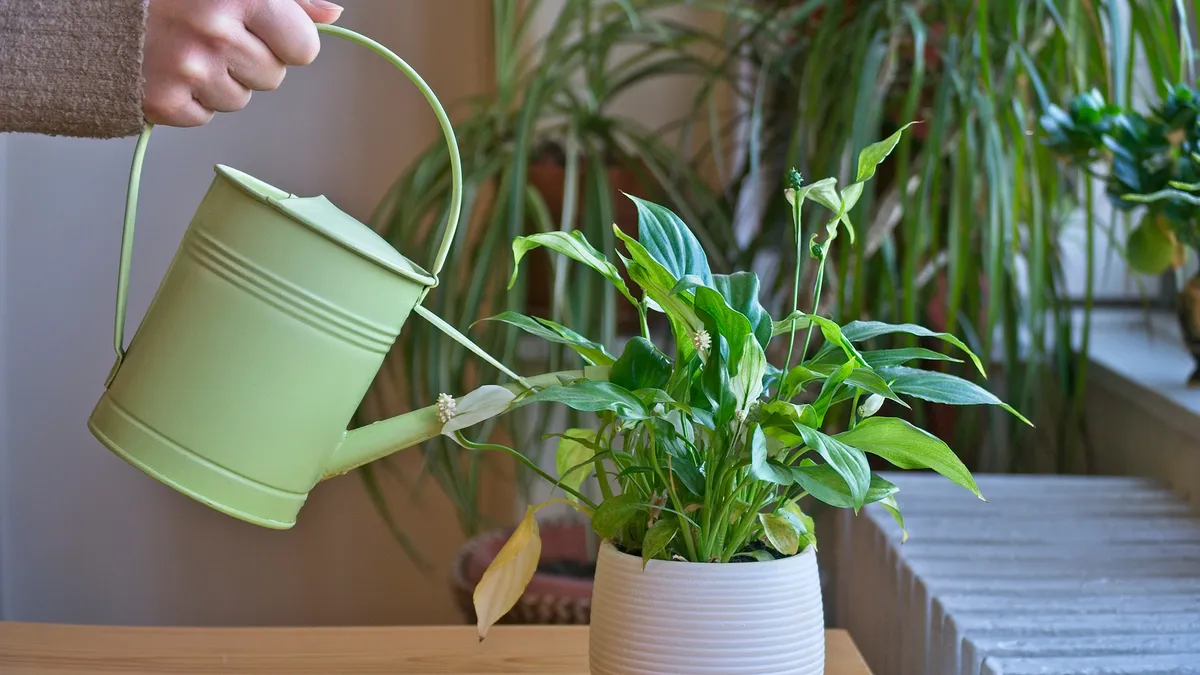
The most common cause of drooping is thirst. Peace lilies droop dramatically when soil dries out completely, collapsing within hours once they hit a critical dehydration point.
Stick your finger into the soil up to your second knuckle. If it's completely dry, the plant needs water immediately. If it's still slightly damp, underwatering isn't the problem, so you can skip to the next section.
Water thoroughly until water drains from the bottom of the pot. Don't just sprinkle the surface, make sure the entire root ball is soaked.
If your pot has no drainage holes (consider fixing this soon), water slowly until soil feels evenly moist throughout, not soggy. Without drainage, you're guessing —which is why this problem keeps happening.
Drooping from underwatering reverses within 2-6 hours. Leaves start perking up noticeably within the first hour after watering. If your peace lily doesn't recover by the next day, underwatering wasn't the issue.
You can prevent this by watering when the top inch of soil feels dry rather than waiting until the plant droops. Drooping repeatedly stresses the plant even though it recovers each time.
2. Make sure you're not overwatering
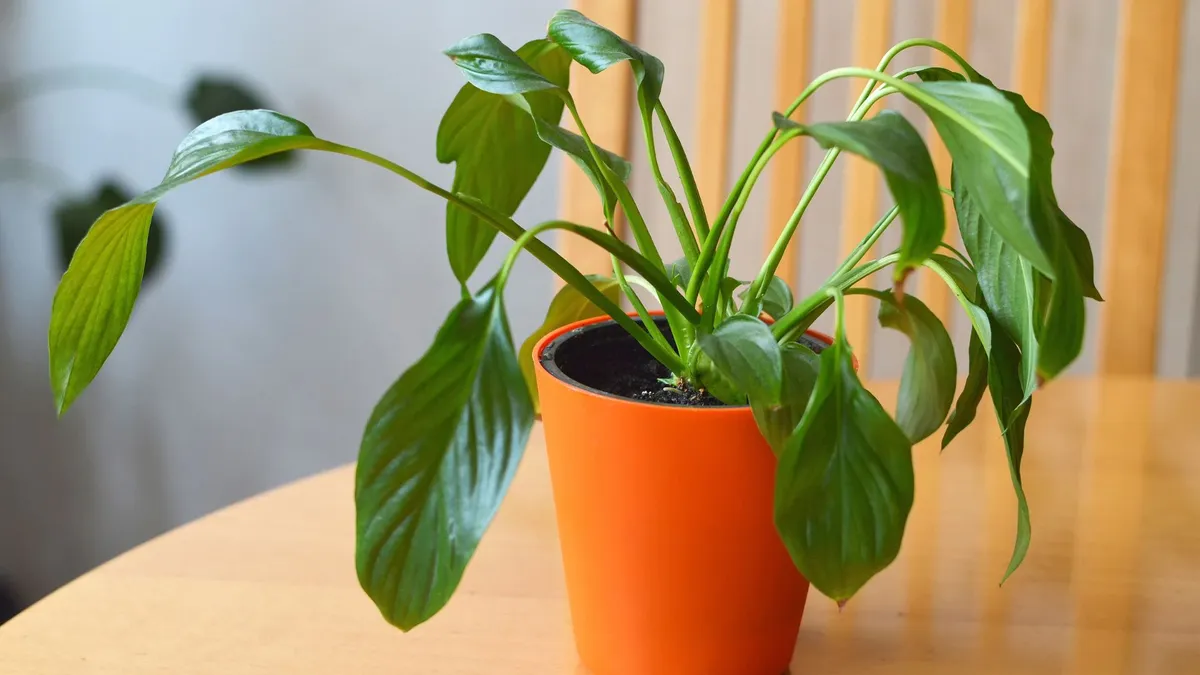
Overwatering causes drooping that looks identical to underwatering. The difference is soil stays constantly soggy, and drooping doesn't improve after wateringit gets worse.
Check soil moisture by sticking your finger deep into the pot. If soil is wet several inches down and has been for days, you're overwatering. The plant's roots are suffocating in waterlogged soil and can't absorb water properly, so the plant droops despite sitting in wet soil.
Stop watering immediately and let soil dry out significantly before watering again. This can take a week or more depending on pot size and soil type.
Check drainage by ensuring water flows freely from the pot's drainage holes. If water sits in the saucer for hours after watering, the pot isn't draining properly. Empty saucers immediately after watering and never let pots sit in standing water.
If overwatering has been severe, roots may have rotted. Gently remove the plant from its pot and check the roots. Healthy roots are white or light tan and firm, while rotted roots are brown, mushy, and smell foul.
3. Check if it's rootbound

Peace lilies outgrow their pots over time. When roots completely fill the pot with no room to expand, the plant becomes rootbound and can't absorb water efficiently even when you water properly. This causes drooping that doesn't respond to watering adjustments.
Remove the plant from its pot to check roots. If roots are circling densely around the outside of the soil ball, tightly packed, or growing through drainage holes, the plant is rootbound.
Repot into a container 2-3 inches larger in diameter than the current pot. Use fresh potting soil formulated for indoor plants. Gently loosen the root ball before placing it in the new pot to encourage roots to grow outward into fresh soil.
After repotting, water thoroughly. The plant may droop more dramatically for 2-3 days as it adjusts to the new pot, this is normal transplant stress. Drooping should improve within a week as roots establish in fresh soil.
Peace lilies typically need repotting every 1-2 years depending on growth rate. If your plant has been in the same pot for multiple years and droops despite proper watering, rootbound conditions are likely the cause.

Follow Tom's Guide on Google News and add us as a preferred source to get our up-to-date news, analysis, and reviews in your feeds. Subscribe to Tom's Guide on YouTube and follow us on TikTok.
More from Tom's Guide