Hydrangeas produce massive blooms that make entire bushes look spectacular, then suddenly the stems bend, flowers hang limply, and the leaves lose their firmness despite the plant looking green and otherwise healthy.
Drooping happens when hydrangeas can't maintain turgor pressure, the internal water pressure that keeps stems rigid and leaves perky. Environmental stress breaks this down: too much or too little water, wrong sun exposure, or poor soil drainage.
The frustrating part is that opposite problems look identical. Underwatering droops them. So does overwatering. Too much sun droops them. So does too little. You need to diagnose the actual cause before fixing it, here's how.
1. Not enough water

Hydrangeas are thirsty plants, and when soil dries out completely, they lose the internal water pressure that keeps stems upright. The result can be dramatic: leaves hanging, stems bent and the whole plant looking defeated.
The telltale sign that your hydrangeas need more water is drooping that appears in the afternoon but recovers by evening once temperatures cool. That pattern points directly to dehydration.
Check soil moisture by pushing your finger 2-3 inches below the surface — not just the top layer, which can be misleading. If it's dry down there, water immediately.
Water deeply once or twice a week rather than a little every day. Deep watering drives roots downward where soil stays moist longer.
You can also add 2-3 inches of mulch around the base to hold that moisture in, and water in the morning so it reaches roots before the heat takes it.
2. Too much water

Overwatering, on the other hand, is counterintuitive. The plant droops not because it lacks water, but because its roots are actually drowning. Waterlogged soil suffocates roots, and suffocated roots can't absorb anything, leaving the plant just as dehydrated as if you'd never watered at all.
Unlike underwatering, the drooping doesn't recover in the evening. It persists all day, often with yellowing leaves alongside the wilting.
Stop watering and let the soil dry out significantly before you water again. To test drainage, dig a small hole nearby, fill it with water, and see how long it takes to drain — it should clear within 30 minutes. If it sits for hours, drainage is your real problem.
If the overwatering has been prolonged, check the roots. Healthy roots are firm and white or tan. Rotten roots are brown, mushy, foul-smelling, and extensive root rot might mean your hydrangeas are unrecoverable.
3. Poor drainage
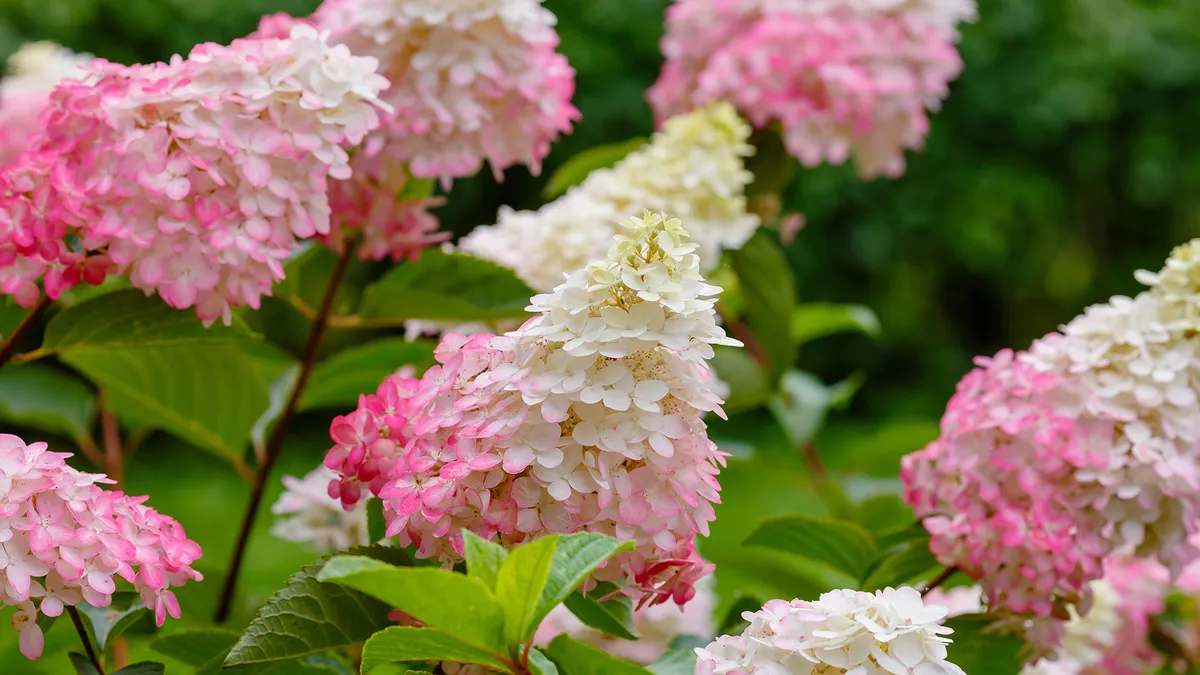
Even careful watering can't help a hydrangea planted in heavy clay soil. Clay holds water and prevents it from draining away, keeping roots in a constant state of saturation.
The symptoms look identical to overwatering because the underlying problem is the same: suffocated roots. The signs are persistent drooping that never fully improves, soggy heavy soil, and puddles that linger on the surface after rain.
The fix is improving what the soil is made of. Work compost, leaf mold, or well-rotted manure into the top 6-12 inches around the plant — organic matter breaks up clay and creates the air pockets roots need. Coarse sand or gravel can also help.
For severe cases, consider moving the hydrangea to a raised bed, or plant it slightly elevated so water naturally drains away from the roots rather than pooling around them.
4. Too much direct sun

Afternoon sun is brutal for hydrangeas. Intense heat causes leaves to lose moisture faster than roots can replace it, and drooping is the plant's way of conserving what little it has left.
The pattern here mirrors underwatering: drooping in the afternoon, recovery by evening, but you'll often see scorched brown edges on leaves as an additional clue.
Hydrangeas want morning sun and afternoon shade. Four to six hours of gentler morning light is ideal as the harsh hours between roughly 1-5 PM are what cause damage.
If you can't relocate the plant, shade cloth suspended above it can filter the worst of the afternoon heat. Planting taller shrubs or structures to the west or south also works well as a longer-term solution.
5. Not enough sunlight

Too little light creates a different kind of drooping, not wilting from water stress, but weak stems that simply can't support the weight of hydrangea blooms. Plants in deep shade stretch toward whatever light they can find, growing leggy and thin rather than sturdy.
The result is fewer flowers and stems that bend under their own weight.
Hydrangeas need at least 4-6 hours of sunlight daily. Less than that and no amount of watering or fertilizing will produce strong growth. If your plant is in deep shade, relocation is the real fix, ideally in fall or early spring when the plant is dormant.
If moving isn't immediately possible, pruning back overhanging branches can make a meaningful difference. Even gaining an extra hour or two of light daily strengthens stems noticeably over time.

Follow Tom's Guide on Google News and add us as a preferred source to get our up-to-date news, analysis, and reviews in your feeds. Subscribe to Tom's Guide on YouTube and follow Tom's Guide Entertainment on TikTok and Instagram. Finally, you can visit our dedicated Tom's Guide Savings Squad hub for expert help on getting the best products for less.
More from Tom's Guide