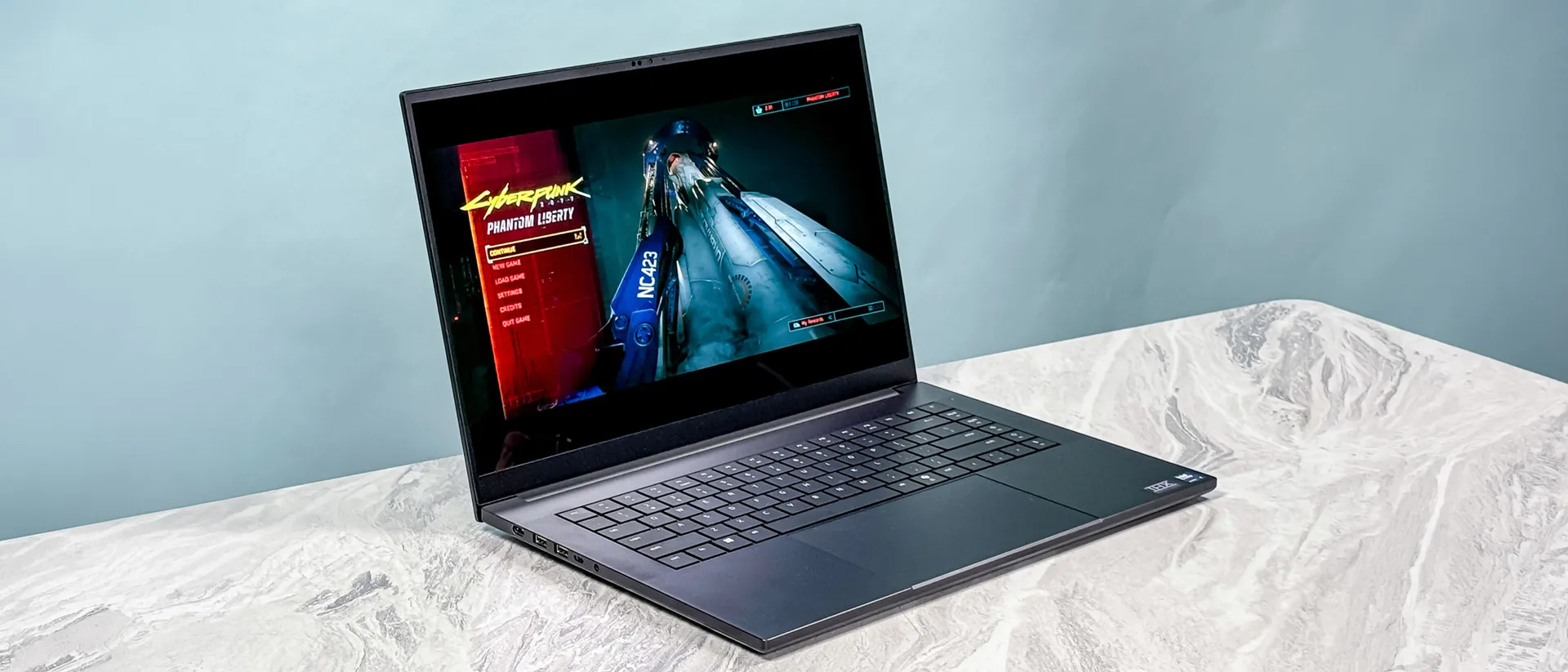
Tom's Guide Verdict
The Razer Blade 16 (2026) is a serious gaming powerhouse thanks to its beefy specs. It’s also an elegant, slim machine that is easy to take wherever you go. Though it demands a steep price, you’re getting a superlative gaming experience that’s worth every penny.
Pros
- +
Slim and portable design
- +
Powerful gaming performance
- +
Vivid OLED panel
- +
Strong battery life (for a gaming laptop)
Cons
- -
Very expensive
- -
Runs loud and hot
Why you can trust Tom's Guide Our writers and editors spend hours analyzing and reviewing products, services, and apps to help find what's best for you. Find out more about how we test, analyze, and rate.
The Razer Blade 16 (2026) is a gaming laptop that makes no compromises. It has an ultraportable design, yet a monstrous gaming beast is packed inside. Though you’ll pay top dollar for Razer’s latest, you’ll get a superlative gaming experience.
Inside, it packs the latest Nvidia RTX 50-series GPU, along with either an AMD Ryzen 9 or an Intel Core Ultra 9 CPU. That, along with up to 64GB of RAM, means you’ll have little trouble running the best PC games with graphics and resolution cranked to the max. No matter what I threw at it, the Razer Blade ran buttery smooth.
Like last year’s model, the new Blade 16 has a gorgeous OLED panel that delivers deep contrast and vivid colors. It also delivers excellent HDR brightness for an OLED gaming laptop. Whether it’s your favorite game or a streaming show, everything on the display will look its best.
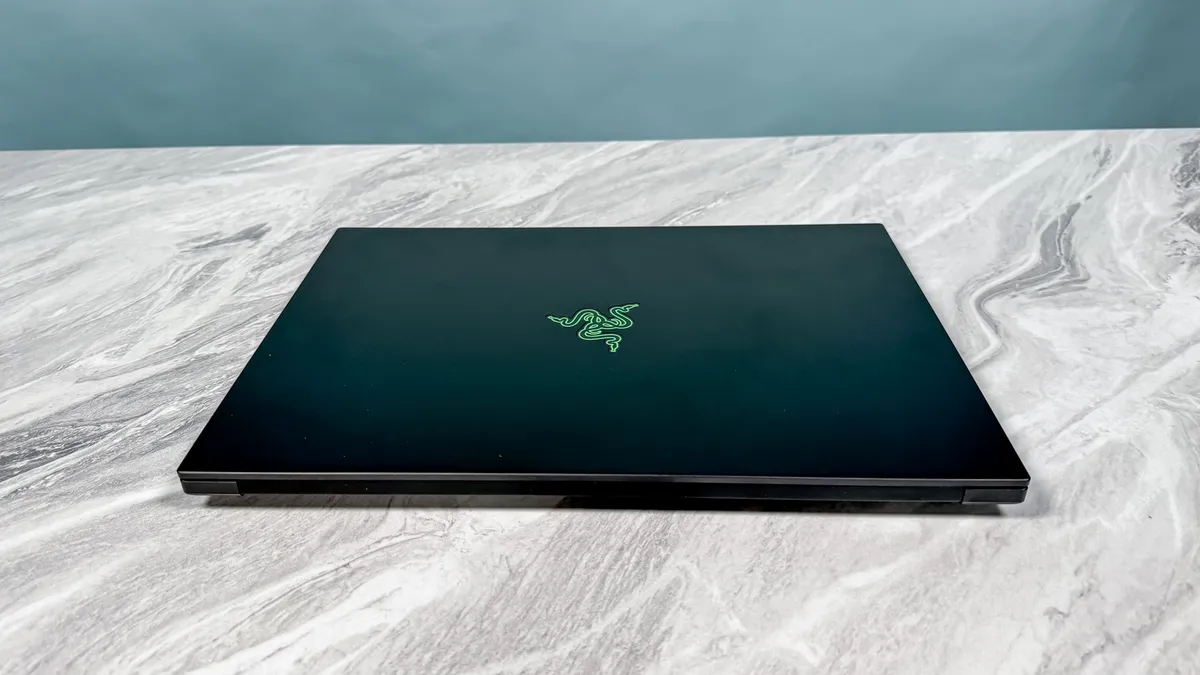
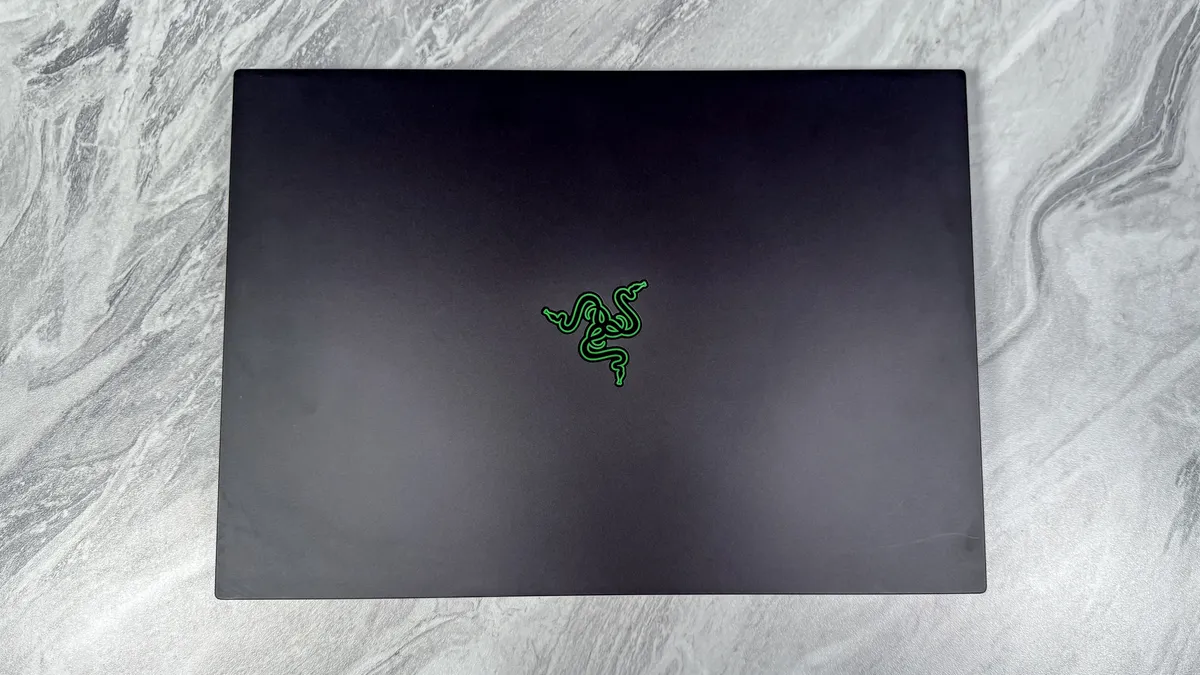
Design-wise, the Razer Blade 16 impresses with its sturdy, CNC-milled aluminum all-black chassis. Without the green Razer logo on the lid, you might not even recognize it as a gaming laptop. Though not exactly light at nearly five pounds, its thin profile makes it easy to slip into your backpack.
While the Razer Blade 16 (2026) demands a steep asking price and can run very hot during demanding games, it’s undeniably one of the best gaming laptops I’ve reviewed. If you’re in the market for a slim gaming laptop with power to spare, this is the machine to get. Find out why in my full review.
Razer Blade 16 review (2026): Cheat sheet
- What is it? The Razer Blade 16 is a thin and powerful gaming laptop featuring the latest high-end components.
- Who is it for? For anyone who wants a premium gaming laptop and is willing to pay top dollar for it.
- What does it cost? The Razer Blade 16 (2026) starts at $2,399 on Razer’s website. As configured, our review unit is valued at $4,899.
- What do we like? We like the slim design, incredible gaming performance, and vivid OLED panel.
- What don’t we like? We don’t like the steep asking price, and that it runs too hot and loud under heavy load.
Razer Blade 16 review (2026): Specs
| Header Cell - Column 0 | Razer Blade 16 (starting) |
Razer Blade 16 (tested) |
|---|---|---|
Price |
$2,399 |
$4,899 |
Display |
16-inch (2560x1600) 240 Hz OLED |
16-inch (2560x1600) 240 Hz OLED |
CPU |
AMD Ryzen 9 365 |
Intel Core Ultra 9 358H |
GPU |
Nvidia GeForce RTX 5060 |
Nvidia GeForce RTX 5090 |
RAM |
16GB |
32GB |
Storage |
1TB |
2TB |
Ports |
3x USB-A, 2x USB-C, 1x microSD, 1x HDMI 2.1 |
3x USB-A, 2x USB-C, 1x MicroSD, 1x HDMI 2.1 |
Connectivity |
Wi-Fi 7, Bluetooth 5.4 |
Wi-Fi 7, Bluetooth 5.4 |
Dimensions |
13.9 x 9.8 x 0.6 inches |
13.9 x 9.8 x 0.6 inches |
Weight |
4.7 pounds |
4.7 pounds |
Razer Blade 16 review (2026): The ups
The Razer Blade 16 (2026) is an absolute powerhouse thanks to its beefy specs, but its elegant design and superb display also add to its allure.
Thin and light design
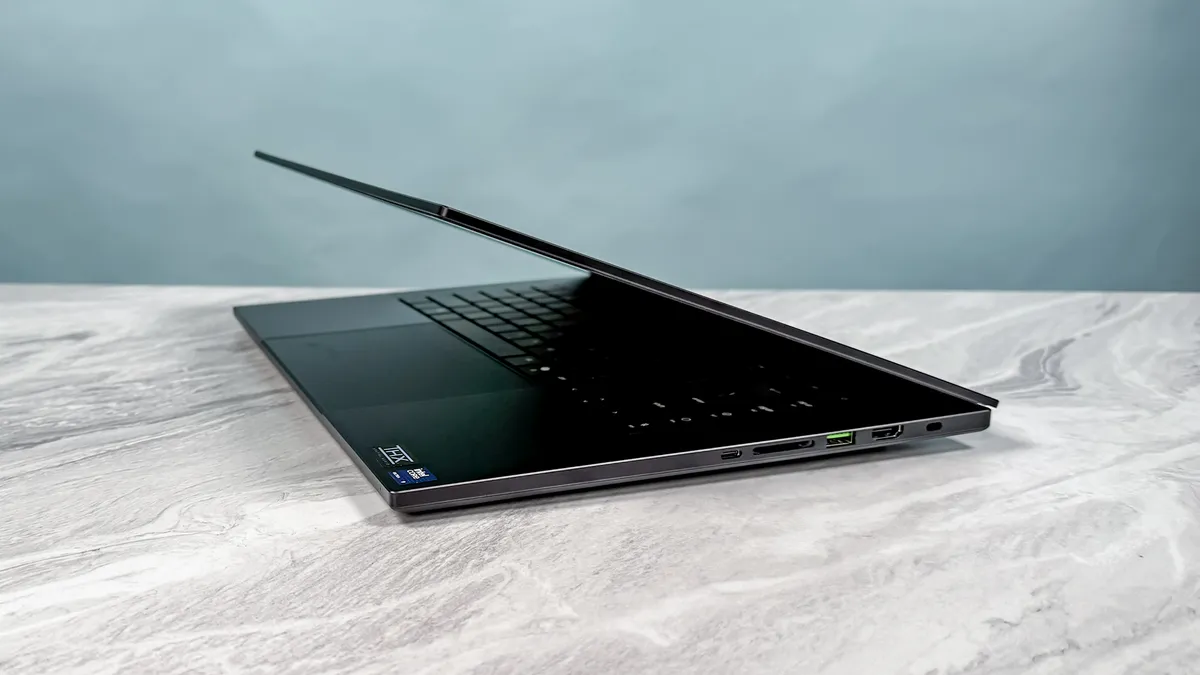
The Razer Blade 16 is one of the loveliest-looking gaming laptops I’ve ever reviewed. Its slim profile, rounded edges, and sturdy aluminum frame could make you mistake it for a high-end work notebook rather than a gaming machine. Not only does it look great, but its smooth surface also makes it a pleasure to hold.
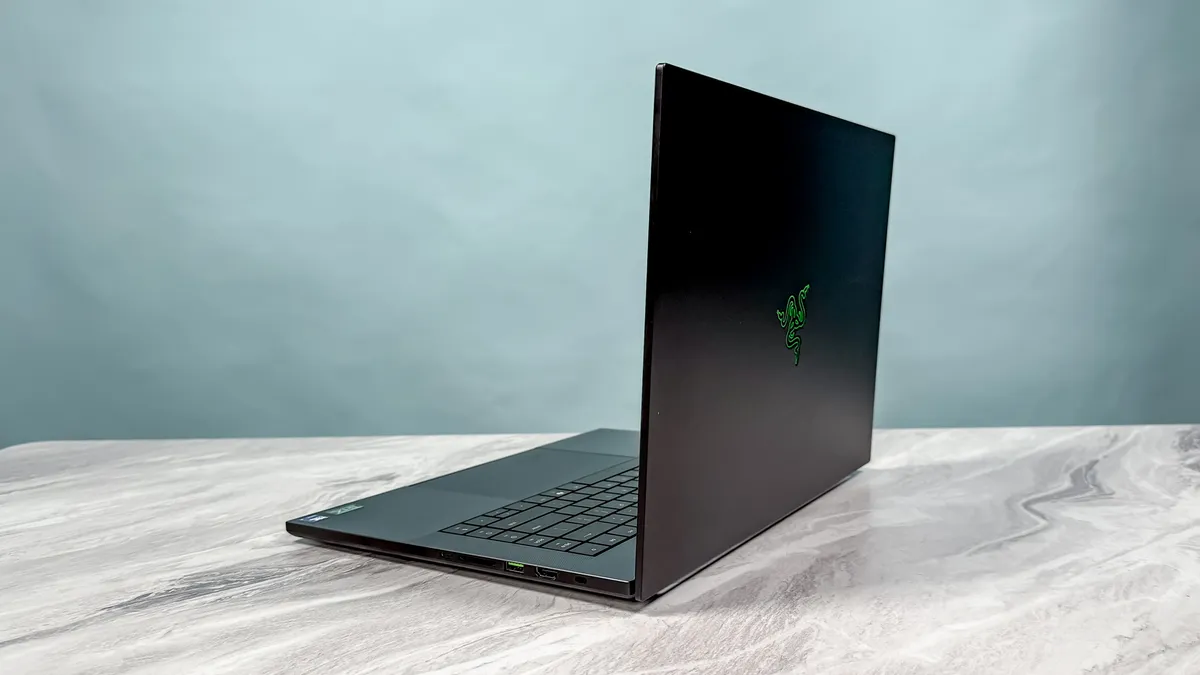
Measuring 13.9 x 9.8 x 0.6 inches and weighing 4.7 pounds, the Razer Blade 16 makes for an unobtrusive travel partner. Sure, you’ll feel its weight in your backpack, but it won’t exactly break your back. It’s rare for a gaming laptop to be this thin and light, which is a major selling point.
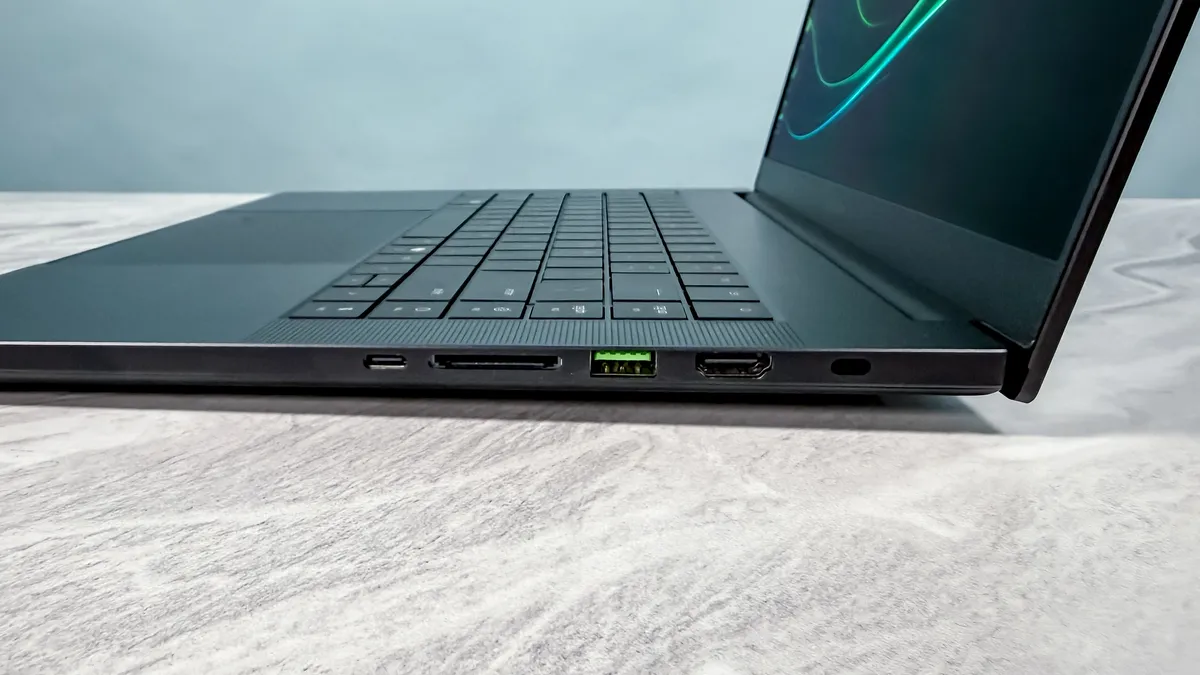
Despite its thin profile, the Razer Blade 16 doesn’t skimp on ports. It packs nearly all the ports you need, including three USB-A, two USB-C, one HDMI, and a microSD reader. You don’t get an Ethernet port, which is a bit of a bummer, but you still get more than enough ports to make this your primary work PC at home.
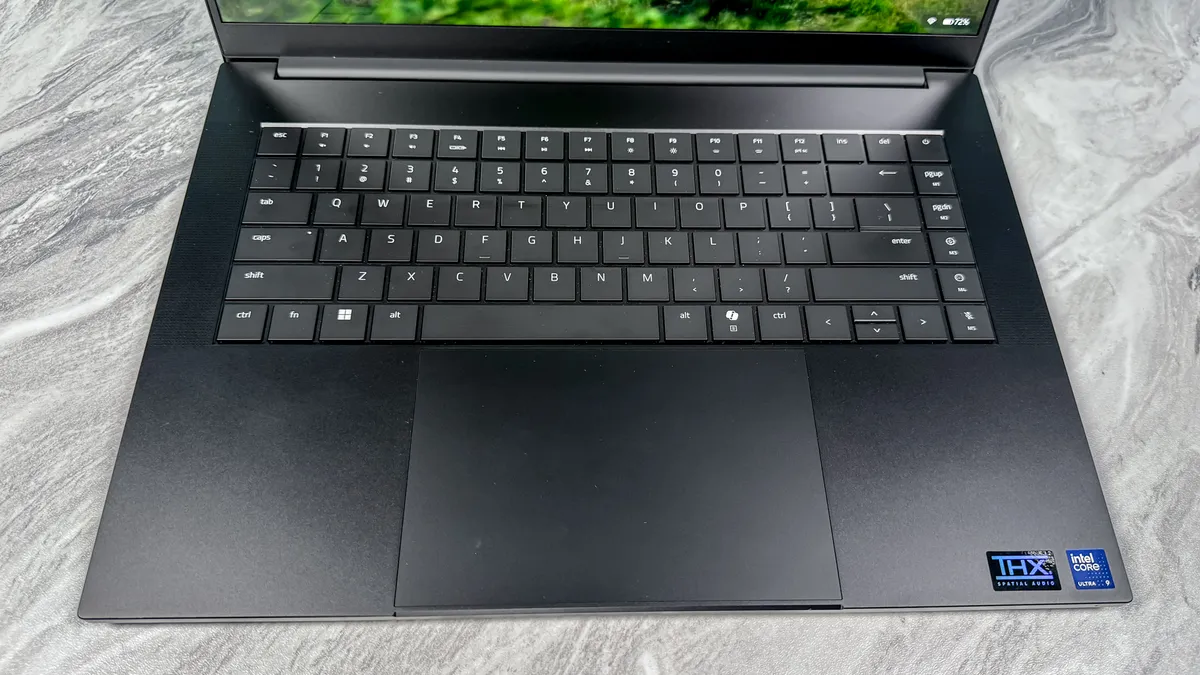
The keyboard is another highlight, thanks to its thick, responsive keys. Travel distance isn’t shallow, which makes for a delightful typing experience. I’m also a fan of the touchpad, since its large size makes it easy to make gestures and swipes. While not as good as a proper mechanical keyboard, the board here is quite great for a gaming laptop.
Vivid OLED panel
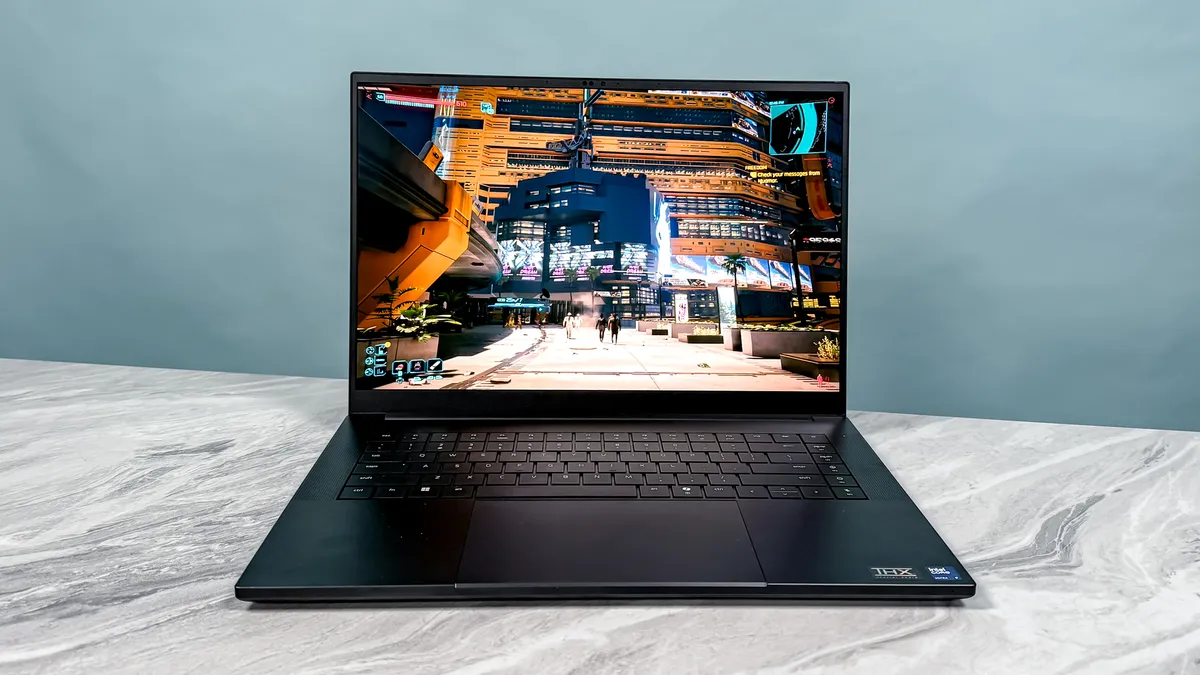
The OLED panel on the Razer Blade 16 is one of its biggest selling points. Whether it was the neon-drenched streets of Cyberpunk 2077’s Night City or the vast open expanses of Red Dead Redemption 2, everything looked bright and colorful to my eyes. You want games to look as good as they run, and you certainly get that here.
| Header Cell - Column 0 | Razer Blade 16 (2026) |
Asus ROG Zephyrus Duo (2026) |
Alienware 16 Area-51 (2026) |
|---|---|---|---|
Nits (brightness) |
408 (SDR) | 586 (HDR) |
439 (SDR) | 650 (HDR) |
368 (SDR) | 556 (HDR) |
sRGB |
127% |
116.5% |
132.2% |
DCI-P3 |
90% |
82.5% |
93.7% |
Delta-E |
0.23 |
0.21 |
0.20 |
As shown in the table above, the Razer Blade 16 delivers strong SDR and HDR brightness. It also features excellent color reproduction (sRGB and DCI-P3) and color accuracy (Delta-E). These values are comparable to those of other gaming laptops we recently tested, such as the Asus ROG Zephyrus Duo and Alienware 16 Area-51.
The only minor downside is that the display is very glossy and easily picks up reflections and glare. You can mitigate this by playing in a darker room, but it’s something to keep in mind before you settle in to play games or watch videos.
Powerful gaming performance
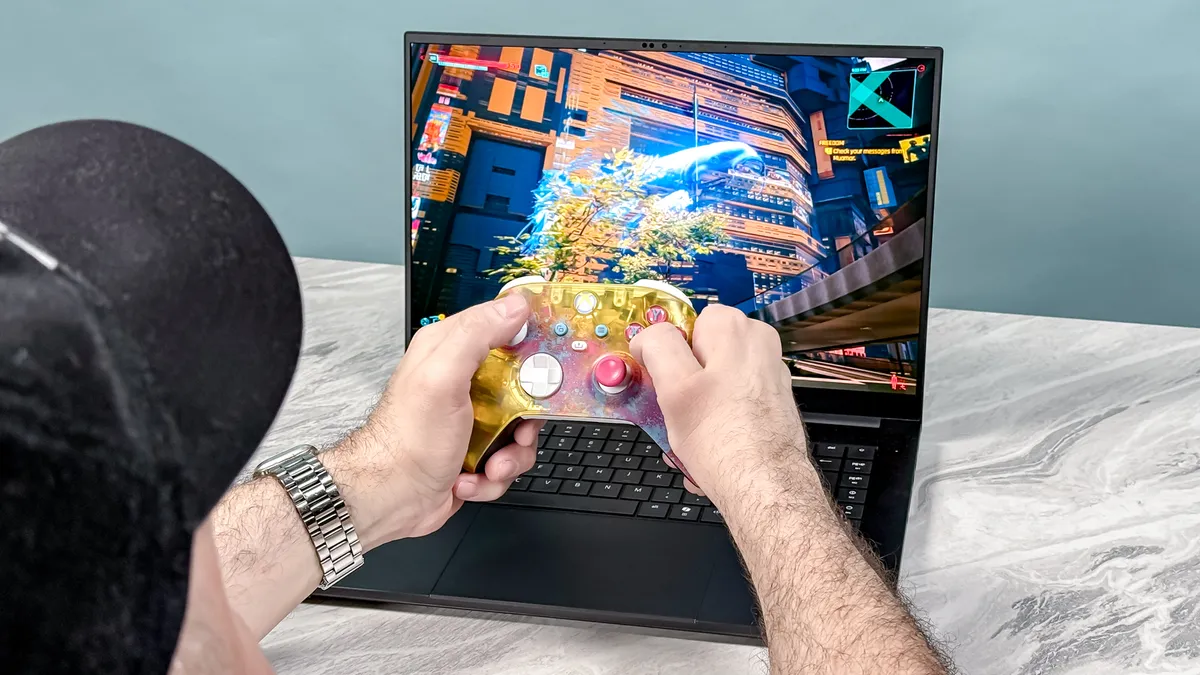
The Razer Blade 16 I tested is a true gaming beast, thanks to its Intel Core Ultra 9 CPU, RTX 5090 GPU, and 32GB of RAM. Those specs also give it plenty of power for video and photo editing. Whether it's demanding tasks in everyday work, the Razer Blade is up to the job.
At 1080p with graphics set to max, Cyberpunk 2077 ran at around 60-70 frames per second during my testing. This is a very demanding game, so having it run so smoothly is impressive. With DLSS 4 enabled, I saw the fps climb to the mid-70s even when I bumped the resolution to 1440p.
| Header Cell - Column 0 | Razer Blade 16 (2026) |
Asus ROG Zephyrus Duo (2026) |
Alienware 16 Area-51 (2026) |
|---|---|---|---|
Assassin’s Creed Shadows |
45 fps |
33 fps |
43 fps |
Cyberpunk 2077 |
41 fps |
26 fps |
38 fps |
Red Dead Redemption 2 |
50 fps |
38 fps |
54 fps |
In our lab tests, where we run a game’s benchmarking tool with the display set to native resolution and graphics maxed out, the Razer Blade 16 also performed well compared to its competitors. Sure, you’re not seeing the desired minimum 60 fps, but the laptop can still play titles at acceptable frame rates even with everything cranked up.
I should note that while the Asus ROG Zephyrus Duo has the same specs as the Blade 16, it didn’t perform nearly as well because of different TDP and thermals—not to mention a different form factor. However, the Alienware 16, with its RTX 5080 GPU and a stronger Intel Core Ultra 9 CPU variant, was about on par with Razer’s beastly laptop.
Strong battery life
It’s usually not worth discussing a gaming laptop’s battery life, since most users keep these demanding machines plugged in for optimal performance. While you won’t get all-day gaming from the Razer Blade 16, it lasts surprisingly long for productivity.
| Row 0 - Cell 0 | Time (hours:mins) |
Razer Blade 16 (2026) |
12:46 (web surfing) | 1:41 (gaming) |
Asus ROG Zephyrus Duo (2026) |
6:48 (web surfing) | 1:07 (gaming) |
Alienware 16 Area-51 |
3:33 (web surfing) | 1:02 (gaming) |
In our battery life test, which involves continuous Wi-Fi web surfing with the display set to 150 nits, the Razer Blade 16 (2026) lasted nearly 13 hours. That’s almost as long as the Dell XPS 16 (13 hours 6 minutes), which is extremely impressive. However, its gaming battery life was just under two hours, which is typical for a gaming laptop.
Razer Blade 16 review (2026): The downs
The Razer Blade 16 is a phenomenal gaming laptop, but it has its shortcomings.
Very expensive

Let’s get the obvious one out of the way — the Razer Blade 16 ain’t cheap! While the starting price of $2,399 might not sound bad for a gaming laptop, you’re settling for a lower-end Nvidia RTX 5060 and less RAM. To get the most from this machine, you’ll want beefier components, which means paying a whole lot more.
If you want to upgrade to a configuration with an RTX 5080 GPU, an Intel Core Ultra 9 CPU, 1TB of storage, and 32GB of RAM, you’ll need to fork over a meaty $3,999. If you want to go all out with an RTX 5090, the same Intel processor, 2TB of storage, and 64GB of RAM, prepare your bank account for a $5,599 hit.
Though gaming laptops are notoriously expensive, the Razer Blade 16 demands a very steep price indeed.
Runs loud and hot
Thanks to the Razer Blade 16’s relatively lightweight design, it’s comfortable to keep on your lap while you work. However, if you plan to do anything intensive, like gaming or video editing, you won’t exactly have a “cool” experience.
On its underside, the Razer Blade reached 118 degrees Fahrenheit in our heat test. Since we consider anything above 95 degrees uncomfortable, that’s decidedly too hot.
This is par for the course with gaming laptops, but the Razer Blade 16 also gets very loud when you’re gaming. Because of that, you’ll want to wear a pair of the best headsets to cancel out the constant noise.
Razer Blade 16 review (2026): Verdict
The Razer Blade 16 (2026) is a fantastic gaming laptop that delivers a truly premium experience. Not only can it run even the most demanding games, but it does so in a sleek form factor that fits anywhere. I’ve tested many incredible gaming laptops over the years, and this one is now easily in my top 10. It’s that good.
Of course, the main drawback is the steep asking price. That’s likely due to RAMageddon, which is a shame. However, if money is no object and you need the best of the best, you won’t be disappointed with the Razer Blade 16 (2026). Right now, it’s my favorite gaming laptop of the year.

Follow Tom's Guide on Google News and add us as a preferred source to get our up-to-date news, analysis, and reviews in your feeds. Subscribe to Tom's Guide on YouTube and follow us on TikTok.