




There was a time not too long ago when a 32GB smartphone felt perfectly workable — potentially even spacious. Fast forward to today and apps have gotten bigger, cameras have become larger, and routine software updates now eat entire gigabytes on their own.
32GB has gone from seeming totally normal (even luxurious) to looking absurdly stingy. I think 256GB laptops are heading in the same direction.
In 2026, plenty of otherwise excellent laptops start with 256GB of storage, despite many of the best smartphones offering the same amount. At first, 256GB might be enough, but after months or years of apps, photos, downloads, and updates, that breathing room is just... gone.
And when it does go, Windows 11 and macOS have a very convenient answer waiting in the wings: move more of your stuff into the cloud — and, sooner or later, start paying for it.
256GB isn’t tiny — and that’s exactly the problem

The funny part, if we can call it that, is that 256GB can feel perfectly comfortable for those who live inside a browser. But there's a difference between having enough storage and having enough room to grow.
We’ve previously said that 256GB is the bare minimum you should look for in a general-purpose laptop, and that increasingly feels spot on in 2026.
It’s definitely enough to get by, but it doesn’t leave you with a huge amount of headroom for the future. In a world where a single Spotify playlist with 1,000 songs can take up nearly 10GB of space, bigger is better.
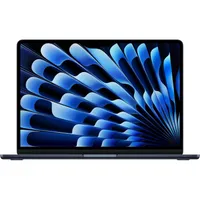
You can actually see the shift happening elsewhere in the market: Apple’s latest MacBook Air now starts with 512GB, an upgrade we welcomed, while many budget laptops continue to stick with 256GB to keep their prices down.
There is, of course, some nuance to this picture. A cheap Chromebook or secondary laptop definitely doesn’t need a huge SSD, and with memory prices soaring, buying decisions are becoming harder than ever.
But for a laptop you expect to use as your main computer for the next five-plus years, 256GB looks less like a specification and more like a compromise.
Your laptop can last years, but its storage can’t grow with it

At a basic level, storage is one of the few parts of a laptop that can become more restrictive simply through normal use.
Photos, downloads, apps, offline media, assorted files, and everything else you acquire from day to day gradually pile up, while the SSD you bought on day one stays the same size. This situation is less of a problem if you can simply replace the SSD later.
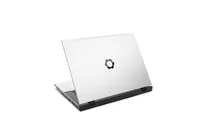
Some Windows laptops, like the excellent Framework models, still make that relatively straightforward, but plenty of thin-and-light notebooks — including MacBooks — effectively lock you into whatever capacity you choose at checkout.
Conveniently, there’s a subscription for that

Running low on storage is less painful than it used to be, mainly because Windows and macOS are extremely good at pushing files to the cloud.
OneDrive’s Files On-Demand feature, for example, lets files remain visible in File Explorer without actually taking up space, while macOS can automatically move less frequently used files into iCloud when space starts running low.
There's no denying that these are genuinely useful features that save people a lot of hassle; having to actively choose what to delete is tough, and decision paralysis is real.
The problem comes when cloud storage starts compensating for your laptop's limited built-in storage.
Both OSes make that transition remarkably easy: You fill the SSD, move more into the cloud, and eventually find yourself paying for extra capacity. Almost without noticing, an understandable hardware compromise becomes yet another subscription.
Cloud storage also isn’t a like-for-like replacement for local storage. Apps, games, caches, and plenty of other files still need SSD space, while online-only files naturally depend on an internet connection.
AI is making the obvious solution harder

The obvious answer would be for 512GB to become the new baseline. Unfortunately, 2026 is turning out to be a pretty terrible year for that transition.
As you might have read, the RAMageddon is also putting pressure on the storage inside our laptops, as well as consoles, tablets, smartphones, and, well, pretty much every consumer device.
Data centres need vast amounts of memory and storage to keep AI services running, and that extra demand is making the components used in consumer SSDs more expensive too.
We’ve already seen how the wider memory crunch is affecting the laptop market, with manufacturers facing higher component costs and difficult decisions over where to make compromises. Even usually unflappable giants like Apple are raising prices across the board.
All of this makes sticking with 256GB easier to understand, even if it doesn’t make it any more appealing. The 256GB laptop isn’t obsolete yet. But, like the 32GB phone before it, its days as an acceptable default should be numbered.

Follow Tom's Guide on Google News and add us as a preferred source to get our up-to-date news, analysis, and reviews in your feeds.
