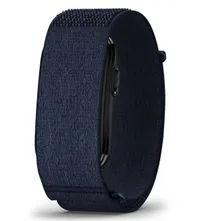
As someone with the attention span of a goldfish, I’m all for the screenless health tracker trend. Being able to keep track of all of my health and fitness goals without the buzz of notifications on my wrist is a must, and I’ve been wearing Garmin’s new $199 Cirqa for the past three weeks to do just that.
You can read my colleague Dan’s full Garmin Cirqa review here, but below, I look at how well I think the Cirqa compares to the Google Fitbit Air or the Oura Ring 5. Here are three things I like, and three things I wish Garmin had done differently.
3 things I like
Part of Garmin’s ecosystem
A screenless tracker is only as good as its app, and I really love the Garmin Connect experience. Sure, it’s not perfect (I still find it confusing that Garmin hides a lot of its tracking in the ‘more’ tab — that’s why we’re here, Garmin!), but having used it for years, it’s familiar, and it gives you an awful lot of data.
It’s also handy if you already have a Garmin device, as you can sync the Cirqa and still keep track of scores like Body Battery and sleep, even if you’re not wearing your main device.
Garmin has made it, and will continue to make it, super easy to connect more than one device to the Connect app. Plus, compared to the Fitbit Air, you don’t really need to pay for Garmin Connect to get all of your data.
I personally think one of the most impressive elements of the Fitbit Air is the Gemini-powered health coach, which really is one of the best I’ve tested, but this feature will cost you $9.99 a month. The Oura Ring 5 also has an excellent app, but comes with an ongoing subscription fee of $5.99 per month.
The physical button
One thing that sets the Cirqa apart from the Fitbit Air or the Oura Ring 5 is the physical button on its side. At the launch event in London, Garmin said this design decision came back to Garmin’s DNA — Garmin knows its users don’t want to miss a minute of health tracking, and this includes the seconds it can take for a tracker to auto-detect your workout.
This button is automatically set up to start and stop a ‘timed activity’, but you can customize which workout type it starts in the app.

Heart rate accuracy and health tracking
Our resident heart rate expert, Nick Harris-Fry, was impressed with the Heart Rate accuracy of the Cirqa in his testing. While it may not be as precise as a dedicated chest-mounted heart rate sensor, it comes pretty close. I’ve always found chest-mounted bands super irritating to wear with a sports bra, so this is music to my ears.
The Cirqa also measures your skin temperature, which can be used for female health tracking, plus the Garmin Cirqa is compatible with Natural Cycles, one of the most popular women's health apps for tracking fertility, postpartum health, and perimenopause. While the Oura Ring also works with Natural Cycles, the Fitbit Air does not support it at this time.

3 things I don’t like
The strap itself
I have pretty petite wrists, and my main issue with the Garmin Cirqa compared to the Fitbit Air or Oura Ring 5 is that it’s pretty bulky on the wrist and not all that comfortable. If I’m wearing a screenless tracker, I want it to disappear, and the Cirqa just doesn’t.
Plus, while I love the color of my purple band, I find it stays wet for a long time. If I’m wearing it for a swimming workout, fine, but I’ve resorted to taking the Cirqa off for a shower, as having a wet fabric band around my wrist when I sit down at my desk is not fun.

The price
At $199, the Cirqa is $100 more than the Fitbit Air, which is a lot of money. Sure, you don’t need the ongoing subscription with the Cirqa in the same way I think you do with the Fitbit Air, but it’s still double the price. I’d personally spend $50 more and buy the Garmin Forerunner 70 and have a screen and onboard GPS, but I get that these are aimed at different users.
That said, the Cirqa is far cheaper than the likes of Whoop or Oura.
Lack of on-board GPS
As mentioned above, there’s no on-board GPS on the Cirqa, so you’ll have to take your phone with you if you want a map of where you’ve walked or run. That said, this isn’t really a fair criticism, as at the time of writing, none of the screenless trackers, including the Whoop 5.0, Oura Ring 5, or Fitbit Air, have built-in GPS.

Follow Tom's Guide on Google News and add us as a preferred source to get our up-to-date news, analysis, and reviews in your feeds.
More from Tom's Guide