High storage phones are feeling more like a scam than ever — how to avoid overpaying

Lots of people lament the loss of the headphone jack and how that changed the way we use our phones, but me? I'm still not over the fact that expandable storage has been relegated to the bare minimum of budget handsets. These days it's been replaced with high storage options that add hundreds of dollars onto the cost of your phone.
I have always maintained that being forced to pay for the same amount of storage every time you buy a new phone is a total scam, certainly compared to being able to swap microSD cards from one device to another.
But more recently, after seeing the rumored price hikes that will affect flagship phones due to be released this year, I'm more convinced than ever that paying for storage is a complete waste of money.
Storage is an expensive addition

It's very easy to fill up your phone's storage without even realizing it. Whether you're obsessed with apps, or can't stop taking photos and videos or your daily life, that space fills up fast. I can't tell you the number of times I've almost filled up the 128GB of storage on my Pixel 10 Pro, and had to scramble to offload files and delete things that are just wasting space.
Obviously the easiest solution to this problem is to buy a phone with more storage. A 256GB model would effectively double my storage space, and that's just the next model up. These days most flagship phones offer at least 512GB and even 1TB storage options for the people that need a lot of space on their phones.
The downside is that this causes the price of your new phone to rise by quite a bit. The 128GB Pixel 10 Pro costs $999, which rises to $1,099 for 256GB, $1,219 for 512GB and $1,449 for 1TB. For the iPhone 17 Pro you're looking at a starting price of $1,099 for 256GB of storage, which rises to $1,299 and $1,499 for 512GB and 1TB models.
For both these phones, you could be paying 30 to 36% more simply by upgrading your storage. That may be a good deal for those of you that need the space, and want the convenience of easy-to-use and readily-available storage on your phone. But this ends up being an expense you have to buy every time you upgrade your phone. The storage doesn't come with you, and once you're finished with the phone all that extra space is gone unless you pay the premium again.
RAMageddon could make it worse

Right now the main problem is that the cost of storage is rising pretty rapidly. RAMageddon hasn't just affected the cost of memory, as AI data centers eat up as much supply as they can handle, they're also buying up storage as well. Which means the cost of storage is increasing, and we've already seen reports suggesting that this is going to affect the price of high-storage phone models.
EU price leaks for the Samsung Galaxy Z Fold 8 Ultra suggest that the upcoming foldable's price will increase by as much as €280 for a 1TB model. Meanwhile the 256GB and 512GB are rumored to be rising by €100 and €180, respectively.
Of course, these are just leaked prices in one part of the world, and there's no telling whether other phone companies will follow suit. In fact, the Pixel 11 Pro XL price leaks suggest a blanket €100 price increase for all models, regardless of how much storage they have. But it suggests we may be looking at a future where higher storage phones cost even more than they currently do, which means the premium of being able to have access to all that storage is even higher than before.
It certainly doesn't help that some phone companies might already follow Samsung's example, and start cutting the amount of RAM on low-storage models. That effectively means that the price tag for higher-specced variants has to cover the rising cost of storage and RAM.
How to avoid paying for high storage phones
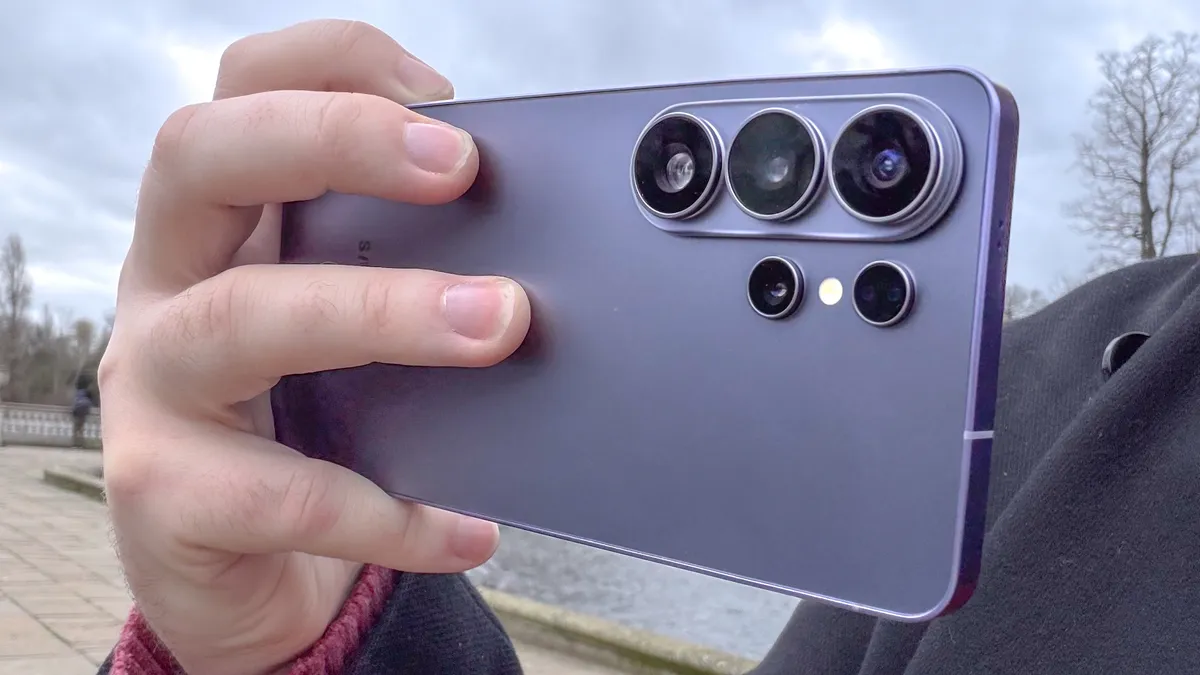
Naturally there are some ways you can avoid having to pay for high storage phones, the simplest of which is to rely on the best cloud storage instead. However, that comes with the added issue of having to pay a continuous subscription fee to retain access to all the files and photos you offload to the cloud.
Plus, there will be occasions where you need to either upgrade your storage allowance (in exchange for more money) or sort through your backups to free up space. So you are only delaying the problem, even if the ability to beam things into cloud storage, and access it at any time via the internet, is very convenient.
Another option is to continually offload those same files to local storage, in the form of external hard drives or networked storage. Admittedly this makes it a lot harder to access files and photos when you don't have physical access to your drives, but it's a lot more cost effective than continuously paying for high-storage phones or cloud services.
Then again, there are some portable hard drives that feature MagSafe compatibility and let you store your extra storage on the back of your phone.
Of course there's also the tried-and-tested option, which is to buy a cheaper phone with lower amounts of storage, and do everything you can to stop it from filling up too quickly. We're talking about things like minimizing the amount of useless apps you have, shooting photos at a lower resolution, stop letting random files and downloads take up space they shouldn't have, and things of that nature.
Then again it's easier said than done to avoid high storage phones when companies are cutting the smaller 128GB models, and offering the more expensive 256GB option as the new entry-level model. As much as I was sick of having 128GB of base storage, I do wish more companies had followed Apple's example with iPhone 17 and increased the base storage at no extra cost.

Follow Tom's Guide on Google News and add us as a preferred source to get our up-to-date news, analysis, and reviews in your feeds. Subscribe to Tom's Guide on YouTube and follow us on TikTok.
More from Tom's Guide