
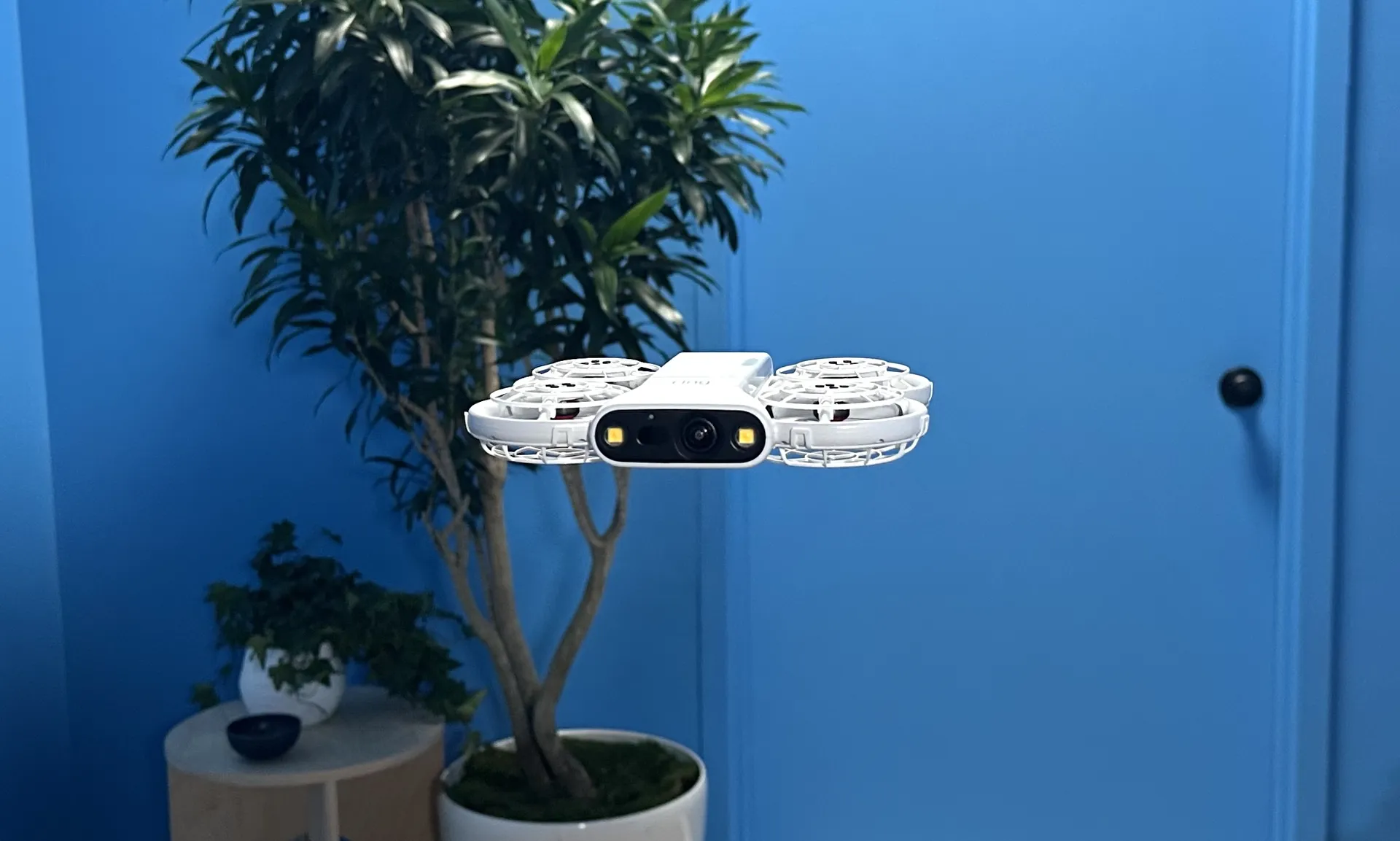
After years in the works, Ring's flying home security camera drone is finally taking flight. The Ring Drone Cam, as it's called, has gone through several iterations since the company first introduced it as the Ring Always Home cam three years ago.
Now that Ring is ready to ship the device, it gave us a sneak preview in advance. Here's my initial impressions of the Ring Drone Cam, as well as how much it'll cost, and when you can get one for your home.
Ring Drone Cam: tl;dr
- It will cost $249.99 at Amazon, and starts shipping on January 27, 2027
- It has a roughly 8-minute flight time
- It weighs 165 grams
- It has a 2K camera with a 148º field of view
A DJI for the home
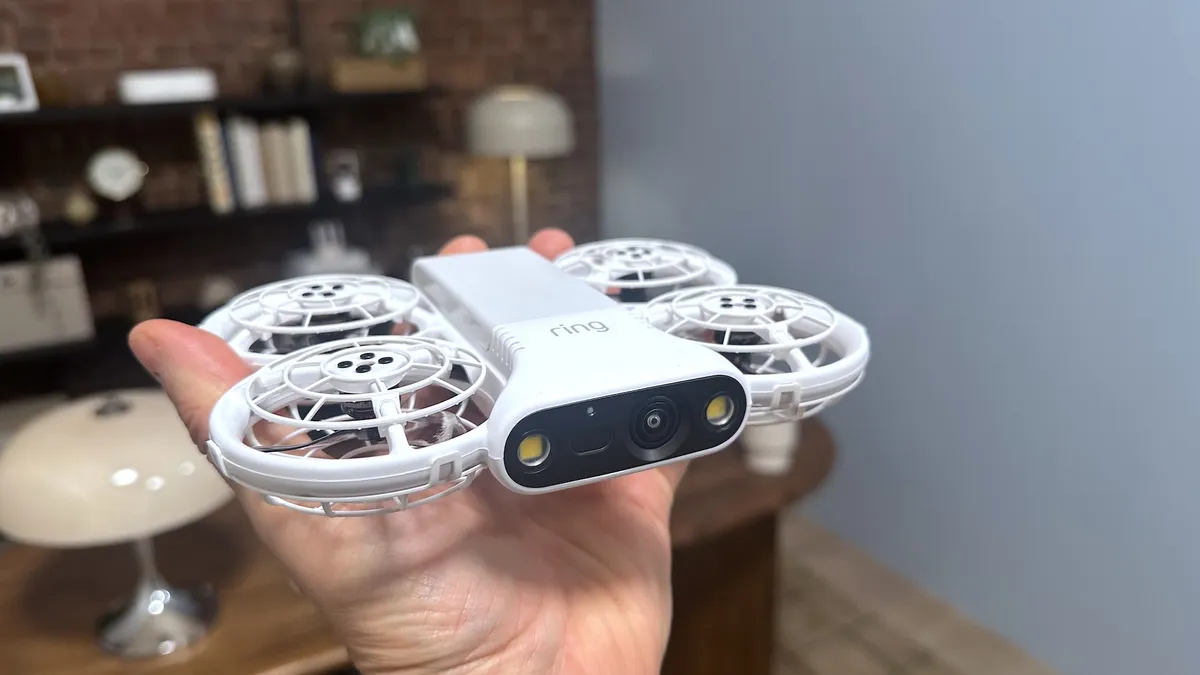
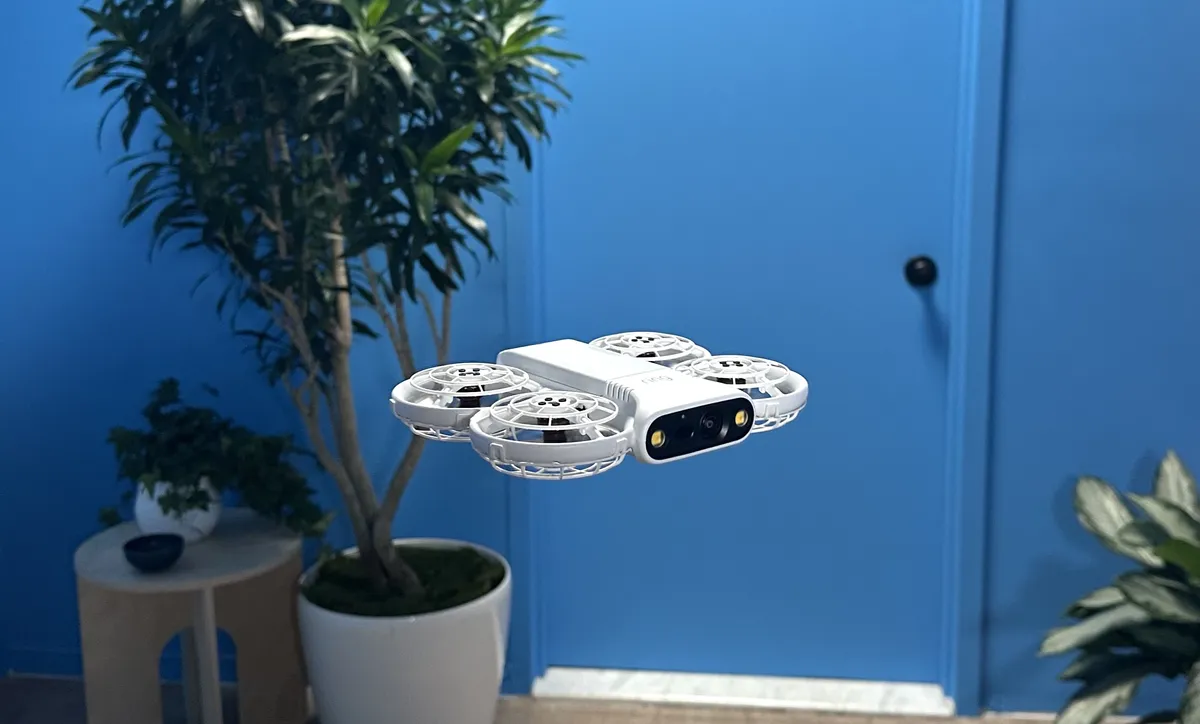
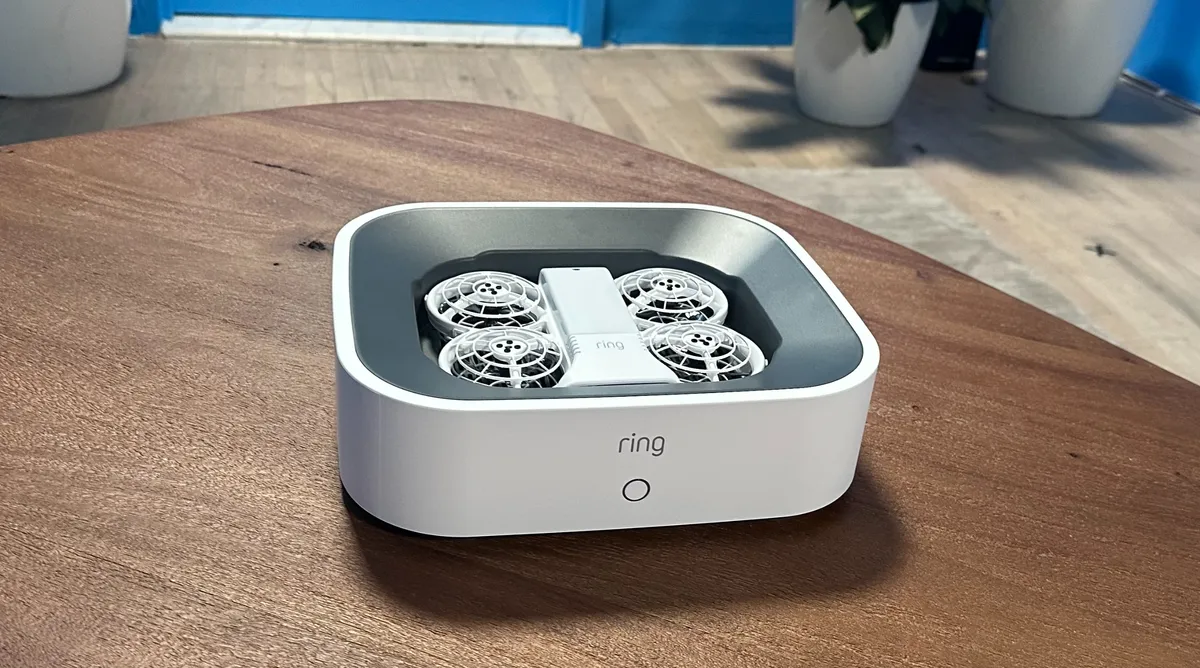
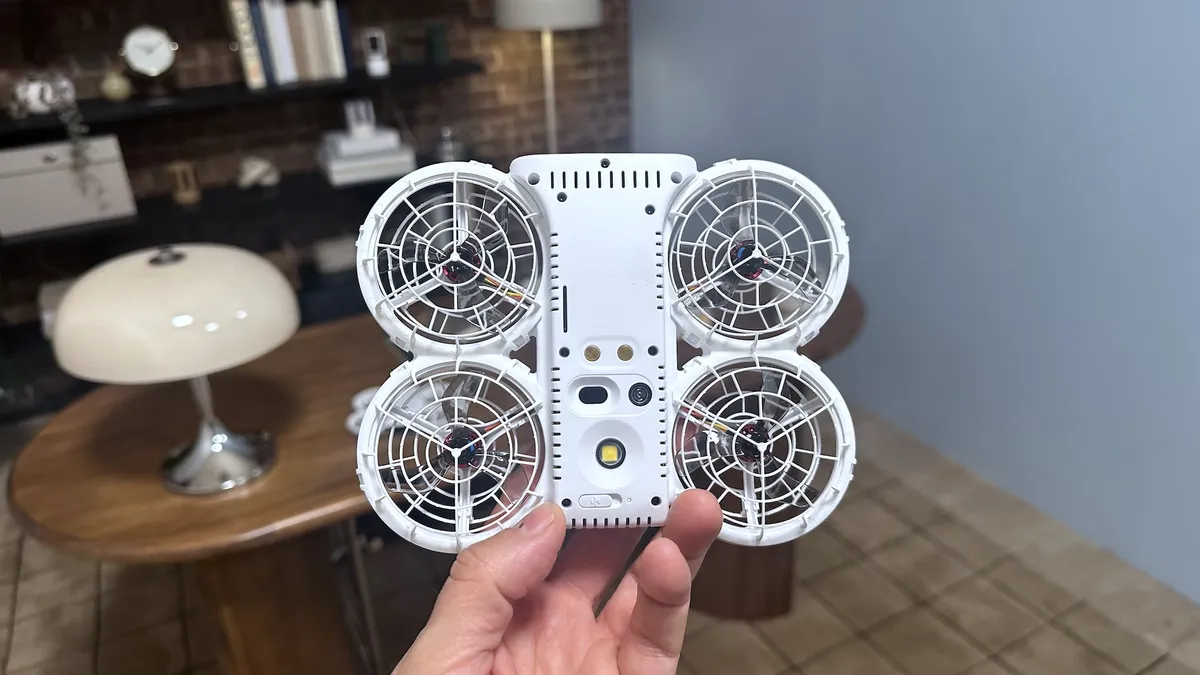
Unlike the Always Home Cam, which had a large protuberance on its underside, the Ring Drone Cam looks somewhat like the DJI Neo; it has a small rectangular body with four encaged rotors. Weighing 265 grams (5.8 ounces), it's lighter than most phones. While the demo unit I saw was white, the actual product will be a light gray. The Drone Cam docks and recharges in a square base station.
The drone has a 2K camera with two LEDs on either side, which it uses to light up your home as it's patrolling at night.
The Ring Drone Cam in action
When activated, the Drone Cam lifts up out of its base, rises to about 4-5 feet in the air, and then proceeds at a stately pace as it moves throughout your home. Even though it's small, you'll definitely notice its presence, as its rotors make a very loud, high-pitched whine.
Knowing how my dog reacts to a vacuum cleaner, I can only imagine his response to this thing flying around the house. Don't even ask what my cats might think.
The Drone Cam navigates your home using a combination of an Alexa Home map (similar to what you'll see on one of Amazon's smart displays) and the setup process, whereby you hold the drone and carry it through your house, taking it on a trip of where you'd like to go. Ring says the Drone Cam can cover multiple stories of your home.
Unlike previous, unreleased versions, the Drone Cam relies on the cloud for navigation, using Amazon's AI Pilot to get around and interpret what the drone is seeing. If the drone loses its connection, it's designed to immediately land — which is why it's important that you make sure its flight path doesn't go over any delicate objects.
The Ring Drone Cam can be programmed to make regular patrols of your house, or to respond to a particular event — such as a window or a door sensor tripping, or a water leak detector going off. Using the Amazon Alexa Home map, it can fly to the location of the event, and give you a live view of what's happening.
There's a rolling drone, too
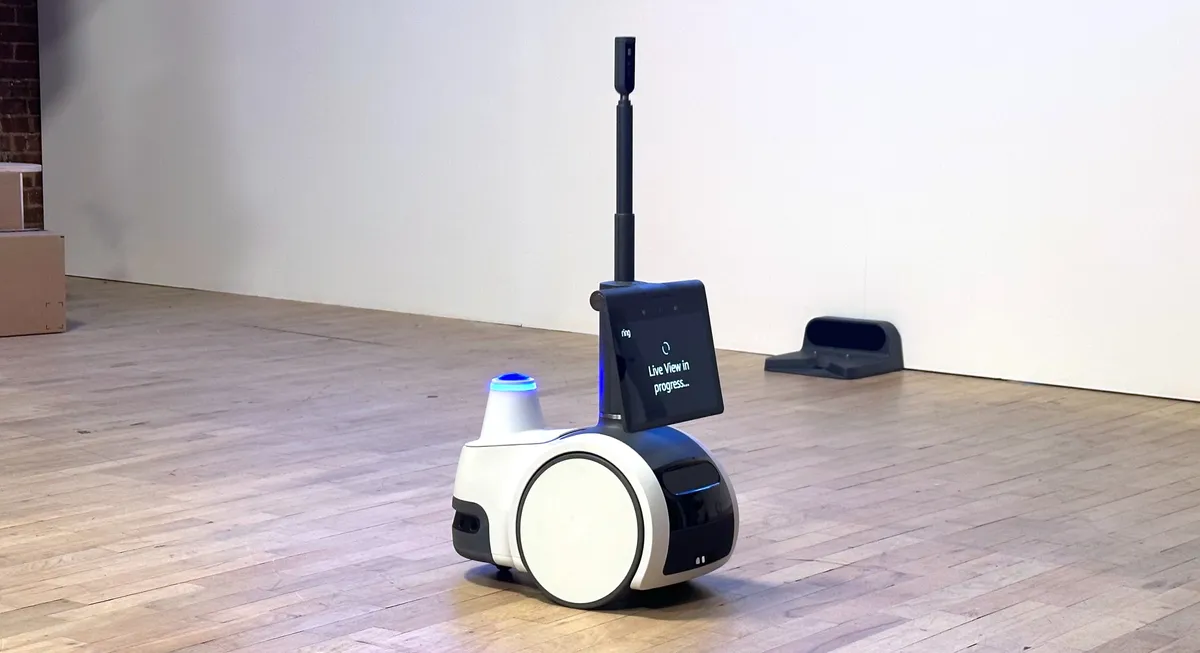
Remember the Amazon Astro? Ring took its parent company's home robot and redesigned the internals to make it a security robot for small businesses and enterprise customers.
Now called the Ring Rover Cam, it's meant to patrol warehouses and stores, and alert you if it detects an intruder. Like the Astro, it has a telescoping camera, but Ring also added a light on the back, which lets you see where the robot is at a glance, and flashes red and screams out a siren when there's an unwanted guest.
The Ring Rover Cam will cost $999, and will ship on December 16.
My initial thoughts
I am more than a bit skeptical about having a camera drone flying through my house. For starters, my pets get nervous enough around vacuum cleaners; I can only imagine how they'd react to a high-pitched drone flying about. And, the idea of a drone autonomously roaming around, potentially recording everything, feels a bit dystopian.
And, if you want the Ring Drone Camera to be able to access every corner of your house, you'll also have to make sure you leave every door wide open before you leave. And, the drone moves so slowly that if it's set up on one side of your house, by the time it responds to, say, a window breaking on the other side, the potential intruder could be long gone.
I can see some utility in it — I don't have, nor do I want, security cameras in every corner of my house, so I can see it being handy if a sensor is tripped in my basement. But, I'm still not sold on the concept; maybe trying it out will change my mind.
What do you think? Would you want a drone security camera for the inside of your house? Take our poll, and let me know in the comments.

Follow Tom's Guide on Google News and add us as a preferred source to get our up-to-date news, analysis, and reviews in your feeds.
More from Tom's Guide