Amazon plans to have more than 20,000 pairs of smart glasses on its delivery drivers by the end of 2027, following a pilot in which more than 500 drivers wore them for 18 months and completed more than 275,000 deliveries.
According to the company, once a driver parks, the glasses switch on and use computer vision to put navigation, package details and hazard alerts directly in the driver's line of sight, so the driver no longer has to keep glancing down at a phone. Amazon says wearing them is voluntary and that the design was shaped by feedback from the drivers who tested it.
The public already seems to have real concerns with AI glasses, like Ray Ban Meta glasses, and Amazon's decision raises one of the biggest problems yet, the glasses take still images at frequent intervals while drivers are on foot. And yet, Amazon says they haven't considered an opt-out for the customers whose homes end up in those pictures.
But the more time I spent looking at Amazon's delivery operation of using 1 million robots to process 600,000 orders and hour, and even scheduling a tour of the Amazon Warehouse, the less the glasses looked like the most important part of the story, because they are simply the part of the system we, the public, can see.
AI is involved before you even place the order
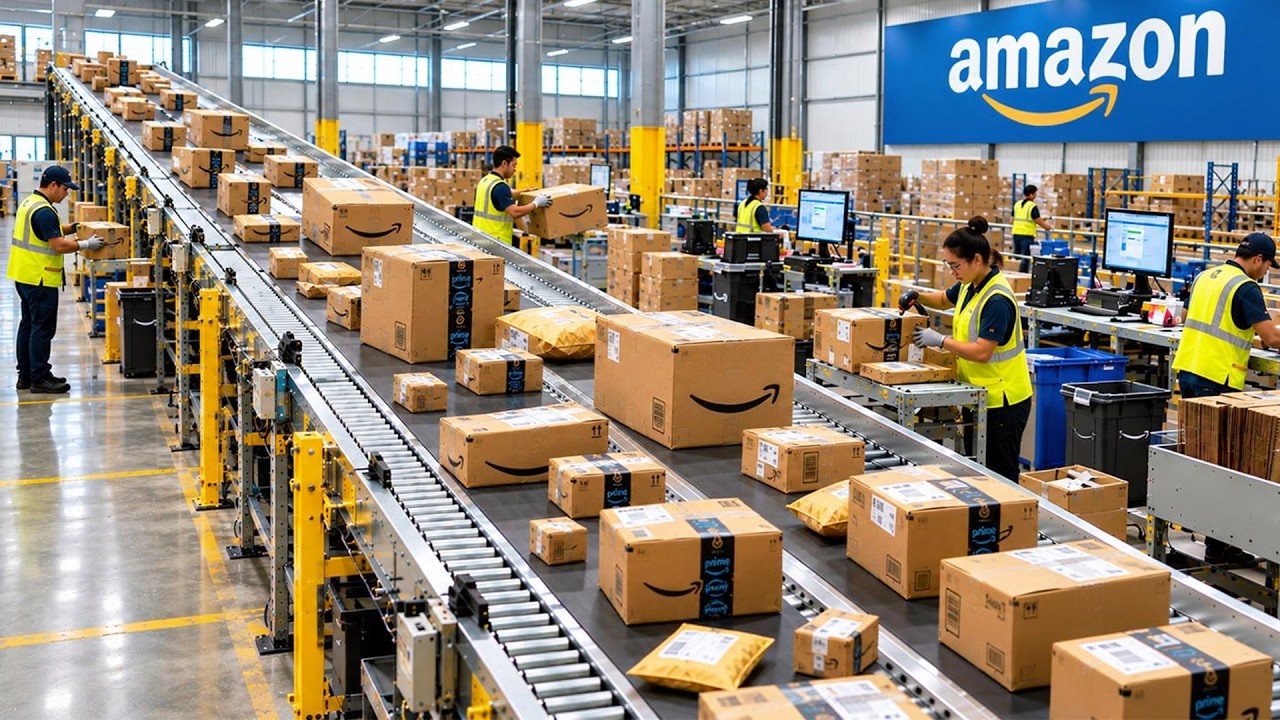
By the time a driver puts them on, AI may already have influenced where a product was stored, how it moved through a fulfillment center, which robots handled it and which route carried it to your house. Amazon uses AI-powered demand forecasting to decide where inventory should sit, robotics and computer vision systems inside fulfillment centers, DeepFleet to coordinate robot movement and AI-powered mapping and routing on the delivery side, making the glasses the newest interface between workers and a much larger system already operating around them.
Amazon's AI starts working long before somebody pulls a box off a warehouse shelf. The company uses a foundation model to forecast demand and decide where inventory should sit, and Amazon says the model has improved its regional forecasts for millions of popular items by 20%, which lets it stock those products closer to the customers most likely to order them.
Once an item reaches a fulfillment center, it enters an environment where people, robots, computer vision and machine-learning systems operate as a single network. Amazon deployed its millionth robot in 2025, part of a fleet spread across more than 300 facilities worldwide.
Some of those robots move entire shelves, and the Hercules model can lift up to 1,250 pounds of inventory. Sparrow works at a finer scale, using computer vision and AI to recognize and pick up individual items of different shapes and sizes, while Proteus moves carts autonomously around the employees who share the warehouse floor with it.
Sequoia combines mobile robots, computer vision and AI to organize inventory and deliver it to workers, and Amazon says the system can identify and store incoming inventory up to 75% faster than its previous methods.
The robots now have their own AI traffic controller
Amazon isn't only adding more robots but also using AI to coordinate them. Its DeepFleet foundation model, which the company compares to an intelligent traffic system for a congested city, plans more efficient paths for the fleet and reduces congestion between robots, and Amazon projects that it will cut the fleet's travel time by about 10%.
Ten percent sounds modest until you apply it to more than a million robots moving inventory across hundreds of buildings, where small savings on each trip add up to a faster operation overall.
Amazon is also bringing agentic AI into the management of its fulfillment centers. Project Eluna, first piloted at a fulfillment center in Tennessee, analyzes real-time and historical operational data so managers can spot bottlenecks without working through dozens of dashboards. Amazon describes it as a system designed to act with a degree of autonomy, reasoning through operational problems and recommending actions to operators, who can ask it questions in plain language, including where to shift people to avoid a bottleneck.
A person still makes the final call, and Eluna recommends rather than commands. But a system that can detect a problem, analyze the data around it and suggest where staff should go next is already shaping decisions that used to rest more heavily on human judgment, including decisions about the workers themselves.
Amazon is working on the relationship from the other direction, too. A next-generation version of Proteus accepts plain-language instructions from employees, so a worker can say what needs to be moved and let the robot work out the priority, route and timing on its own. The new Proteus is being piloted in Amazon's research labs, and the company plans to deploy it in Europe in the first half of 2027.
Amazon keeps automating human work
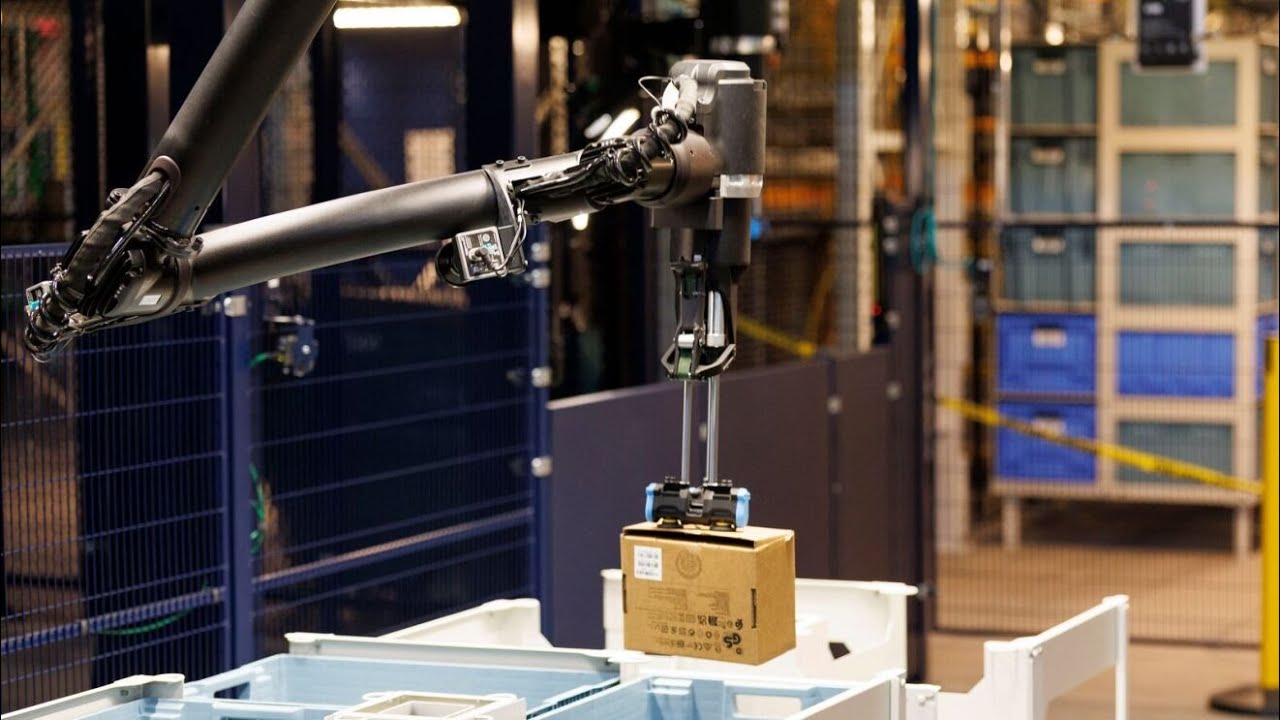
Vulcan, Amazon's first robot with a sense of touch, makes that progression especially clear. Earlier warehouse robots relied on cameras and suction, and densely packed storage bins stayed difficult for them because they couldn't feel what they were pressing against in a crowded space.
Vulcan uses force sensors to detect when it has made contact with an object and how much pressure it is applying, which lets it pick and stow items in tightly packed compartments, and Amazon says it can handle roughly 75% of the types of items stored in its fulfillment centers at speeds comparable to human workers.
It is easy to read that as one more task taken from people, but it's part of a larger pattern. Amazon's robots started by moving shelves, then learned to move packages and recognize individual objects, and now one of them can feel what it touches, while AI learns to coordinate those machines and analyze the buildings they work in.
Then the package leaves the warehouse

The AI stays with the package after it leaves on a delivery van. Amazon's Wellspring mapping technology learns from every trip to a location and builds a detailed model of the physical world, and Amazon says that since 2024 it has identified 202 million parking locations, mapped 2.8 million building entrances and cataloged 85,000 mailrooms and lockers.
Its AI routing also adjusts for conditions like reduced visibility after sunset or the extra time a downtown stop needs to find parking during the lunch rush.
The glasses plug directly into that system. They put Wellspring's guidance in front of the driver's eyes, and according to reporting on the rollout from TechRepublic, the images they capture along the way can also feed back into Wellspring, which means the driver wearing them is both following the system's instructions and helping train it.
That is why the glasses no longer seem especially shocking to me. They make visible something that has been happening across the rest of Amazon's operation for years.
The questions we should be asking

The Amazon fulfillment center near me is just one of the places where the public can watch this system at work. You'll see more robots than you've ever seen in one place and the fact that they are literally carrying entire towers of inventory and conveyor systems linking every corner of the building to real-time data coordinating the operation is mind blowing.
And yet, I know that what visitors see is the visible half of the system. The robots, conveyors and workers moving in sync are all on display in a harmonious system. The harder issue is who benefits when the system makes a worker faster.
Saving a driver 20 seconds at each stop could make for an easier shift, or it could simply show the system that another stop fits into the day. Amazon has estimated that the glasses could save drivers up to 30 minutes per shift, but it hasn't published data showing whether they reduce mistakes or speed up deliveries, and it hasn't said who gets those 30 minutes back.
Final thoughts
Which brings us back to the glasses. They are the only piece of Amazon's AI system that a customer is ever likely to see (besides the tour), so it makes sense that they are drawing the most scrutiny at the moment.
But they sit at the very top of a much larger structure, resting on forecasting models that decide where products live, robots and fleet software that decide how they move, an agentic system that suggests where workers should go, and a mapping platform that tells drivers where to park and which door to use.
The glasses are just the tip of Amazon's AI, and if the conversation stops at the camera on a driver's face, it will miss nearly everything underneath that is actually deciding how the work gets done.
Follow Tom's Guide on Google News and add us as a preferred source to get our up-to-date news, analysis, and reviews in your feeds. Subscribe to Tom's Guide on YouTube and follow us on TikTok.

More from Tom's Guide