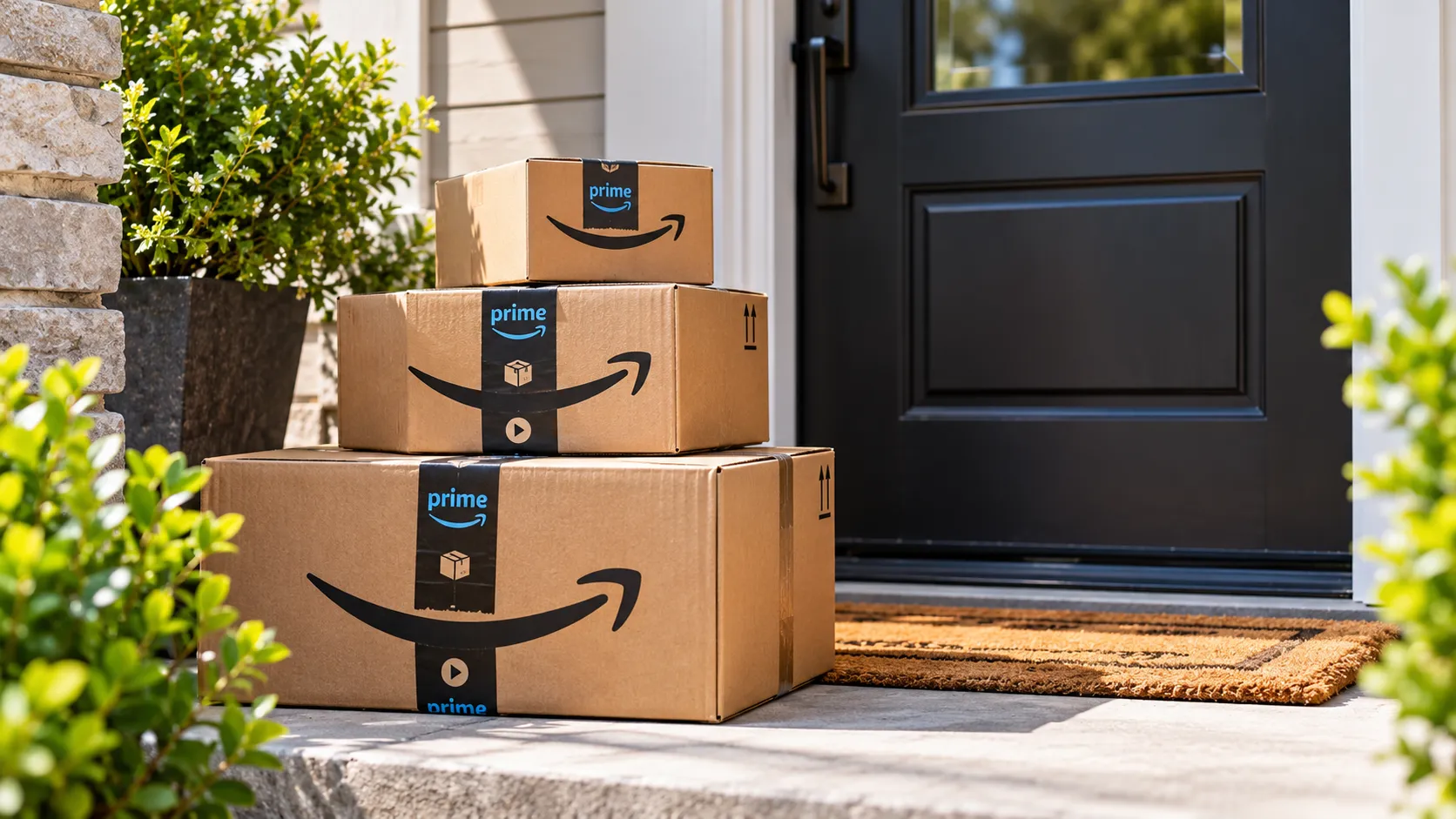
Porch piracy is still a major problem. 30% of American adults have had a package stolen at some point in their lives, and 49% worry more about package theft during the holidays than at other times of year, according to Security.org’s 2026 Package Theft Report. The report estimates that 47.7 million people had a package stolen in the past year, and that the stolen packages were worth $7.7 billion. And with the average adult expecting 28 deliveries between October and December, there’s simply plenty more opportunity for boxes to sit unattended.
Of course, there are things you can and should do to keep your packages safe. The best protections stop a theft before the package lands, either by arranging a verified hand-off, shortening the time a box spends outside, or sending it somewhere secure. Here are some practical ways to protect your packages from porch pirates this holiday season.

Stopping a delivery from going missing
The strongest option for an expensive order is probably to require a verified hand-off. UPS Protected Delivery, which launches Nov. 16, requires the recipient to give the driver a PIN, or numeric code, before an eligible package is released. FedEx Authenticated Delivery uses a unique QR code instead. Both of these services are a little limited in how and where you can use them, and they may cost more too. The shipper, not the recipient, has to select either one, so ask the retailer before you order.
For everything else, the carrier’s tracking app is the first line of defense. Turn on notifications from Amazon, UPS, FedEx and USPS, and act on the “out for delivery” message rather than waiting for “delivered.”
Security.org identifies delivery alerts as a popular prevention method, with 39% of shoppers using delivery notifications or tracking apps. An alert alone won’t protect a box, but it at least gives you a notification you can act on relatively quickly.
“The goal shouldn’t be watching your front door all day,” says Ken Sedberry, director of Xfinity Shield. “It should be knowing when a package arrives and having a plan to bring it inside.”
Amazon’s scheduling tools can shorten that exposure further. Map Tracking shows the driver’s live position on eligible deliveries, while estimated two- to four-hour delivery windows give you something more useful than an all-day estimate. Prime members can also use Amazon Day to batch orders onto one day each week when someone is home. Security.org found that 43% of shoppers schedule deliveries for when someone will be there.
Photo on Delivery adds a record of where the driver left the package, which is especially helpful if it ended up behind a planter or at a side entrance. It doesn’t prove the package stayed there, though.
For valuable shipments, a traditional signature requirement is still worth requesting if the newer verification services aren’t available. The sender usually has to add it, and fees vary by carrier and service.
Secure the drop spot
The best way to secure where packages are left is to not leave them there in the first place. That may sound silly, but there are actually a few different ways you can prevent packages from being left alone on your doorstep. Amazon Locker and Counter are free alternatives, and they’re part of a network of more than 25,000 pickup locations across the country.
“For those receiving a high volume of deliveries, especially during the holidays, giving carriers a secure place to leave packages is much more effective than simply hoping a camera discourages someone from taking them,” says Rod Sides, founder of Loxx Boxx, which makes package lockboxes.
Lockers give you three calendar days to collect a package, and size or item restrictions mean not every order qualifies. Staffed Counters at retailers offer another option if you’d rather collect from a person.
Carriers like UPS and FedEx have their own pickup locations too. UPS Access Point locations hold packages for up to seven days at no charge, although redirecting an in-flight package costs $5.99 for free Basic My Choice members. Premium, at $19.99 a year, includes it. FedEx Hold at Location keeps packages for up to seven days at FedEx Office and FedEx facilities, but FedEx says to pick up within five business days at participating retailers such as Walgreens and Dollar General. Redirecting to a retail location is free.
USPS offers free Hold for Pickup through Delivery Instructions, along with free Hold Mail for three to 30 days when you’re away. Its Smart Lockers in Post Office lobbies provide another free option with a five-day collection window. Hold windows and redirect fees change periodically, so confirm them in the carrier’s app before rerouting a valuable order.
Home parcel boxes are more convenient, but they depend on driver cooperation. Some allow you to lock packages behind a four-digit PIN — but a driver rushing through deliveries in a busy season may not take the time to do that, or may not see the request in the first place.
If you do go the route of using a drop box, it's worth anchoring it properly. An empty, lightweight lockbox can be carried away and opened elsewhere, so bolt it down or weight it properly. Then make it as hidden from the street as you can. Delivery instructions should name an exact hiding place rather than simply saying “front door.” Something like “inside the parcel box behind the side gate” gives the driver a workable instruction. It still isn’t a guarantee, and some carrier menus offer limited space for custom directions.
Cameras and AI alerts
Some of the best home security cameras and video doorbells can help deter porch pirates as well. A battery-powered video doorbell is a pretty reasonable entry-level option. Look for higher-resolution 2K video, a wide-angle view, person and package alerts, and a choice of battery or wired power.
Prices tend to drop during holiday sales, but keep in mind that the hardware price is only part of the cost. Cloud recording, which saves clips to the manufacturer’s servers rather than in your home, typically requires a subscription.
Person and package detection makes these devices much easier to live with. AI, in this context, mostly means pattern-recognition software that distinguishes people and packages from other movement. It reduces alerts caused by passing cars, animals or swaying branches. It can make a pretty big difference.
“Delivery drivers often drop a package without ringing the bell, but a motion alert lets you know the moment someone is at your door, often before the carrier’s delivery email arrives, so you don’t have to keep watching the front door,” says Veronica Moturi, senior vice president and chief customer officer at Brinks Home.
It's worth keeping in mind the fact that cameras don't always deter theft and often document it more than prevent it. Pairing one with motion-activated lighting and a camera monitoring sign can help with the deterrence, though.
Lighting deserves special attention during the winter, when many deliveries arrive after dark. A lit entrance helps drivers find the right drop spot and removes some of the cover a thief would prefer.
“Look for a camera with clear night vision, since shorter days mean more deliveries and holiday visits happen after dark,” says Moturi.
Apartments and renters
Apartment residents have a lot more reason to plan ahead. Security.org found that 10% of apartment dwellers had a package stolen in the previous three months, compared with 3% of single-family home residents. That’s more than three times as likely. Shared lobbies, dense delivery traffic and long periods with nobody watching the entrance all create opportunities.
If your apartment building offers some kind of locked package room or front desk, it may be worth having packages left there rather than in front of your door. If you don't, there's no harm in requesting one from building management — and if there have been thefts, a request from multiple tenants could carry more weight.
Renting also makes it harder to mount security cameras and smart doorbells. Thankfully, there are plenty of battery-operated ones that don't require drilling or changing wiring, so if you are renting and want something like that, they are available.
After a theft
If you do fall victim to a porch pirate, there are a few things to do. Start by verifying that the package is actually missing. Check the tracking status and delivery photo, then ask household members, neighbors or the doorman whether they collected it. Look around side entrances and other plausible drop spots. Sometimes, you might find that it wasn't stolen at all.
If you still can't find it, it's worth contacting the retailer promptly with the order number, tracking details, delivery date and any photos or footage you have. That’s usually the fastest route to a replacement before a holiday.
Amazon often asks customers to wait about 48 hours after a package is marked delivered and to file a missing-package claim within 30 days of the delivery date, but policies differ for third-party sellers and other retailers. Refunds and replacements are common, not guaranteed.
File a police report even if the retailer refunds you or sends a replacement. Only 23% of recent victims in Security.org’s survey reported their most recent theft to police. Those reports really help departments identify repeat locations, spot organized activity and decide where to assign patrols.
Purchase protection through a card such as American Express may cover eligible items for 90 days after purchase, and Amex asks for notice of a claim within 30 days of the loss or as soon as reasonably possible. Terms vary, so you’ll want to check your benefits before relying on them.
Bottom line
Gene Petrino, a former SWAT commander and police sergeant, offers the simplest summary of the whole problem. “Thieves can’t steal what they can’t see.”
Concealment matters, but removing the package from public view altogether is better. No single gadget covers every delivery, and paid verification won’t be available for every order. The best plan to protect your packages is to combine methods. Do what you can to prevent them from being left alone in the first place, use carrier alerts to get your packages to safety quickly, and use security cameras as a deterrent or to monitor anything that does get stolen.