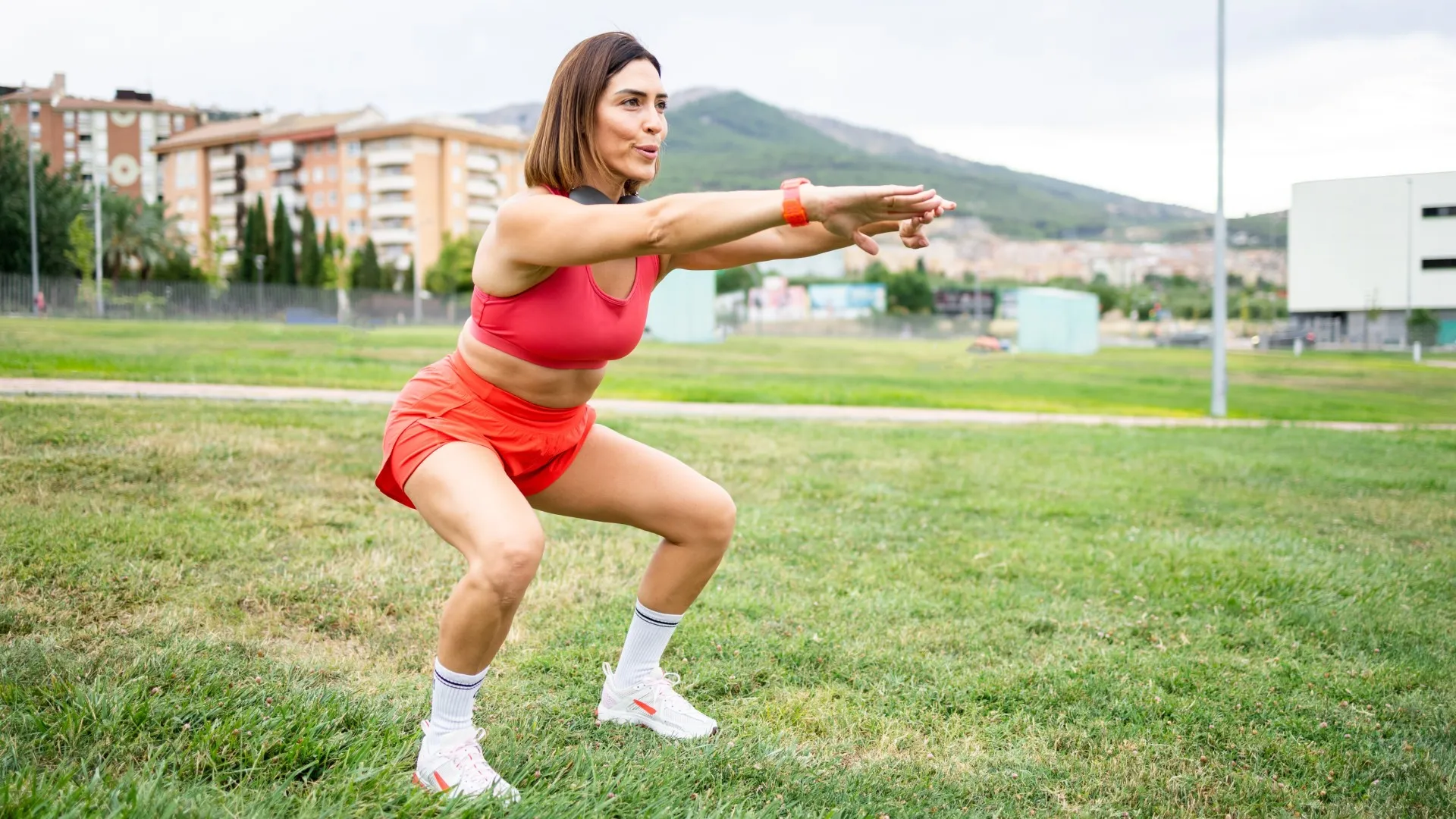
As a coach who specializes in mobility, I love nothing more than putting new clients through longevity tests. There are five I think you should know about, particularly after the ages of 40 or 50, when components of fitness like balance, strength and mobility begin to naturally decline. That's because the loss of lean muscle mass, if not built or maintained, begins to accelerate around this time.
Whether you train regularly or not, I recommend giving all five a try. If you can do them all, it indicates your body is currently moving pretty well with a good amount of functional ability and strength. If there are any you can't complete, consider practicing them more often or adding some resistance training or mobility drills to support getting better at them.
Mobility training is my happy place; I see it make an enormous difference in people's lives, creating strong, balanced and mobile bodies. Below, let's test yours.
Watch: 5 longevity tests you can try at home
If you experience pain at any time, stop and rest. If you're working with an injury or health condition, I recommend seeking advice before starting these exercises.
The tests
- Deep squat hold, 90 seconds: Place your feet slightly wider than shoulder-width apart, toes pointed slightly out. Sit your hips back and lower into a deep squat, pushing your knees out in line with your toes. Try to sit your butt as low as possible while keeping your chest proud, back straight and gaze ahead. Hold and breathe. You can cross your hands over your chest, bring them to prayer, or extend them away from you.
- Sit-to-stand: From a seated position on the floor, try to stand without using your hands. There are a few ways to do this, so find what works for you. Keep your core engaged and avoid hunching.
- Forward fold: Stand with your feet hip-width apart. Hinge forward at your hips, keeping your legs as straight as possible with a soft bend in your knees. Slowly lower your fingertips toward the ground just in front of your feet. See if you can place your fists on the ground and gently press down with your knuckles. Hold and breathe, then slowly roll up to stand.
- Dead hang, 60 seconds to 2 minutes: Wrap your hands fully around a pull-up bar or similar, thumbs tucked. Engage your core, stare straight ahead, then lift your feet away from the ground and hang without support. Once you reach your limit, gently bring your feet to the ground again and relax.
- Farmer's hold, 60 seconds: Grab two heavy weights such as dumbbells, kettlebells, or even a trap bar and place them just outside both feet. Stand with your feet hip-width apart. Engage your core and sit your hips back to lower down and pick up your weights with a straight back and proud chest. Drive up through your legs to stand, fully extending the knees and hips. Hold the weights by your sides. Once you reach your limit, sit your hips back and lower the weights to the ground.

As a general rule of thumb, guidelines suggest a male should be able to carry his body weight split between both hands, with 50% in each hand. More advanced lifters may be able to hold their body weight in each hand. For women, this is roughly up to 75% of body weight split between sides. It will ultimately depend on your bodyweight and fitness levels.
As a minimum, try to hold the dead hang and farmer's hold for at least 30 seconds. Ideally, aim for 60 seconds to 2 minutes; if you can hold for above 2 minutes, this is an incredibly good indication of strength and future longevity.
The sit-to-stand exercise assesses core strength, balance, and a level of mobility and flexibility to lift your bodyweight from the ground without support. This is a very functional test and indicates levels of strength and balance into later life, as you'll likely need to perform similar movements day-to-day.
Forward folds are popular in yoga and test hamstring flexibility, stretching along the posterior chain. If you need to bring a lot of bend into your knees to get your fists flat or you're struggling to reach down at all, it might be worth adding some lower-body mobility exercises and hamstring stretches to your weekly routine, then retesting.
Remember, though, hamstrings are notoriously tight muscle groups, and stretching for flexibility, though important, might not last beyond the day you're exercising. That said, repeatedly stretching these muscles over time, even indirectly during classes like yoga, will show some benefits long-term.
Finally, did you know research shows grip strength is a key indicator of longevity? Your ability to grip and squeeze powerfully has been linked to biological aging and can tell you a lot about overall strength.
Practice these movements as often as you can and retest every few months to see how you're progressing. Plus, let us know how you got on by answering our poll.
Follow Tom's Guide fitness on Instagram for more workouts, routines, tips, and tricks.

Follow Tom's Guide on Google News and add us as a preferred source to get our up-to-date news, analysis, and reviews in your feeds. Alternatively, you can read our content on the Tom's Guide app available now for iOS and Android. Subscribe to Tom's Guide on YouTube and follow us on TikTok.
More from Tom's Guide
- I teach people how to be more mobile: 3 low-impact back and shoulder moves that build stability and strength after 40
- According to a personal trainer, this exercise is 100 times more effective than crunches. I tried it and was humbled
- I teach people over 50 to be mobile: 3 low-impact moves that build more stability than a 30-minute walk