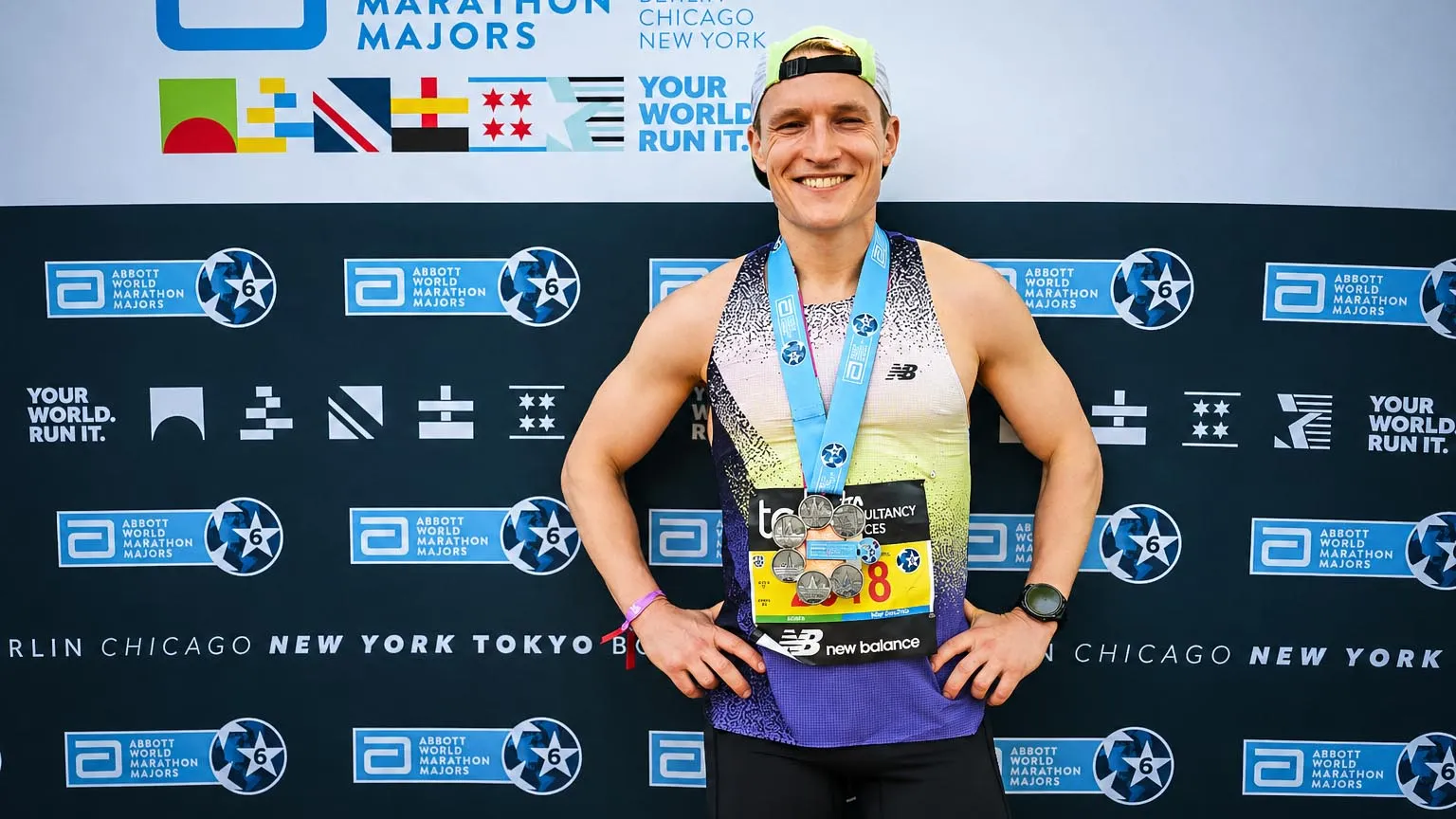
As runners, we spend an awful lot of time planning the lead-up to a big race — from 16-week training plans to tapering, and race-day nutrition. Yet more often than not, we don't spend a lot of time worrying about what we'll do after the race.
When should runners typically return to training after running 26.2 miles? And what are the signs to look out for that you might be nursing an injury? To find out more, we sat down with Peloton instructor and six-star finisher, Matt Wilpers.
How long should runners typically take off after a marathon?
"It depends on the person! I've noticed that it takes me much less time to recover from a marathon now, with over 10 marathons under my belt, than it did after my first one. That said, the level of training going in and how hard you push the pace during the marathon can drive recovery time up as well," says Wilpers.
"If I had to give it a timeline, I would say at least one week off with little to no running, followed by 2-3 easy weeks of running before I would consider adding any speed back in. This, of course, assumes you're getting adequate sleep and taking care of your body from a hydration and nutritional standpoint.
"As you get back into running, I think it's important to pay attention to how your body feels and not push it before it's ready and feeling recovered. If you get into a run and your body starts to feel tired and/or even more sore, that's a good sign that you may need more time off," he adds.
"I am a big believer in getting moving ASAP after a marathon to help the body recover faster and reduce the stiffness and soreness. By 'getting moving,' I mean primarily stretching and mobility work as you would do in yoga. Light cardio can also help, but nothing that feels like it is adding to your soreness vs helping it go away. For example, light swimming, elliptical, or even some light walking."

What should runners prioritize in the days following a marathon?
- Sleep: Sleep is where recovery really takes place, so getting some extra sleep can go a long way.
- Nutrition: Make sure you're consuming quality foods that cover all the macronutrients because your body needs them to rebuild.
- Hydration: As you can lose a good number of fluids during a race, it takes time to restore your body. After a race, I am a big fan of consuming water with an electrolyte mix in it to help get the mineral levels back up.
- Mobility: Get your body moving again with the goal of restoring mobility and getting your body feeling good again with some light movement and gentle stretching. You should finish these sessions feeling less sore and stiff than when you started.
What are the signs something is more than just DOMS?
"Sharp, localized pains, swelling, or soreness that is not improving after a couple days", says Wilpers. As a reminder, if you experience any of these symptoms, it's always best to get checked by a doctor or physical therapist before returning to any form of exercise.

What would a return to running look like?
"After at least one week of little to no running, take at least 2-3 weeks to build back into your running routine, starting with short easy runs," says Wilpers. "Pay attention to how you feel during your runs.
"Oftentimes, residual soreness can sneak up on you during a run. This is simply a sign to be patient with your body as it is still recovering. I would not focus on doing any speed work until after three weeks of rebuilding easy-paced running volume," he adds.
Follow Tom's Guide fitness on Instagram for more workouts, routines, tips, and tricks.

Follow Tom's Guide on Google News and add us as a preferred source to get our up-to-date news, analysis, and reviews in your feeds.
More from Tom's Guide
- SWEAT app review: I've been using this app for the past decade, and here's why I think it's the best workout app for women
- I’m a registered dietitian and here are the 9 healthy foods I actually eat to keep my heart strong
- 'I’m a Pilates instructor, and I recommend these 5 core exercises to help older clients build strength and improve posture'