Tight hips can lead to pain and discomfort in your lower back, hips, knees, or feet — an extremely common issue that can be caused by prolonged sitting, muscle imbalances, or repetitive movements like running or cycling.
Besides pain and discomfort, tight hips can affect your posture and reduce your mobility. Shortened hip flexors, caused by prolonged sitting, might make it uncomfortable to stand up from a chair or extend your leg backwards when running or walking.
Over time, tight hips can put you at an increased risk of injury, as other joints like the knees and lower back will compensate. You might also find that your glutes become weaker if your hip flexors are tight and working too hard.
If you’re worried about your hips, it’s always best to seek advice from a qualified professional, but the good news is, with the right exercises, you can work on your hip mobility and loosen tight hip flexors from home. Here are three tests you can do from home to assess your hip mobility:
1. Thomas test
Named after the British orthopedic surgeon Hugh Owen Thomas, this simple test assesses your hip flexor and quad tightness. The test looks at the iliopsoas — the group of muscles that connect the spine to your legs, or the primary hip flexor muscle.
Here’s how to do the Thomas test:
- Start by lying on your back on the edge of a bed or table, with your legs hanging over the edge.
- Bring one leg up to your chest, holding your knee with both hands.
- Look what happens to your other leg when you hold your knee to your chest — if your knee stays bent and hanging off the bench, your hip flexors are fine. If your lower leg lifts off the bench, or your knee straightens, your hip flexors and quads are likely to be tight.
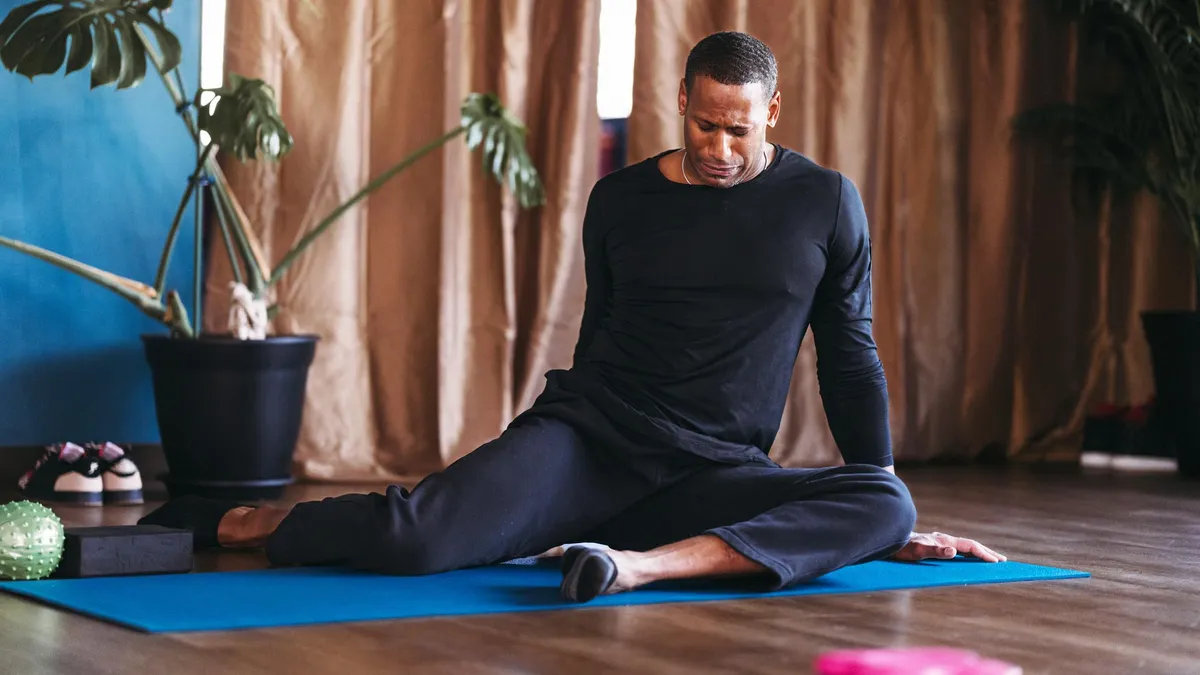
2. 90/90 hip stretch
You can read what happened when this fitness writer recently added the 90/90 hip stretch to his routine for a week, but as well as being a great stretch for tight hip flexors, it can help test your hip rotation.
How do the 90/90 hip stretch:
- Sit on the floor with both knees bent at a 90-degree angle — one leg will be bent in front of your torso, the other will be to the side of you.
- Without using your hands, try to rotate your body to the side, so that your front leg becomes the side leg.
- If you can do this smoothly, your hip mobility is likely to be fine; if you can’t, or need to put your hands down on the floor, it’s likely your hip mobility needs some work.
3. Hip internal rotation
Finally, this test looks at the internal rotation mobility of your hips, or the hip's ability to rotate inwards. Poor internal rotation can be a cause of knee pain.
Here’s how to do this test:
- Start by lying on your back and bring both legs into a tabletop position with your knees bent.
- Keeping your lower back pressed into the floor, and your legs bent at a 90-degree angle, take both feet out to the side, bringing your hips in. You should have an internal rotation of 20 to 30 degrees.
- You might find that one leg can rotate, while the other can’t, highlighting an imbalance.
If you do have tight hips, why not try these 5 mobility moves to help, or this 15-minute hip-opening yoga flow.
Follow Tom's Guide on Google News to get our up-to-date news, how-tos, and reviews in your feeds. Make sure to click the Follow button.
More from Tom's Guide
- This one simple exercise reduces stiffness in your hips and boosts mobility — according to a personal trainer
- Unlock Your Tight Hips: A Yoga Teacher Says These Are the 'Big 3 Movements' You Need as You Age
- I'm a personal trainer — here's 3 hip-opening exercises to reduce stiffness and boost lower-body mobility