Lifting heavy weights is great for building muscle and strength and protecting you from age-related muscle mass and bone density loss. It keeps you functional, improves many fitness markers and builds confidence, too.
That said, there's more than one way to train, and there's also a reason for that. In the relative strength versus absolute strength debate, relative strength refers to your strength ability compared to your bodyweight rather than the maximum you can lift. Adding bodyweight workouts to your routine will help you lift, push, pull and squat with your own weight, keeping you strong and mobile, but also translating to better basic movement patterns when you do lift weights.
Here are five that I swear by for building upper-body strength without weights, plus the benefits and how to do them. All I recommend is one of the best yoga mats to protect and support your joints.
What are the 5 upper body exercises?
Remember to scale each exercise appropriately. That might mean fewer sets or reps or following a few cues that I supply below.
1. Pike push-ups

Think of pike push-ups as a vertical push-up, so more like an overhead press, which targets your shoulders more. It is used as a mobility drill and also as preparatory work for more advanced calisthenics exercises, such as handstand push-ups and handstands.
I like to use it as a standalone strengthening exercise, as it's great for developing pushing power and encourages a full range of motion as you press. As I mentioned, it's more shoulder-dominant than a regular push-up, but also hits the triceps, upper chest and traps, then stabilizing muscles like the serratus anterior and core. To an extent, your hamstrings also get a stretch, too.
To modify this exercise, elevate your feet onto a box (harder) or place a block or barbell plate on the floor in front of your hands so that your head has less distance to travel (easier).
- Start in a downward dog position, then walk your hands slightly closer toward your feet so that you can move vertically
- Position both hands shoulder-width apart and engage your core and glutes
- Keep your legs as straight as possible, or softly bend them if you have tight hamstrings
- Slightly shift your weight forward over your hands, then lower the crown of your head to tap the floor ahead of your hands
- Press up and slightly backward to the starting position
- 3-4 sets and 8-10 reps
2. Tricep dips (weighted)
You can use bars or two boxes and stand between them to make this exercise harder. This way, you can push yourself up and then dip with your whole body weight, rather than having your feet supported on the ground.
Triceps dips are triceps-focused, and given your triceps support press-based motion, strengthening them will improve your ability to do exercises like push-ups and overhead presses (plus a whole host of other resistance exercises).
You can bend your knees or keep them straight, depending on what works better for you. Keep your back straight and try to move vertically, keeping your back close to the bench or box as you move up and down.
Focus on fully bending your elbows as you lower your butt, then press upward with power. To really ramp up this exercise, see if you can slow the tempo to four seconds each way.
- Start with a box or bench behind you and place your hands on the edge roughly shoulder-width apart
- Extend your legs in front of you with your butt close to the edge of the box
- Look ahead and keep your back straight
- Bend your elbows and lower your butt toward the floor
- Pause, then press upward to the starting position, extending the elbows as you drive up
- Try to avoid hunching your shoulders and keep them pulled down as much as you can
- 3-4 sets and 8-10 reps.
3. Ring or bar rows
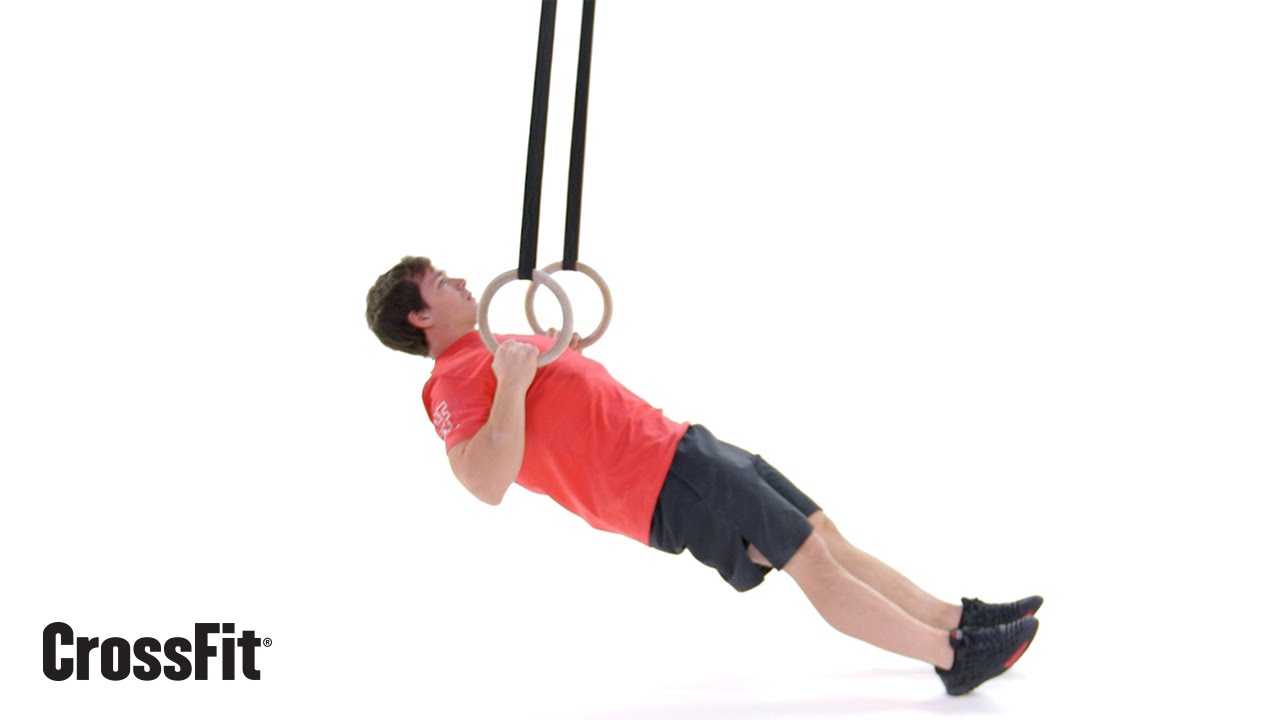
The ring row builds back strength, which is great for your posture and shoulder health — if you spend your day hunching over a laptop screen or desk, this is one to try.
It uses a horizontal pull, so unlike the regular pull-up, where you pull yourself up over the bar vertically, you'll start with your body under the rings or bar. I'd argue this challenges your core slightly more and carries over to many gymnastic skills. Think of stronger back and biceps muscles, which will also improve your pulling power.
- Set up rings, a bar, or TRX handles so they hang above the ground at the height of your hips
- Place your feet on a box (harder) or on the floor, then grab the rings or bar shoulder-width apart and engage your core
- Your body should be under the bar with a straight line from head to toe
- Keeping your elbows wrapped in close to your body, pull your body upward until your chest touches your hands
- Squeeze your back and shoulder blades at the top, then slowly lower with control
- 3-4 sets and 8-10 reps.
4. Prone lat pull-downs

You can add light weights, a resistance band, or a light bar for this exercise, but practice with your bodyweight first to ensure you activate and squeeze the correct muscles. Sometimes, when we use equipment to make an exercise harder, we can rush through the reps. Working with your weight means there's nowhere to hide to pull focus, and you can move with a full range of motion and control.
To do this move, you'll start on your stomach and lift your chest away from the floor, then mimic the lat pull-down by extending your arms in front of you, then bending your elbows and drawing them down toward your sides. It's a fabulous way to strengthen your back, glutes and posterior deltoids (the backs of your shoulders).
Whether you use weights or a bar (or not), it will test your shoulder mobility, so if you have sticky shoulders or conditions like frozen shoulder, be careful with this one and stop if you find it painful.
For an extra challenge, lift your legs into the air.
- Start on your stomach and extend your arms and legs
- Engage your core, then lift your chest away from the ground
- Send your gaze to the top of your mat
- Position your arms slightly wider than shoulder-width. Keep your legs pressed into the mat
- Bend your elbows, then draw them down toward your hips, squeezing your back and shoulder blades as you do
- Pause, then extend your arms again
- 3-4 sets and 8-10 reps.
5. Scapula pull-ups

Scapula pull-ups are great for preparing your shoulder joints for movement and load. This exercise will warm up your arms, shoulders and upper body and activate the stabilizing muscles that support your shoulders during workouts.
This isn't a pull-up, but focuses on the initiation of the move, which involves the slight shrug and lift you perform before you pull your weight to the bar. It builds upper back strength, improves shoulder mobility and develops the mind-muscle connection.
It also activates the latissimus dorsi, rotator cuff, rhomboids and trapezius muscles and improves range of motion of the shoulders. You may increase pull-up strength and efficiency by practicing this over time. If you don't feel comfortable, position plates or a box under the bar to relieve some tension, or wrap a resistance band around the bar and step a foot or knee into it.
- Stand under a bar, then grip slightly wider than shoulder-width and fully wrap your thumbs around the bar
- Hang from the bar, allowing your body to go heavy. Your arms should be straight andyour elbows extended
- Shrug your shoulders toward your ears, elevating the shoulder blades
- Pause, then, keeping your arms straight, pull your shoulder blades down and draw them together while pushing your hands into the bar
- Focus on this slight shrug up and down for 2-3 sets and 10 reps.

Follow Tom's Guide on Google News and add us as a preferred source to get our up-to-date news, analysis, and reviews in your feeds.
More from Tom's Guide
- Treadmill farmer's walk: How to do it and the benefits of building strength while walking with weights
- Forget Russian twists — 5 standing ab exercises that sculpt your core with one kettlebell
- Forget push-ups, it only takes 5 exercises to build your core and shoulders with this workout