EVs are still expensive to buy, with the average price still hovering at around $55,000. But despite their hefty costs, affordable EVs do exist — eve though they're in short supply. I've tested out nearly a handful of the, with two of the most affordable EVs you can buy right now being the Nissan Leaf (from $38,990) and Hyundai Kona Electric (from $38,375). They prove that you don’t need to spend a fortune to reap the rewards of all-electric power.
I drove both models for a week to test out their driving performances, how efficient they are, and what kind of speeds you can expect with Level 1 charging at home. These are all the basics you should look at if you’re planning to upgrade to an EV. For this matchup, I’m pitting the two exact trims I tested: the 2026 Nissan Leaf Platinum+ FWD and 2025 Hyundai Kona Electric N Line.
In my previous Hyundai Kona Electric vs Chevrolet Equinox EV face-off, the Kona Electric came away on top. However, it faces a much more formidable challenger with the Nissan Leaf. While both are some of the best electric cars I’ve tested in the last year, there’s one I’d buy with my own money.
Nissan Leaf vs Hyundai Kona Electric: Specifications
| Row 0 - Cell 0 | 2026 Nissan Leaf Platinum+ FWD |
2025 Hyundai Kona Electric N Line |
Battery |
75 kWh |
64.8 kWh |
Motor |
AC Synchronous motor |
FWD Permanent-Magnet Synchronous Motor |
0 to 60 mph |
N/A |
6.8 seconds |
Range |
259 miles |
230 miles |
Horsepower |
214 hp |
201 hp |
Wheels |
19-inches |
19 inches |
MSRP |
$38,990 |
$38,375 |
Price Tested |
$41,930 |
$39,880 |
Nissan Leaf vs Hyundai Kona Electric: Design


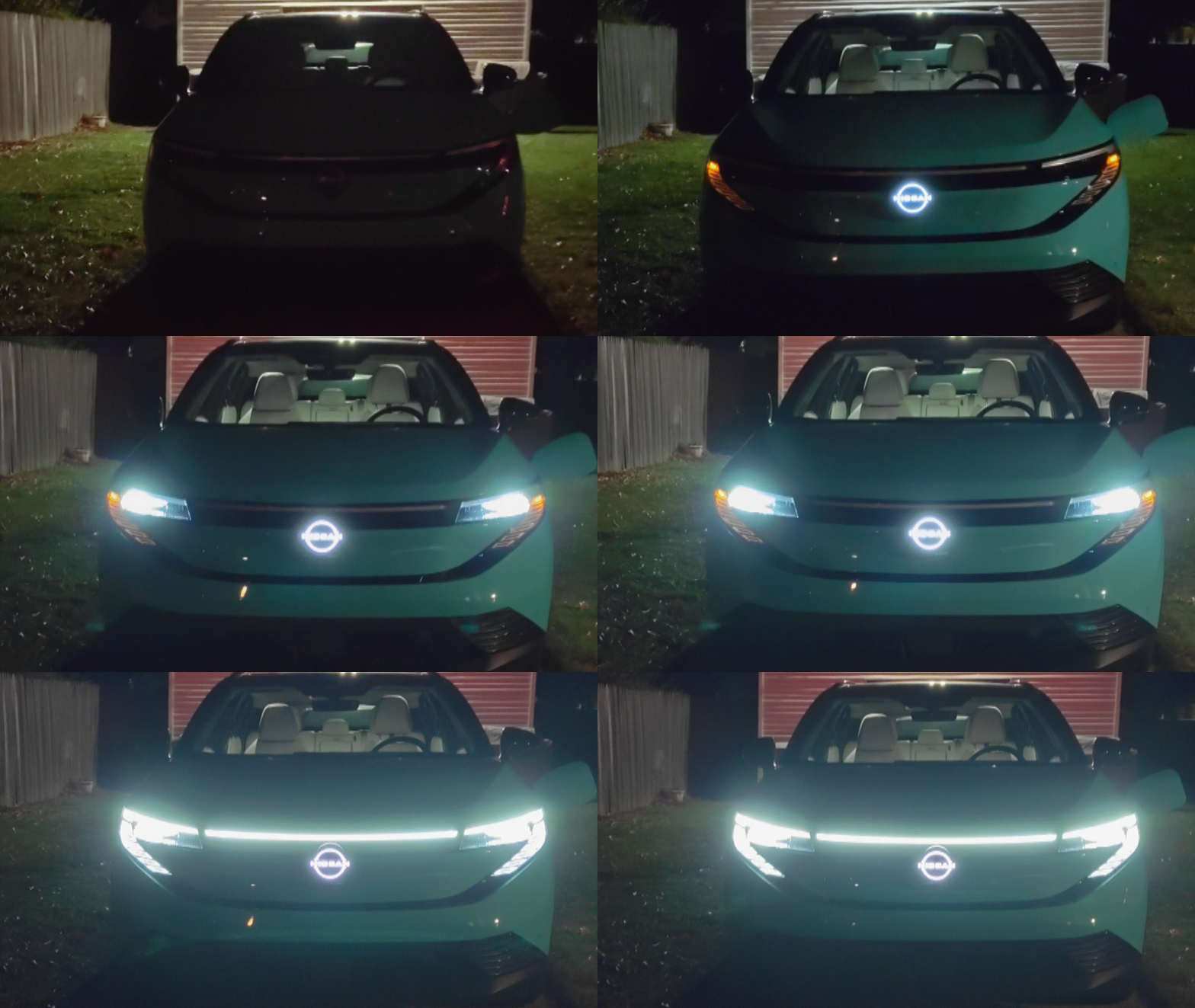
Nissan’s redesign makes the 2026 Leaf a head turner on the road, mainly because it ditches the dorky persona that's long been attached to the series. This makeover is a refreshing one that turns this subcompact crossover SUV into a delight for the eyes. From its aggressive and sporty stance, to small touches like the 3D effect of its stacked rectangular headlights, the new Nissan Leaf embodies the aesthetics of what I want in a sporty-meets-modern design.


The 2025 Hyundai Kona Electric N Line is equally stunning in its own right, boasting sleeker coupe-like lines around its body that adds to its sporty demeanor. It certainly has a youthful style due to the N Line body kit that adds black accents all around its trim. But while I appreciate its sporty design, I still prefer the more modern look of the Nissan Leaf.
Winner: Nissan Leaf
Nissan Leaf vs Hyundai Kona Electric: Efficiency
| Row 0 - Cell 0 | 2026 Nissan Leaf Platinum+ FWD |
2025 Hyundai Kona Electric N Line |
Price tested |
$41,930 |
$39,880 |
Total miles driven |
372 miles |
412 miles |
Average Efficiency |
3.6 mi/kWh |
4.3 mi/kWh |
Best long distance driving efficiency |
4.1 mi/kWh |
4.4 mi/kWh |
Best short distance driving efficiency |
5.1 mi/kWh |
5.8 mi/kWh |
Level 1 charging rate |
4.24 mi/hr |
3.96 mi/hr |
You can see how far I drove each vehicle over the course of my testing in the chart above. The Hyundai Kona Electric isn’t just more efficient than the Nissan Leaf, it’s the most efficient EV I’ve tested in the last year with the 4.3 mi/kWh average I recorded. This is important because Hyundai has the Kona Electric rated for up to 230 miles of range with its 64.8 kWh battery, which comes out to an efficiency of 3.55 mi/kWh. Based on the 4.3 mi/kWh I obtained with the Leaf, it could potentially get as much as 278 miles of range.
Since the Nissan Leaf is the larger vehicle and comes with a 75 kWh battery, I’m not surprised it ended up with a lower average efficiency of 3.6 mi/kWh. If it's able to sustain that average, it means a range of 270 miles, making it better than the 259 miles of range that Nissan claims.
Despite this, there’s just no comparison between the two as the Hyundai Kona Electric N Line is way more efficient in every way — including highway driving where it manages to sustain a 5.8 mi/kWh efficiency during one of my long distance trips.
Winner: Hyundai Kona Electric
Nissan Leaf vs Hyundai Kona Electric: Drive performance


Partly because it’s part of the N Line series, I prefer the driving performance of the Kona Electric. Switching it into Sport mode injects much-needed power that doesn’t just increase the responsiveness of its acceleration, but it also makes the steering much tighter. As a result, it’s way more fun to drive and better suited for tight turns.
Similarly, the Nissan Leaf also has its own sport mode that sharpens the accelerator’s response — while accompanied by a pronounced regenerative braking system. Don’t get me wrong, it satisfies my need for speed, but it doesn’t feel quite as thrilling to drive.
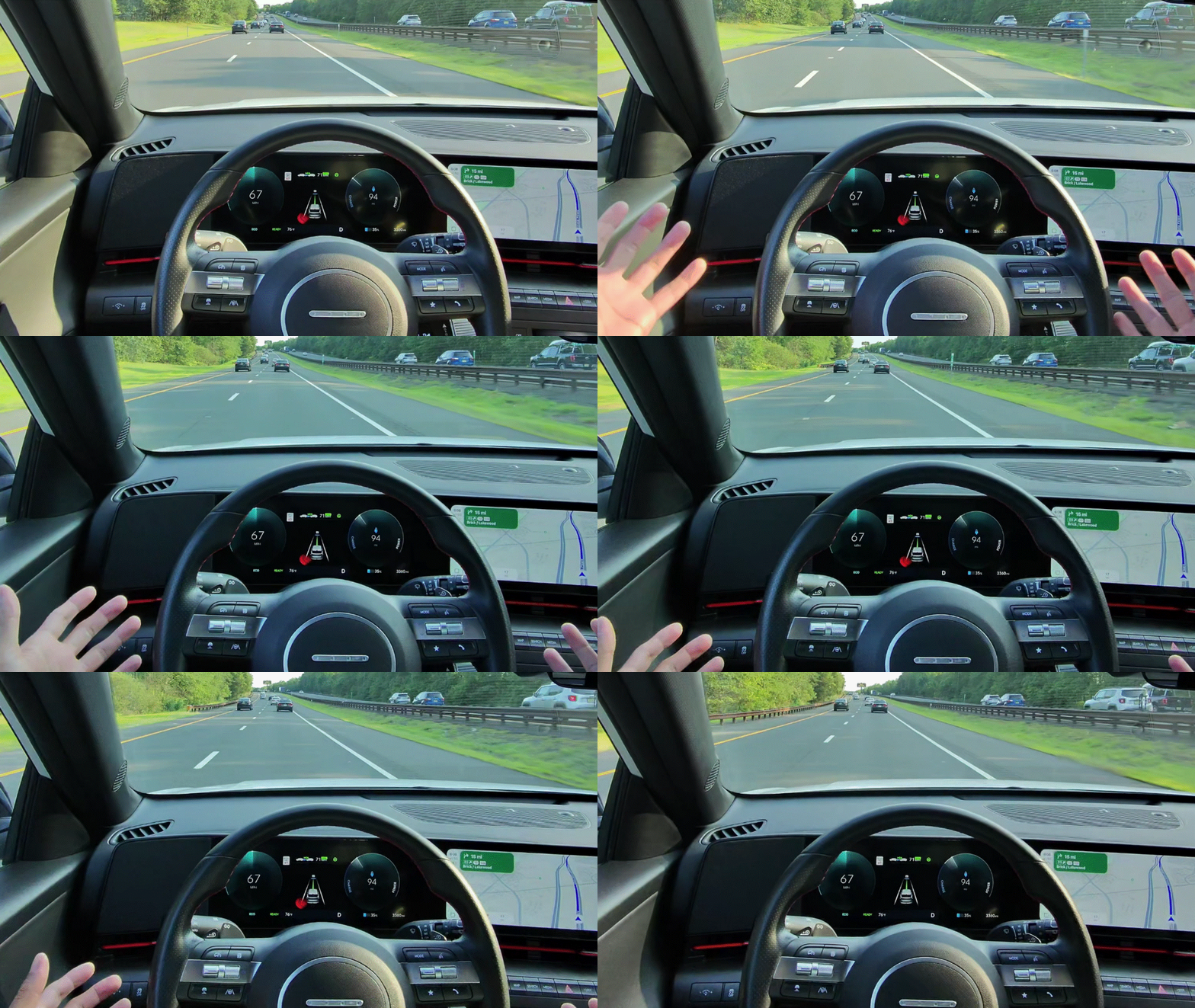
There’s also the matter of their respective adaptive cruise control systems, which both do very well on the highway to maintain cruising speed. The only difference is that Hyundai offers a dedicated button on the steering wheel to activate the Kona Electric’s lane center assist. It works on highways and local roads to keep me centered in my lane.
Winner: Hyundai Kona Electric
Nissan Leaf vs Hyundai Kona Electric: Comfort


One of the biggest downsides to the Hyundai Kona Electric is that it’s deceptively small. Even though the front seats offer plenty of space to make long drives bearable, there’s very little room for passengers in the back seat. They’ll be able to accommodate smaller children, but you can forget about adults because they’ll be smashing their knees frequently against the front seats. Hyundai does leave ample trunk space, but it could’ve sacrificed some of that to make more legroom.


That’s not a problem for the 2026 Nissan Leaf Platinum+ FWD, which employs TailorFit leatherette that makes the seats more spill and stain resistant. There’s ample legroom for passengers in the back too, while its larger trunk space allows me to stow larger sized packages without needing to fold down the back seats.
Winner: Nissan Leaf
Nissan Leaf vs Hyundai Kona Electric: Value



Now this is where it gets interesting because like I’ve mentioned from the start, these are two of the most affordable EVs you can get — way less than the $50K cost I see with most EVs. Both the trims I tested come with plenty of premium features that I think justify their value over their base trims.
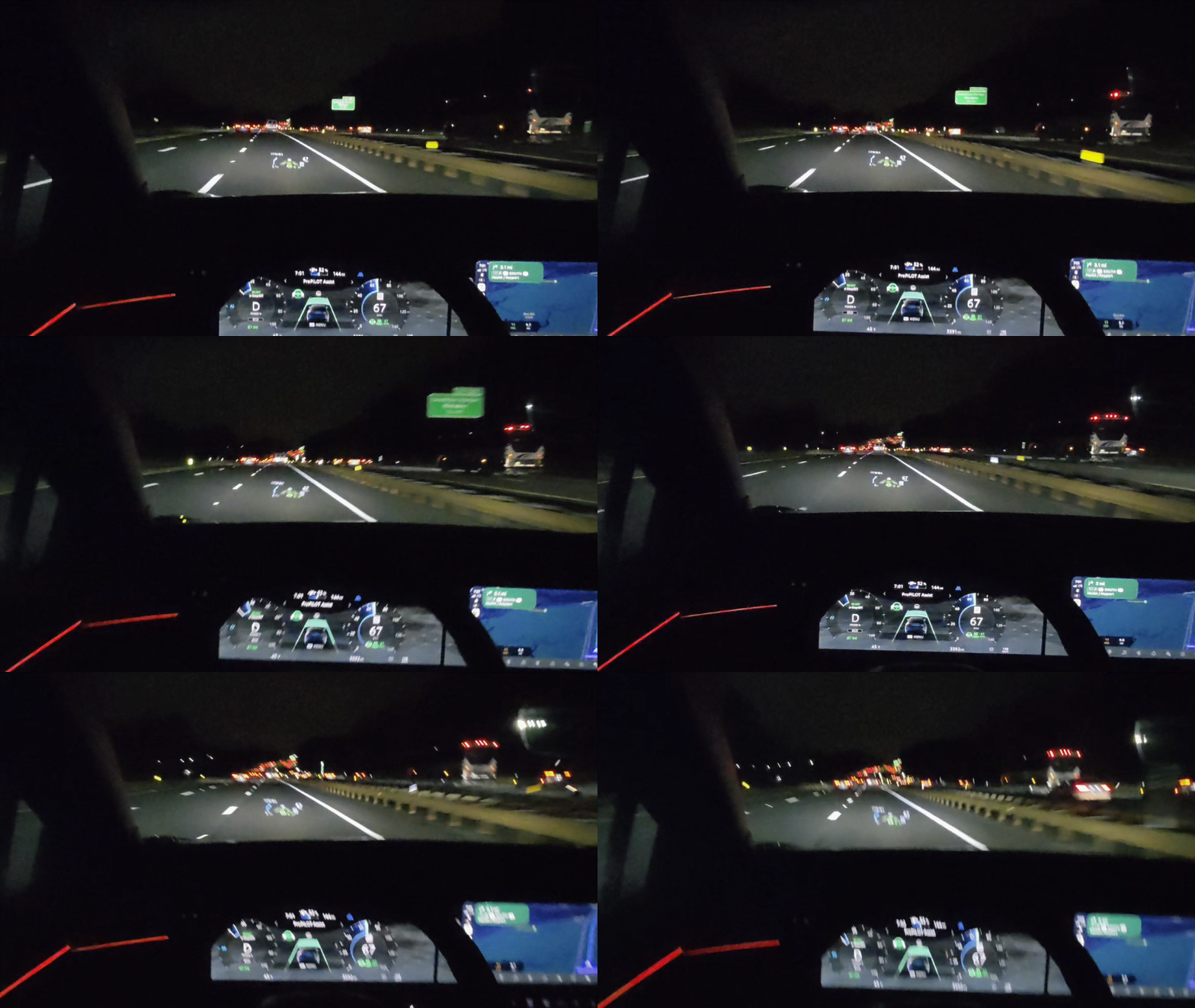
There’s a $2,000 spread between them, yet I feel Nissan’s giving you more bang-for-the-buck value. In addition to offering a head-up display and a 10-speaker Bose sound system, I really love how the electronically controlled glass roof has a subtle fading animation that makes it go from opaque to transparent. It also has the faster Level 1 charging speed to add back more range with an overnight charge at home.


Hyundai’s also pretty generous with the Kona Electric, like how it has way more dazzling ambient lights on the inside. However, it suffers from relying too much on using a lot of hard plastic everywhere on the inside.
Lastly, it’s worth noting their base trim prices — $29,990 for the 2026 Nissan Leaf S+ and $32,975 for the 2025 Hyundai Kona Electric SE. Both trims are as basic as they come, but I would still get the Leaf because of its larger size.
Winner: Nissan Leaf
Nissan Leaf vs Hyundai Kona Electric: Verdict


After tallying the results, this face-off goes to the Nissan Leaf. It’s the affordable EV I’d buy with my own money because of its modern design, spacious interior, fast Level 1 charging, and way more extra premium features. Even though it falls short to the Kona Electric’s class leading efficiency, I’m glad to make the trade-off for a larger vehicle that’s comfortable to drive for everyone.
You can’t go wrong with the Kona Electric either, especially if you prefer a sportier drive. It may look small, but don’t let it deceive you because it’s incredibly fast and responsive. Its smaller size, however, leaves less room on the inside for your passengers.

Follow Tom's Guide on Google News and add us as a preferred source to get our up-to-date news, analysis, and reviews in your feeds.
More from Tom's Guide
- I'm not anxious that it's getting darker earlier with this thermal camera for my car — here's why
- I just test drove the new Nissan Leaf — and it's irresistible at under $30,000
- CrabWalking with the GMC Sierra EV is the weirdest thing I’ve ever done with a car — and it’s actually pretty useful