Tom's Guide Verdict
The 2026 Lucid Gravity Grand Touring sets a new benchmark for three-row EVs by pairing sports-car acceleration and maximum passenger space with a class-leading efficiency. However, it commands a steep starting cost and its minivan-esque look is tough to overlook.
Reasons to buy
- +
Class-leading efficiency
- +
Spacious legroom
- +
Much improved adaptive cruise control
- +
Higher quality cameras
- +
Stunning glass canopy roof
- +
Frunk doubles as a bench
- +
Speedy acceleration
Reasons to avoid
- -
Minivan-like look
- -
Pricey
- -
Tough to access third row seat
Why you can trust Tom's Guide Our writers and editors spend hours analyzing and reviewing products, services, and apps to help find what's best for you. Find out more about how we test, analyze, and rate.
For the past couple of years, the Lucid Air has consistently been one of the most efficient EVs I’ve tested. By reaching that golden 4 mi/kWh average during my testing, Lucid didn’t just set the benchmark for what an electric sedan could achieve — it also proved that range anxiety is a thing of the past. While its all-electric luxury sedan is one of the best electric cars on the market, relying on a single model hasn’t helped the company broaden its brand recognition.
Enter the 2026 Lucid Gravity, a bold electric crossover that reimagines what a 3-row SUV can be. The California-based EV maker is finally stepping into a new category, but with a base price of $79,900 that balloons to a staggering $123,950 as-tested price for the Grand Touring trim I tested for a week, it faces a steep uphill battle to prove it’s worth that kind of money.
In fact, it’s competing against other notable 3-row luxury SUVs I’ve put to the test, like the Rivian R1S and Cadillac Vistiq — in addition to ultra-practical alternatives like the Kia EV9 and Hyundai Ioniq 9. Here are my pros and cons of the 2026 Lucid Gravity Grand Touring.
2026 Lucid Gravity review: Specifications


| Header Cell - Column 0 | 2026 Lucid Gravity Grand Touring |
|---|---|
Battery |
123 kWh |
Motor |
Dual Motor (AWD) |
0 to 60 mph |
3.4 seconds |
Range |
386 miles |
Horsepower |
828 hp |
Wheels |
22-inches front, 23-inches rear |
MSRP |
$94,900 |
Price Tested |
$123,950 |
2026 Lucid Gravity review: Testing summary

I drove a total of 236.8 miles during my week of testing the 2026 Lucid Gravity Grand Touring, achieving an average efficiency of 3.24 mi/kWh. Just like its sedan sibling, the Gravity proves it’s ultra-efficient where it matters most, easily outclassing its key three-row rivals.
This class-leading efficiency stems from its 123-kWh battery, 900V+ electrical architecture, and low-slung, aerodynamic design that significantly cuts drag compared to the blockier, high-riding stances of the Cadillac Vistiq and Rivian R1S.
It pulled ahead in both my short- and long-distance driving tests, returning 3.59 mi/kWh around town and an even more impressive 3.68 mi/kWh on highway stretches. For a crossover with seating for up to seven, these are figures typically reserved for much smaller EVs.
Equipped with a native NACS charge port, it provides direct access to Tesla Superchargers without needing an adapter, while included adapters ensure compatibility with third-party CCS and J1772 stations. On standard Level 1 charging at home, I logged a recharge rate of 2.27 mi/hr. While that edges out competitors like the Escalade IQ (1.88 mi/hr), it remains modest compared to the 3 to 4+ mi/hr rates lighter, smaller EVs can pull from a standard 120V household outlet.
| Header Cell - Column 0 | 2026 Lucid Gravity Grand Touring |
2026 Rivian R1S Quad |
2026 Cadillac Vistiq Platinum |
|---|---|---|---|
Price tested |
$123,950 |
$124,890 |
$99,915 |
Total miles driven |
236.8 miles |
165.4 miles |
367.3 miles |
Average Efficiency |
3.24 mi/kWh |
1.85 mi/kWh |
2.9 mi/kWh |
Best long distance driving efficiency |
3.68 mi/kWh |
2.2 mi/kWh |
2.9 mi/kWh |
Best short distance driving efficiency |
3.59 mi/kWh |
2.03 mi/kWh |
3.3 mi/kWh |
Level 1 charging rate |
2.27 mi/hr |
2.49 mi/hr |
3.24 mi/hr |
2026 Lucid Gravity review: What I like
Spacious interior
Sit in any seat inside and you’ll immediately notice the sprawling amount of passenger space. The best seats in the house are unquestionably in the second row, offering a generous 42.6 inches of legroom. Making them even better are the flip-out tray tables integrated into the front seatbacks, adding practical utility that makes typing on a laptop or watching videos on a tablet far more comfortable.
While third-row seating in most mid-size SUVs is typically reserved for children, the Gravity manages to deliver a legitimate 33.9 inches of legroom in the rearmost quarters. Removable floor inserts cover the footwells, but taking them out drops the floor and significantly improves thigh support for adults. That said, climbing into the third row requires waiting on the powered second-row seats to slide forward and tilt, which tests your patience when loading passengers in a hurry.
Much improved adaptive cruise control

One of the biggest pain points I experienced with the Lucid Air was how frustratingly unreliable its driver-assistance suite felt, especially for a six-figure luxury vehicle. Simply getting the system to remain active and accessible was part of the struggle. Fortunately, Lucid took note: the upgraded DreamDrive 2 Pro system on the Gravity finally delivers the consistency this price bracket demands.
The adaptive cruise control and hands-free highway assist feel substantially more polished, reading traffic conditions smoothly and applying throttle or braking with measured confidence. During one stretch of highway driving, the Gravity gently applied the brakes when a car abruptly cut into my lane — a composed response that avoids the jarring reactions I frequently encounter in other ADAS suites.
Higher-quality cameras with 360-degree coverage
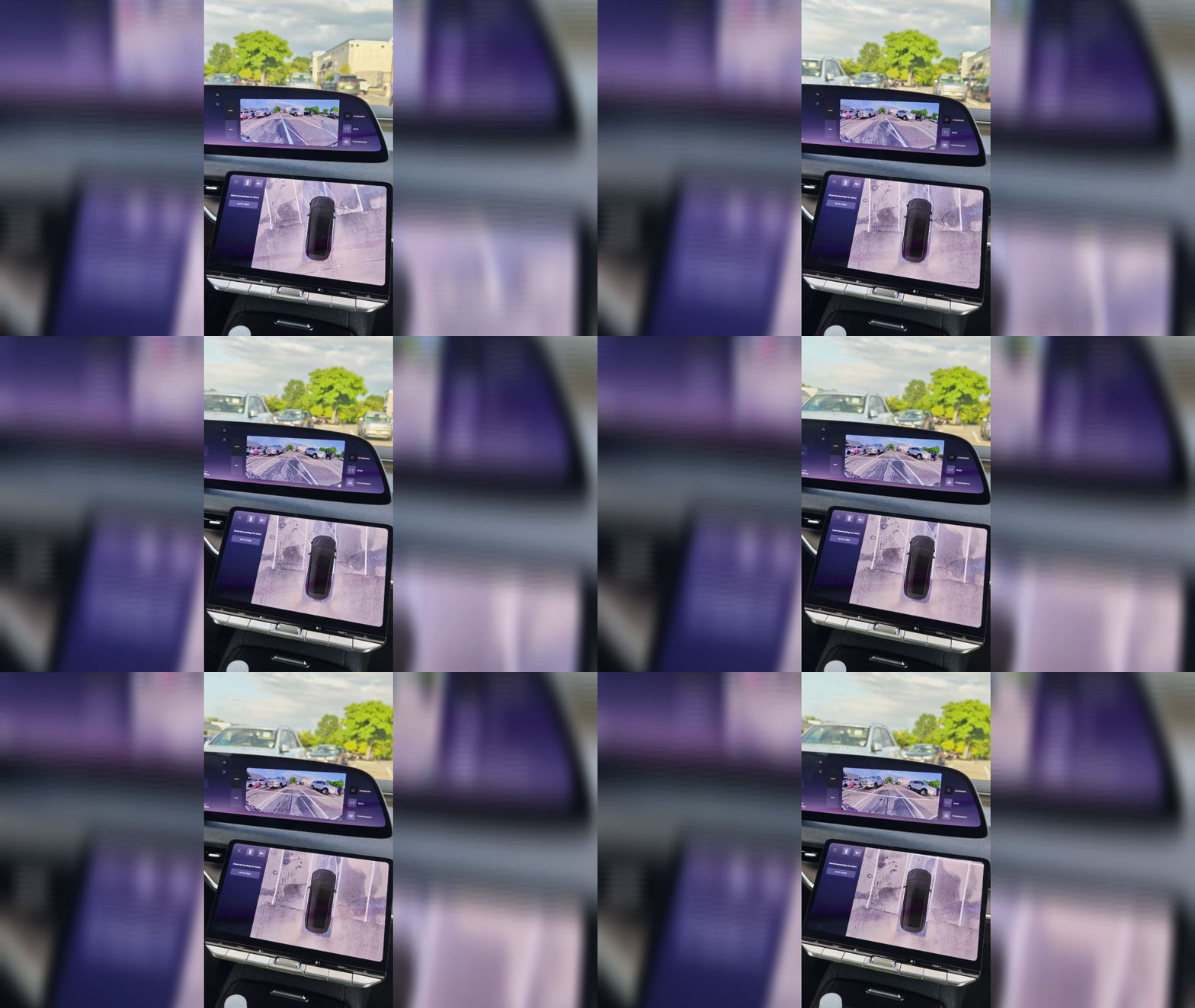
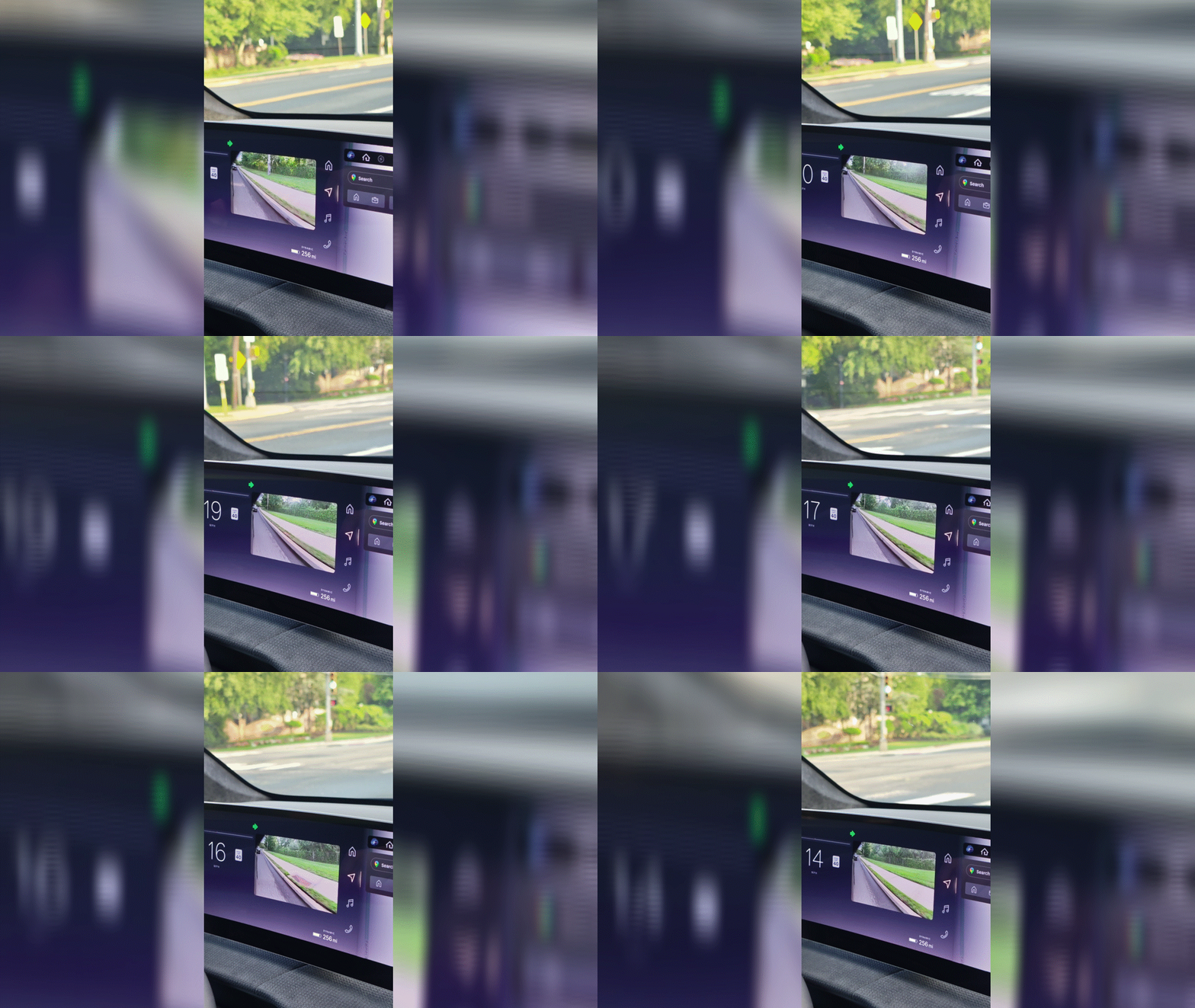
Part of why its ADAS feels like a much more polished experience comes down to the upgraded camera hardware Lucid equipped this time around.
Unlike the Lucid Air, which suffered from low-resolution feeds that stuttered and looked noisy in low light, the Gravity features high-definition cameras with noticeably wider dynamic range. That upgrade makes the stitched 360-degree surround-view parking system look crystal clear. They’re sharp enough that the blind-spot monitors — which project a live video feed directly onto the 34-inch driver’s display — are far more dependable to lean on during highway lane changes.
A frunk that converts into a useful bench seat
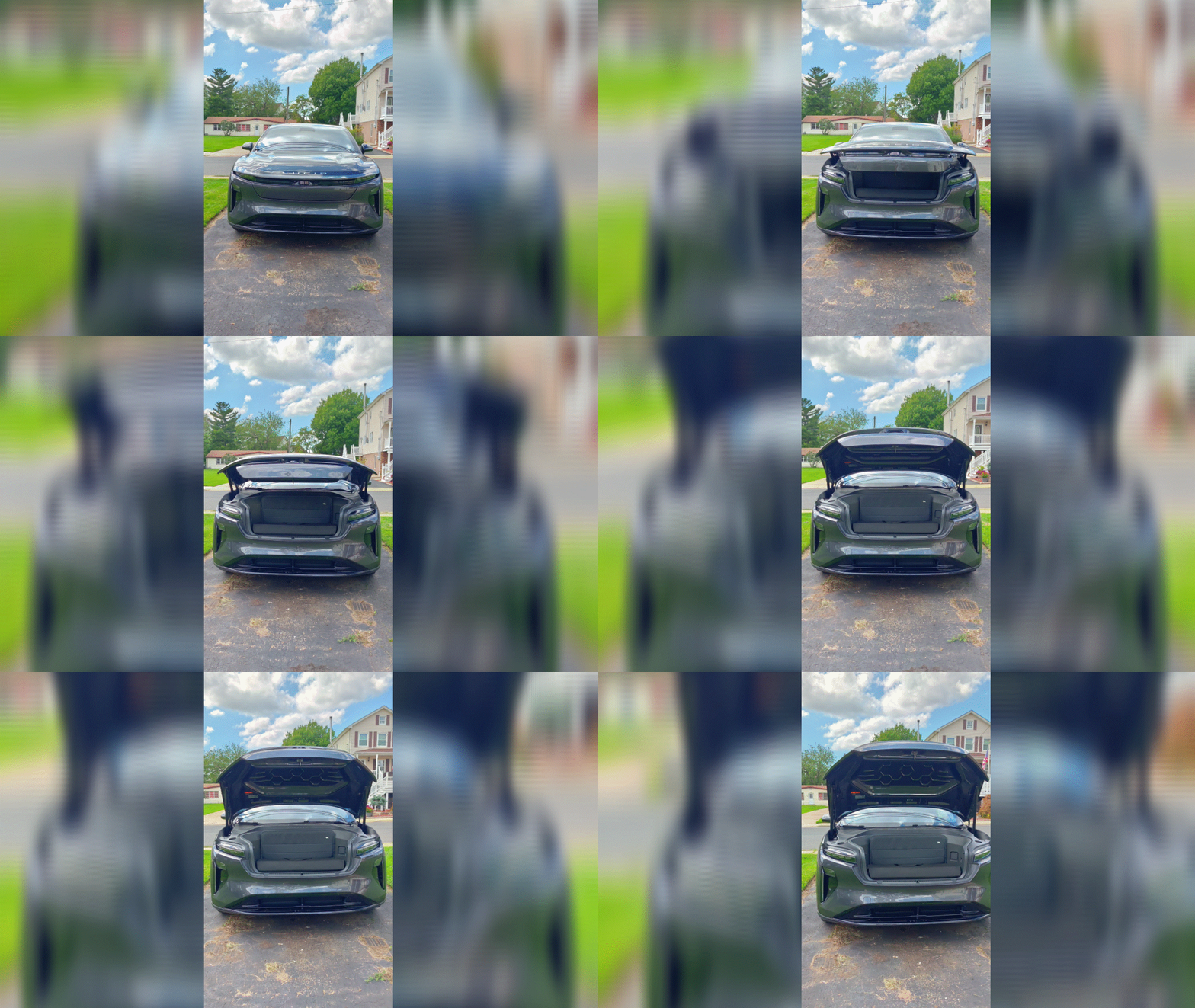
Frunks in EVs are always cool to show off, but Lucid took a distinctly different design approach with the Gravity. Instead of settling for just another deep cargo bin, its cavernous 8.1-cubic-foot compartment does double duty as a functional bench seat — ideal for beach trips, outdoor concerts, and tailgates.
Thanks to the crossover’s low front load height, the power-operated frunk sits at a natural seating level that easily accommodates two adults, complete with integrated cup holders molded into the surround. This trim I tested included the optional plush seat cushion insert, which folds up neatly inside the tub for easy storage. It’s one of those inventive design flourishes I didn't expect to care about.
Breathtaking glass canopy roof
As much as I appreciate panoramic sunroofs, the Lucid Gravity takes the concept to another level with its signature Glass Canopy Roof, which completely erases the boundary between the windshield and the sky. Sitting in either front seat, you're encased in continuous glass — so much so that traditional sun visors have to be mounted directly onto floating posts anchored to the glass.
This architectural choice floods the cabin with natural light and makes the interior feel remarkably dramatic. Passengers in the second and third rows aren't neglected either, as they're treated to an expansive rear glass roof that rarely feels overpowering on sunny days thanks to Lucid's heavy UV- and infrared-blocking coatings.
Accelerates shockingly quick
Don’t let the family-friendly silhouette fool you: the 2026 Lucid Gravity Grand Touring accelerates like a genuine performance machine. Powered by a dual-motor all-wheel-drive powertrain, this electric crossover churns out a staggering 828 horsepower.
I’d recommend sticking with "Smooth" mode if you want to prioritize efficiency, but switching to "Sprint" mode makes a world of difference when you want instant acceleration. It delivers more than enough thrust to overtake slower traffic and tackle highway merges effortlessly, all while keeping interior cabin noise to an absolute minimum.
The most efficient 3-row SUV around

Other luxury automakers frequently overlook efficiency, but Lucid doesn’t — and that’s one of the Gravity’s biggest competitive advantages. Just like the Lucid Air, the Gravity flips the script on what family-sized EVs can deliver by prioritizing powertrain efficiency above all else.
I can’t stress enough how astonishing the 3.24 mi/kWh average was during my real-world driving. Prior to this, the Hyundai Ioniq 9 led the way with its then-impressive 3.0 mi/kWh benchmark — so for the Gravity to exceed that proves that Lucid's 900V+ architecture and aerodynamic engineering can finally dispel range anxiety concerns.
2026 Lucid Gravity review: What I don't like
Design strays minivan-like
While Lucid classifies the Gravity as a sleek luxury crossover, viewing its profile in person tells a slightly different story. In order to maximize interior packaging and reduce aerodynamic drag, Lucid gave the Gravity a cab-forward, steeply sloped nose, an elongated passenger greenhouse, and a low roofline—proportions that make it look less like an authoritative SUV and a lot more like a modern minivan.
In fact, I couldn’t help but be reminded of the Kia Carnival, which also blurs the line between an upscale SUV and an elongated people-mover. The Gravity simply doesn’t command the same head-turning road presence as the striking Lucid Air sedan, and that van-leaning aesthetic may give pause to buyers expecting a traditional, high-riding luxury SUV stance.
Commands top dollar

All that cutting-edge hardware and tech comes at a steep financial cost. With the Gravity Grand Touring carrying an official starting price of $94,900 before destination and options, it commands a massive premium that places it out of reach for most buyers. If you intend to spend six figures on a luxury electric SUV, the Rivian R1S remains my top choice.
At the same time, the Gravity Grand Touring faces a tough challenge steering value-conscious buyers away from mainstream three-row alternatives like the Kia EV9 and Hyundai Ioniq 9, which top out under $75,000 for their highest trims. While those vehicles can't match the Gravity's blistering 828-horsepower acceleration, or its class-leading efficiency, you can purchase them fully loaded for tens of thousands less while enjoying comparable passenger utility and everyday road-trip comfort.
2026 Lucid Gravity review: Bottom line
The 2026 Lucid Gravity Grand Touring fundamentally redefines what a three-row electric crossover can achieve. By translating the Lucid Air’s miniaturized powertrain packaging and aerodynamic philosophy into an SUV format, Lucid has delivered something unprecedented: a full-sized family hauler that comfortably carries up to seven passengers without succumbing to sluggish dynamics or terrible energy consumption. It raises the bar for the entire segment with its class-leading 3.24 mi/kWh overall efficiency.
However, it isn't without compromises. Its styling is an acquired taste, leaning noticeably minivan-like in person. And, of course, its six-figure price tag creates a steep barrier to entry when mainstream alternatives like the Kia EV9 and Hyundai Ioniq 9 offer generous three-row utility for tens of thousands less.
Even so, if you have the budget to splurge on top-tier luxury that refuses to compromise on sports-car acceleration, executive legroom, or range efficiency, the Gravity Grand Touring stands as a top choice for three-row electric crossovers.

Follow Tom's Guide on Google News and add us as a preferred source to get our up-to-date news, analysis, and reviews in your feeds.
More from Tom's Guide
- I'm not anxious that it's getting darker earlier with this thermal camera for my car — here's why
- I just test drove the new Nissan Leaf — and it's irresistible at under $30,000
- CrabWalking with the GMC Sierra EV is the weirdest thing I’ve ever done with a car — and it’s actually pretty useful