






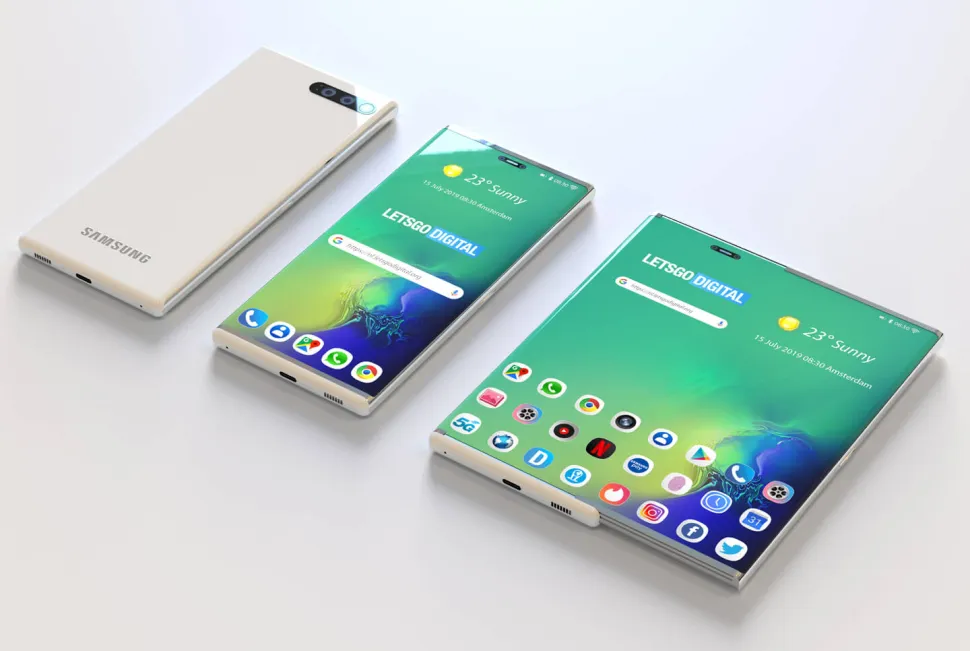
Samsung is rumored to be privately showing a new slider phone at CES 2020 — one that can expand its screen size from regular candy bar to mini-tablet size by just stretching it. It’s a slider phone — but unlike any we've seen before.
We saw a brief revival of the slider phone last year, with devices like the Xiaomi Mi Mix 3, the Oppo Find X, and the Honor Magic 2. But this is a different beast. Those phones just allowed you to move the screen to reveal the hidden selfie camera, thus eliminating any need for top bezels, notches or punch holes.
But Samsung’s “slider” doesn’t move the entire the display to show a hidden element. It actually expands its screen. As the Korean electronics industry newspaper ET News reports, Samsung’s secret slider device uses a flexible panel to increase the display’s real estate from a normal 6-inch phone to a 8-inch mini tablet.

“The slide panel developed by Samsung Display is characterized by the fact that the screen naturally grows and shrinks when the button is pressed,” the paper reports. Just like LG’s rollable TV. The screen doesn’t have a glass surface like the rumored Galaxy Fold 2 but a regular plastic skin.
If this sounds familiar to you, it’s because the phone’s rollable design was patented last July. In fact, the company patented not only one but two expandable sliders: one with that expands horizontally — which makes sense — and one that expands vertically — which is pretty damn weird — and doesn’t seem very useful.

The wacky world of Samsung’s phone patents
Knowing that this device may have become a reality — even in prototype form to test the press’ opinion waters — makes me a happy nerd. Especially knowing that Samsung has been patenting the weirdest things.
There’s a patent for the wraparound phone that uses a foldable display all around the phone but doesn’t really fold — kind of like the Xiaomi Mi Mix Alpha.
Then you have the Galaxy Z-Fold, which folds not only once but twice for a treasure map triptych design.

There’s also one with dual dettachable magnetic screens and a winged one that looks like Xiaomi’s foldable prototype. The company is even toying with the idea of a phone that turns into a wearable wristband.
I don’t know how many of these things will pan out or gain any traction in the market, but kudos to Samsung for thinking and trying crazy new things.

