




I’m sorry to be the bearer of bad news, but there’s a good chance your iPhone is letting down your wireless headphones.
If you own a decent mid-to-premium pair released within the past few years, such as the Bowers & Wilkins Px7 S3 and Bose QuietComfort Ultra Earbuds Gen 2 found in our best headphones and best wireless earbuds buying guides, there’s a good chance it supports a high-quality Bluetooth codec like LDAC or aptX HD/Adaptive.
That essentially means they can wirelessly receive music over that codec so long as the phone (or other source device) supports it too.
The problem is, iPhones only support the inferior ‘basic’ SBC and AAC codecs. Play a Spotify Lossless song from an iPhone 17 to those B&W over-ears, for example, and the audio signal is transmitted over AAC Bluetooth, even though the headphones support the vastly superior aptX Lossless.
That has a potentially significant impact on sound quality. To understand this, you need to know a little about how Bluetooth codecs work. Let me explain.
Codecs matter, but aren't born equal

In the context of phones, laptops/computers and wireless headphones, each supports one or more Bluetooth codecs. A Bluetooth codec is software that compresses, encodes and decodes music so that it can be efficiently transmitted wirelessly between devices, though not all are born equal.
SBC is the most basic, universally supported codec, followed in terms of ubiquity and quality by AAC. Theoretically, aptX Lossless and LDAC are the most advanced.
I’ll spare you a long rant about Bluetooth codecs, but essentially all you need to know is that these most advanced codecs can handle audio files with the highest bitrates (hi-res songs) and compress them for transport in a way that best retains their integrity.
In other words, they can package a high-quality audio signal, send it between devices, and unpackage it at the other end without losing much of the musical information in the signal.
No Bluetooth codec can do this perfectly and completely losslessly, i.e without some information being lost – there’s simply too much information in a hi-res audio file to squeeze down the Bluetooth technology bandwidth tube without compressing it first. But aptX Lossless is arguably the best at the job.
Its maker, Qualcomm, claims that, with CD-quality audio (16-bit/44.1kHz) anyway, "no data is lost when audio is encoded and decoded with aptX Lossless"; it still compresses, but supposedly anything ‘lost’ in that process is restored.

Therefore, to set yourself up for optimal wireless headphone listening (before the actual quality of your headphones’ hardware comes in to determine that even more!), both your phone/audio source and headphones should support a high-quality codec. Bluetooth headphones and earbuds are doing their bit, increasingly supporting them, but the same can’t be said of most everyday audio devices.
Indeed, iPhones aren’t the only offenders of low-quality (lossy) Bluetooth codec support; MacBooks don’t natively support any version of aptX (they prioritise AAC, as iPhones do), nor do many Windows machines.
Android phones fare better on this front, with many supporting LDAC and at least aptX HD, though support for the better aptX Adaptive and better still aptX Lossless is rarer.
A neat, affordable solution

So you’ve spent a few hundred (or more) dollars on wireless headphones and potentially can’t even hear them at their best due to your phone’s Bluetooth limitations, right? Right.
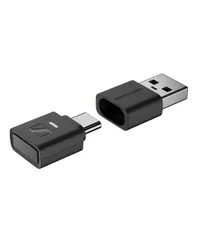
But there is a way you can easily, affordably and conveniently right that wrong: by plugging a Bluetooth dongle like Sennheiser’s BTD 700 into the USB-C socket of your phone/audio source.
This $45 device brings aptX Lossless (and aptX Adaptive; aptX codecs are backwards-compatible) to your iPhone or other device, improving the Bluetooth transmission (and thus sound quality potential) between it and your aptX codec-supporting wireless headphones.
Sennheiser isn’t the only manufacturer of such small, discrete upgrades, but I’ve recently tested its BTD 700 with a range of devices and headphones and can vouch for its value.
Using the dongle with an iPhone 15 connected to the Sennheiser HDB 630 ($499.95) headphones, Spotify Lossless streams sound significantly clearer, more solid and dynamic.
Remove the dongle from the equation, reverting back to AAC transmission, and the presentation loses its shape and vitality, sounding comparatively meek and flat. I'm talking night and day differences that fully justify the dongle's modest expense.
Okay, so connecting anything to your phone – even something as dinky as the 2.4cm-long, 2g BTD 700 – won’t sit well with some, especially those with an older, Lightning port-toting iPhone who will need to add a Lightning-to-USB-C adaptor into the equation. You also can’t use it while your phone is charging.
But for those who can live with having a small protrusion from their device for the sake of superior sound quality, it’s a no-brainer buy.
Not all wireless headphones will benefit
Remember when I said that optimising Bluetooth transmission quality is a good start but that the quality of your headphones themselves matters more? Well, that’s true, and bears repeating here. Indeed, you can hear clear sonic differences between different qualities of Bluetooth codec transmissions… but only if your headphones are sophisticated enough to reveal those differences in the first place.
It’s like watching a DVD and a 4K Blu-ray through an old HD TV; the latter will offer a much better representation of what the camera captured, but the extra sharpness, detail and colour range information stored within the disc won’t present itself overly obviously on the TV due to the screen's limited pixels and colour reproduction.
In other words, don’t expect the improvements offered by higher-quality codecs to be readily communicated by sub-$200 wireless headphones; you will be wasting your money, hopes and dreams on the dongle upgrade.
The BTD 700 isn’t going to make your headphones better than they are, it’s just going to allow them to perform to their maximum potential for wireless playback. If your mid-to-premium Bluetooth headphones have sonic skills, your wireless listening experience will almost certainly be enriched by upgrading to aptX Adaptive/Lossless transmission.
More from Tom's Guide
- I'm skeptical about the Galaxy Z TriFold — here are the 5 big questions I have about Samsung's triple-folding phone
- I've Reviewed 18 Pairs of Headphones This Year — and These Are the Only 3 I Wholeheartedly Recommend
- I ditched my Bose QuietComfort Ultra for these $149 noise cancelling headphones — here's what happened

Follow Tom's Guide on Google News and add us as a preferred source to get our up-to-date news, analysis, and reviews in your feeds.

