When it comes to tech made for children, one of the defining features tends to be low prices. However, those budget prices usually mean cheaply made devices.
Unlike more expensive options such as the iClever Auraa ($65) or the more premium Puro Sounds Labs BT2200-Plus ($99), the JBL 320s are nearly featureless. That’s not necessarily a bad thing.
With kid-friendly headphones, the important things to consider are comfort, durability, sound quality, and whether they have a volume cap to protect young ears. Beyond that, extra features are nice to have but not necessary.
With that in mind, I spent a couple of weeks testing out the $20 JBL Junior 320 wired headphones. Does a low price mean poor quality or does it live up to the reputation? I found out, plus a few thoughts from a real kid.
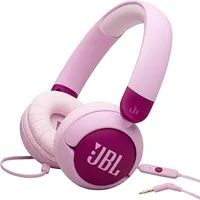
Hard plastic shell

If it weren’t for the JBL branding, I was surprised the Junior 320s even came in a box, much less with a cloth carrying bag that ripped almost immediately — I would have thrown it away anyway.
They come in two colors: blue or purple, with a hard plastic making up most of the build. The earbuds come pre-wrinkled, so they look like they’re already well-worn, which isn’t pleasant to look at. Honestly, it feels cheap.
This is a personal pet peeve, but I found the headband noticeable and irritating over long listening sessions. My son wasn’t bothered by it. This is likely because the headphones are designed for a kid's head.
The headphones do come with stickers that kids can use to personalize the plastic bits or cover walls somewhere they shouldn’t.
Long live wires

These headphones are wired with a 3.5mm jack, which is not removable. However, I gave the wire a few hard tugs like a kid might and found it pretty sturdy. I’m sure an enterprising child could rip the wire off, but I think it’s strong enough for most.
The wire features a simple controller that lets you pause or start audio and a microphone for chatting over FaceTime with a tablet or phone if you let your kids use those.
I’m a big fan of wired connections, especially as it means there’s no battery to charge, but I do realize these headphones won’t work for those with devices that no longer offer 3.5mm ports. Still, most kid-friendly tablets and music devices still have that port, so it shouldn’t be too much of a problem that these don’t have Bluetooth connectivity.
Surprising sound

Some of my favorite headphones are made by JBL, like the company's flagship Tour One M3, which has a big, bassy sound. I put on the 320 headphones with my expectations on the floor.
And honestly, they managed to step over the bar pretty easily. Yes, they lack the depth of their more expensive sibling, but I was surprised at how clean the mids and trebles sounded while the bass had a bit of punch.
I listen to a lot of podcasts as well, and cheap headphones can make them sound flat. The 320s won’t elevate that experience, but if you’re using these with a tablet on a road trip, your kids won’t complain they can’t hear Bluey.
If you’re dropping down to the Junior 320 headphones from something more robust, you might not enjoy them. However, I found listening on these perfectly fine; it certainly didn’t make the experience unlistenable, which many cheap cans do.
No ANC, but that may not matter

Many kids' headphones now promote ANC as a way to protect kids’ ears because they’re not cranking the volume to hear their shows, games or music over outside noises. This is one area the 320s are lacking, but it also means the price isn’t as high, something I'll never complain about.
I’m personally not sure that ANC is important for kids' headphones, especially when you need to get a child’s attention.
That all said, the important thing is that, as an ear-friendly headphone, the volume is capped at 85dB, meaning over long listening sessions, even at high volume, you or your child’s ears are more protected compared to headphones that can go higher. The JBL Junior 320 headphones have that cap.
What the kids are saying

I asked my son to try out the JBL Junior 320 headphones over a couple of sessions with an iPad mini while he played Zoombinis. He seems to gravitate toward the headphones that let him plug in, so the 320s were perfect with the wired connection.
He also said he liked how light they were and deemed them comfortable enough. He’s not an audiophile yet, but he liked the sound.
He is younger, so heavier headsets might feel uncomfortable. I’ll note that JBL lists the 320s at 4 ounces (116 grams). iClever doesn’t list the weight of the Auraa headphones we tested, but a food scale put them at 232 grams or just over 8 ounces. Not too much heavier, but noticeably more mass than that JBL set.
Verdict

With everything in the world steadily getting more expensive, every penny counts. If you’re looking for a pair of headphones that will protect your little one's ears but also won’t break the bank, the JBL Junior 320 headphones do the job.
These headphones are pretty featureless, and the wired connection can be limiting. Plus, the soundscape won't blow anyone away, but I don't know that most kids will care.
At $20, the JBL Junior 320 headphones are ones you can take a flyer on for your kid. They’re durable, feature that important volume cap, and won’t hurt your wallet too much if they disappear in your kids' room never to be seen again.

Follow Tom's Guide on Google News and add us as a preferred source to get our up-to-date news, analysis, and reviews in your feeds.
More from Tom's Guide
- I tested JBL’s newest flagship soundbar — and it’s proof you don’t need to spend $2k on a full home theater setup
- Apple's iOS 27 beta 3 update finally introduces a brilliantly clever and streamlined control interface for AirPods Adaptive mode, empowering users to instantly fine-tune ambient noise blending intensity with just a simple tap
- The Marshall Acton IV won me over with its charming retro design and incredible sound — and it’s earned a permanent spot on my coffee table