
Gemini Deep Research can now tap directly into your Gmail, Drive, and Google Chat, pulling that information into your research alongside results from across the web.
If you're already using Deep Research for complex topics or vacation planning, you'll get far more detailed and personalized reports by connecting your Gmail, Drive, and conversation history. This additional context from your inbox and saved files gets blended with information from online sources, ensuring you won't miss any important details.
This feature is available to all Gemini users, so if you’re ready to try it out for yourself, here’s exactly what you need to do.
1. Sign in to Gemini

Gemini is powered by your Google account, so sign in to get started.
2. Go to Deep Research
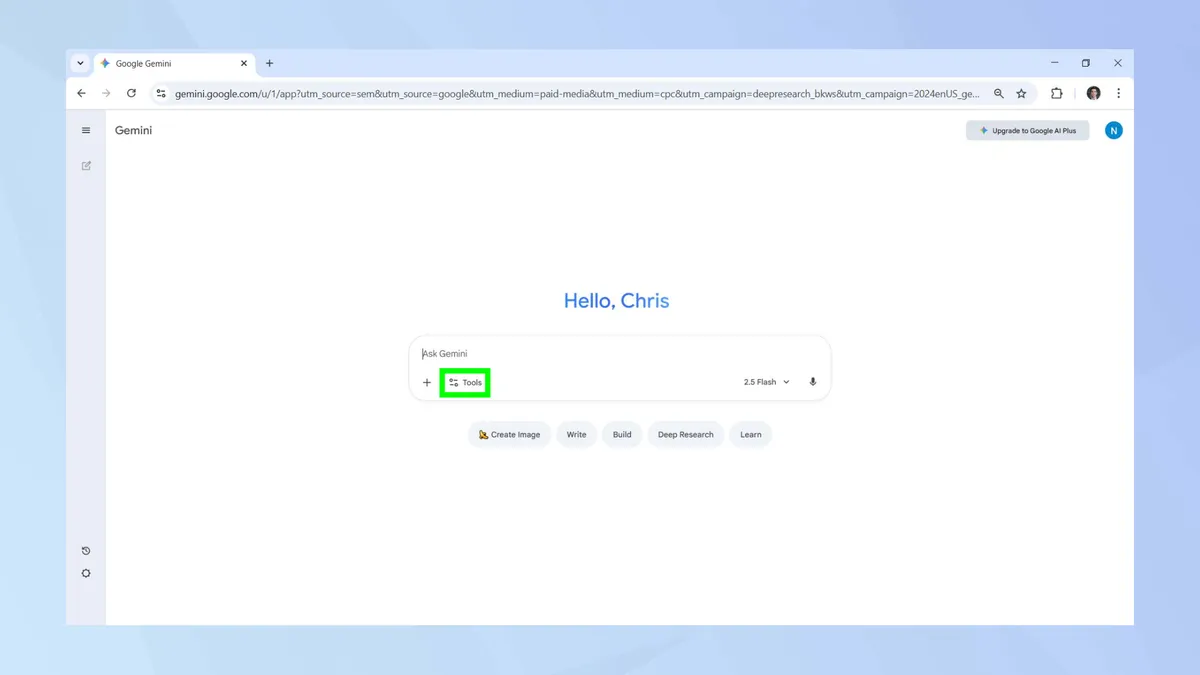
Deep Research is switched off by default. To turn it on, click on tools.
3. Enable Deep Research

Clicking on the tools option opens a drop-down menu. Next, click on Deep Research.
4. Choose your sources
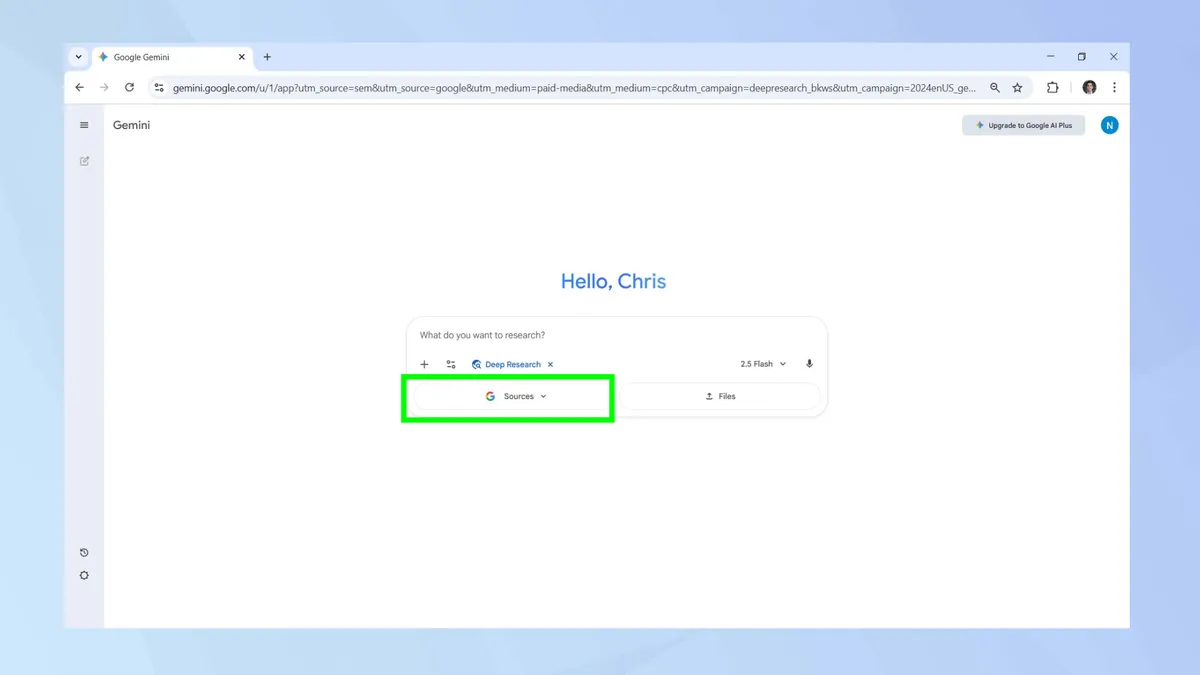
The default source for Deep Research is Google search, the original single source that this model launched with. Today you can connect to additional sources like your own Gmail, Drive, and Google Chat.
To select one of these new sources, click the sources tab, which appears after you’ve correctly enabled Deep Research.
5. Enable your sources
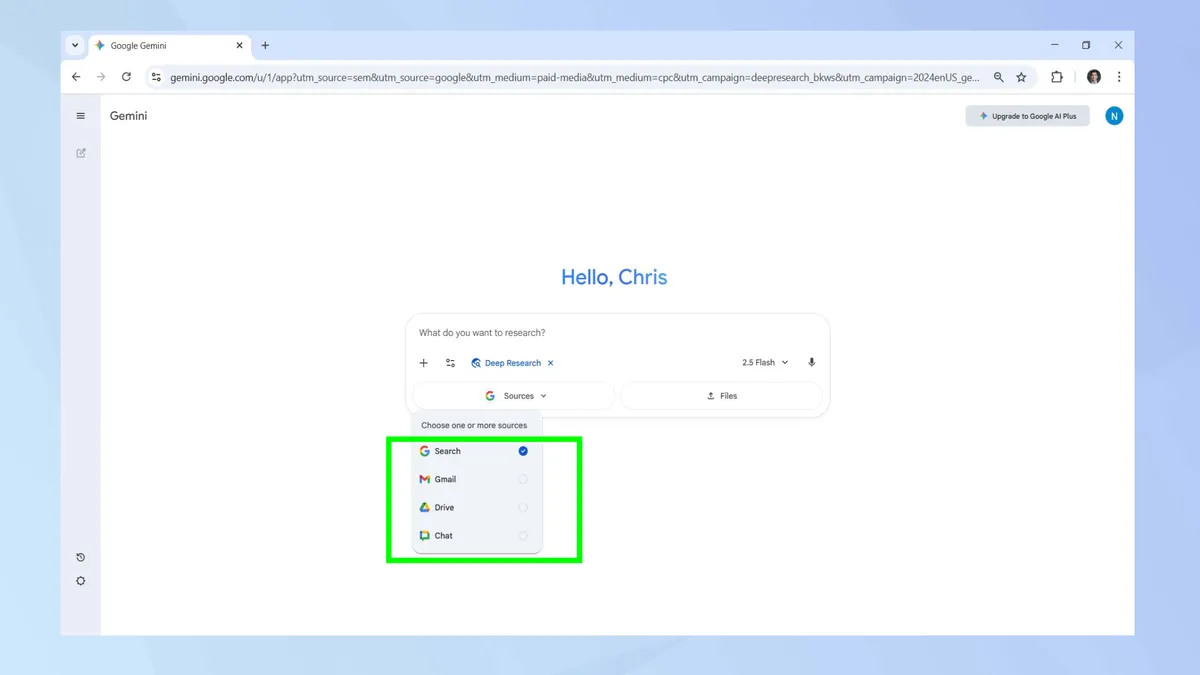
A drop-down menu should appear, giving you the option to enable Gmail, Drive, and Chat as additional sources. Select the sources you wish Deep Research to use.
While you have to choose at least one source, you’re free to enable them all at the same time.
6. Start your research
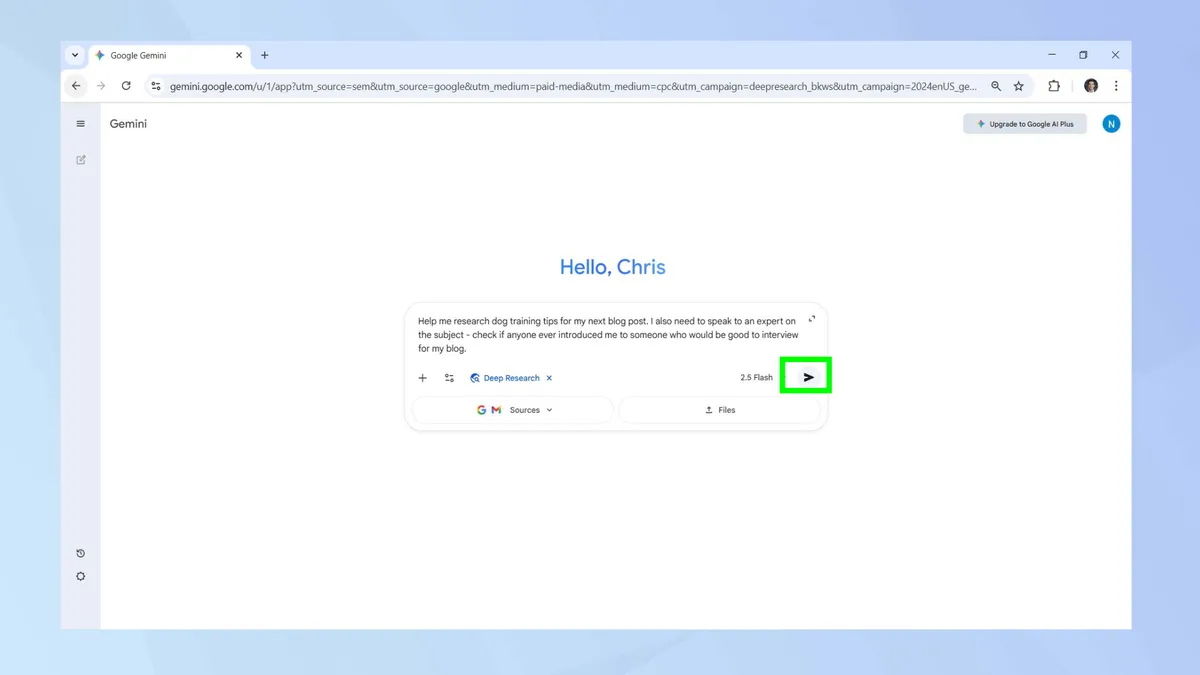
Type your prompt, hit enter, and let Deep Research handle the heavy lifting. For this guide, I asked Gemini to gather dog-training tips for a blog post.
I also emailed myself the name of a dog trainer willing to be interviewed to test whether Deep Research could surface that information straight from my Gmail inbox (spoiler alert: it succeeded!)
7. Edit your plan
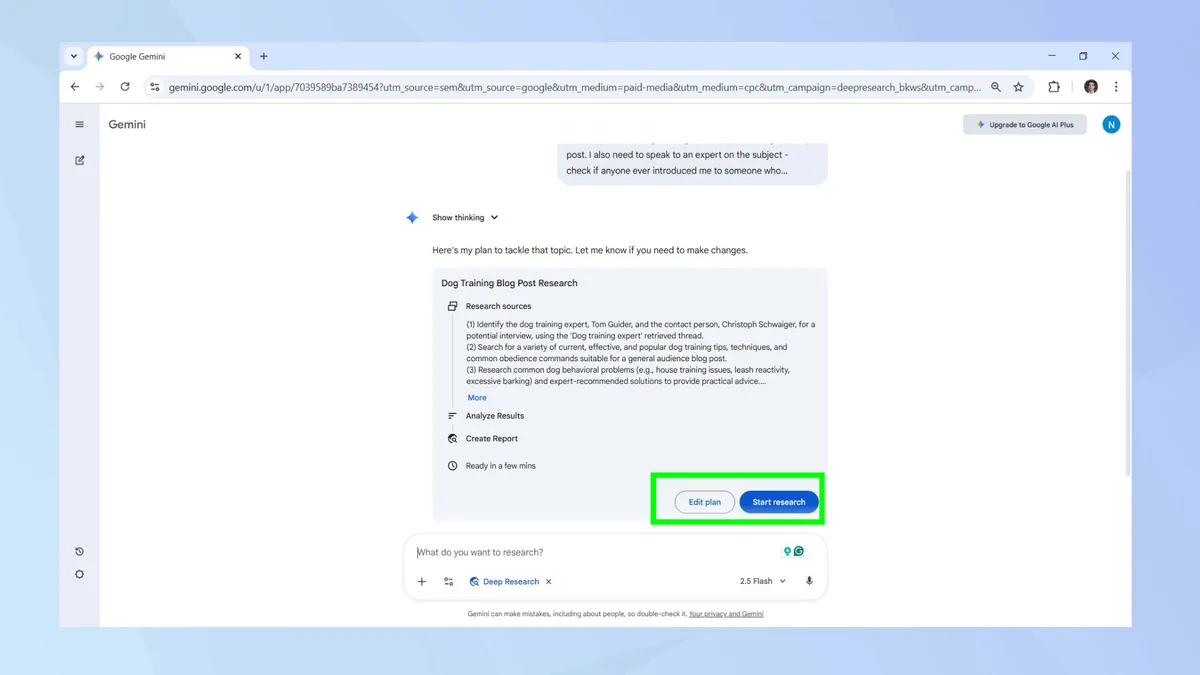
Before it gets to work, Deep Research will present its initial plan to tackle your chosen topic. If there’s anything you wish to amend, click edit plan. Once you’re happy, click on start research to begin.
8. Share the report
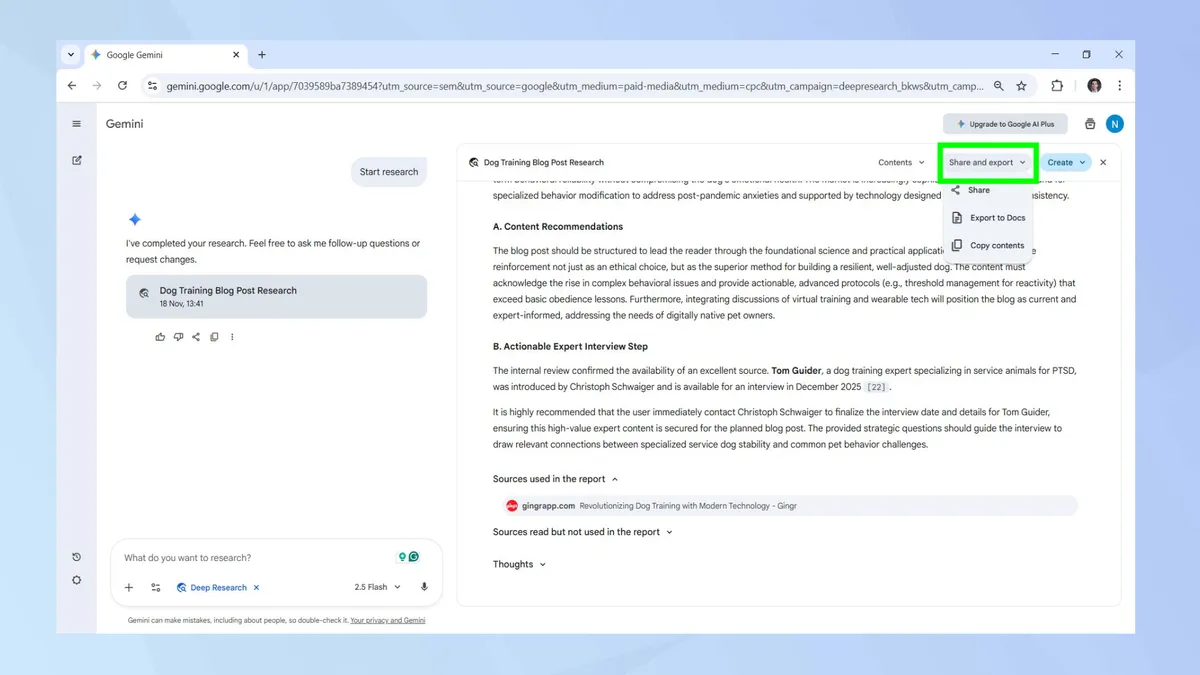
With Deep Research’s report now complete, combining internet sources and relevant content found in your Gmail, Drive, and Chat, you can disseminate it.
Click the share and export tab to choose whether to share it externally, export the report to Docs, or to simply copy the text to your clipboard.

Follow Tom's Guide on Google News and add us as a preferred source to get our up-to-date news, analysis, and reviews in your feeds. Make sure to click the Follow button!
More from Tom's Guide
- How to use Google Gemini's Guided Learning feature
- AI-generated images get roasted — but they're great for this one thing
- 5 smart ways to use Gemini Live with your phone right now