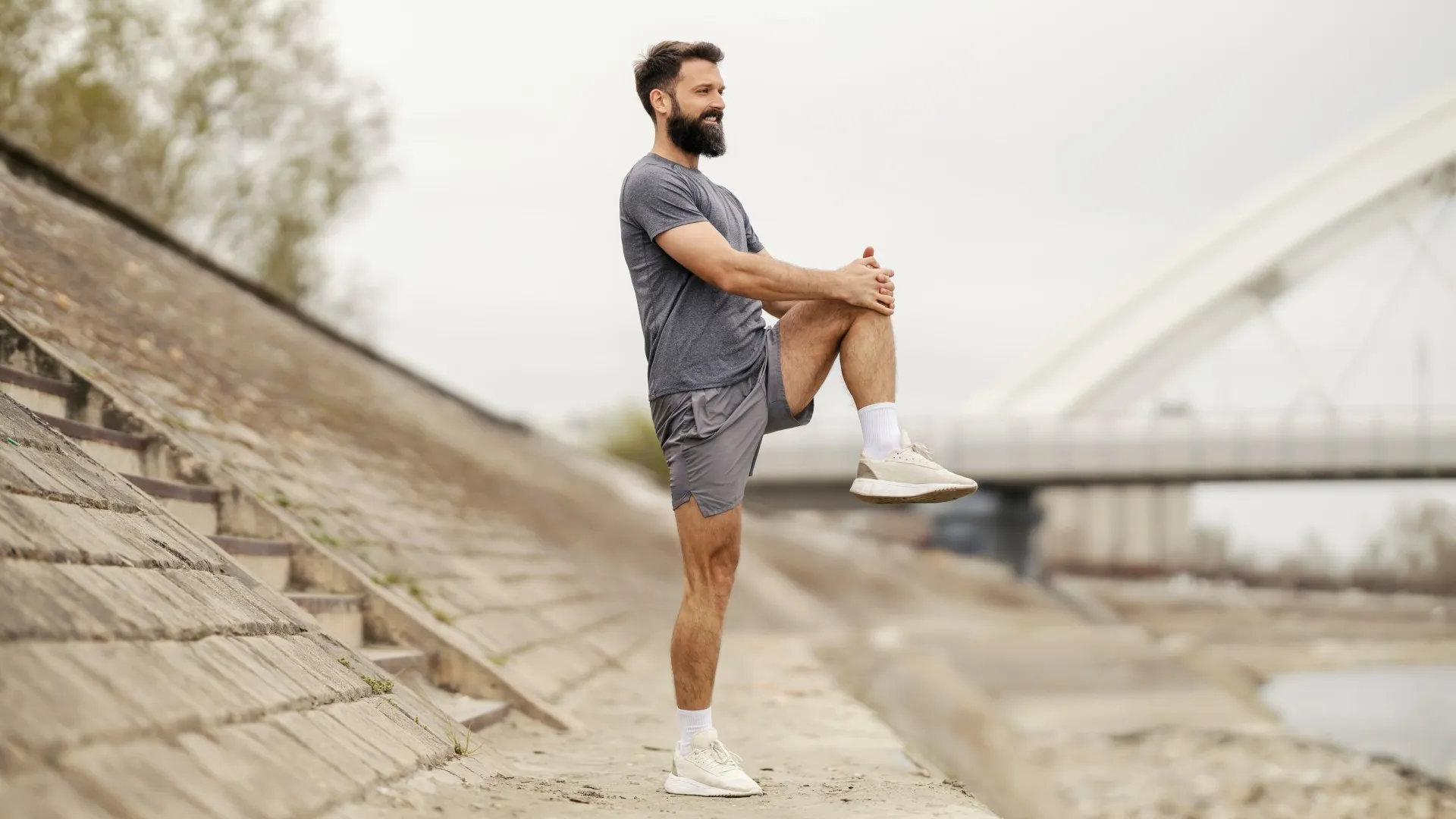
Knee problems can strike at any age, but as we age and naturally begin to lose muscle mass, strength and balance, you might notice problems cropping up more regularly. Some people will never struggle with knee pain, and that's great, but for others, it's a lifelong battle to continue exercising in later life while managing symptoms.
The goal is to build and maintain strength, stability and mobility through exercise, and for that reason, I turned to UK-based physio Matthew Piff at Nuffield Health for three exercises he swears by.
Check them out below, along with some benefits and step-by-step instructions.
3 lower-body exercises from a physiotherapist
“If I had to pick just three exercises that I would rarely skip for long-term knee health, they would be sit-to-stands, step-ups and single-leg calf raises," says Piff. "Together, they help build strength and resilience throughout the lower body, which can reduce stress on the knee joint and support day-to-day movement.”
1. Sit-to-stands

“This is an easy functional strength exercise you can do at home, and it replicates an activity we perform multiple times every day. It strengthens the quadriceps, glutes and hip muscles, all of which help absorb load and reduce stress on the knee joint," explains Piff.
"It is commonly used in rehabilitation and osteoarthritis management because it improves both strength and independence in daily activities.
The real benefit of sit-to-stands is that they help keep everyday movements feeling easier, helping you move more confidently. Whether it's getting up from the sofa, standing from a dining chair, or climbing the stairs, stronger leg muscles can help you move with greater ease and independence. They are also an excellent way of maintaining lower-body strength and function as we age."
Piff recommends 2-3 sets of 8-15 repetitions. "As this starts to feel easier, you can lower the chair height or add some weight to continue building strength," he adds.
- Sit on a chair with your feet flat and in front of your knees.
- Lean your chest slightly forward and push through your heels to lift yourself up without using your hands.
- When you’re in the standing position, sit your hips back and lower into the seat with control.
2. Step-ups

“Step-ups develop strength through a single-leg stance, which closely mirrors walking and stair climbing," explains Piff. "They challenge the quadriceps, glutes and calf muscles while also improving balance, coordination and knee control. You can do the exercise holding on to something, but a greater challenge is to perform it without support and slow the movement down for a greater effect."
Piff loves step-ups because they mimic everyday movements. "These activities require us to support our body weight on one leg at a time, making step-ups a practical way to build lower-limb strength and confidence while also reducing the risk of falls."
Aim for 2-3 sets of 8-12 repetitions on each leg. "Start with a low step and increase the height gradually as your strength improves. If you want to progress further, you can add weights," Piff adds.
- Place a step or solid box in front of you below knee height.
- Take a step onto it. Push through your leg and raise your body upward to stand on the platform with both feet flat.
- Slowly step down with one foot, then the other. Switch your leading leg during your reps.
- Keep your posture upright with a slight forward lean to help engage your glutes.
3. Single-leg calf raises

“Strong calf muscles are often overlooked when discussing knee health, but they play a key role in absorbing force during walking and providing stability throughout the lower limb," Piff says.
"As we age, calf strength and power decline significantly, affecting balance, gait speed and overall function. Maintaining calf muscle function can help reduce the workload on the knee and contribute to more efficient movement.
"This means that every time you walk, accelerate, or change direction, your calf muscles are working hard to support and propel you forward. Keeping them strong can make everyday activities feel easier, while also improving balance, ankle stability and overall lower-limb function."
Try 2-3 sets of 10-15 reps. Start with both legs at the same time, then see if you can challenge your balance by doing a single-leg variation, one at a time. "If balance is a challenge, use a wall or banister for support. As the exercise becomes easier, you can make it more difficult by lowering your heel more slowly or by holding a weight while performing the movement," he says.
- Stand with your feet hip-width apart and relax your hands by your sides or on your hips. For an extra challenge, stand on the edge of a step or stair.
- Raise up onto the ball of your right foot, keeping your chest proud and spine long
- Pause at the top and squeeze your calf, then slowly lower the heel with control.
- Switch sides or work both sides together. Working one side at a time will challenge your balance more and help you focus on one muscle group at a time.
Verdict
“For all of these exercises, the key to progress is finding the right level of intensity," recommends Piff. "Exercise should not be overtly painful, but if it feels too easy, you're unlikely to see improvements. The goal is to work hard enough to encourage the muscles to adapt and develop greater capacity over time.
"It might be helpful to start with these exercises three to four times a week, alongside other activities such as walking or gardening. Overall, consistency is one of the most important factors in maintaining strength, mobility and long-term knee health.”

Regional physiotherapy lead responsible for clinical and operational performance at Nuffield Health, UK.
While these exercises are recommended by a qualified physiotherapist, you should always listen to your body and stop if you feel sharp pain, numbness, or tingling. Working with a physical therapist, physician, or similar professional will help you determine the issue for specialized recommendations based on your personal journey.
Follow Tom's Guide fitness on Instagram for more workouts, routines, tips, and tricks.

Follow Tom's Guide on Google News and add us as a preferred source to get our up-to-date news, analysis, and reviews in your feeds. Alternatively, you can read our content on the Tom's Guide app available now for iOS and Android. Subscribe to Tom's Guide on YouTube and follow us on TikTok.
More from Tom's Guide
- I teach people how to be more mobile: 3 low-impact back and shoulder moves that build stability and strength after 40
- I teach people how to be strong and mobile: this is the one exercise I regret ignoring for years
- I teach people over 50 to be mobile: 3 low-impact moves that build more stability than a 30-minute walk