Most of my core training happens on the floor. Planks, dead bugs, crunches, you know the drill. So when I kept seeing trainers online recommending standing core workouts for posture, balance, and “functional strength,” I initially dismissed them as watered-down ab exercises for people who didn’t want to get on a mat.
Boy, was I wrong.
After spending the better part of the last two decades lifting weights, running marathons, and sitting at a desk for far too many hours each day, I’ve noticed my core strength doesn’t always translate into good posture. I can do plenty of sit-ups and hold a solid plank, but after a long writing session, I still catch myself slouching forward like a shrimp over my keyboard. That disconnect made me curious about standing core training, which focuses less on six-pack aesthetics and more on stability and posture.
So I decided to try a simple standing core routine every day for a week to see whether it would make any noticeable difference in my posture, balance, and core strength. “Standing core exercises are beneficial because they train the body in positions we naturally use throughout the day,” says Abbie Watkins, CPT, certified personal trainer with OriGym. “When you perform standing exercises, your core has to stabilise your spine while you balance or shift weight, which mirrors real-life movement patterns.”
For this experiment, I performed the same five standing core exercises every day for seven days. The routine took around 10 to 15 minutes total, and I focused on proper form with control rather than rushing through reps. Here’s the routine I followed and what happened after a week.
1. Standing knee drives
Standing knee drives force your core to stabilize while balancing on one leg, and I noticed my hip flexors and lower abs working far more than expected. By day three, I also realized how much concentration it took to stay upright without leaning backward or collapsing through my torso. “Standing knee drives are excellent for improving lower abdominal control and balance,” explains Watkins.

How to do it:
- Stand tall with your feet hip-width apart and your core engaged.
- Lift your right knee toward your chest until it reaches hip height.
- At the same time, drive your left arm forward.
- Pause for one to two seconds while balancing on your standing leg.
- Lower slowly back to the starting position.
- Repeat on the opposite side.
- Perform three to four sets, 10 to 12 reps per side.
- Rest for 45 to 60 seconds between sets.
2. Standing oblique crunches
I expected this movement to feel like a standing version of a bicycle crunch, but it ended up feeling more like a balance exercise. The slower I moved, the more I felt my obliques (side abs) and glutes working together to stabilize my body. Rushing through reps made the movement feel sloppy and far less effective. By the end of the week, this was the exercise where I noticed the biggest improvement in my coordination and control.

How to do it:
- Stand with your feet shoulder-width apart and your hands behind your head.
- Shift your weight onto your left foot.
- Lift your right knee while bringing your right elbow down toward it.
- Focus on crunching through your side rather than bending forward.
- Slowly return to the starting position.
- Repeat all reps on one side before switching, or alternate sides continuously.
- Perform three to four sets of 10 to 15 reps per side.
- Rest for 45 to 60 seconds between sets.
3. Woodchoppers
Woodchoppers train rotational strength and force your core to resist momentum as you move side to side. I particularly noticed this exercise waking up muscles around my mid-back and obliques that traditional crunches rarely touch. “Woodchoppers help develop rotational strength and target the obliques,” says Watkins. They also helped force my core to resist momentum as I moved from side to side. I particularly noticed this exercise waking up muscles around my mid-back and obliques that traditional crunches rarely touch.
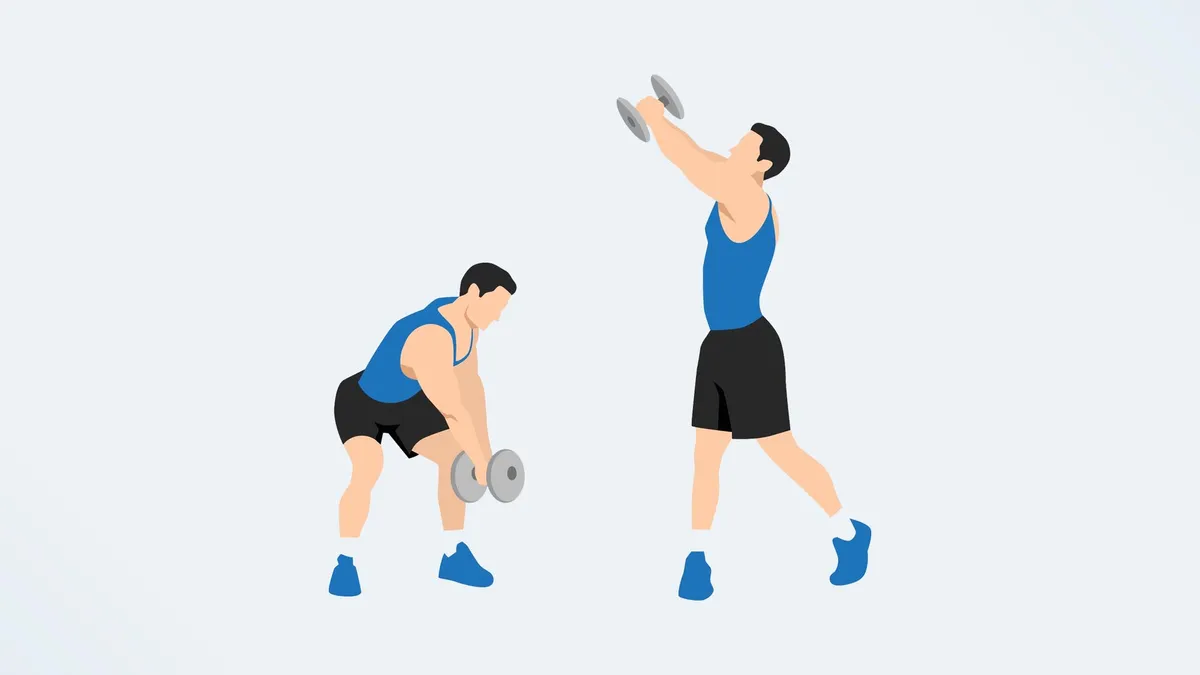
How to do it:
- Stand with your feet slightly wider than hip-width apart.
- Clasp your hands together in front of your chest.
- Rotate your torso and bring your hands toward one hip.
- In one controlled motion, sweep your arms diagonally upward across your body.
- Allow your hips and torso to rotate naturally.
- Slowly return to the starting position without using momentum.
- Complete three to four sets of 10 to 12 reps per side.
- Rest for 45 to 60 seconds between sets.
4. Standing marches with overhead reach
This movement felt surprisingly challenging because it forced me to keep good posture while coordinating my upper and lower body. Reaching overhead while marching exposed how tight my shoulders and upper back actually are from sitting at a desk all day. By day five, I noticed I was naturally standing taller throughout the day, especially while walking.
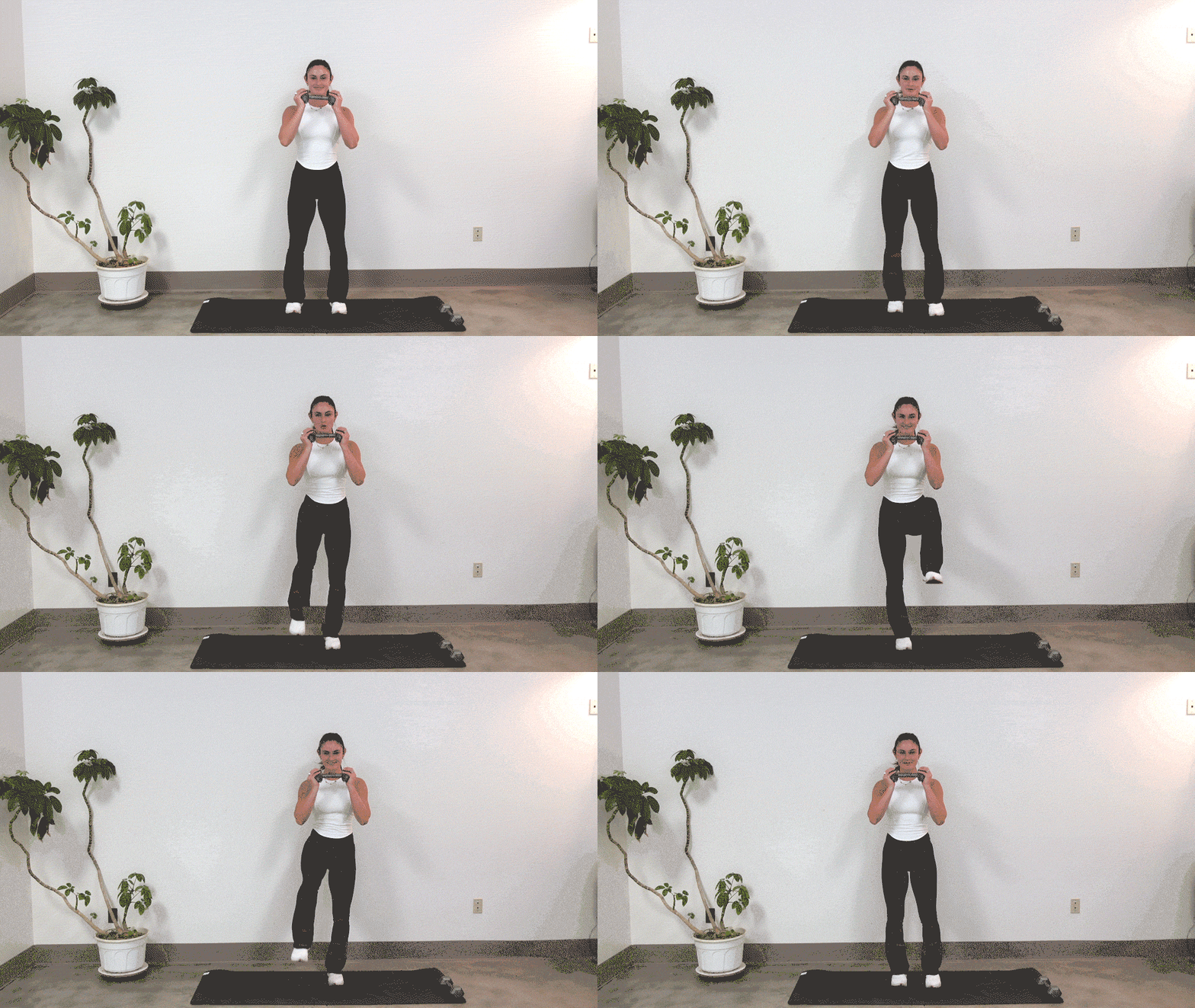
How to do it:
- Stand tall with your arms resting by your sides.
- Raise your right knee toward hip height.
- Simultaneously extend your left arm overhead.
- Keep your ribs down and avoid arching your lower back.
- Lower both limbs slowly and repeat on the opposite side.
- Perform three to four sets of 10 to 15 reps per side.
- Rest for 45 to 60 seconds between sets
5. Standing Pallof press
This was by far the hardest exercise in the routine, and the one that most clearly felt like “real-world” core training. The resistance band constantly tried to pull my torso sideways, forcing my abs, obliques, and lower back muscles to resist rotation. After seven days, I noticed better awareness of my posture while sitting and standing, especially around my shoulders and ribcage positioning.
“Exercises that involve resisting rotation, maintaining balance, or controlling posture force the body to engage the abdominals, obliques, and lower back muscles together, which helps reinforce better alignment over time,” explains Watkins.

How to do it:
- Attach a resistance band to a stable anchor at chest height.
- Stand sideways to the anchor point with your feet shoulder-width apart.
- Hold the band at chest height with both hands.
- Flex your core and press the band straight outward.
- Resist the urge to rotate toward the anchor.
- Pause for one to two seconds with your arms extended.
- Return the band slowly to your chest and repeat.
- Perform 10 to 12 reps per side.
- Rest for 45 to 60 seconds between sets.
What happened after a week?
Did this routine completely transform my posture in seven days? No. But I noticed more changes than I expected. The biggest difference was awareness. I became much more conscious of how often I slouch, lean into one hip, or lose tension through my midsection while sitting or standing. By the end of the week, standing taller started to feel more natural rather than forced.
I also noticed small improvements in my balance and stability, particularly during single-leg exercises. And while this wasn’t a hypertrophy-focused workout, my core definitely felt worked and sore after each workout.
Will I completely replace traditional core training with standing exercises? No. But after seven days, I can confidently say they’re far more effective and challenging than I initially gave them credit for.
Follow Tom's Guide on Google News and add us as a preferred source to get our up-to-date news, analysis, and reviews in your feeds.

More from Tom's Guide
- I’m a physical therapist who works with seniors: Here are the 5 bodyweight exercises I recommend
- No, not planks! I'm a personal trainer for seniors, and these are the 4 best exercises you can do for core stability at every age
- Over 60? I’m a personal trainer, and these 3 floor exercises will show you how strong your core is