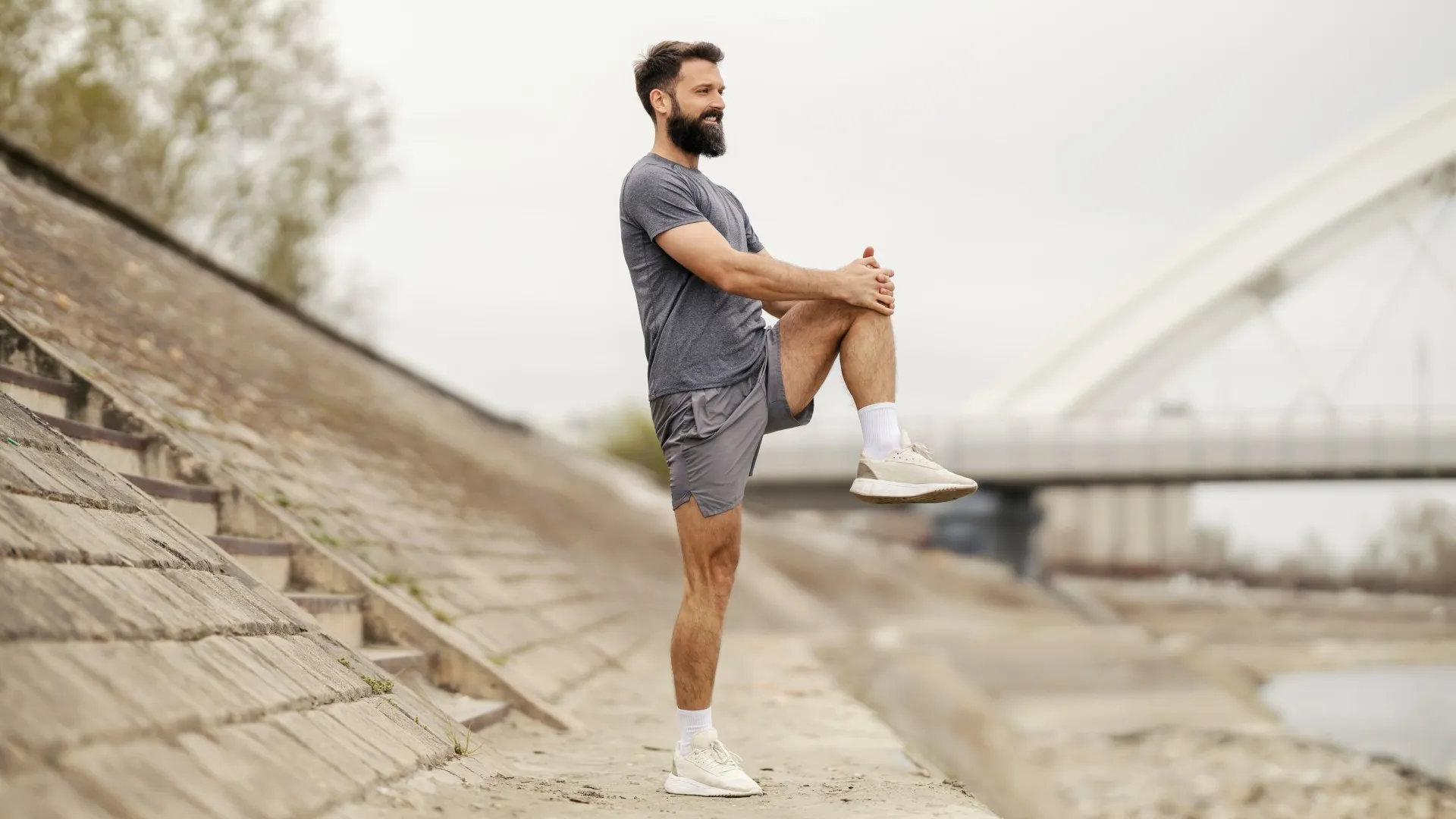
I'm 35, so while I'm not quite looking at how exercise impacts my later life just yet, I am thinking more about workout longevity and how it feels for my body. In the last year or so, I've steered away from high-impact exercise toward more low-impact exercise, like Pilates and yoga, and progressive weightlifting.
Despite fitness markers declining as early as your 30s, I feel stronger than ever; my posture has improved, and my core is more stable. I am thankful to balance training and mobility drills for their role in this.
If you think you might like to give it a go, here are three balance exercises I use to build stronger joints, boost balance and increase overall stability. They've already made a noticeable impact on my joints, especially my ankles and knees, which are problem areas for me as I'm hypermobile.
Learn how to do them below, why they're beginner-friendly, and the benefits.
What are the three balance exercises?

Balancing isn't just about how long you can stand on one leg for, although that's certainly part of it. It's about learning to use your core and maintain stability in an unbalanced, unstable environment.
That means it's an incredible form of functional training, which means exercise that mimics or improves activities you'd typically do in your daily routine, like squatting, reaching, climbing, or standing on one leg to tie a shoelace.
Anyone, from elite sportspeople to exercise beginners, can benefit from improving balance, as you'll see crossover into longevity and strength, which are key as you age.
Adding strength exercises to your routine alongside mobility and balance drills can help protect muscles, bones, joints and ligaments and help prevent falls or trips.
Here are three I swear by.
If you’re new to exercise, working with an injury or illness, or have any contraindications to exercise, speak with a qualified medical professional before trying these movements. Remember, not every exercise is for every person, so listen to your body.
- Bear plank to leg extension: Start in a tabletop position with your hands stacked under your shoulders and hips over your knees, then tuck your toes and lift your knees to hover a few inches above the mat. Zip your stomach in and brace, keeping your back flat. Extend one leg behind you without rotating your hips (they should face the mat) until your leg is hip height, then return to the bear plank. Repeat on the other side. 3 sets, 6-10 reps per side
- Standing clamshells: Stand with your feet hip-width apart and hinge forward at your hips so that your chest is near parallel to the ground. Place your hands on your hips with your core braced. Softly bend one knee, then lift the leg outward to hip height. Pause and balance, then slowly lower the leg again. Keep your hips square as above. 3 sets, 6-10 reps per side
- Lateral shoot-throughs: Start in the bear plank position above. Place your weight into your right hand, lift your left hand into the air, then lift your right leg, send it beneath your body and twist over to the left. Pause, then return to center and switch directions. 3 sets, 6-10 reps per side.
There's a strong degree of core work involved in each move, and as your core muscles are responsible for stabilizing your spine and pelvis and aiding safe movement, this is a good thing!
I guide you to a 5-minute bracing routine you can try to help activate your core beforehand. As a general rule, try bracing your stomach as though expecting an impact; breathe using your diaphragm, directing your breath toward your stomach; lightly pull your navel in and up.
How do I modify?
You can keep one knee planted during the bear plank and leg extension exercise and still test your balance. During clamshells, don't lift your leg as high to begin with and focus on grounding through your standing leg. Keep your hips as square as you can and squeeze your glutes, and hold onto something if you prefer.
Finally, slow the lateral shoot-through and focus on rotating through your waist; you don't have to kick all the way through to begin with or lift your hand high; just take a rest when you need it.
You can reduce your sets or reps, or hold on to something for support.
What are the benefits?
Each movement focuses on engaging and strengthening your core muscles while targeting the stabilizer muscles in the body responsible for balance.
Bear planks with a leg raise are the ultimate test of anti-rotation, as you work hard to keep your hips square and body balanced. For an extra challenge, can you raise your opposite hand away from the mat?
This move strengthens your core, hips, quads, wrists, shoulders, arms and ankles, and improves ankle mobility. As you extend your leg, notice the stretch along your hip flexors and the engagement in your glutes and hamstrings; squeeze your glutes as you lift.
Anti-rotation exercises help you resist twisting, targeting your obliques, transversus abdominis and deep spinal stabilizers, which work together to stabilize the body as a unit.
Standing clamshells work the standing leg and glute and target the outer glutes, or the gluteus medius muscles, as you open the hip and lift your leg. The hip hinge also helps activate the glutes, and your core and hamstrings are active throughout as you balance.
Notice all the small wobbles and don't be afraid of them; you're still strengthening the target muscles and you can still make improvements.
Finally, shoot-throughs are excellent at engaging your obliques through rotation as you twist from side to side. As you balance on one hand and the opposing foot, you're teaching both sides of the body to co-ordinate together.
The shoulder of the supporting arm will contribute toward stabilizing your body as you kick through, and to some degree, your legs and hips are working as well, though they are not the main focus of this exercise.
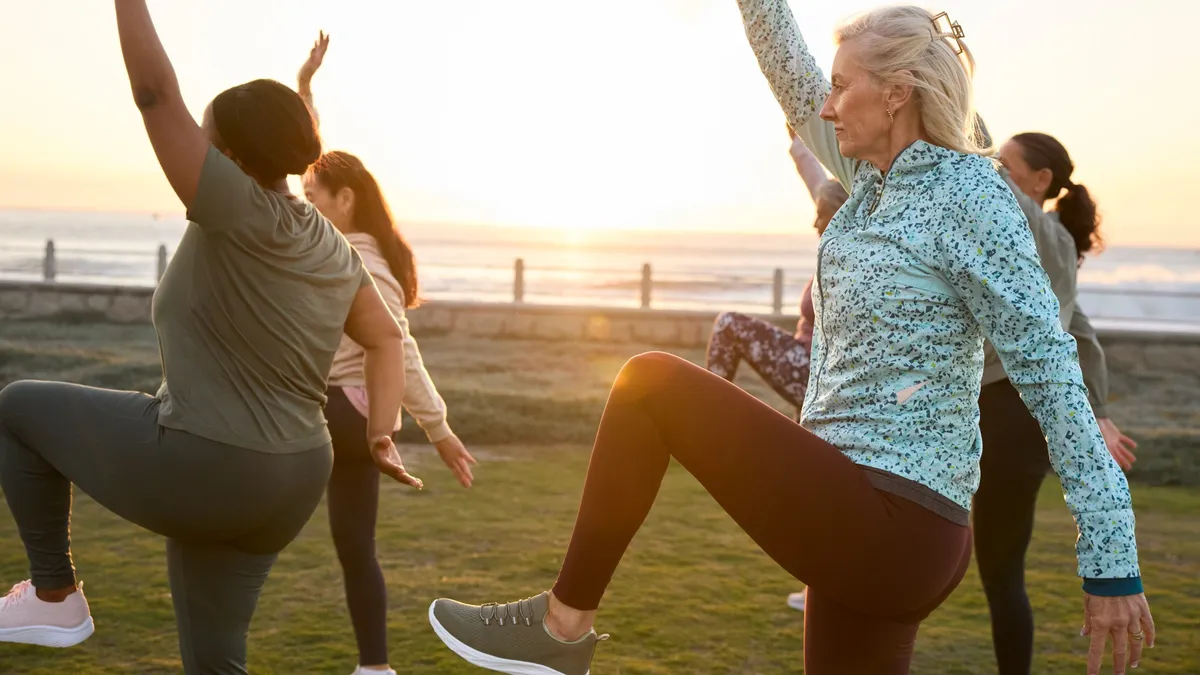
As you get older, the main goal is to train the joints and stabilizing muscles around them with a particular focus on the lower body. This isn't just about aging, though. Sportspeople like elite runners and footballers also need agility and balance training to help them accelerate, decelerate and change direction.
We want the body to be strong, mobile and stable to avoid a lack of mobility, bone density, or muscle mass. The good news is that the routine is low-impact, so you can repeat balance training several times per week and measure how you improve.
As you improve, see if you can add resistance bands above the knees or adapt sets and reps to challenge you more. Can you lift your leg higher? Move slower? You can wobble as much as you need to; it's part of the fun and practice.
Remember to engage your core throughout. A stronger core can help improve your balance, and so can breathing during every rep.
I've been adding these moves to my routine regularly, and I am already noticing an enormous amount of benefit for balance and control. I highly recommend giving them a try several times per week if you can.
Follow Tom's Guide fitness on Instagram for more workouts, routines, tips, and tricks.

Follow Tom's Guide on Google News and add us as a preferred source to get our up-to-date news, analysis, and reviews in your feeds.
More from Tom's Guide
- Forget frog pose — I added weighted hip rolls to my mobility routine, and my hip strength has transformed in just 3 weeks
- I'm a weightlifting coach — 3 exercises I prefer over lunges for building strong, stable legs and knees over 40
- Stop doing 100s of sit-ups to build strong, stable abs. McGill curl-ups are elite, and here's how to do them