We know that jumping into a workout isn't recommended; as a trainer, ideally, you'd always warm up first with me. But whether or not you swerve your warm-ups in your own time, preparing your core and spine is very important, and these five "grounding" exercises are perfect for helping you do that.
If you try these before workouts, you'll feel more connected to your body, including your core and diaphragm, and the ground beneath you. This is particularly crucial for exercises that require foot-ground connection, like squats and deadlifts, plus moves like push-ups or planks, where your hands or elbows are also planted.
Below, I show you exactly how to do them, plus share some of the benefits. One of the best yoga mats is useful to have, but any exercise mat will work.
If you experience pain at any time, stop and rest. If you're working with an injury or health condition, or you're currently pregnant or postnatal, I recommend seeking advice before starting these exercises.
Watch: 5 low-impact exercises for posture and core strength
Try to work slowly through these and focus on exactly what your breath and body are doing. As you breathe, slow it down to three to four counts in and out, breathing down into your stomach while lightly bracing your core. Imagine inflating and deflating a balloon; placing your hands on your stomach can be useful for connecting with the breath. Some beginner breathing exercises may help you get started.
Additionally, with your feet on the ground, press through your heels and big and little toes. This is called a tripod position, and combined with toe splay, will help you feel connected to the ground. Combined with some breathing exercises, spine work, and core engagement, your whole body should feel ready to move safely.
The routine:
- Pelvic tilt 2 sets x 8-10 reps: Lie on the mat with your knees bent and feet pressed down, hip-width apart. Place your hands lightly on your hips. Keep your chin tucked so that your spine is neutral. Slowly tilt your pelvis toward you and draw your navel in; notice how this flattens your lower back to the mat. Reverse the motion back to neutral.
- Toe splay 60-90 seconds: Stand with your feet hip-width apart. Press down through your big and little toes and heels. Begin rolling your feet from the outer edges to the inner edges, and from heels to toes. Roll through your toes individually from big to little, pressing down into the mat and feeling the connection with the ground.
- Belly breathing for 2 sets of 10 breaths: You can lie on your back or stay standing. Place both hands on your stomach and begin breathing in and out for the count of 4 seconds each way. As you inhale through your nose, feel your stomach expand like blowing up a balloon; as you exhale through pursed lips, feel your stomach deflate, and your navel draw in.
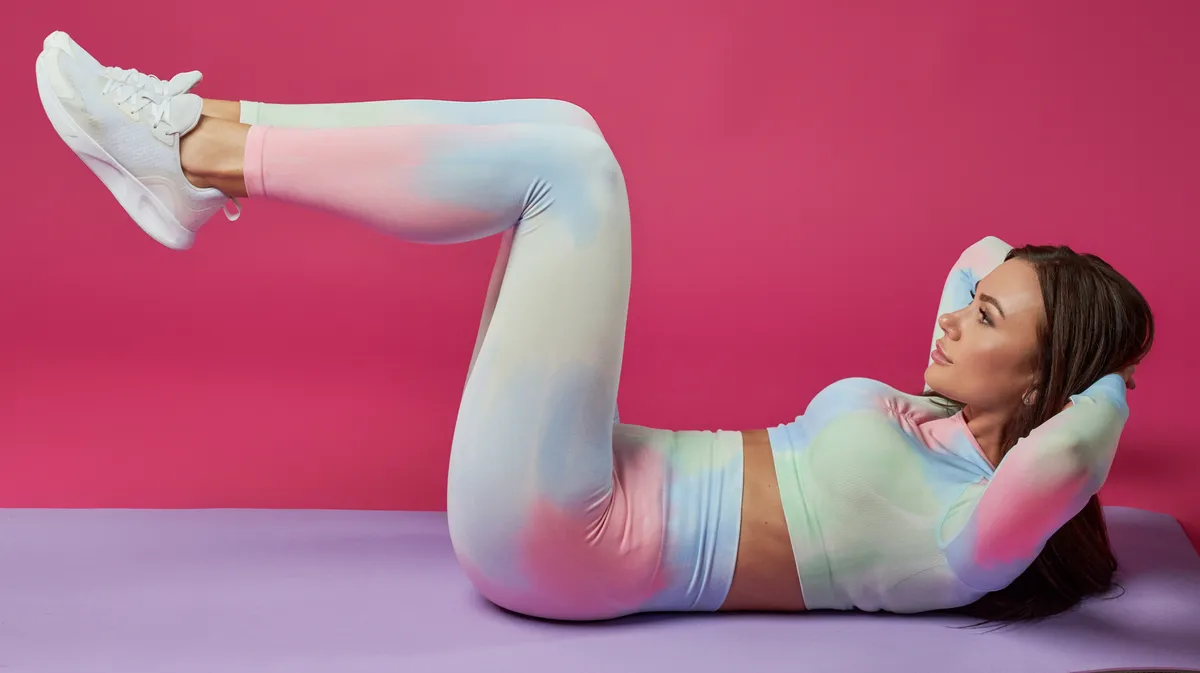
- Core bracing 2 sets x 8-10 reps: Lie on your back with your knees bent and feet raised in a tabletop position. Place your hands by your sides on the mat. Slowly peel your upper back away from the mat and send your gaze forward; crunch your stomach and brace as you press into the mat with both hands. Hold for a moment, then slowly lower your back and head to the mat again.
- Forearm plank pushes 2 sets x 8-10 reps: Start in a forearm plank with your shoulders stacked over your elbows. You can place your knees down for extra support. As you hold the plank, push through your forearms to lift your chest further from the mat, separating your shoulder blades and slightly rounding your upper back. Release, then repeat.
What are the benefits?
Here are some of the benefits you can expect:
Pelvic tilt: Technically a core exercise, the tilt strengthens your abdominal muscles and can help relieve lower back pain. If you struggle with posture, this one is for you, as it also helps engage the deep core muscles like the transverse abdominis. I find this particularly helpful during floor exercises, when I might be arching my lower back rather than connecting with the ground.
Toe splay: Foot-ground connection is crucial for stability and power during standing or balancing exercises. Think squats, deadlifts, or even some yoga poses. It's also a brilliant grounding technique that can relieve stress and help you feel more connected to the body. I recommend closing your eyes and focusing on how your feet feel on the earth beneath you. Take long, deep breaths as a moment of mindfulness.
Belly breathing: Belly breathing is helpful for core activation and engaging the diaphragm, ensuring you breathe properly during exercise, when your body is under tension. This can improve posture and alignment and also help manage blood pressure during heavy lifting. It's a useful way to reduce stress and move the body from the sympathetic nervous system to the parasympathetic nervous system, which means rest and repair. Think of it as a mini reset.
Core bracing: As the name suggests, this drill will help you engage your core properly. As you reach up and forward, you'll draw your navel in and brace down through your stomach, helping to activate the deep core. We want to focus on squeeze-and-release movements throughout to get the most from this move.
Forearm plank pushes: Finally, planks are one of the most common multi-muscle core exercises out there, but often we dump into the shoulders, which takes away from the active engagement of the exercise. Pressing through your forearms and drawing your shoulder blades apart will help you lift your upper body, improve engagement and boost form.
Follow Tom's Guide fitness on Instagram for more workouts, routines, tips, and tricks.

Follow Tom's Guide on Google News and add us as a preferred source to get our up-to-date news, analysis, and reviews in your feeds. Alternatively, you can read our content on the Tom's Guide app available now for iOS and Android. Subscribe to Tom's Guide on YouTube and follow us on TikTok.
More from Tom's Guide
- I teach people how to be more mobile: 3 low-impact back and shoulder moves that build stability and strength after 40
- I’m a personal trainer who works with clients aged 65+ daily. Here are the 2 exercises I always recommend when it comes to building mobility and balance
- A Pilates instructor shares a 6-move routine for over-60s to build balance, mobility and functional core strength