I never used to like Pilates, but over time, I have come to love nothing more than strengthening my muscles, improving mobility and honing my body with weekly Pilates classes. Alongside CrossFit, yoga and my job as a personal trainer, I like to think I have developed a strong core.
And although I don’t have a six-pack, a strong midsection does a lot more than just sculpt visible ab muscle — it plays a role in posture, spinal stability and injury prevention, helping you move well and safely at any age. And that’s according to the science we already know about.
Recently, I took a move that crops up in Pilates semi-regularly and decided to give it my undivided attention: flutter kicks. This abs exercise doesn’t just feature in Pilates, though — I have put my clients through their paces using this move time and time again over the years, and you’ll see it feature in many abs workouts.
Keen to test my core strength and share my results, I took to doing flutter kicks every day for one week — here’s what did, and didn't, happen.
What are flutter kicks?
The flutter kicks exercise involves lying on your back, lifting your upper back away from the mat, then fluttering your legs up and down as they hover inches above the ground. Flutter kicks feature in both mat and reformer Pilates, but the move is more modern than those found in “traditional” Joseph Pilates sequences.
This exercise should always be powered using your midsection, despite the rapid movement from your legs, just as most movement should be driven with your powerhouse core muscles. Although you may see people scissoring quickly with their legs while performing the move (also known as scissor kicks), don't let the momentum take over.
How to do flutter kicks
- Lie on your back with your legs extended
- Rest your hands by your sides. You can also slide your hands beneath the upper glutes if you struggle to connect your lower back with the mat
- Zip your belly toward your spine and slightly tuck your pelvis toward you
- Lift both legs away from the mat to hover above it and point your toes. At the same time, lift your shoulders away from the mat and send your gaze forward as you engage your core muscles
- Flutter your legs quickly up and down, alternating with eachother
- Softly bend your knees if this feels too difficult or if you feel it mostly in your hips or back.
Focus on control and rhythm rather than momentum to hold as much tension in your core muscles as possible. If lifting your upper back feels too difficult, stay resting on your back with your neck supported. Try to avoid arching your spine as this will take the emphasis off your core and onto your lower back and hips, putting more strain on your lumbar.
I did flutter kicks every day for one week — here’s what happened to my body
The benefits of flutter kicks involve constant tension in your core muscles, deeper core engagement and stronger, enduring hips and torso muscles over time — but here’s what I noticed when I tried them every day for one week.
1. It's not just an abs exercise

It’s important to differentiate between abs versus core muscles; that’s because your abs, or the rectus abdominal muscles, form just one muscle group (albeit a large one along the front of your stomach) in your network of core muscles.
You also have the internal and external obliques, transverse abdominis, erector spinae, multifidus, pelvic floor, diaphragm, hip flexors and gluteus muscles to account for, all of which connect around the pelvis, spine and ribcage. Targeting your core as a whole, rather than just focusing on the abs, will help you build functional strength, improve posture and reduce pain.
Flutter kicks target the deeper core muscles, including the transverse abdominis, plus the hips and lower abs, and to a degree, your legs. However, if you feel this move mostly in your hips or back, this signals a lack of core engagement.
2. My core could not endure
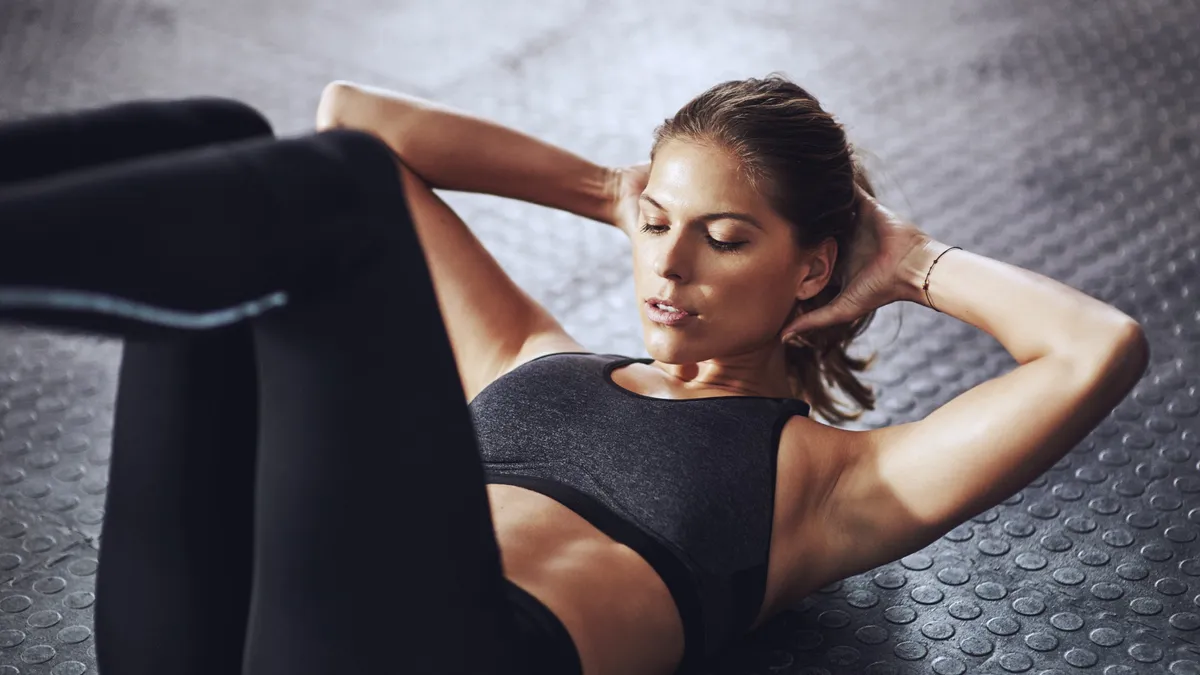
I like to think I have a strong core, but flutter kicks seriously beasted me. Your legs and upper back stay elevated, which means you brace your core throughout the entire movement, helping to build endurance and tap into a principle called time under tension.
CrossFit improved my maximal strength output and power with its big lifts and thunderous erg sprints, but Pilates taught me control, endurance, balance and stability. The art of slowing down. It taps into a different set of principles, so while you might be strong at lifting weights, it doesn’t mean your endurance is up to scratch.
Sure, maybe I can throw heavy weights above my head, but can I keep my legs raised and fluttering up and down for 10 sets of 45 seconds of work and 15 seconds of rest every day? No, I can’t.
3. I had to focus on a lot of moving parts
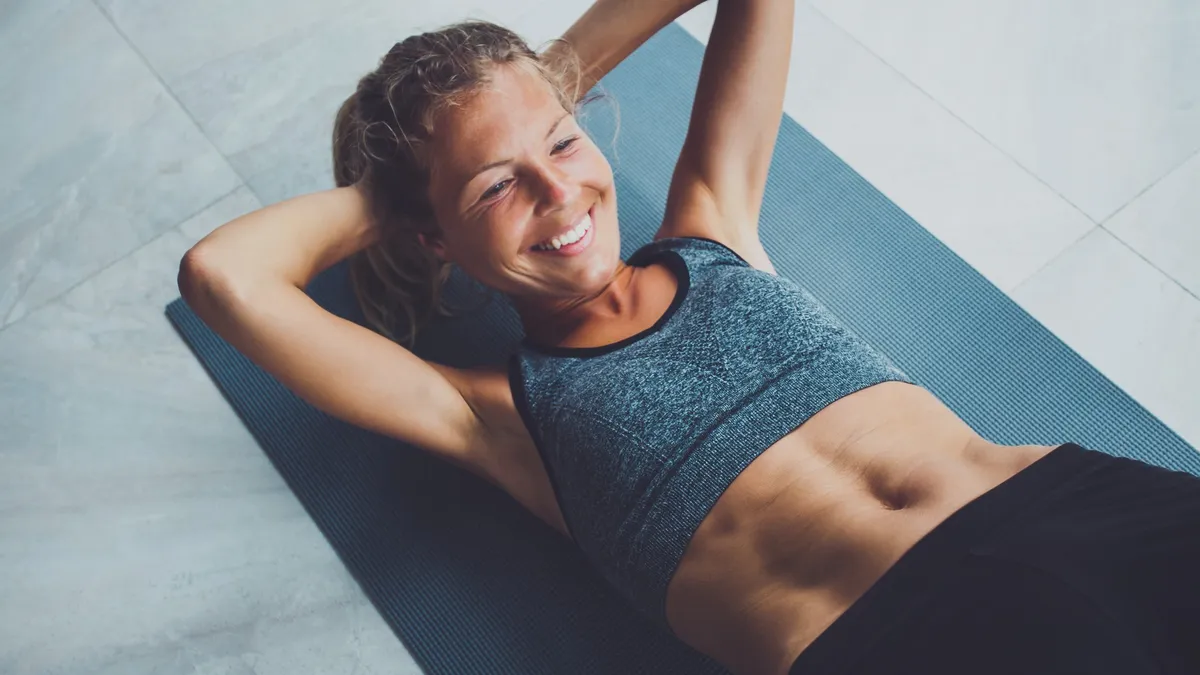
Conscious muscle contraction helps to build the mind-muscle connection, but that’s not all there is to think about. Not only was I focused on keeping my shoulder blades lifted, but I also had to think about compressing my abdomen and keeping my lower back pressed down without arching. On top of that, I was trying to move my legs with control and stabilize my hips to prevent momentum from taking over.
And just when I thought I had everything under control, I realized I wasn’t breathing. Core engagement and midsection strength require you to breathe properly, especially as the diaphragm is a core muscle. Did you know that shallow breathing and poor posture are connected? Not to self: inhale and exhale properly.
4. But my back thanked me for not doing sit-ups

Unlike sit-ups, Russian twists, or crunches, your back stays anchored to the floor during flutter kicks, which means you don’t put your spine through endless flexion and extension. That doesn’t necessarily mean the exercise is safe for you if you have back pain, as this comes down to the individual, but my back certainly thanked me.
Anti-flexion, extension and rotation exercises are important to include in any workout, as they teach your body to hold and maintain tension and stability while resisting motion. Trust me, you won't miss sit-ups or crunches if you try flutter kicks every so often.
Verdict
While flutter kicks can certainly help to build core stability, strength, control and endurance, you’ll need to pair this exercise with other core work or a yoga, weightlifting, or Pilates routine to really see a difference.
Because I was also training regularly during this time, it’s hard to say whether the deep ab burn could be attributed solely to flutter kicks, but I certainly had DOMS throughout the week.
By the end of the week, my breathing had improved and I could get further into the sets before wanting to throw my yoga mat out of the window. I also felt more controlled.
Perhaps my core was adapting to the movement pattern, but I knew from my experience as a trainer that I was unlikely to see huge gains in endurance in such a short time. That's one to measure over the weeks and months.
While flutter kicks can certainly help to build core stability, strength, control and endurance, you’ll need to pair this exercise with other core work or a yoga, weightlifting, or Pilates routine to really see a difference.
However, it is a great move for activating your deep core muscles and hips, which are stabilizing muscles that need to be strong and active to support larger, more powerful working muscles in the body.

Follow Tom's Guide on Google News and add us as a preferred source to get our up-to-date news, analysis, and reviews in your feeds.
More from Tom's Guide
- I did a 7-minute Chinese plank every day for a week — here are my results
- No crunches needed — tighten your core and build full-body strength in 30 minutes with Pilates and light dumbbells
- I'm a personal trainer — forget heavy weights and try this 3-move workout to build strong arms and abs