It’s no secret that mobility declines with age. One year you’re hopping off the floor without thinking about it; the next, your knees feel stiff after sitting too long, your balance feels less reliable, and climbing stairs suddenly requires more concentration than it used to.
That’s exactly why chair-based exercises have become popular among physical therapists, trainers, and older adults. But despite the name, chair workouts can be surprisingly effective and definitely don’t mean “taking it easy” just because you’re sitting down.
“As we age, factors such as reduced muscle mass and joint stiffness can increase the risk of falls and make traditional exercise feel intimidating,” explains James Bickerstaff, CPT, a personal trainer at OriGym. “Chair-based exercises provide additional support and stability while still allowing the body to move safely through a full range of motion.”
To get the most out of these six seated exercises, Bickerstaff recommends performing them three to five times per week and staying consistent. “Regular movement helps maintain joint mobility, muscle strength, and coordination, all of which benefit overall mobility and help reduce fall risk,” he says.
Here are six chair-based exercises designed to improve mobility and stability after 60.
1. Seated marches
Seated marches will challenge your coordination, hip mobility, and core stability all at once. Seated marches mimic the mechanics of walking while reinforcing posture and controlled movement, making them particularly helpful for older adults who feel stiff or unstable during daily activities.
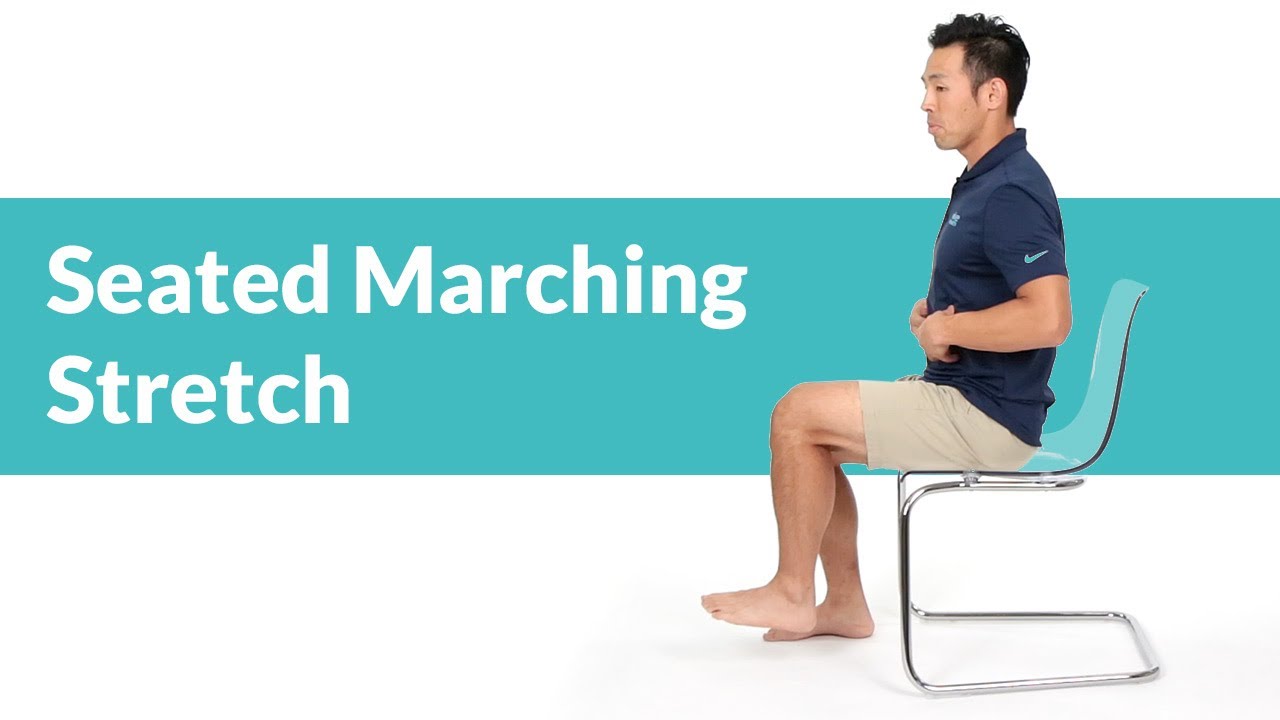
How to do it:
- Sit toward the front edge of a sturdy chair with your feet flat on the floor.
- Sit tall with your shoulders relaxed and your core engaged.
- Slowly lift your right knee toward your chest as high as it feels comfortable.
- Lower your foot back down with control.
- Repeat on the opposite side in a smooth marching motion.
- Continue alternating sides while maintaining upright posture.
- Perform 2 to 3 sets of 10 to 12 reps per leg.
- Rest for 30 tp 45 seconds between sets.
2. Sit-to-stands
Sit-to-stands are one of the most functional exercises you can do as you age because they directly train the movement of standing up from a chair, bed, or toilet on your own. The movement strengthens your quads, glutes, hips, and core while improving lower-body control and balance.
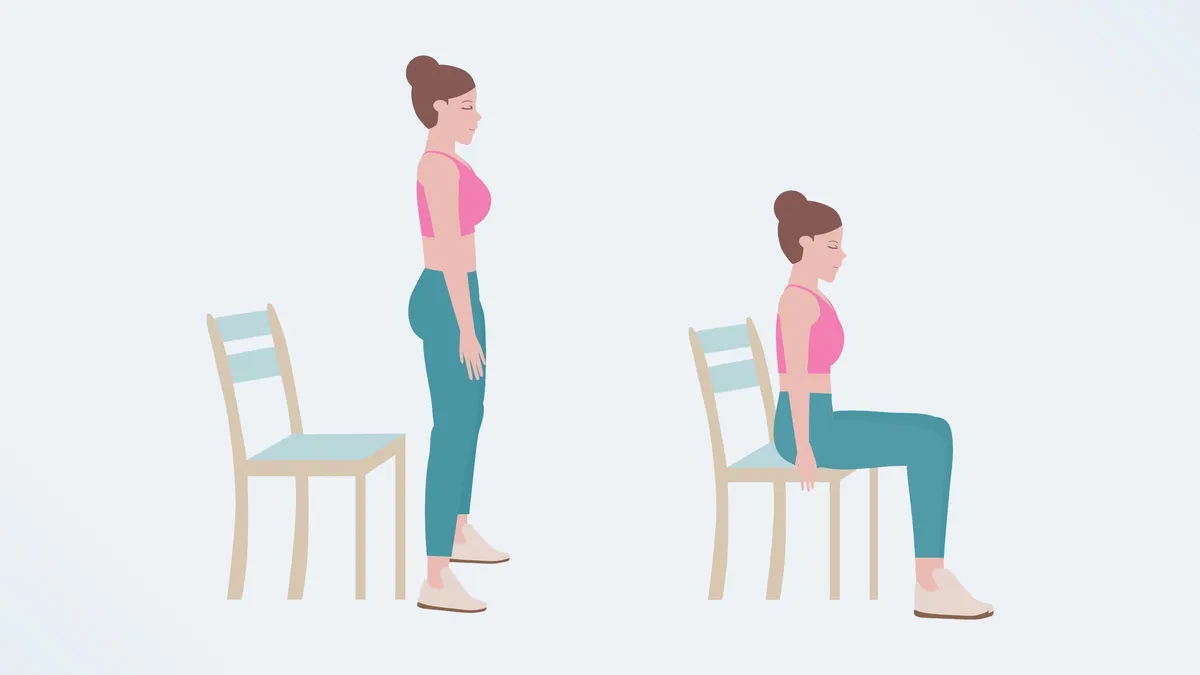
How to do it:
- Sit upright in a sturdy chair with your feet hip-width apart.
- Position your feet slightly underneath your knees.
- Lean forward slightly while keeping your chest lifted.
- Press through your heels and slowly stand up without using your hands if possible.
- Fully straighten your hips at the top of the movement.
- Slowly lower yourself back down with control rather than dropping into the chair.
- Complete 2 to 3 sets of 8 to 10 reps.
- Rest for 30 to 45 seconds between sets.
3. Seated leg extensions
This movement targets your quads, which are essential for walking, climbing stairs, and stabilizing the knees. Strengthening your quads can improve mobility and make everyday movement feel safer and more controlled.
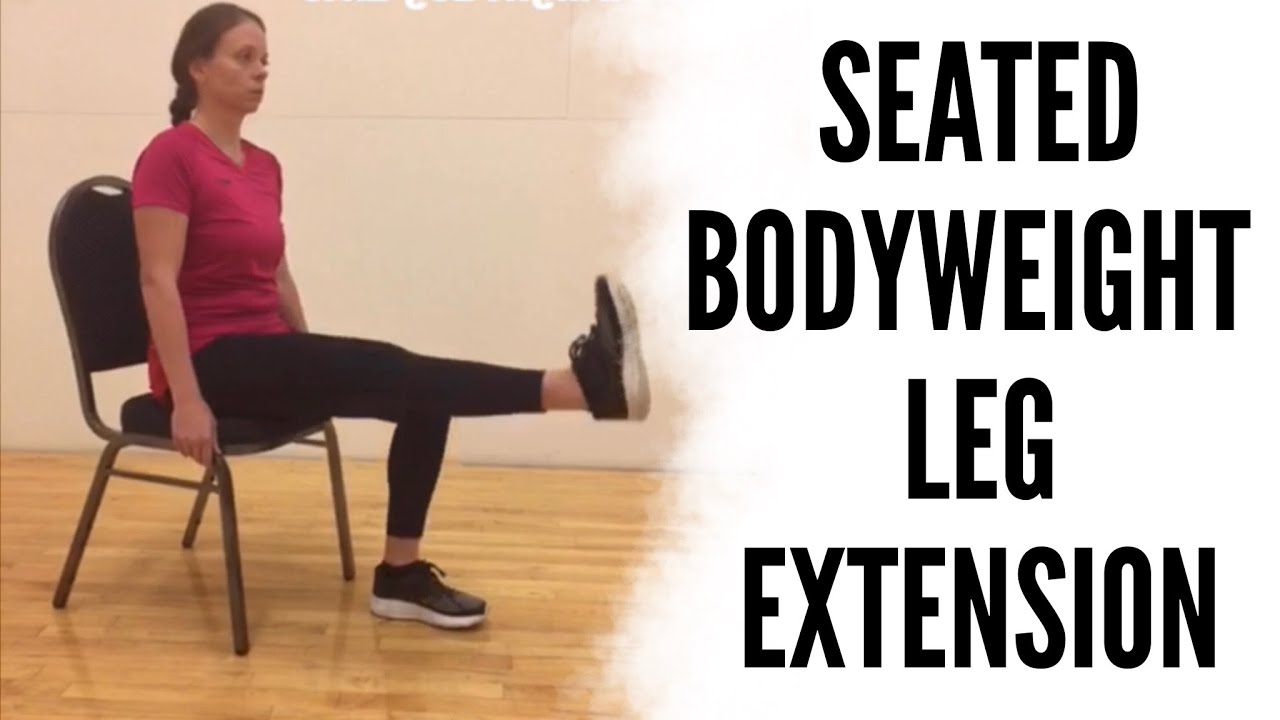
How to do it:
- Sit upright in your chair with both feet flat on the floor.
- Flex your core and keep your shoulders relaxed.
- Slowly extend your right leg until it’s parallel with the floor.
- Flex your foot so your toes point upward.
- Pause for one to two seconds at the top of the movement while squeezing your thigh muscles.
- Lower your leg back down slowly and with control.
- Repeat on the opposite side.
- Aim for 2 to 3 sets of 10 to 12 reps per leg.
- Rest for 30 to 45 seconds between sets.
4. Heel-to-toe raises
Your ankles and lower legs are crucial for maintaining balance, stability, and walking mechanics as you age. Heel-to-toe raises help improve ankle mobility and strengthen your calves and muscles around your shins, which are essential for stability and reducing fall risk.
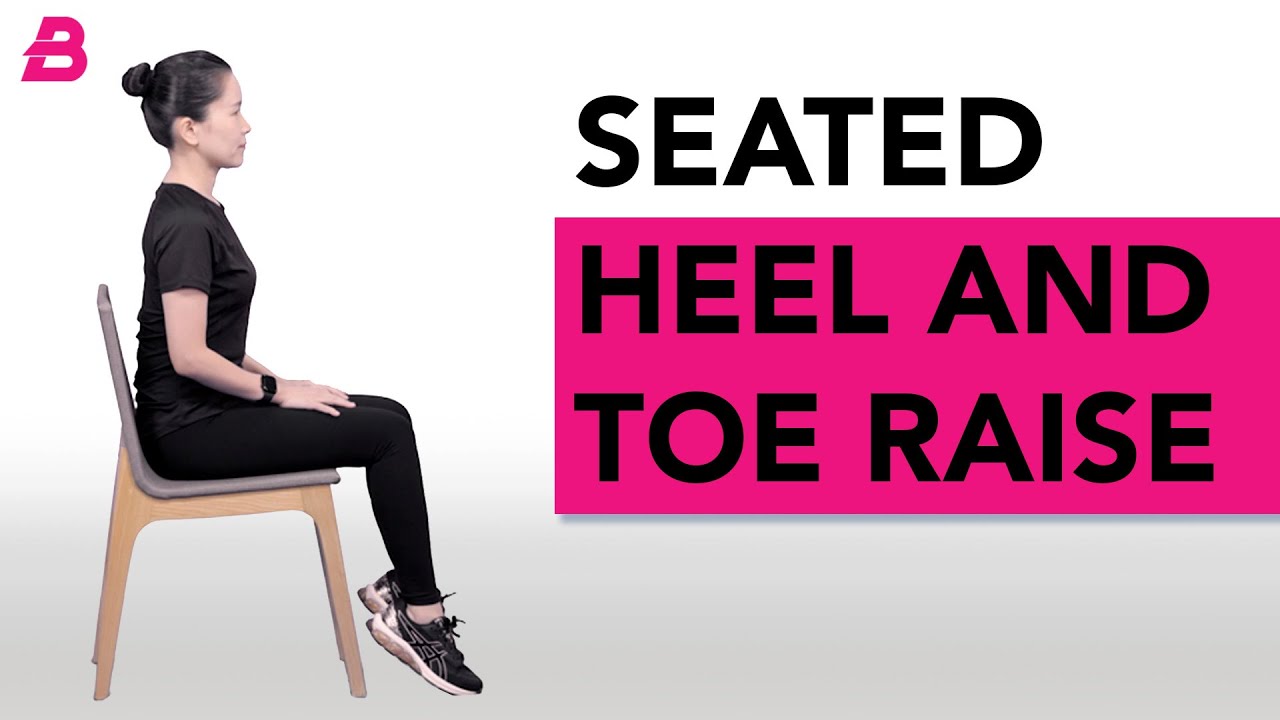
How to do it:
- Sit tall in your chair with both feet flat on the floor.
- Keep your toes planted and slowly raise your heels off the floor.
- Pause for one to two seconds at the top of the movement.
- Lower your heels back down slowly.
- Lift your toes while keeping your heels grounded.
- Pause again before lowering your toes back down.
- Continue alternating between heel raises and toe raises in a slow, controlled rhythm.
- Do 2 to 3 sets of 12 to 15 reps.
- Rest for 30 to 45 seconds between sets.
5. Seated torso rotations
Research shows that spinal mobility tends to decline with age, especially for people who spend long periods sitting. Seated torso rotations help boost rotational mobility through your spine and core while improving your posture.
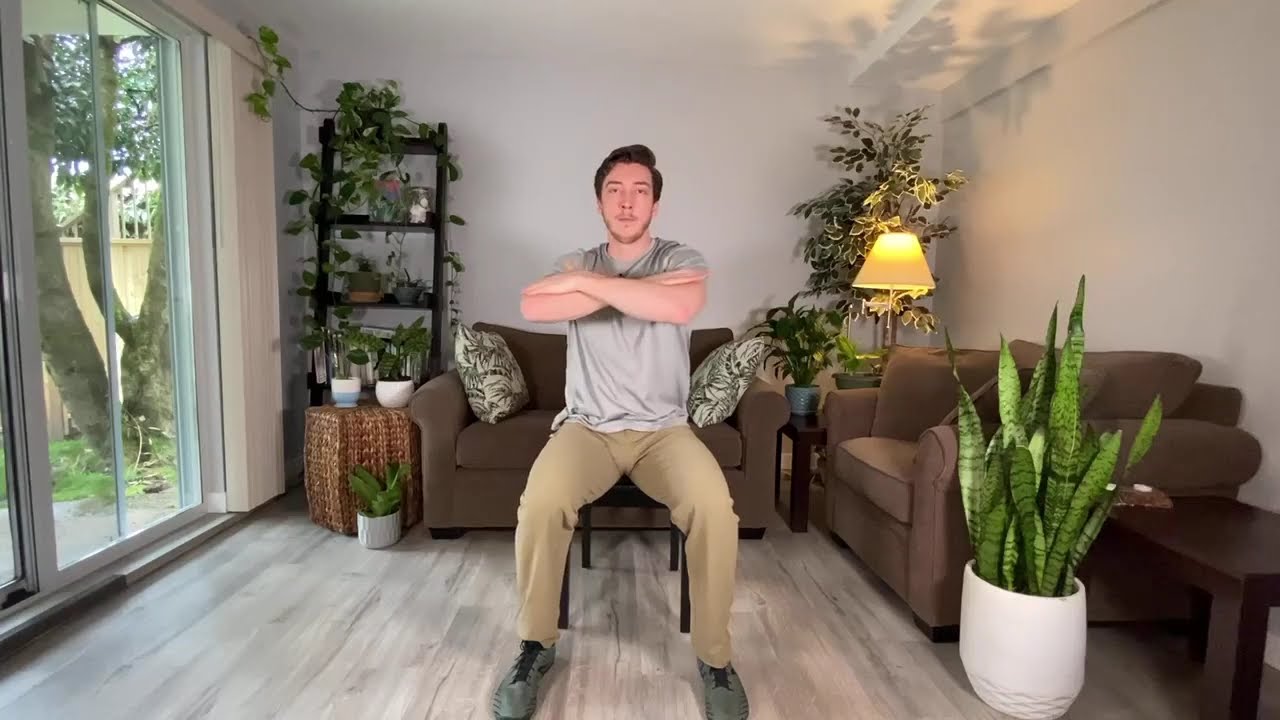
How to do it:
- Sit upright near the front of your chair.
- Cross your arms over your chest or place your hands lightly on your shoulders.
- Engage your core and keep your hips facing forward.
- Slowly rotate your upper body to the right as far as feels comfortable.
- Pause for one to two seconds while maintaining upright posture.
- Return slowly to the centre position.
- Repeat on the opposite side.
- Perform 2 to 3 sets of 8 to 10 reps per side.
- Rest for 30 to 45 seconds between sets.
6. Single-leg holds using chair support
Balance is one of the biggest predictors of fall risk as we age, and single-leg exercises are one of the most effective ways to improve it. This movement strengthens the stabilizing muscles around your ankles, hips, and core.
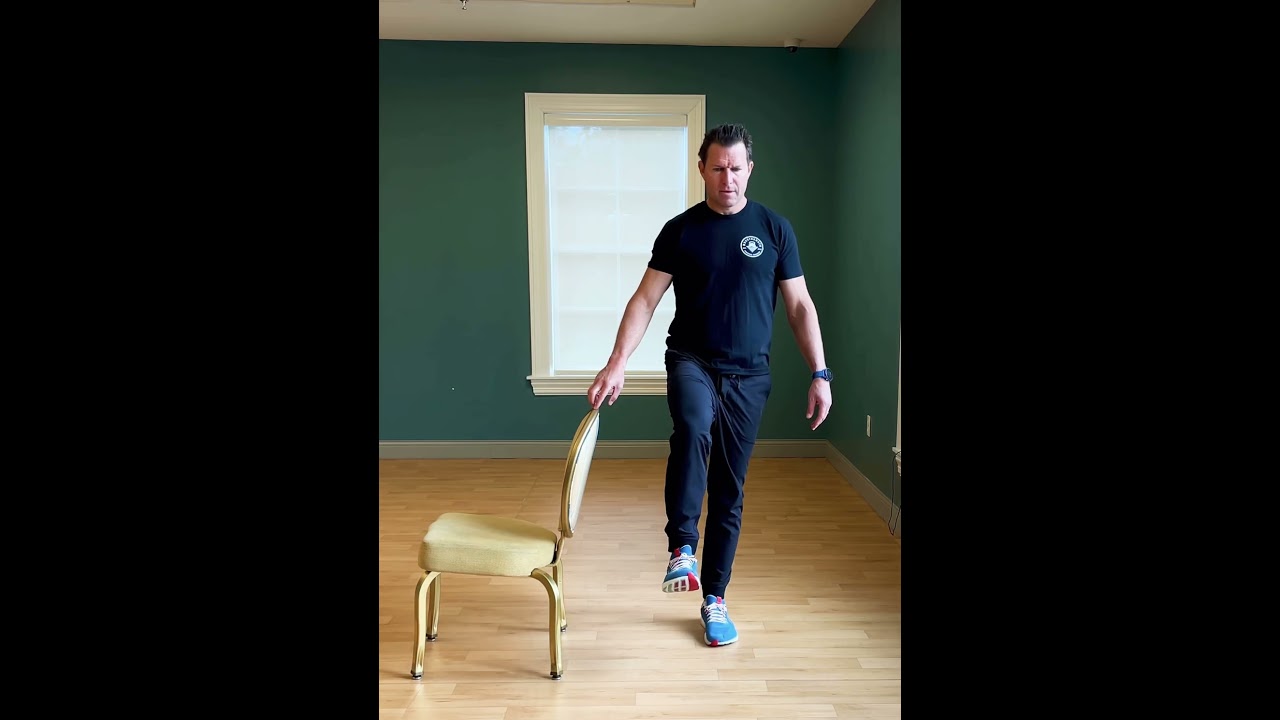
How to do it:
- Stand behind a sturdy chair and hold the backrest for support.
- Stand tall with your feet hip-width apart.
- Shift your weight into your left foot.
- Slowly lift your right foot slightly off the floor.
- Keep your torso upright and avoid leaning too far to one side.
- Hold the position for 15 to 30 seconds while breathing steadily through your nose.
- Lower your foot and repeat on the opposite side.
- Complete 2 to 3 sets per leg.
- Rest for 30 to 45 seconds between sets.
Follow Tom's Guide on Google News and add us as a preferred source to get our up-to-date news, analysis, and reviews in your feeds.

More from Tom's Guide
- I’m a physical therapist who works with seniors: Here are the 5 bodyweight exercises I recommend
- No, not planks! I'm a personal trainer for seniors, and these are the 4 best exercises you can do for core stability at every age
- Over 60? I’m a personal trainer, and these 3 floor exercises will show you how strong your core is