My mom has always preached the benefits of an early night, so even as an adult it's been my go-to fix following a bad night's sleep. Turns out, going to bed earlier to catch up on sleep is the worst thing I could have done.
"People often assume that if they're tired or sleeping poorly, the solution is to go to bed earlier," explains Dr. Joshua Roland, medical director for Dreem Health. "But this can create a mismatch between your sleep opportunity (time in bed) and your actual sleep need."
Here's why your 'early nights' might actually be causing your poor sleep and 3 a.m. wake-ups too, and how you can properly catch up on rest without sabotaging your quality of sleep...
At a glance: Key takeaways
- Early nights are seen as a healthy way to catch up on sleep, however they can disrupt your circadian rhythm and lead to middle of the night wake-ups.
- When you go to bed early, you may not have built up enough 'sleep pressure,' so you might struggle to drift off. This can cause some people to mistakingly think they have temporary insomnia.
- But if you're yawning and feel drowsy, a slightly earlier bedtime (around 20 minutes earlier than normal) can help — but experts say to avoid significantly altering your sleep schedule.
How early nights caused my overnight wake-ups
Early nights might sound sensible but our sleep schedules thrive on routine. When that routine gets disrupted, even if you think you're doing the right thing, your sleep can suffer.
"When people extend their time in bed significantly beyond what they're used to, they may find that sleep becomes more fragmented," explains Dr. Aric Prather, sleep scientist and licensed clinical psychologist at BetterSleep.
"One reason for this is that the body is still operating on its usual timing," he says. "Sleep is regulated by both circadian rhythms and sleep drive, and an earlier bedtime doesn't necessarily shift those systems immediately.
Here are three ways it impacted my sleep...
I started waking up at 3 a.m.
I assumed an early night would simply add hours to my usual sleep routine but my good intentions flew out the window when I found myself waking up at 3 a.m.
As Dr. Rolands explains, this is because while my schedule has changed, my body clock is sticking to its usual routine.
"Someone who normally sleeps from 11 p.m. to 7 a.m. may fall asleep at 9 p.m. if they're tired, but their body clock is still programmed for a later schedule," explains Dr. Roland. "As sleep pressure fades overnight and the circadian system begins preparing for wakefulness, they may wake at 2, 3, or 4 a.m. and struggle to fall back asleep."
This is because around this time of night, your hormones shift. Levels of melatonin, the sleepy hormone, drop off while cortisol, the awake hormone, begins to rise.
If you've already clocked up enough sleep, this hormone change can be enough to wake you. And because sleep pressure (the need for sleep) has faded, you can't drift off again.
"In some cases, an 'early night' can actually contribute to middle-of-the-night awakenings rather than improve sleep," says Dr. Roland.
I couldn't fall asleep
Despite yawning my way through the afternoon, I often find when I go to bed at an earlier hour, I lie awake until my regular sleep time arrives. What gives?
Sheree-Ann Michelle, Pharmacist and Functional Medicine Health Coach at The Wellnaissance, explains that the longer you're awake, the more the chemical adenosine builds up and it's this that makes us feel sleepy (in other words, the more you're awake, the more you feel pressure to sleep.)

"When you go to bed before that sleep pressure has had sufficient time to build, your body simply is not ready to enter or sustain deep sleep, even if you feel tired or stressed," says Michelle. "The result is that people who go to bed unusually early often find themselves lying awake."
It's like turning up early for a train. You're ready to go but the train is sticking to its schedule.
I struggled to sleep the next night
When your early nights haven't accomplished what you hoped for, you might feel tempted double down — keep moving your bedtime forward until those cumulative hours have finally killed off your sleep deprivation.
However, all this time spent in bed not sleeping can have a long reaching impact on your sleep health.
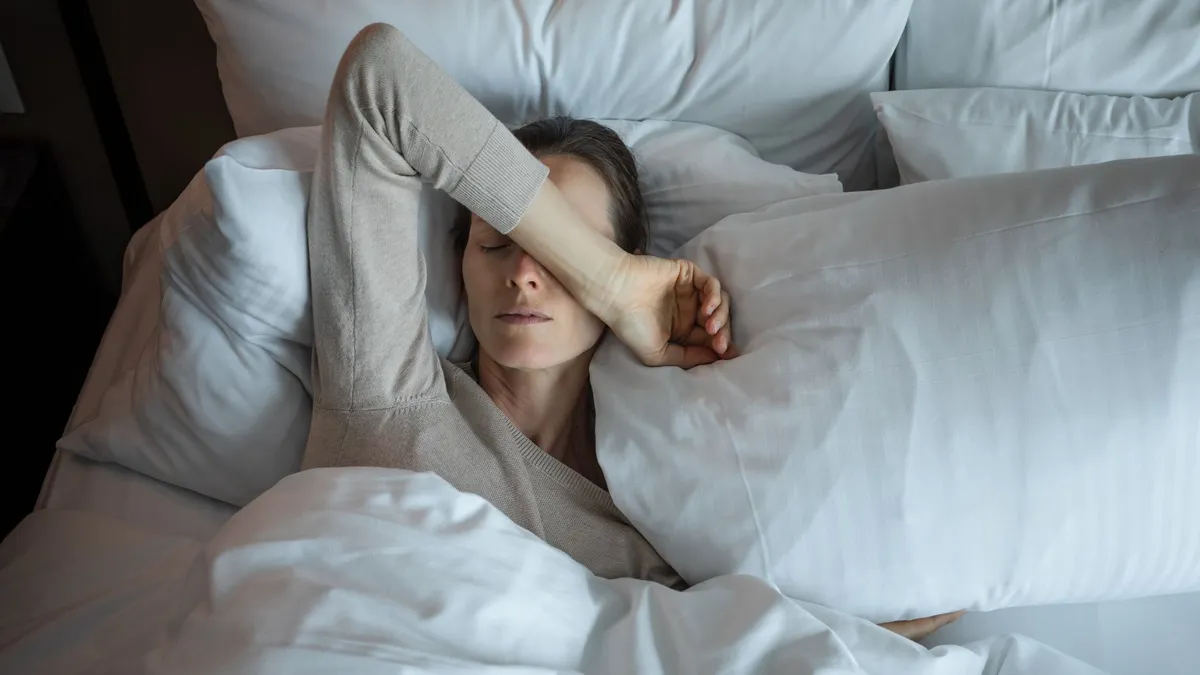
"One reason that early nights can backfire is that getting into bed before sleepiness leads the brain to connect bed with laying awake," says Dr. Jessica Weatherford, psychologist at Catalyst Psychology.
That means when you go to bed, your brain doesn't think: 'this is where sleep happens.' Instead, it might start to assume, based on experience, that you're lying there with the intention of staying awake.
How to sleep better after a bad night's sleep
So my early nights might not actually help me catch up on sleep. But as it's my go-to solution when I've clocked up under seven hours the night before, I asked the experts what I can do instead.
1. Move your bedtime slightly earlier
After a bad night's sleep you might be tempted to crawl into bed as soon as possible but Dr. Roland advises sticking as close to your usual sleep schedule as possible.
"I'd recommend recovering from a poor night's sleep by maintaining a consistent wake-up time," he says, "moving bedtime only slightly earlier if needed."
That means rather than an additional hour in bed, you take an extra 15 to 20 minutes. Doing so maintains your sleep cycle, limiting disruption (while still getting a touch more snooze.)
2. Aim for a few good nights, not one 'mega night'
"Consistency' is your watchword when it comes to good sleep as your body clock thrives on repetition. So when you're trying to catch up on rest, don't do it all at once.

"Prioritize several consecutive nights of adequate rest rather than relying on a single 'recovery' sleep marathon," says Dr. Rolands.
"Additionally, your body can only make so much sleep," notes Dr. Prather.
To get through the day in between, try a quick nap. But quick is the operative word: the 20-minute nap hack is the best way to regain energy without ruining your sleep pressure.
3. Make sure you're actually sleepy
There's a difference between feeling worn out and feeling tired. If you go to bed when you're experiencing the first but not the second, you might find yourself lying awake.
Dr. Weatherford encourages looking for "signs of sleepiness", including yawning and heavy eyes.
When these sleepy signals are clear, it's time to go to bed, even if you're (slightly) ahead of your usual bed time.

Follow Tom's Guide on Google News and add us as a preferred source to get our up-to-date news, analysis, and reviews in your feeds. Subscribe to Tom's Guide on YouTube and follow us on TikTok. Finally, you can visit our dedicated Tom's Guide Savings Squad hub for expert help on getting the best products for less.